


Primary sourceDocument1790
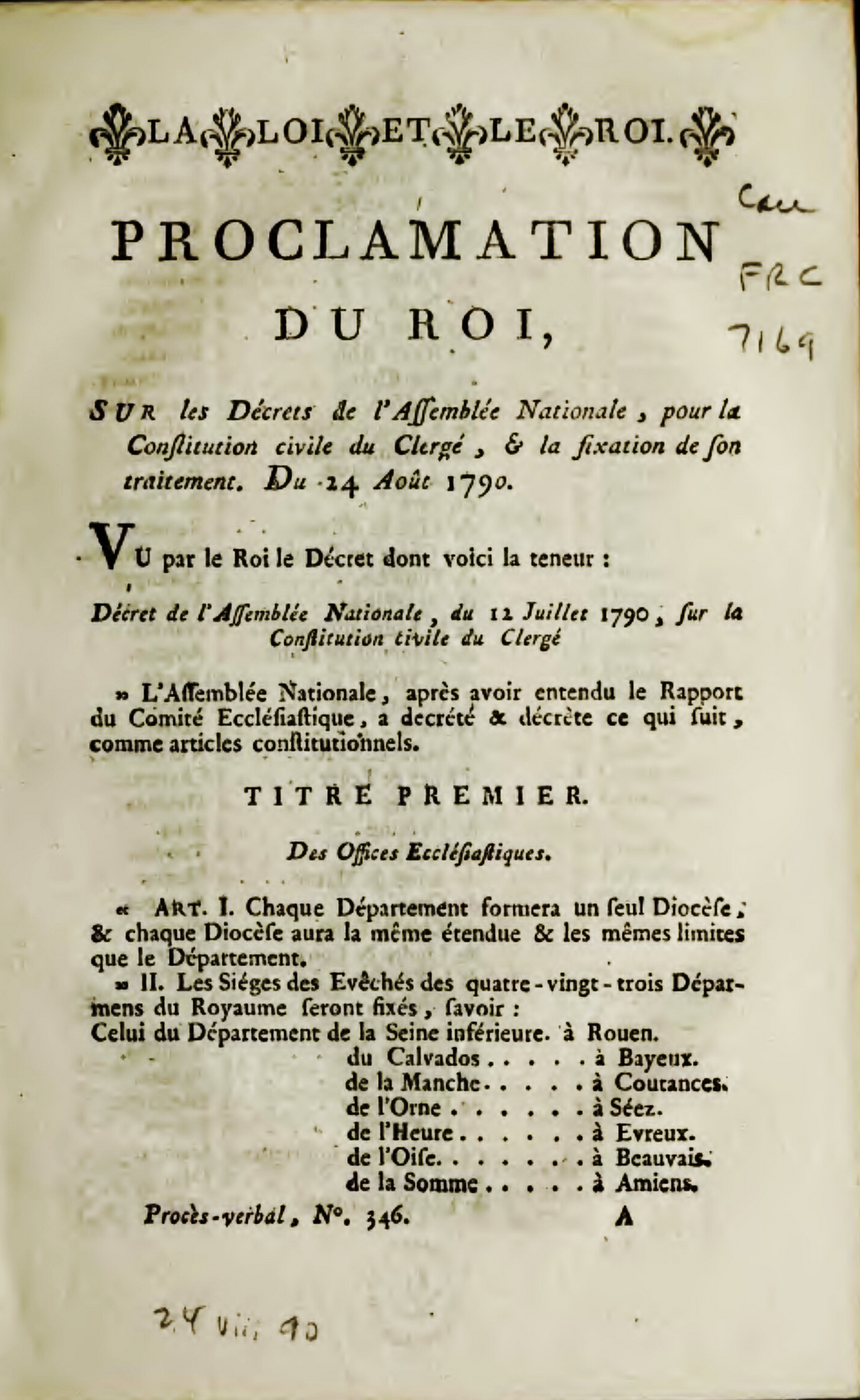
Civil Constitution of the Clergy
National Constituent Assembly · 1790
An 1790 law subordinating the Catholic Church to the French state; Talleyrand swore its oath and consecrated the first constitutional bishops.
Talleyrand swore the oath to this law and consecrated constitutional bishops, leading to his excommunication.
Free Humy account · No credit card · 120,912 sources to read
About this source
What it is
Passed on 12 July 1790 by the National Constituent Assembly, this law placed the Catholic Church in France under state control, replacing papal authority with election of clergy by the people. The proclamation shown here carries the king's formal announcement of the decree.
Why it matters
The law split French Catholics between those loyal to the new state church and those loyal to Rome. Talleyrand, as a bishop, took the required oath and consecrated the first constitutional bishops—an act that led to his excommunication and marked his definitive break with the Church, showing how deeply the Revolution reshaped even its clergy's loyalties.
Look closer
- Why might the government have wanted bishops and priests to be elected instead of appointed by the Church?
- What does it suggest that Talleyrand supported this law, even though it meant breaking with Rome?
- What risks might a Revolution take by provoking people's religious loyalties this way?
This document is part of the curated material that grounds the AI version of Charles-Maurice de Talleyrand-Périgord on Humy.ai — when students ask about related events, the AI can quote it and cite it.
More Charles-Maurice de Talleyrand-Périgord sources
Browse all 97 →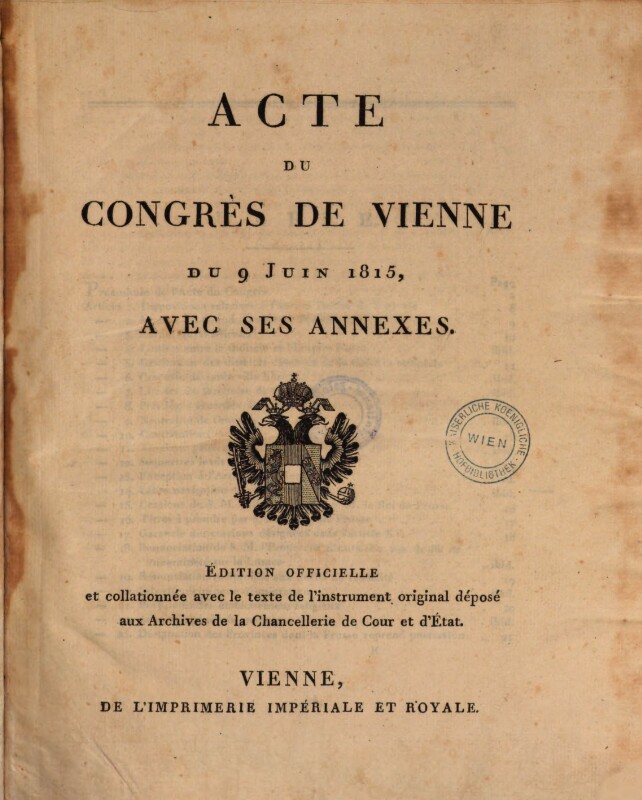 Document
Primary source
Final Act of the Congress of Vienna
9 June 1815
 Painting
Primary source
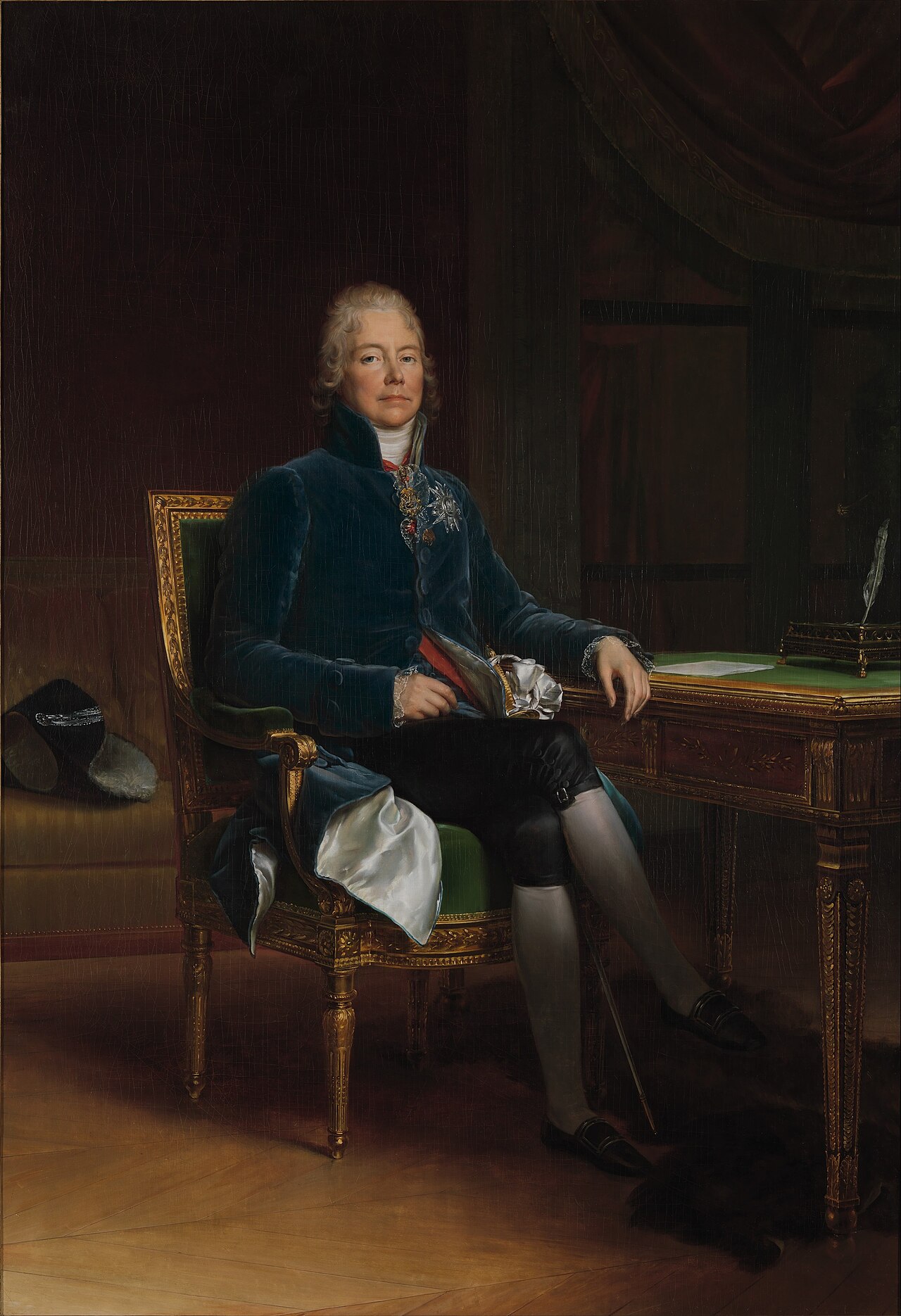
Charles Maurice de Talleyrand Périgord, Prince de Bénévent
François Gérard · 1808
 Document
Primary source
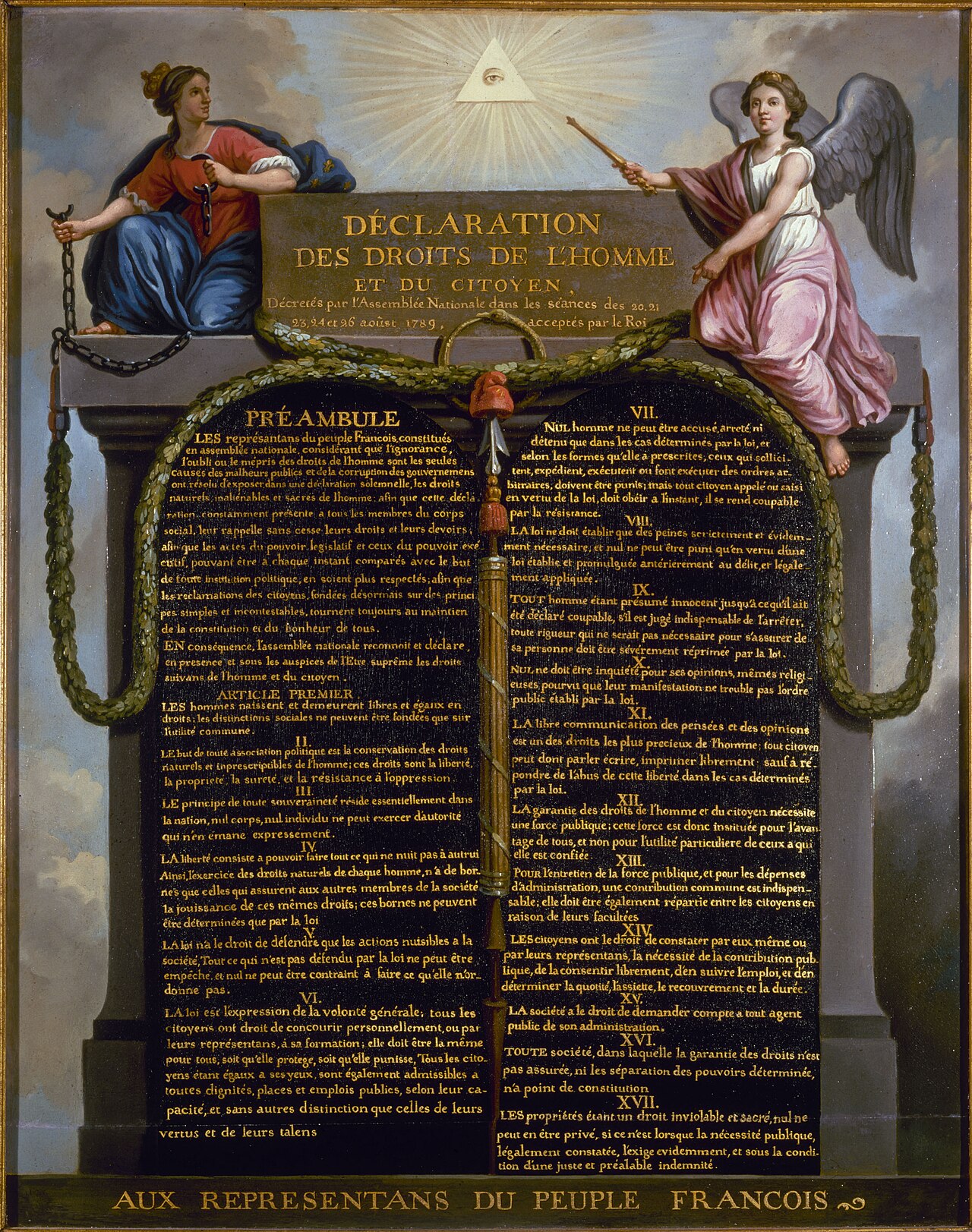
Declaration of the Rights of Man and of the Citizen
National Constituent Assembly · 1789
Primary source
Rapport sur l'instruction publique
Charles-Maurice de Talleyrand-Périgord · 1791
Free account
Read every Charles-Maurice de Talleyrand-Périgord source
Sign up free →
Ready when you are
Start chatting with Charles-Maurice de Talleyrand-Périgord now.
20 messages free · No credit card · Available in 50+ languages.