


Primary sourcePainting1913
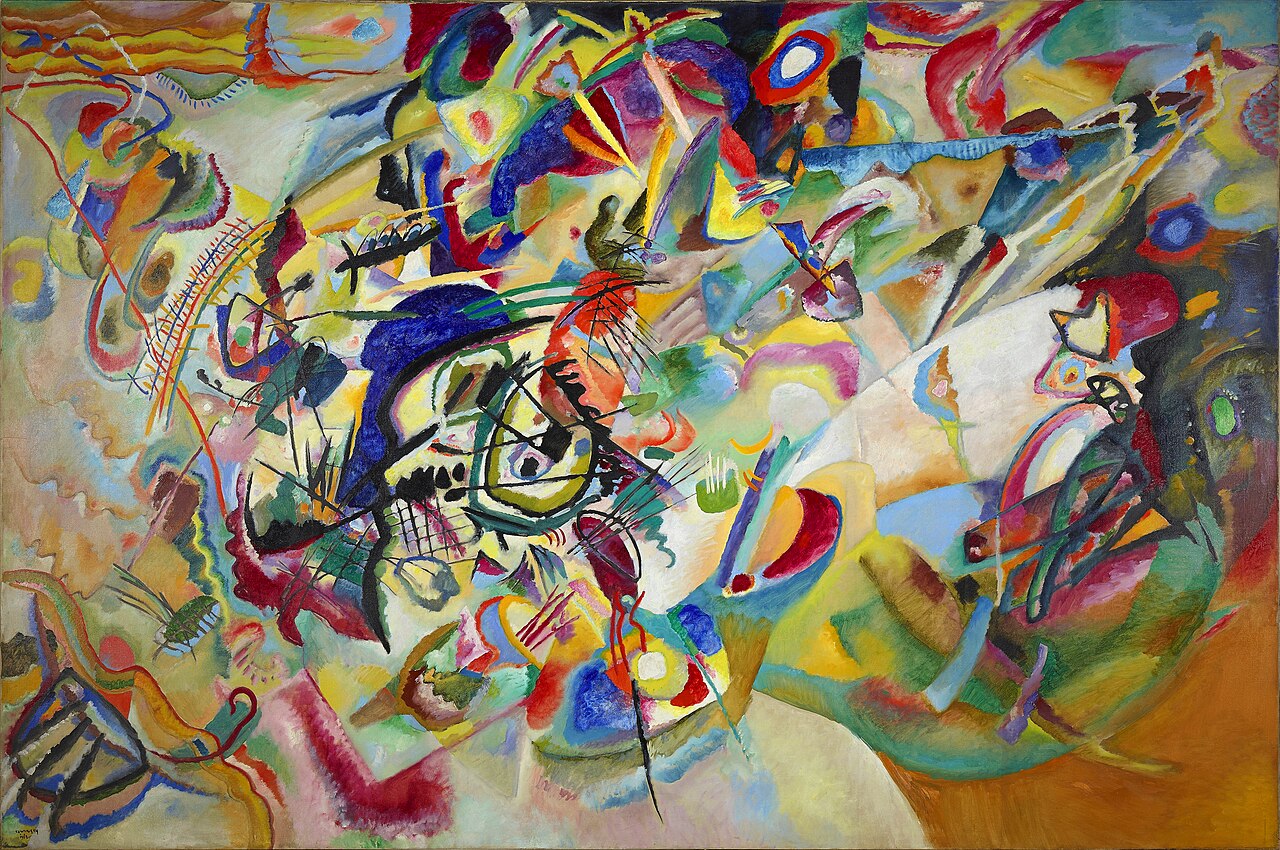
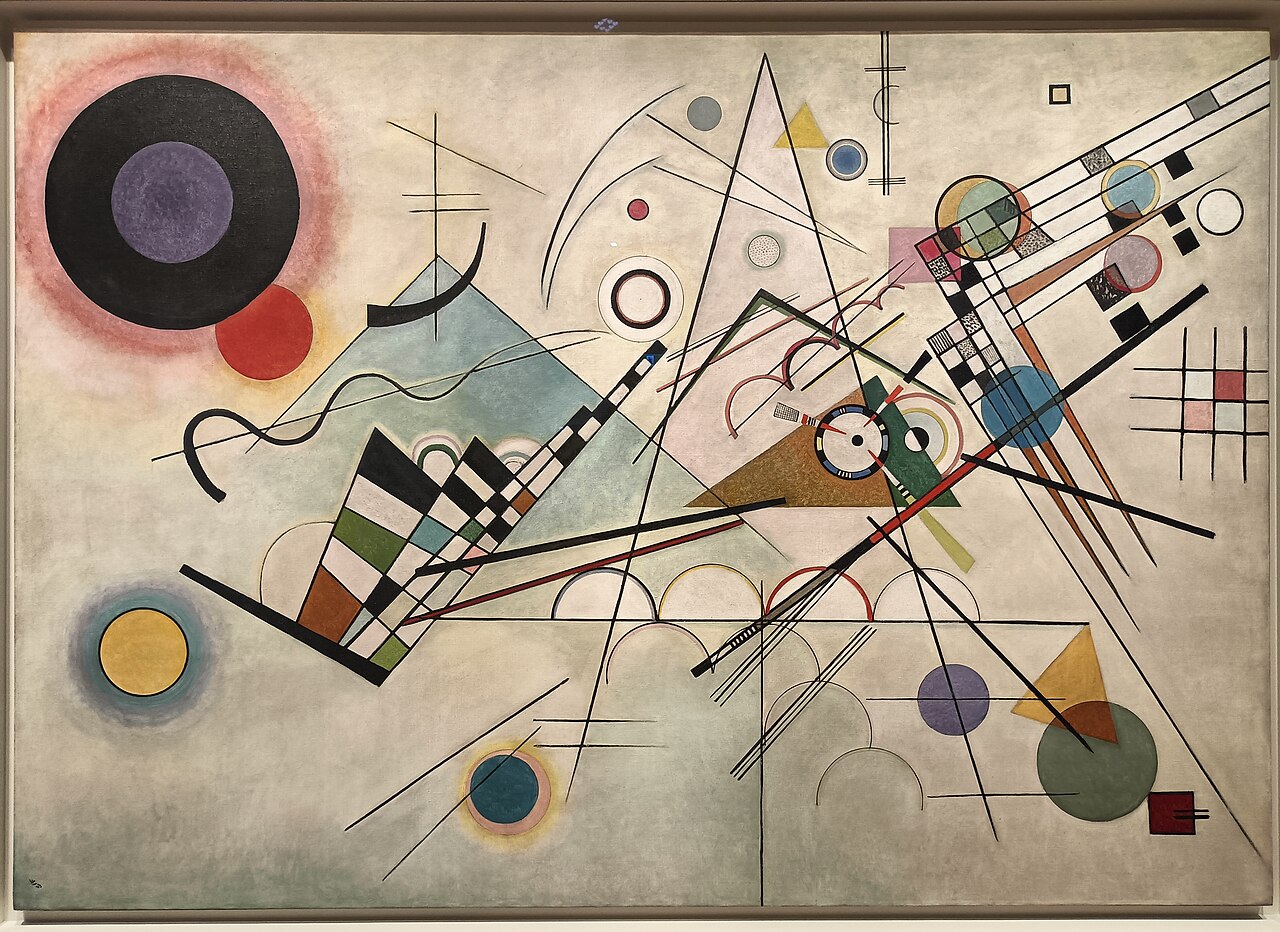
Composition VII
Wassily Kandinsky · 1913
Kandinsky's 1913 abstract painting, often seen as the summit of his pre-war abstraction, combining themes of resurrection, judgment and the flood.
Regarded as the summit of Kandinsky's pre-war abstraction, built up through many preparatory studies.
About this source
What it is
This is Composition VII, an oil painting made in 1913 by the Russian-born painter Wassily Kandinsky. It is held in the Tretyakov Gallery in Moscow.
Why it matters
Art historians consider this painting the high point of Kandinsky's pre-war abstract work. Scholars have concluded it combines themes of Resurrection, Judgment Day, the Flood and the Garden of Eden, even though no figures are clearly recognisable. Dozens of preparatory studies, including his first abstract watercolour, show that Kandinsky planned this swirling composition very deliberately, despite its spontaneous appearance. It relates to the abstract experiments of other artists of the period working at the same time.
Look closer
- Why might an artist plan an 'abstract' painting through many preparatory studies rather than painting spontaneously?
- What clues, if any, can you find of the religious themes historians describe?
- What is lost, and what is gained, when a painter moves away from recognisable subjects?
This painting is part of the curated material that grounds the AI version of Wassily Kandinsky on Humy.ai — when students ask about related events, the AI can quote it and cite it.
More Wassily Kandinsky sources
Browse all 93 →Primary source
Concerning the Spiritual in Art
Wassily Kandinsky · 1911 (dated 1912)
 Painting
Primary source
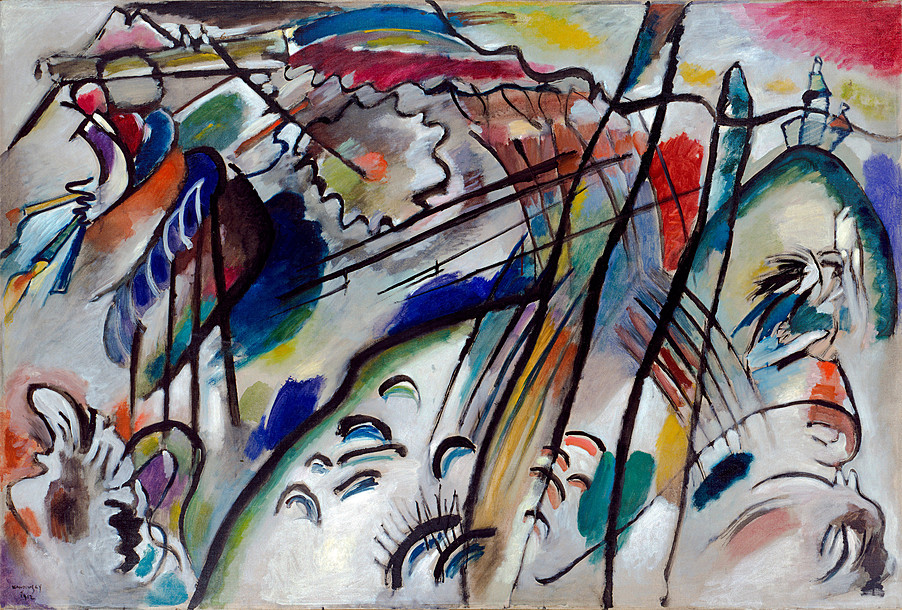
Improvisation 28 (second version)
Wassily Kandinsky · 1912
 Painting
Primary source
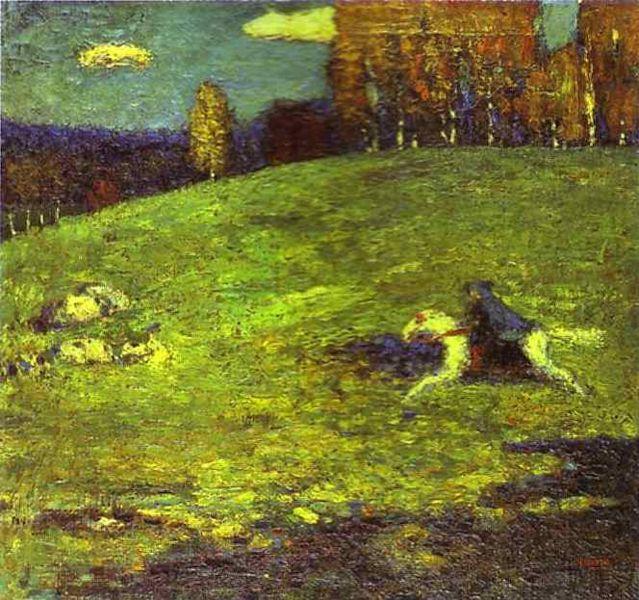
The Blue Rider
Wassily Kandinsky · 1903
 Book
Primary source
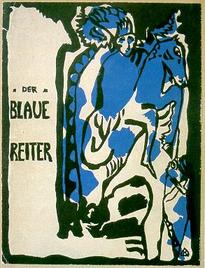
Der Blaue Reiter Almanac
Franz Marc · 1912
Free account
Read every Wassily Kandinsky source
Sign up free →
Ready when you are
Start chatting with Wassily Kandinsky now.
20 messages free · No credit card · Available in 50+ languages.