


Primary sourceDocument1867
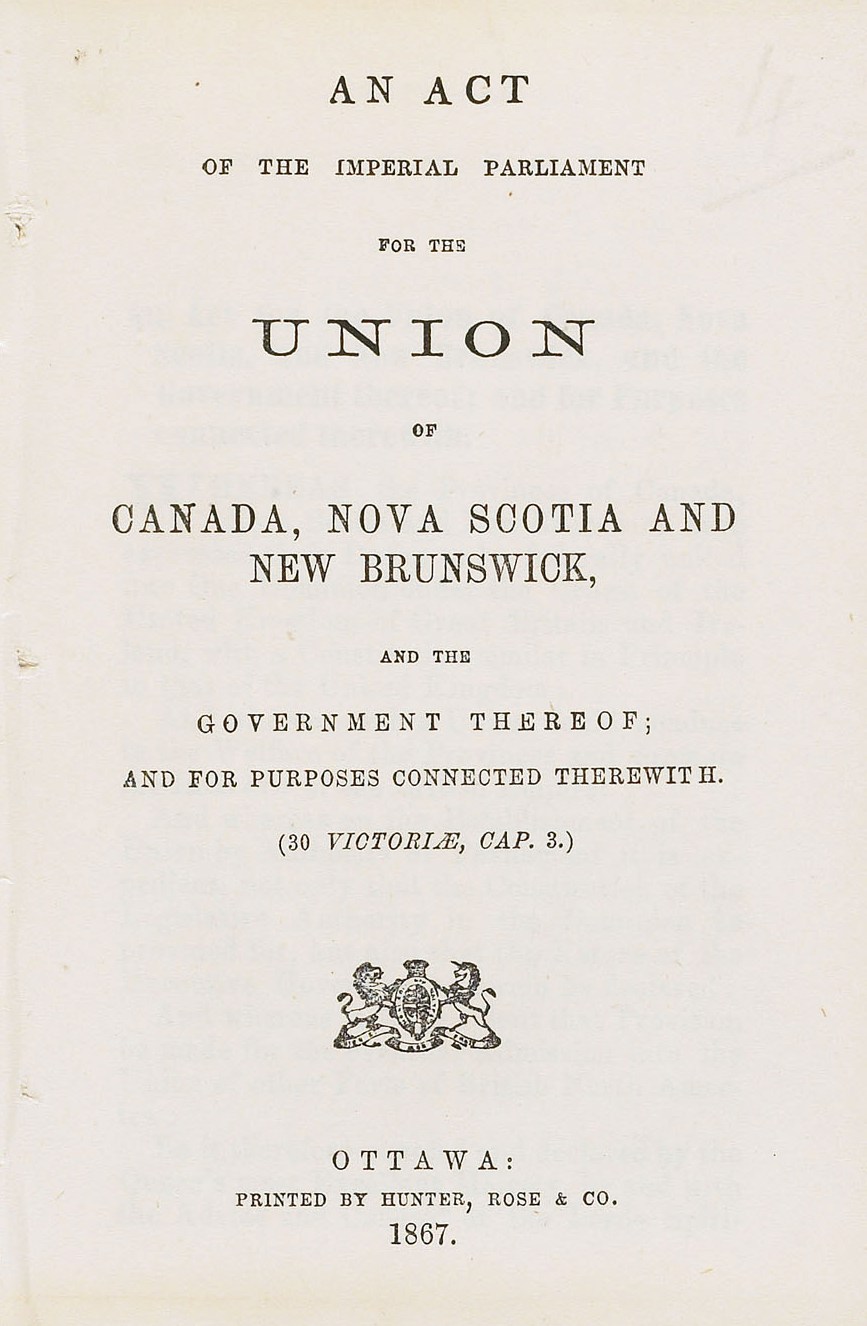
Constitution Act, 1867
1867
The founding statute that created Canada in 1867, drafted largely by John A. Macdonald at the London Conference.
Macdonald was the chief drafter of this founding statute, shaping Canada's federal structure.
About this source
What it is
This is the Constitution Act, 1867 (originally the British North America Act), the law passed by the British Parliament that created the Dominion of Canada. It set up Canada's parliament, courts, and the division of powers between the federal government and the provinces, and created the provinces of Ontario and Quebec.
Why it matters
John A. Macdonald did more than any other delegate to draft this act, and its strong central government reflects his own preference for a near-legislative union of the British North American colonies. It remains the foundation of Canada's constitution today.
Look closer
- Why might the preamble compare Canada's constitution to that of the United Kingdom?
- What does the division of powers between federal and provincial governments tell you about the compromises behind Confederation?
- Whose voices are missing from a document written by a small group of political leaders?
This document is part of the curated material that grounds the AI version of Sir John A. Macdonald and Samuel Leonard Tilley on Humy.ai — when students ask about related events, the AI can quote it and cite it.
More Sir John A. Macdonald sources
Meet the AI Sir John A. Macdonald →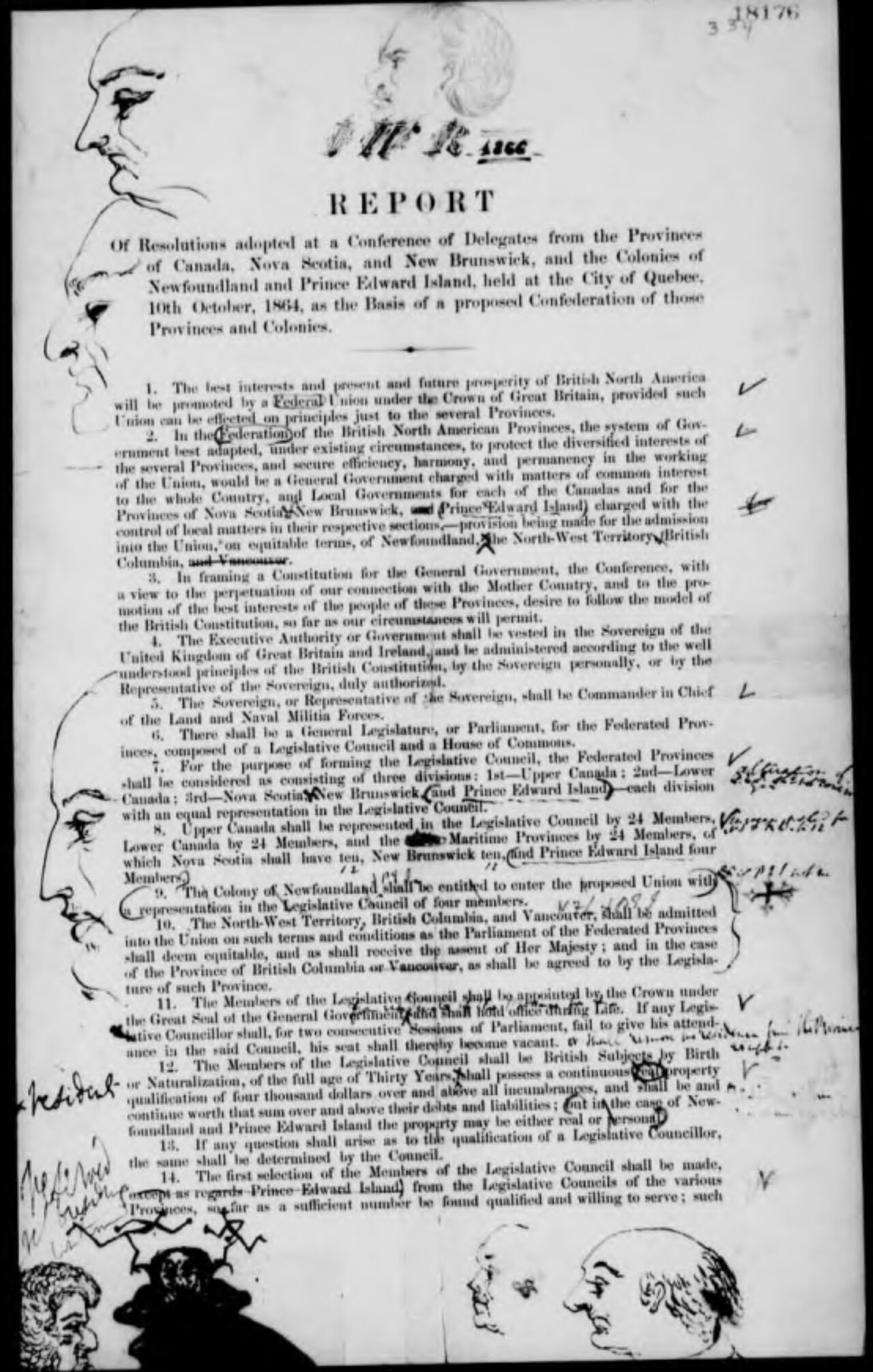 Document
Primary source
Quebec Resolutions (Seventy-Two Resolutions)
Delegates of the Quebec Conference (principal drafter John A. Macdonald) · 1864
 Photograph
Primary source
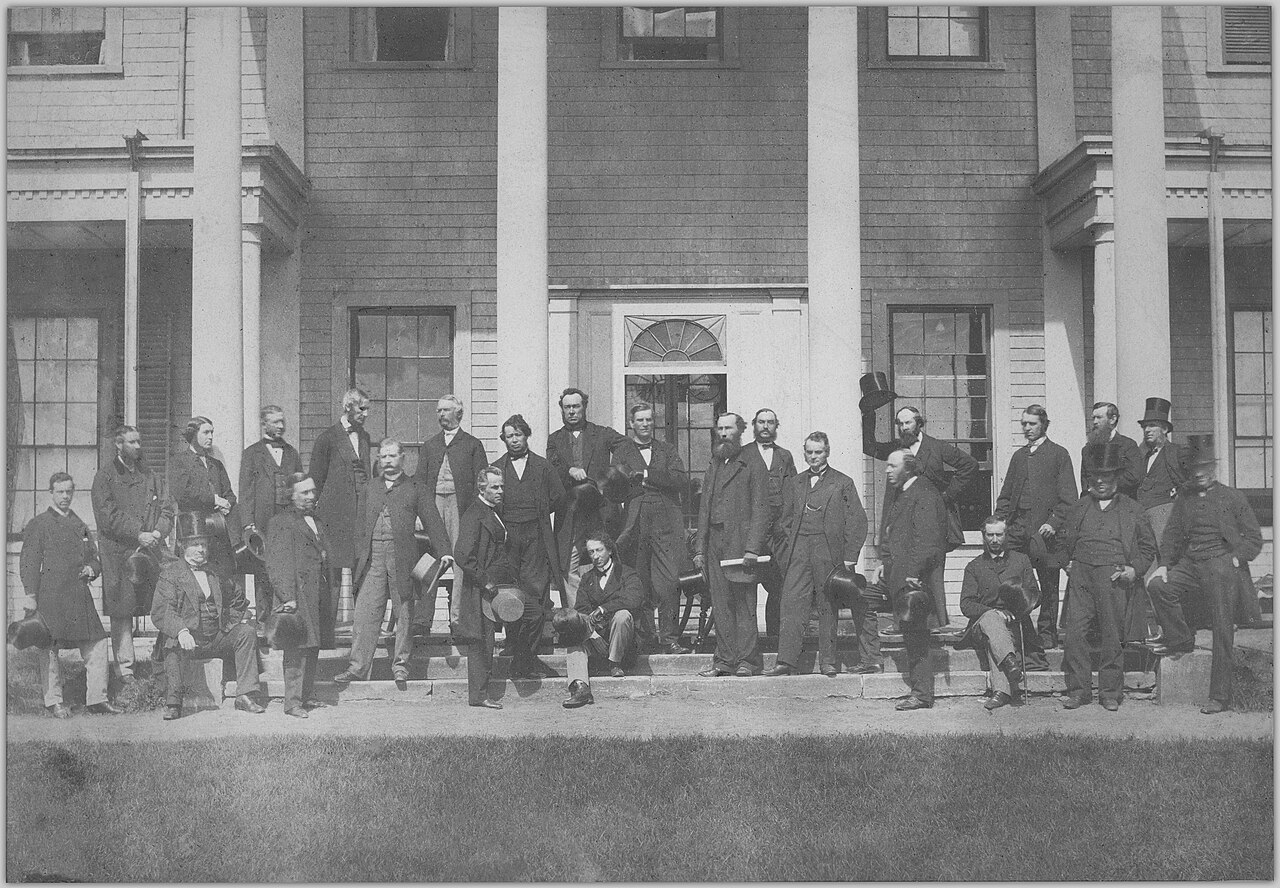
Charlottetown Conference Delegates, September 1864
George P. Roberts · September 1864
Primary source
Chinese Immigration Act of 1885
1885
 Painting
Primary source
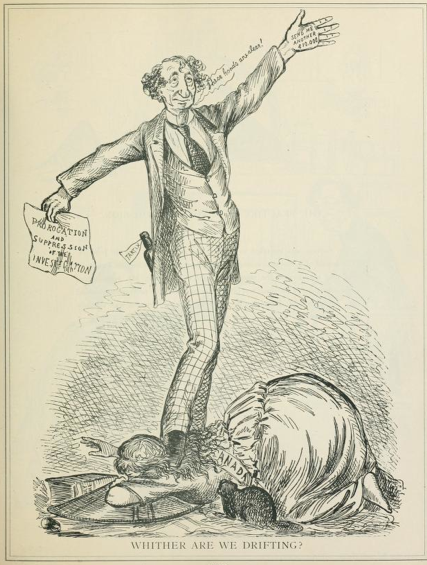
"Whither Are We Drifting?" cartoon, Grip
J. W. Bengough · 1873
 Document
Primary source
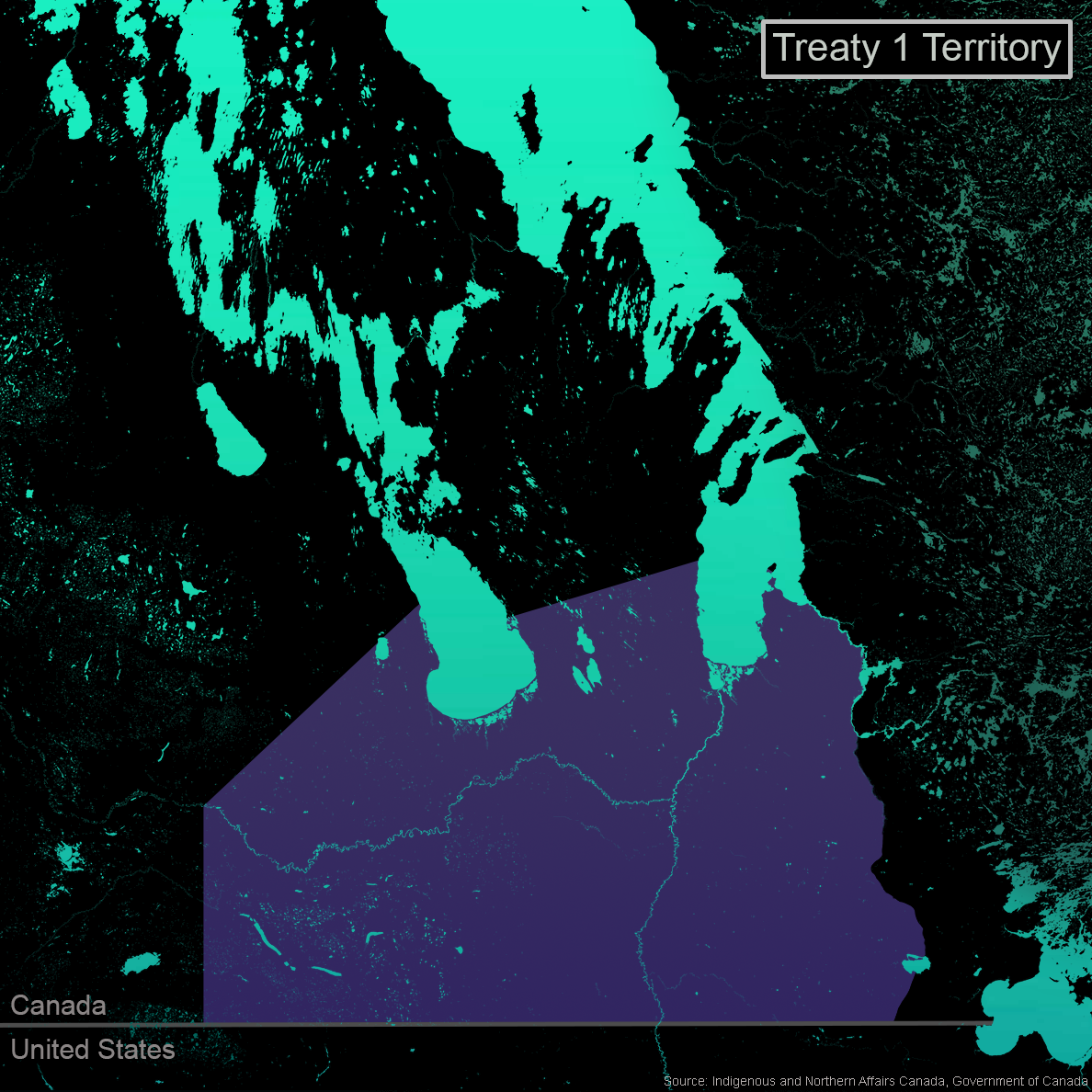
Treaty 1
3 August 1871
Ready when you are
Start chatting with Sir John A. Macdonald now.
20 messages free · No credit card · Available in 50+ languages.