


Primary sourceLetter1850
Constitutionality and Enforcement of the Fugitive Slave Law
Millard Fillmore · 1850
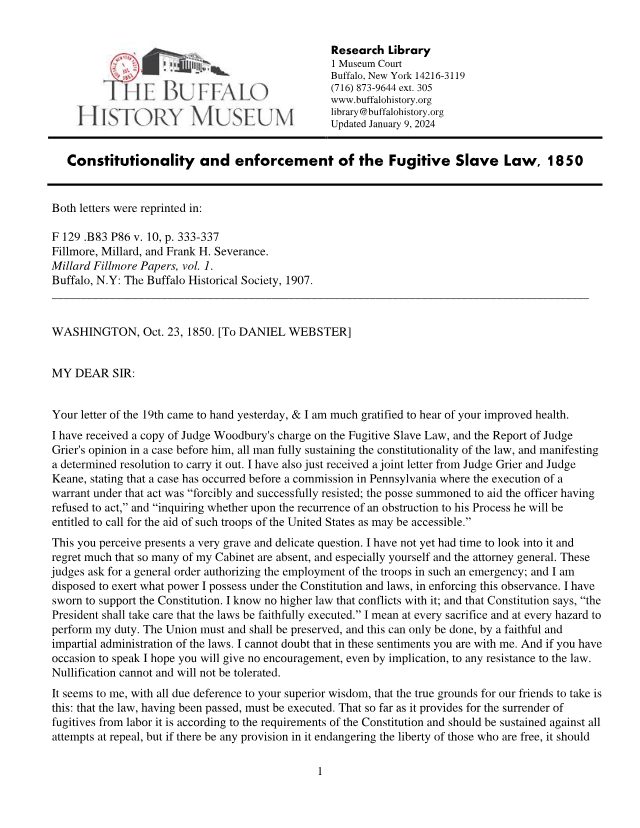
Letters between President Fillmore and Daniel Webster in 1850 discussing the legality and enforcement of the Fugitive Slave Act.
These letters show Fillmore, as president, directly grappling with enforcing the Fugitive Slave Act.
 PDF · 3 pages
About this source
What it is
These are letters exchanged in 1850 between Millard Fillmore and Daniel Webster, his Secretary of State, concerning the constitutionality and enforcement of the Fugitive Slave Act. They were later reprinted in the Buffalo Historical Society's Millard Fillmore Papers in 1907.
Why it matters
The Fugitive Slave Act was one of the most controversial laws of the 1850 Compromise. These letters show Fillmore and Webster working through legal and political concerns about enforcing it, revealing how the executive branch grappled with slavery's legal and moral conflicts.
Look closer
- What does Fillmore's language reveal about his priorities as president?
- Why would Fillmore and Webster need to discuss the law's constitutionality?
- What does this correspondence leave out about the people affected by the law?
This letter is part of the curated material that grounds the AI version of Millard Fillmore on Humy.ai — when students ask about related events, the AI can quote it and cite it.
More Millard Fillmore sources
Meet the AI Millard Fillmore →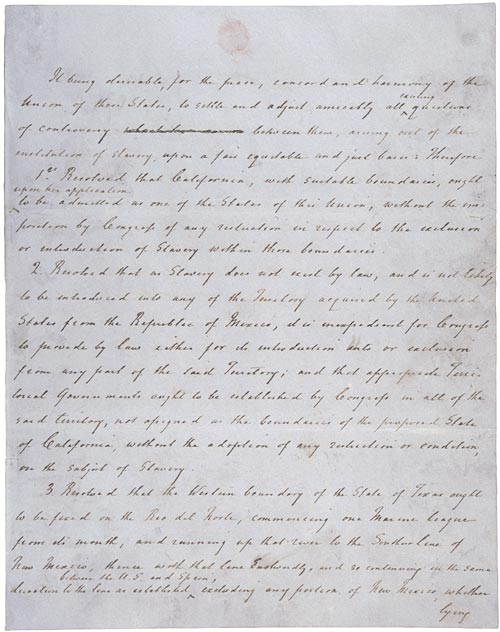 Document
Primary source
Compromise of 1850
Henry Clay · 29 January 1850 (resolutions); statutes enacted September 1850
Primary source
Fugitive Slave Act of 1850
United States Congress · 1850
 Photograph
Primary source
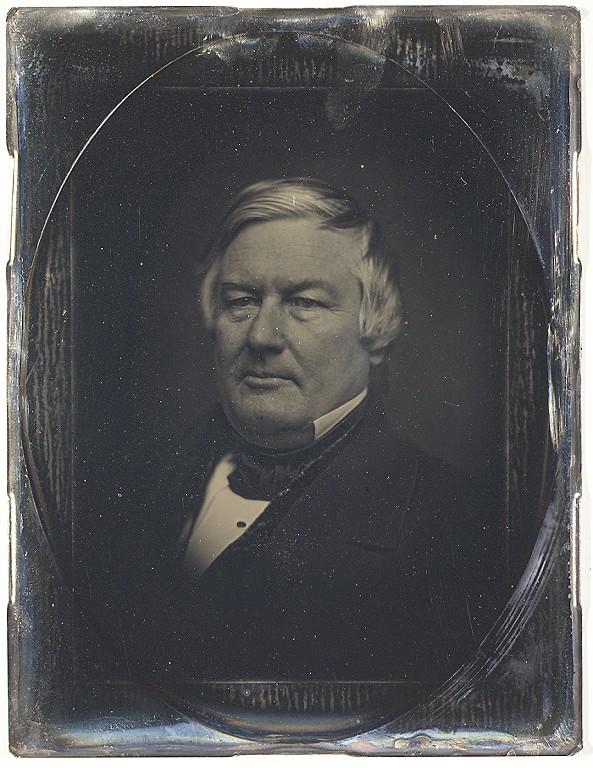
Millard Fillmore
Southworth and Hawes · 1850
Primary source
Millard Fillmore's First Annual Message to Congress
Millard Fillmore · December 2, 1850
Primary source
Millard Fillmore's Second State of the Union Address
Millard Fillmore · December 2, 1851
Ready when you are
Start chatting with Millard Fillmore now.
20 messages free · No credit card · Available in 50+ languages.