


Primary sourcePainting1514
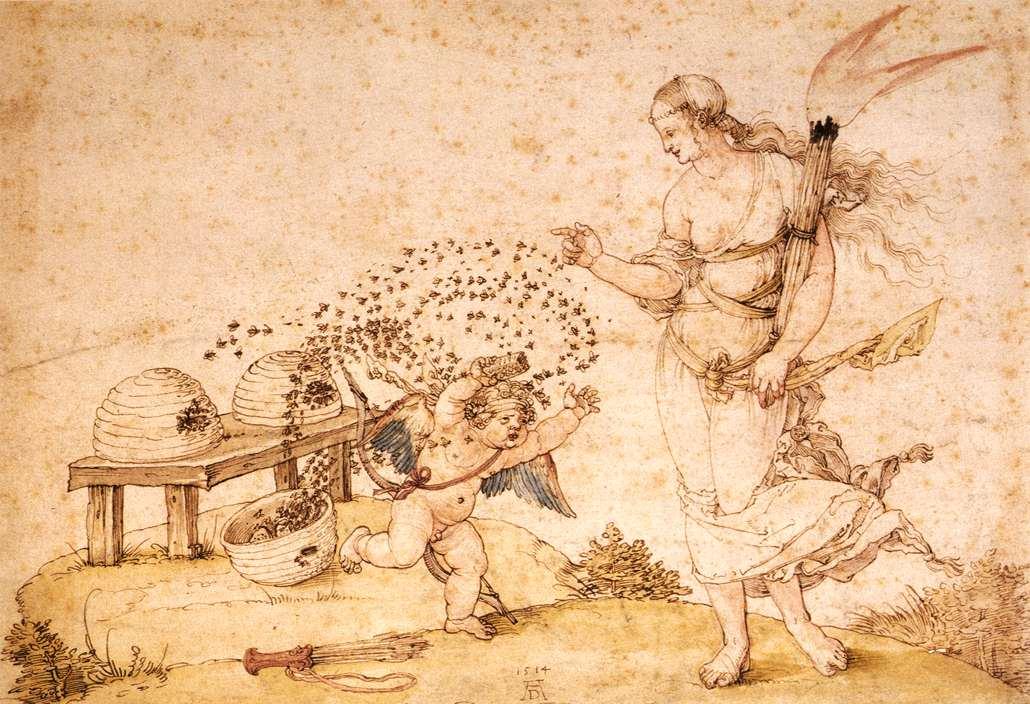
Cupid the Honey Thief
Albrecht Dürer · 1514
An engraving by Albrecht Dürer from 1514 showing Cupid stealing honey from bees, a classical theme reworked in Dürer's Northern style.
A work made by Dürer himself in 1514, reflecting his engagement with classical mythology.
About this source
What it is
This is a drawing with ink and wash, dated 1514, by Albrecht Dürer. It depicts a winged Cupid running off with a basket of bees while a woman with a bow points accusingly at him, with beehives and swarming bees nearby.
Why it matters
Dürer often reworked classical mythological subjects in his own Northern European style, blending humour and close observation of nature with inherited stories from antiquity. This piece shows his interest in combining storytelling with detailed natural study, such as the bees and hives.
Look closer
- What story is being told, and how can you tell from the figures' actions?
- Why might Dürer have chosen a mythological subject rather than a religious one here?
- What details show Dürer's attention to nature?
This painting is part of the curated material that grounds the AI version of Albrecht Dürer on Humy.ai — when students ask about related events, the AI can quote it and cite it.
More Albrecht Dürer sources
Meet the AI Albrecht Dürer →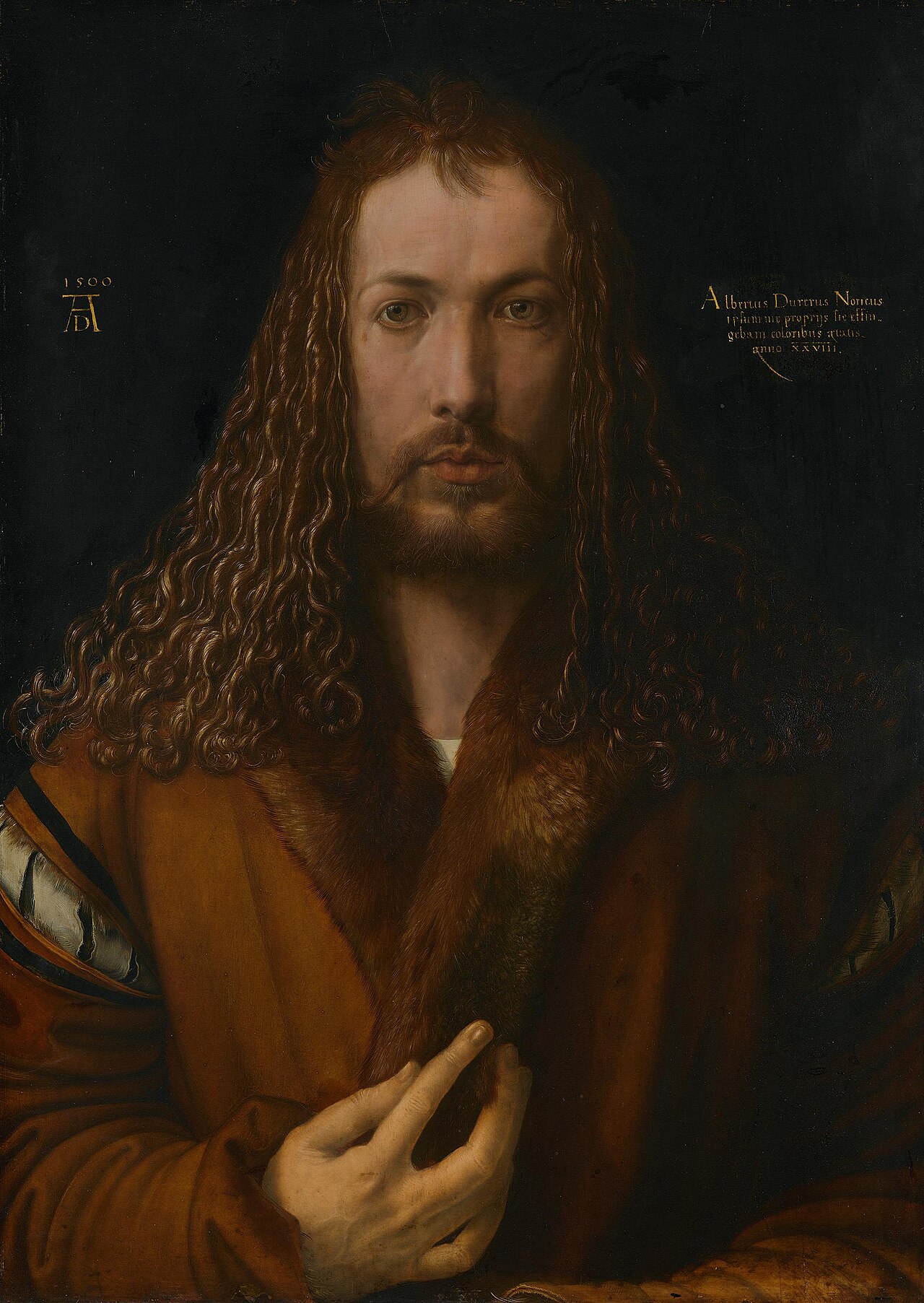 Painting
Primary source
Self-Portrait with Fur-Trimmed Robe
Albrecht Dürer · 1500
 Painting
Primary source
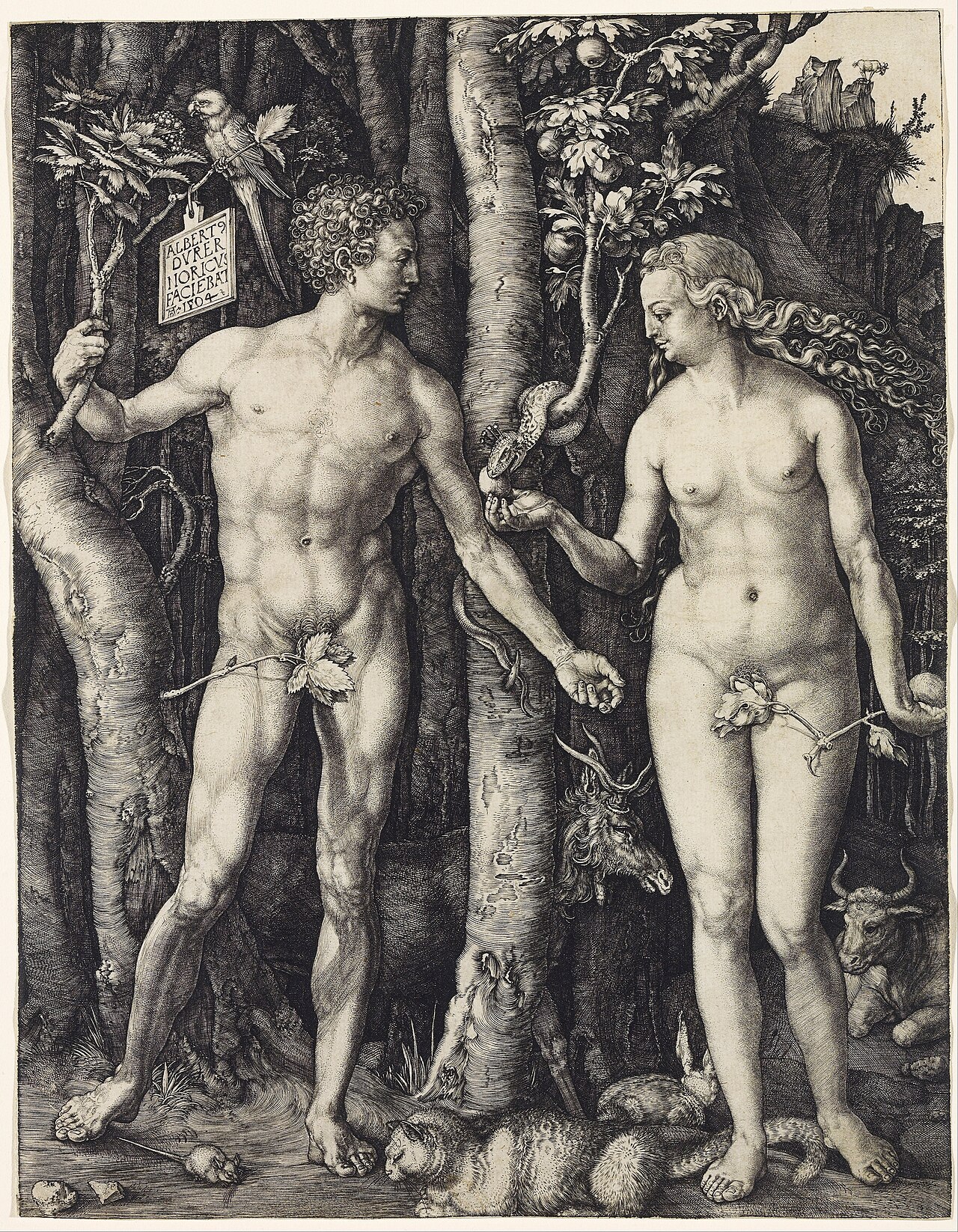
Adam and Eve
Albrecht Dürer · 1504
 Painting
Primary source
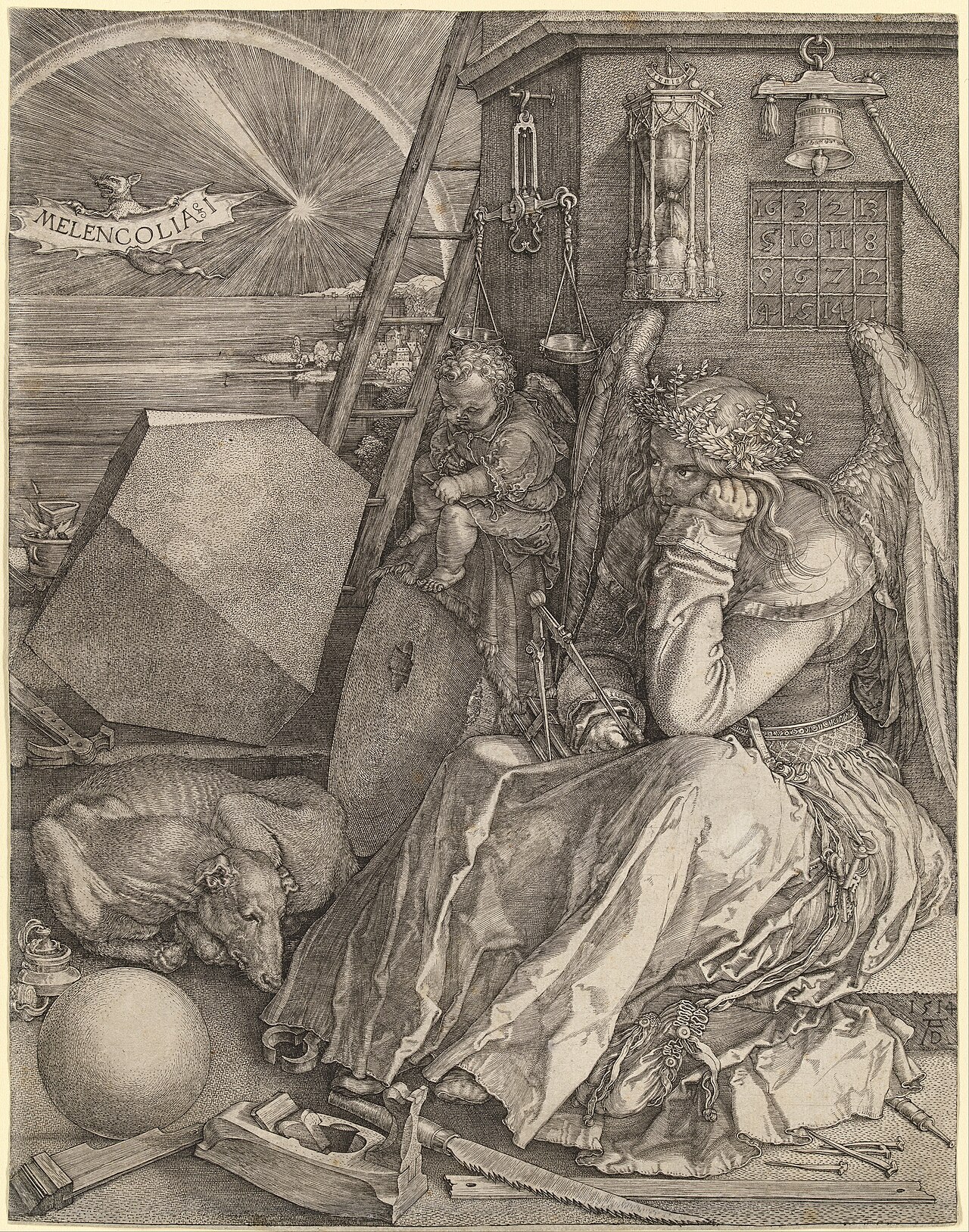
Melencolia I
Albrecht Dürer · 1514
 Painting
Primary source
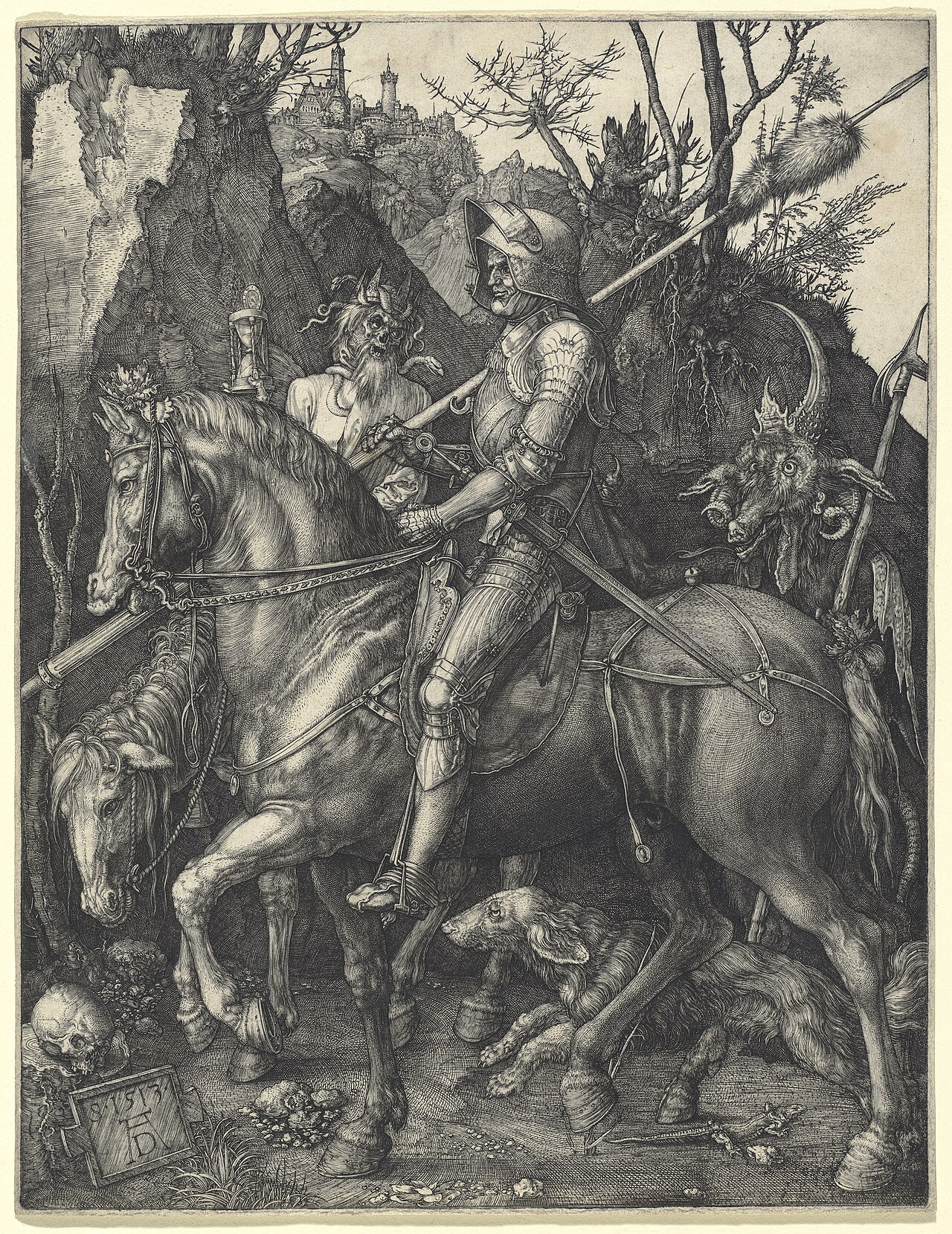
Knight, Death and the Devil
Albrecht Dürer · 1513
 Painting
Primary source
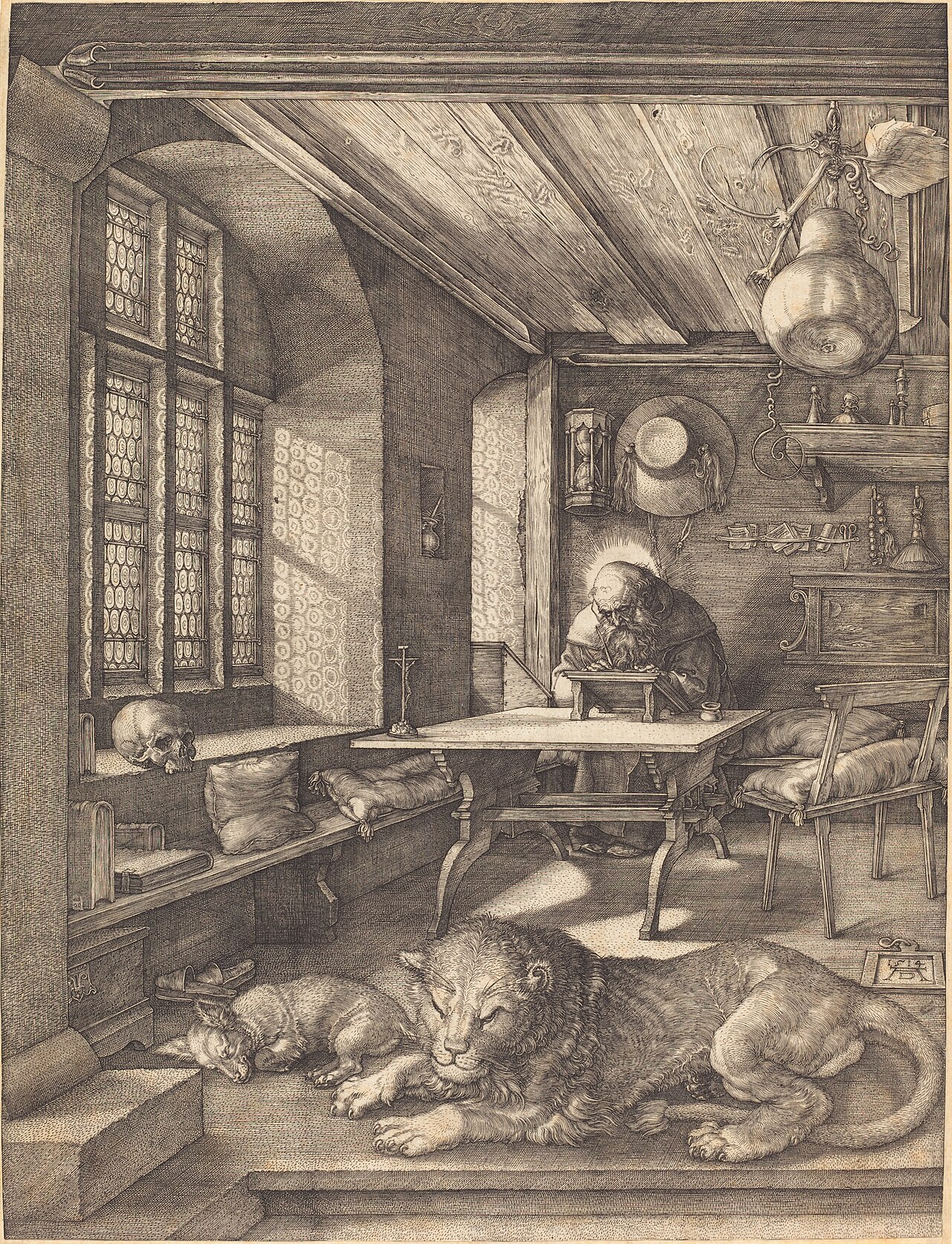
St. Jerome in His Study
Albrecht Dürer · 1514
Ready when you are
Start chatting with Albrecht Dürer now.
20 messages free · No credit card · Available in 50+ languages.