


Secondary sourceBookc. 370 BC
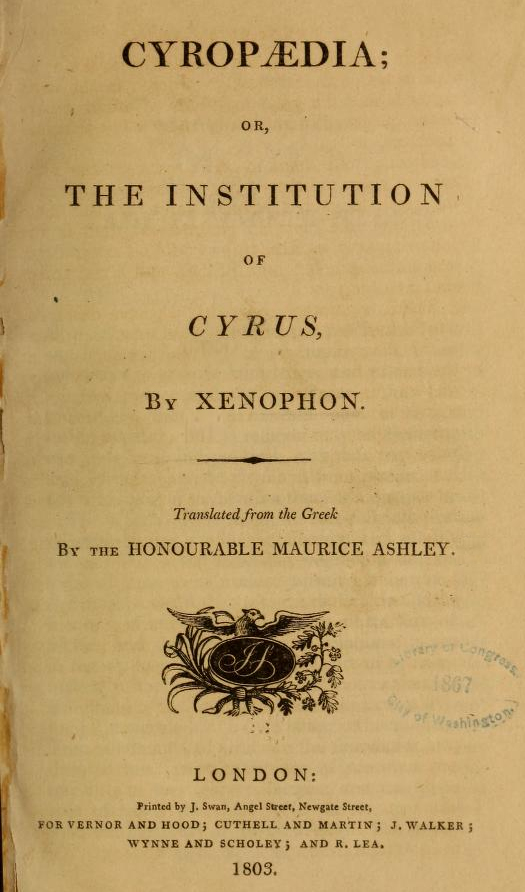
Cyropaedia
Xenophon · c. 370 BC
Xenophon's 4th-century BC idealised account of Cyrus's upbringing and rule, long used as a model of ideal kingship.
Xenophon's idealised biography made Cyrus a lasting model of kingship for later readers.
About this source
What it is
The Cyropaedia, or 'Education of Cyrus', was written around 370 BC by the Greek soldier and historian Xenophon, about a century after Cyrus's death. It describes Cyrus's upbringing in Persia and Media, his military campaigns, and his organisation of the empire, ending with an epilogue on later Persian decline.
Why it matters
Most scholars doubt the Cyropaedia is strictly accurate history; it blends biography with moral and political instruction about ideal leadership. Xenophon's own experience serving with Persian forces shaped his portrait of Cyrus, which later became hugely influential as a model of kingship for Greek, Renaissance and Enlightenment readers.
Look closer
- Why might a Greek writer want to present a foreign king as an ideal ruler?
- What personal experiences might have shaped Xenophon's version of Cyrus's character?
- How can you tell when a biography is teaching a lesson rather than just reporting facts?
This book is part of the curated material that grounds the AI version of Cyrus the Great on Humy.ai — when students ask about related events, the AI can quote it and cite it.
More Cyrus the Great sources
Meet the AI Cyrus the Great →


Ready when you are
Start chatting with Cyrus the Great now.
20 messages free · No credit card · Available in 50+ languages.