


Primary sourceDocument1791
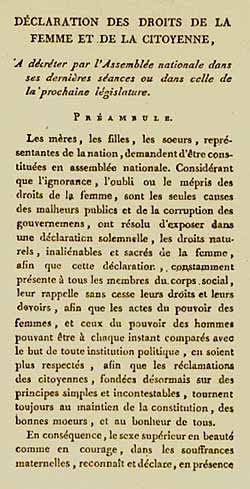
Declaration of the Rights of Woman and the Female Citizen
Olympe de Gouges · 1791
Olympe de Gouges's 1791 rewriting of the Declaration of the Rights of Man, demanding equal rights for women.
Her most famous written work, directly rewriting the 1789 Declaration to demand equal rights for women.
About this source
What it is
Written by Olympe de Gouges and published in September 1791, this document rewrites the articles of the 1789 Declaration of the Rights of Man to apply them to women. It was dedicated to Queen Marie Antoinette.
Why it matters
It shows that de Gouges saw the Revolution's promise of 'universal' rights as incomplete, since women were excluded from citizenship and voting. The text argued that if women could be punished by the state, they should also share its rights — including the famous line about the right to mount the scaffold and the rostrum. It stands as one of the earliest clear statements of feminist political thought from the Revolution.
Look closer
- How closely does the wording follow the 1789 Declaration of the Rights of Man?
- Why might de Gouges have dedicated it to the Queen?
- What does the preamble say caused 'public misfortunes'?
This document is part of the curated material that grounds the AI version of Olympe de Gouges and Mary Wollstonecraft on Humy.ai — when students ask about related events, the AI can quote it and cite it.
More Olympe de Gouges sources
Meet the AI Olympe de Gouges →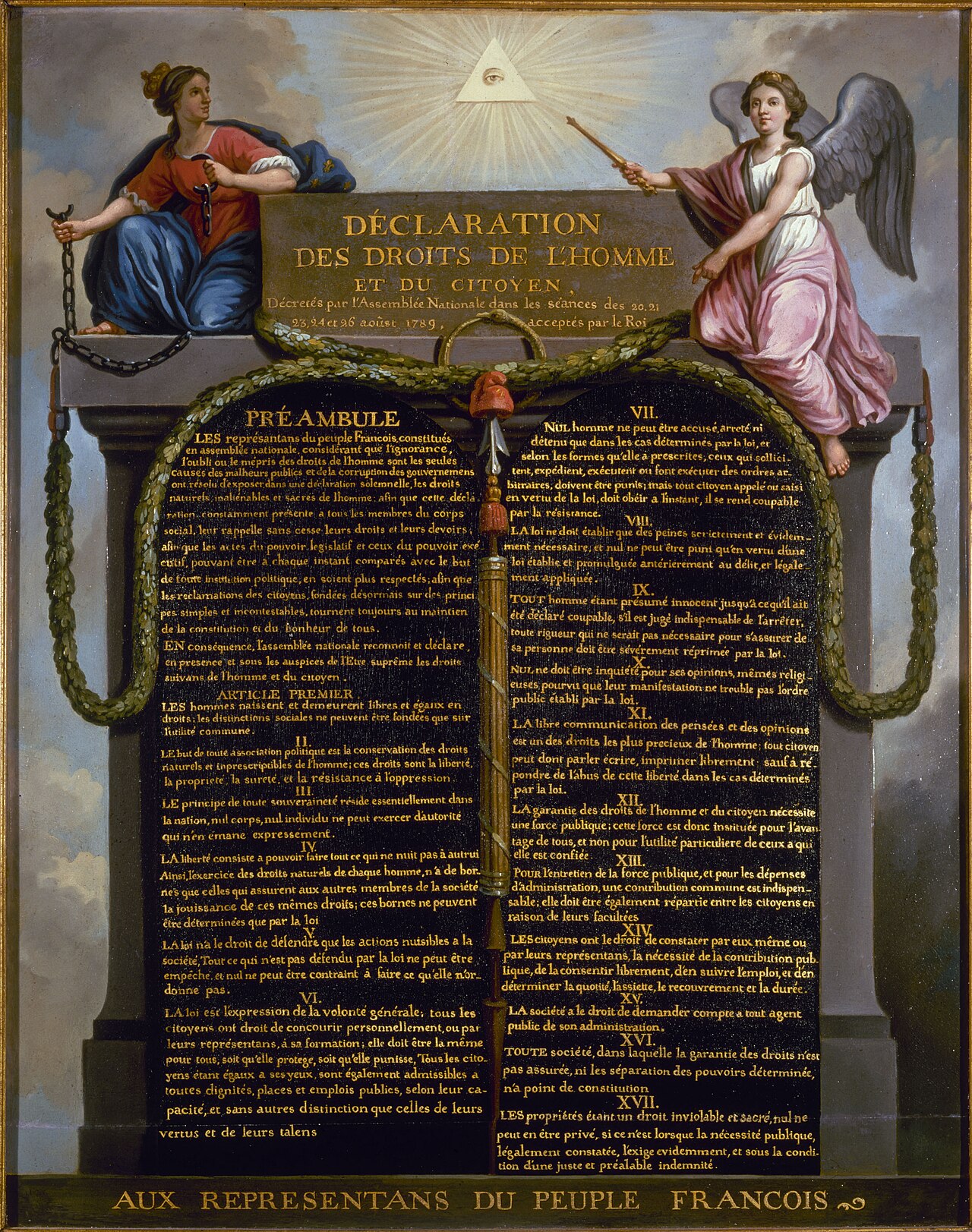 Document
Primary source
Declaration of the Rights of Man and of the Citizen
National Constituent Assembly · 1789
 Document
Primary source
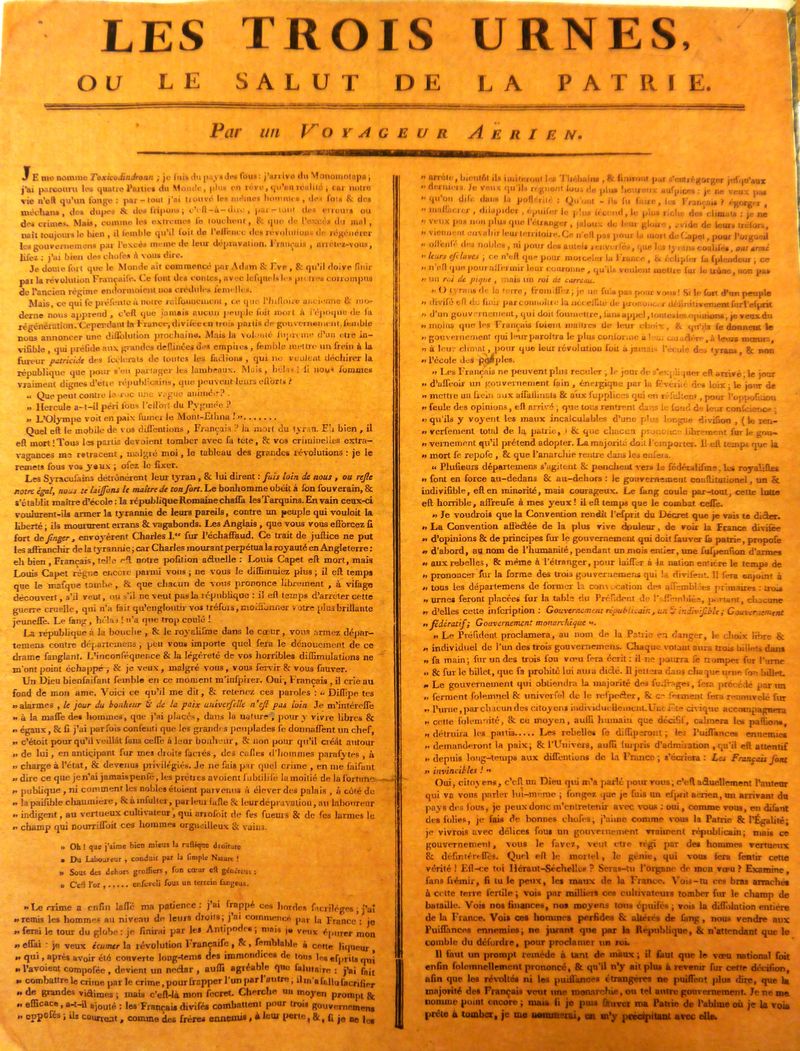
Les Trois Urnes, ou le Salut de la Patrie, par un voyageur aérien
Olympe de Gouges · 1793
 Painting
Primary source
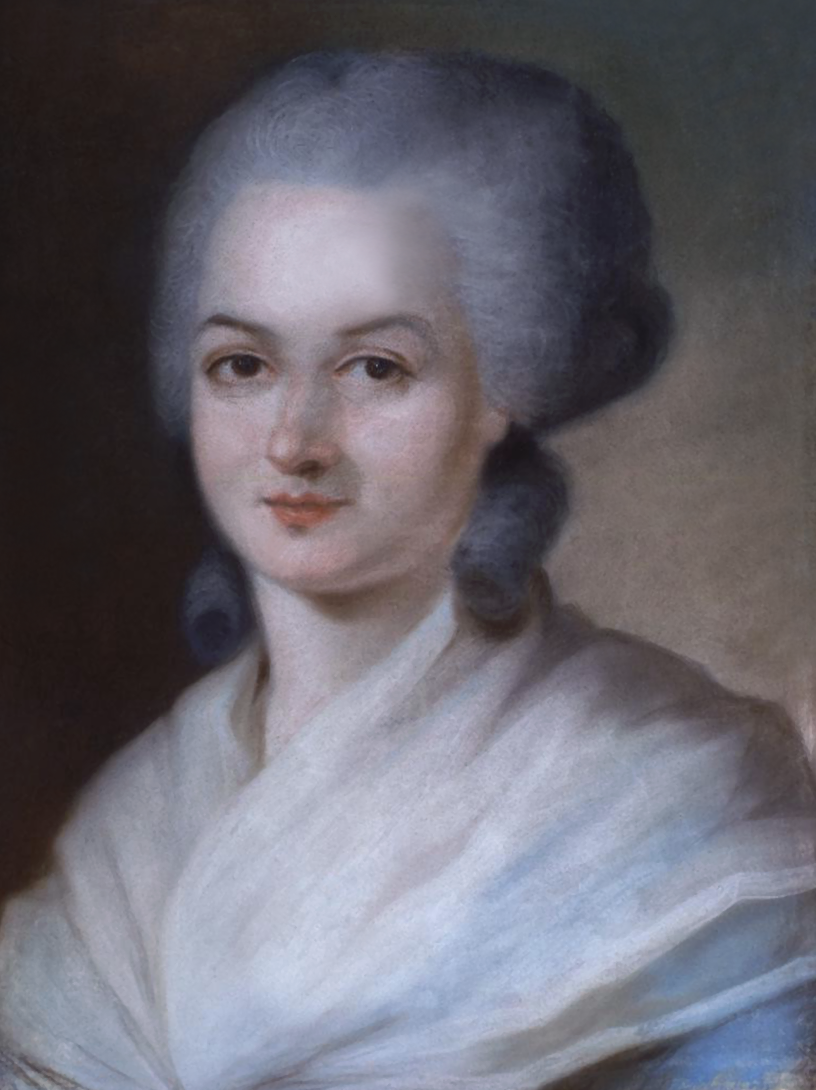
Portrait of Olympe de Gouges
Alexander Kucharsky
 Document
Primary source
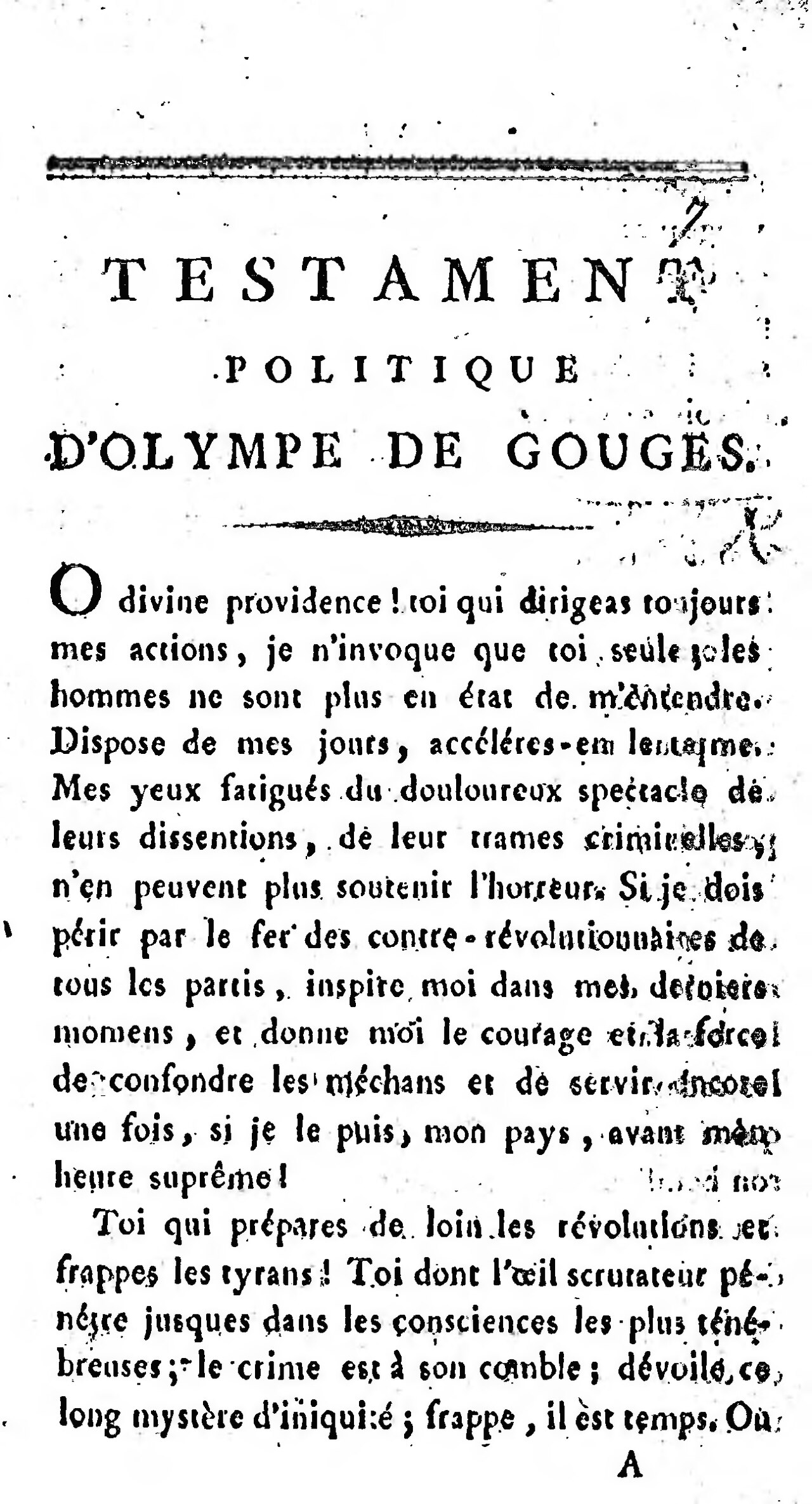
Testament politique d'Olympe de Gouges
Olympe de Gouges · June 1793
 Document
Primary source
Remarques patriotiques
Olympe de Gouges · 1789
Ready when you are
Start chatting with Olympe de Gouges now.
20 messages free · No credit card · Available in 50+ languages.