


Primary sourceDocument4 July 1776
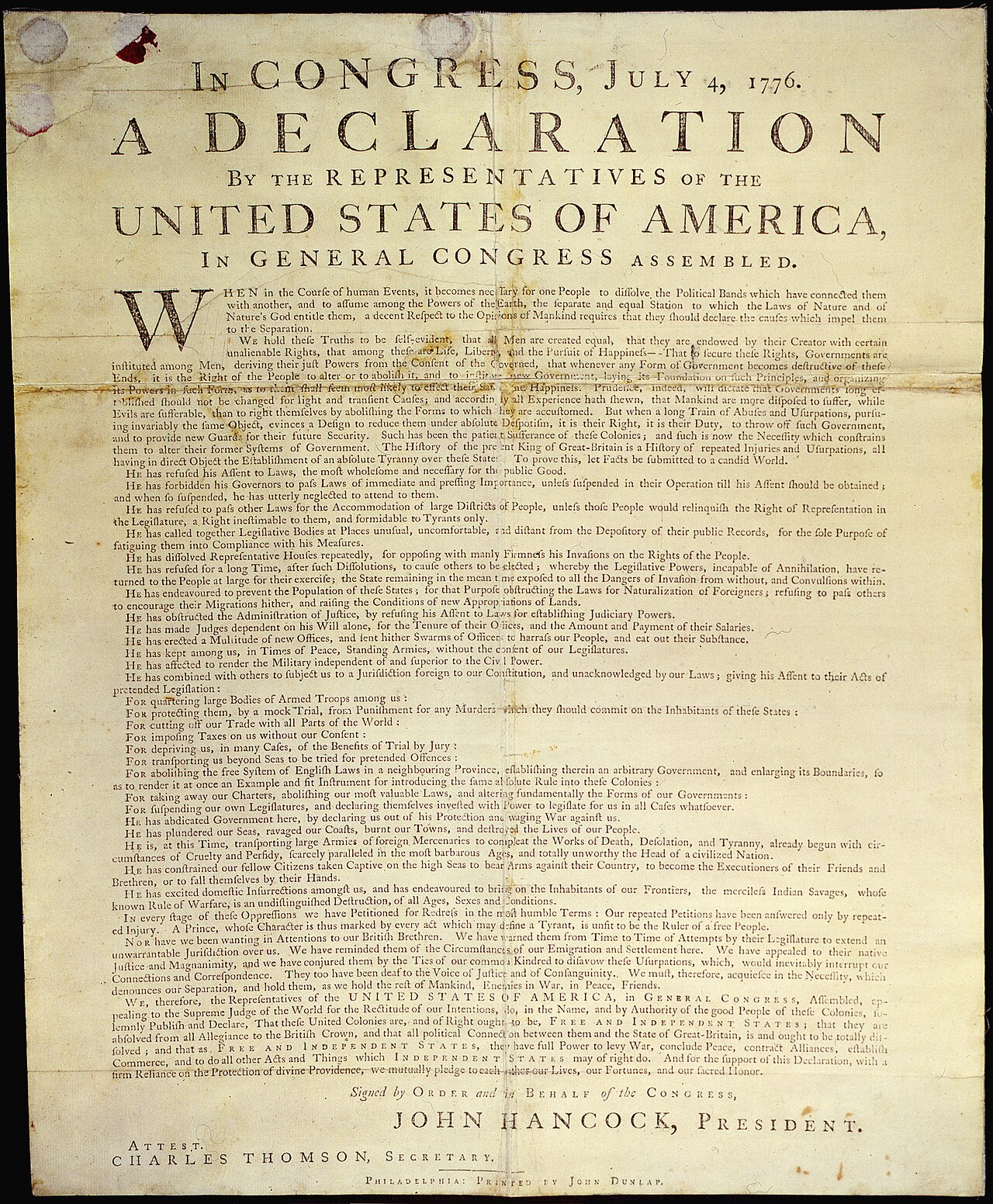
Dunlap Broadside of the Declaration of Independence
John Dunlap · 4 July 1776
The first printed version of the Declaration of Independence, printed in Philadelphia by John Dunlap for the Continental Congress in July 1776.
This printed Declaration carries the decision for independence that Samuel Adams helped adopt as a delegate.
About this source
What it is
This is a printed broadside of the Declaration of Independence, headed "In Congress, July 4, 1776." It is signed by John Hancock, President, and attested by Charles Thomson, Secretary. The National Archives describes it as the first printed version of the Declaration and notes that John Dunlap of Philadelphia was printer to the Continental Congress. The National Archives holds the original, and this image is a scan of it. The record says the document was drafted for the most part by Thomas Jefferson.
Why it matters
The Declaration justified breaking the colonial ties to Great Britain and set out a basic philosophy of government and a list of grievances against the Crown. Samuel Adams was one of the delegates who voted for independence, so this printed text is the public form of the decision he helped make. The document also connects Jefferson, Hancock, Thomson and Dunlap to the making of the nation.
Look closer
- Why would the Congress want the Declaration printed and distributed quickly?
- Who is named as the authority behind the text, and why does the heading matter?
- Whose experiences are absent from a document that speaks for "the Representatives of the United States"?
This document is part of the curated material that grounds the AI version of Samuel Adams and Arthur St. Clair on Humy.ai — when students ask about related events, the AI can quote it and cite it.
More Samuel Adams sources
Meet the AI Samuel Adams →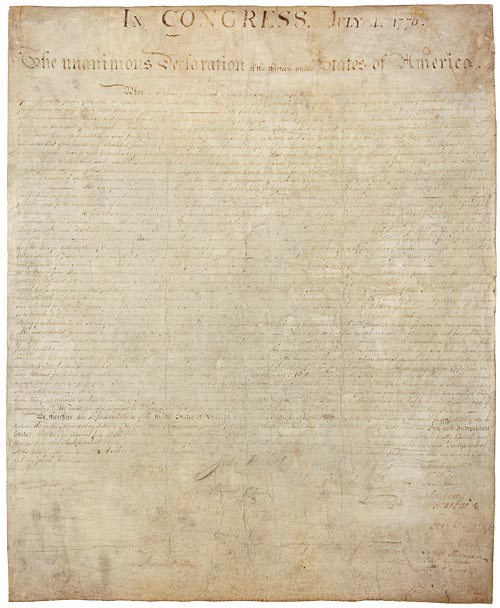 Document
Primary source
Declaration of Independence
Continental Congress (drafted by Thomas Jefferson) · 1776
 Document
Primary source
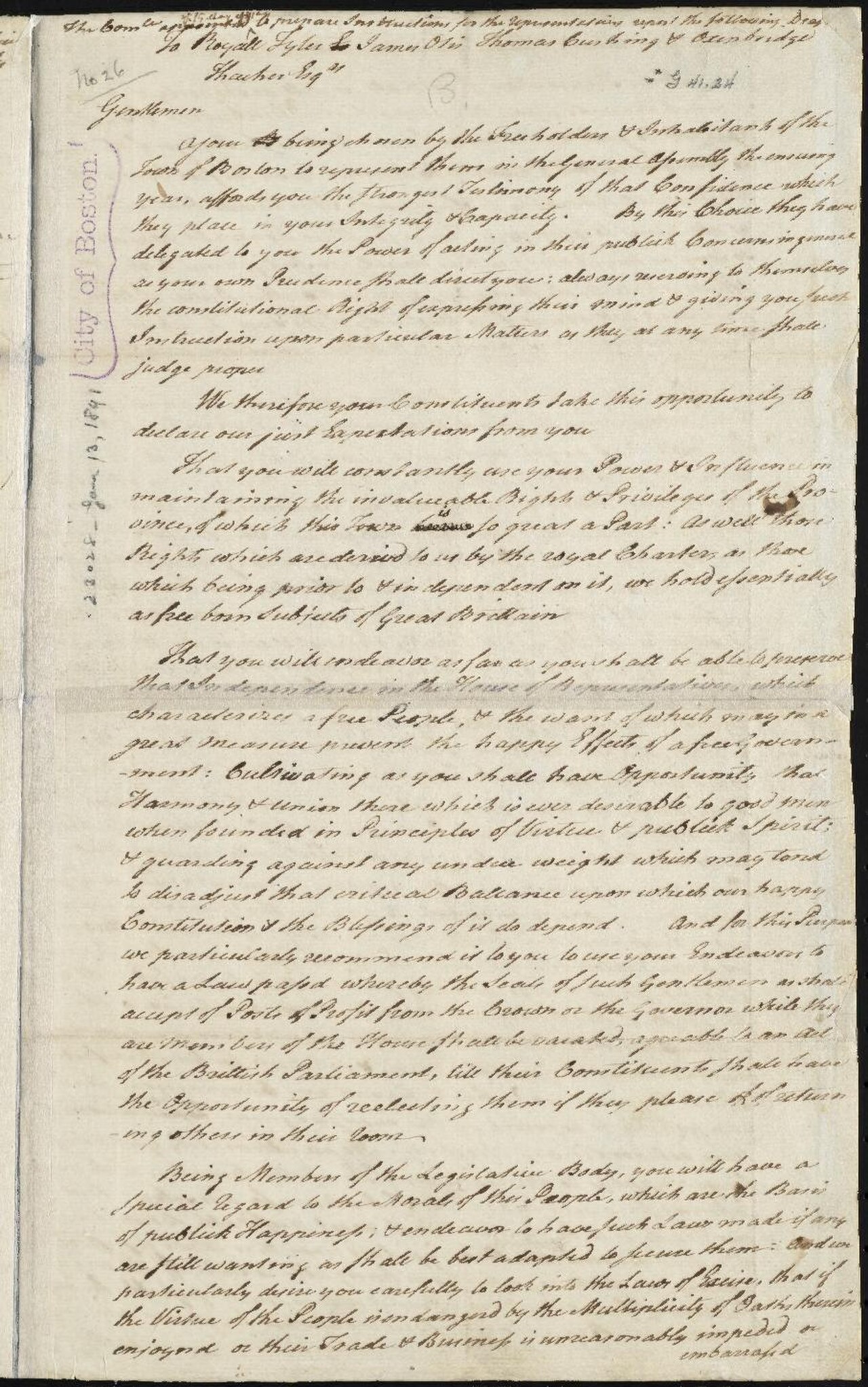
Instructions of the Town of Boston to its Representatives
Samuel Adams · May 1764
 Painting
Primary source
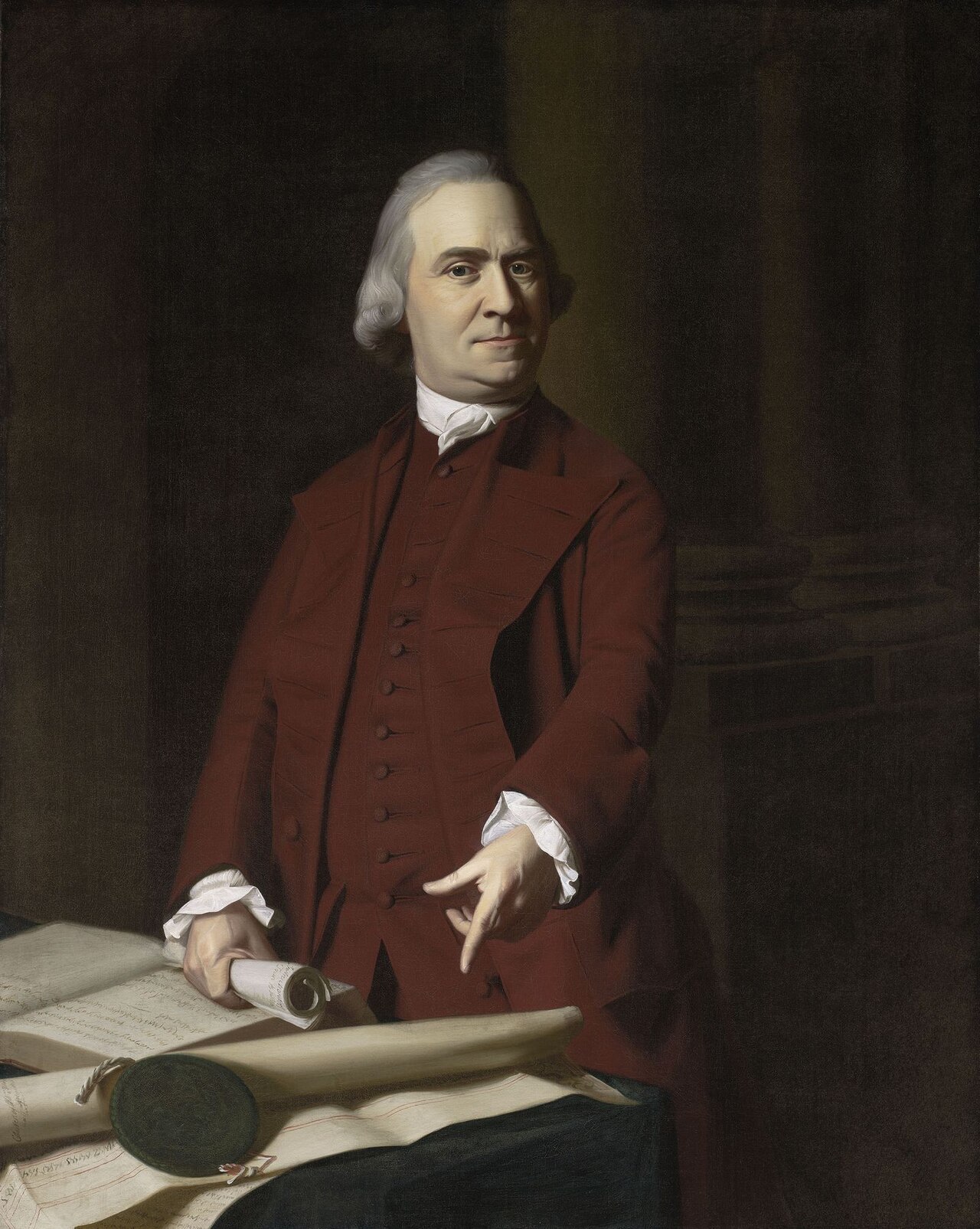
Samuel Adams
John Singleton Copley · 1772
 Document
Primary source
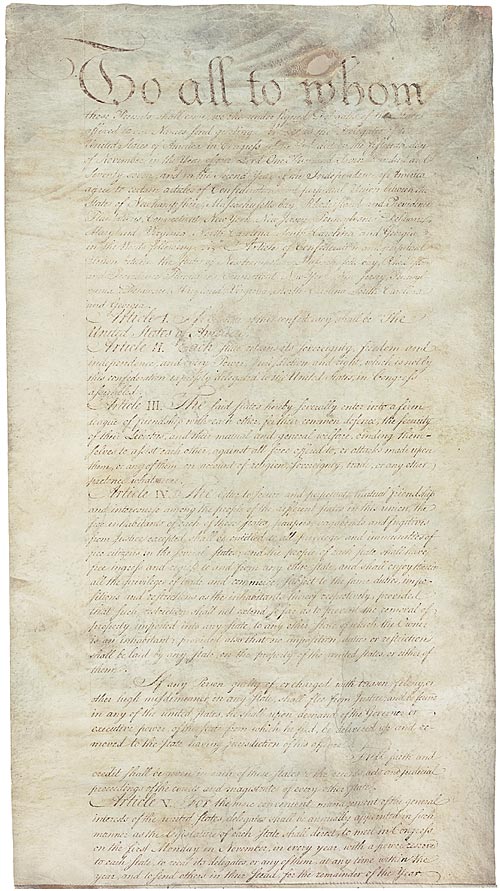
Articles of Confederation
Continental Congress · 1777
 Document
Primary source
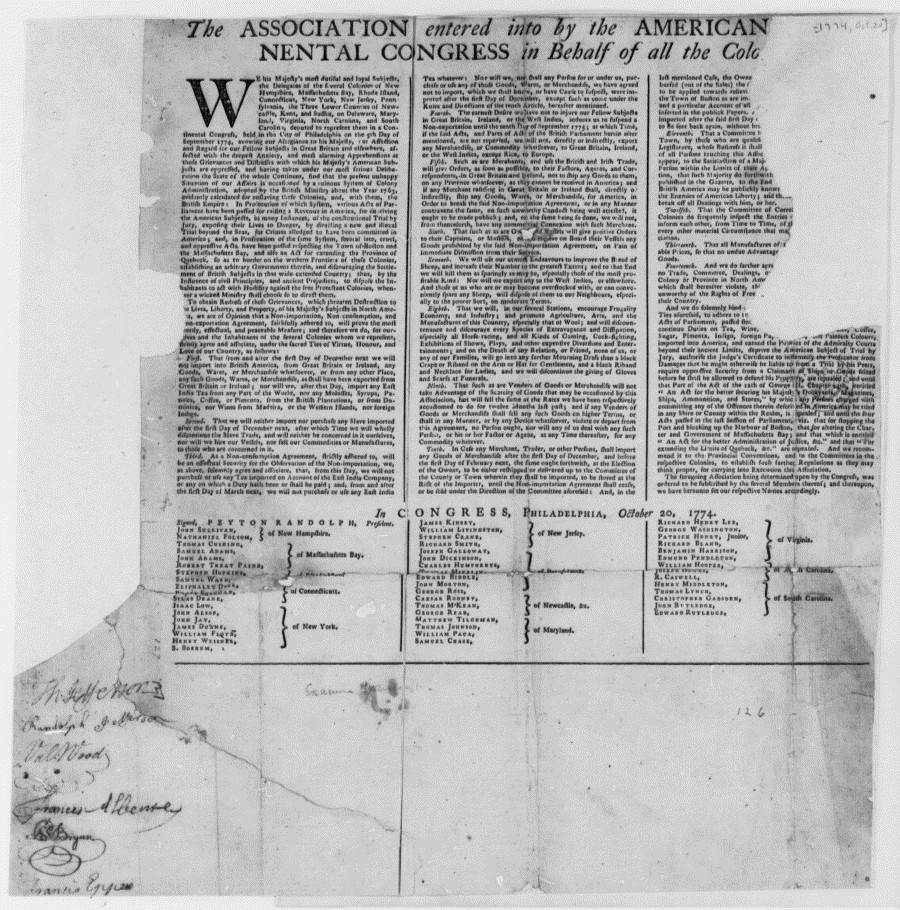
Continental Association
First Continental Congress · 20 October 1774
Ready when you are
Start chatting with Samuel Adams now.
20 messages free · No credit card · Available in 50+ languages.