


Primary sourcePainting19th century
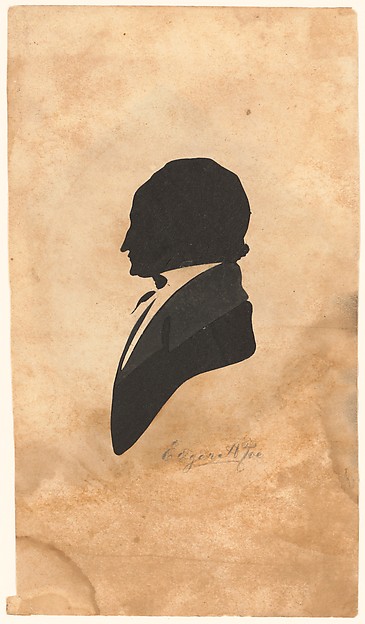
Edgar Allan Poe (cut-paper silhouette)
19th century
An anonymous 19th-century cut-paper silhouette of Poe, held by The Metropolitan Museum of Art.
It is a 19th-century likeness of Poe, showing how his appearance was recorded during his era.
About this source
What it is
This is a cut-paper silhouette, a black profile of a man facing left on a tan, mottled paper background. He wears a high-collared jacket and cravat, and a faint cursive signature appears below the figure. The maker is listed as anonymous, American, 19th century. The object is held by The Metropolitan Museum of Art and was given through the Mary Martin Fund in 1960. The record names it as a likeness of Poe, and the museum's catalogue gives only the broad date of the 19th century.
Why it matters
Silhouettes were a popular and inexpensive way to record a person's likeness in the 19th century, before photography became common. This one shows that Poe was among the people whose profile was cut and kept in that period. Because the maker is unknown, it also shows how many everyday portraits from the past have no name attached to them.
Look closer
- What can you learn about a person from a profile alone, and what is missing?
- Why might a silhouette have been made instead of a painted portrait in this period?
- Who might have made this likeness, and why might we not know their name?
This painting is part of the curated material that grounds the AI version of Edgar Allan Poe on Humy.ai — when students ask about related events, the AI can quote it and cite it.
More Edgar Allan Poe sources
Meet the AI Edgar Allan Poe →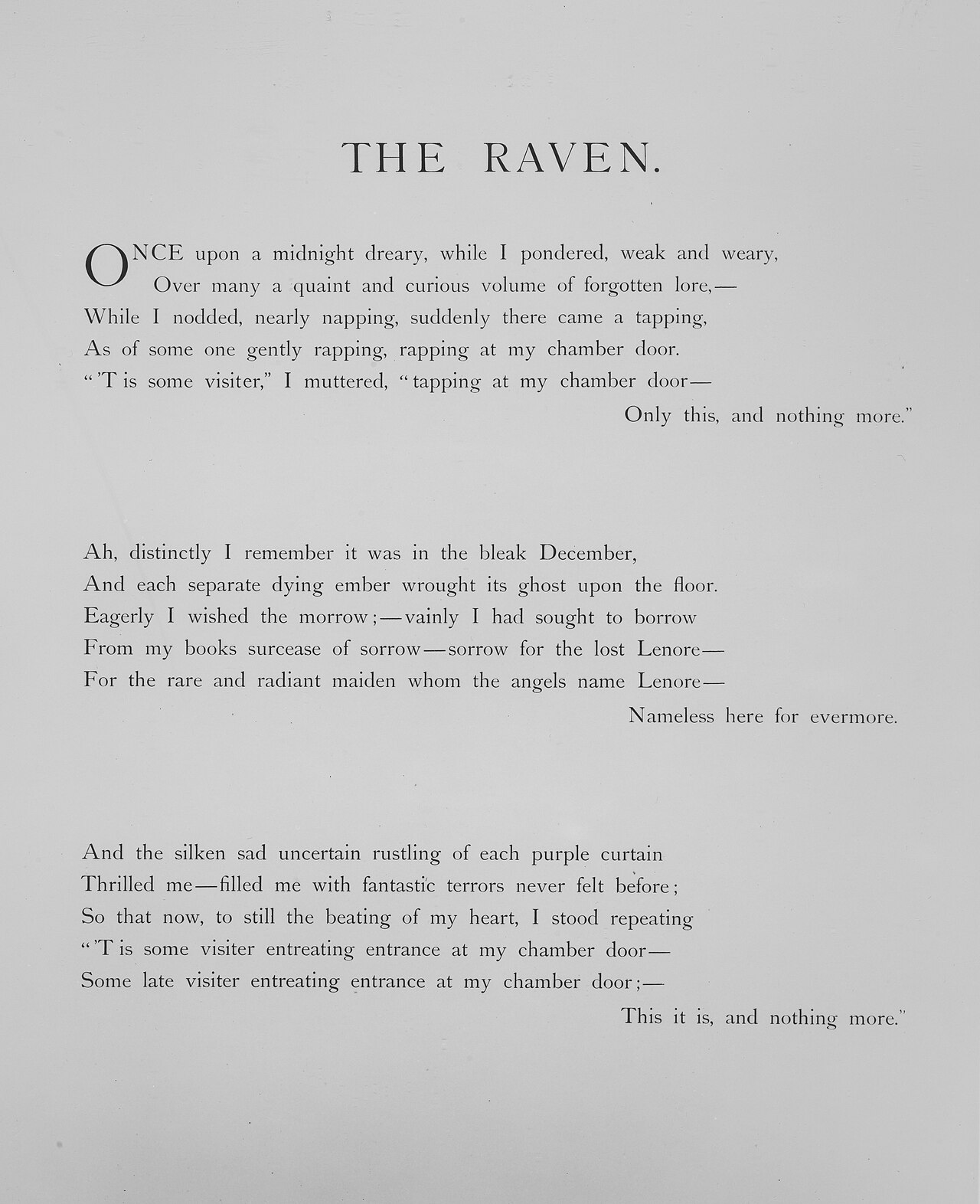 Book
Primary source
The Raven
Edgar Allan Poe · 1845
 Book
Primary source
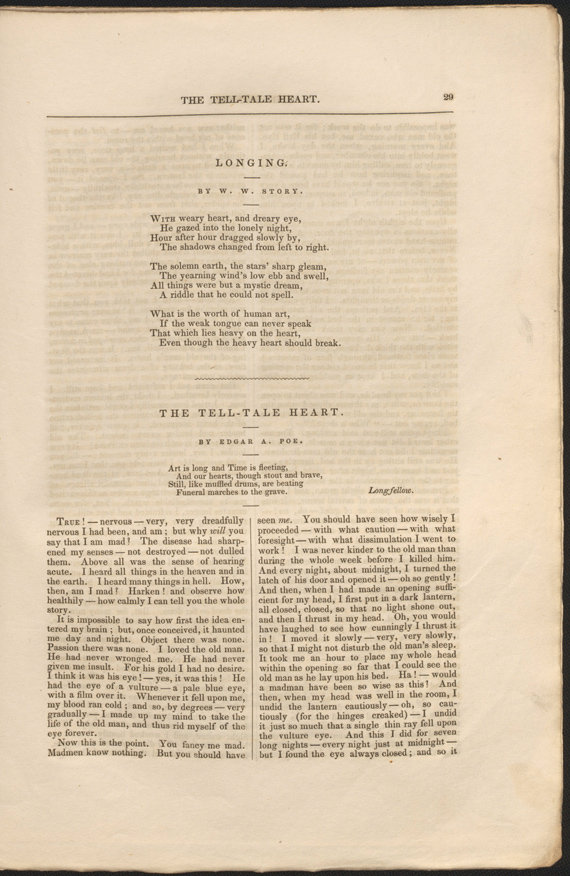
The Tell-Tale Heart
Edgar Allan Poe · 1843
 Book
Primary source
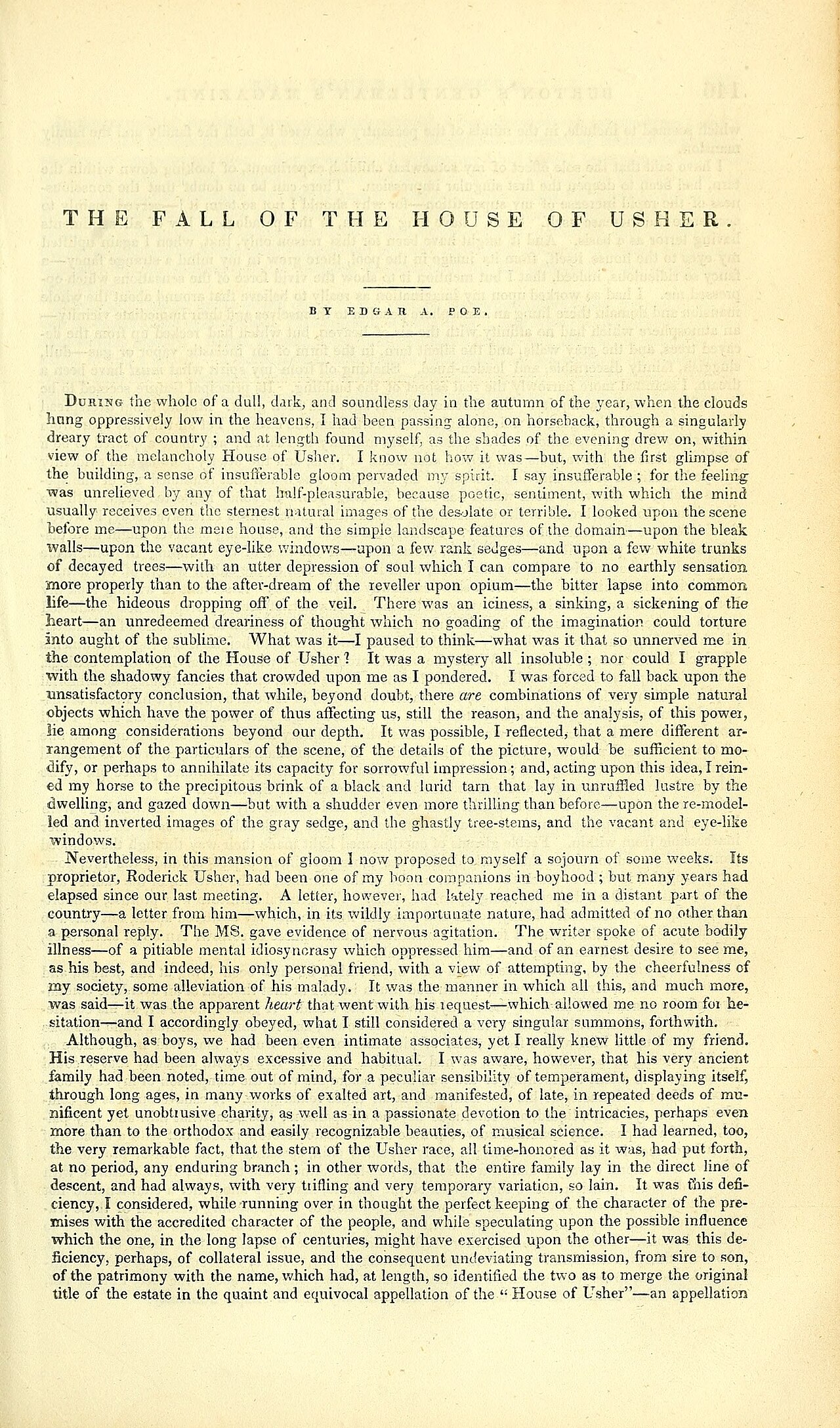
The Fall of the House of Usher
Edgar Allan Poe · 1839
 Book
Primary source
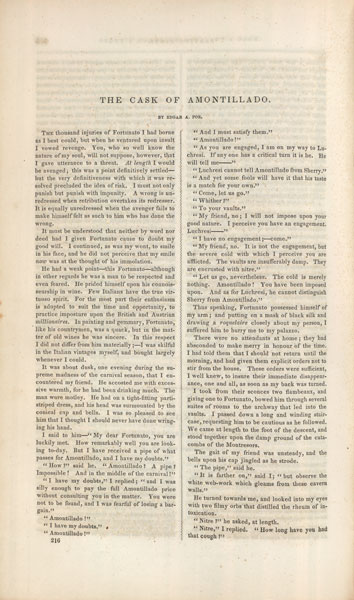
The Cask of Amontillado
Edgar Allan Poe · November 1846
 Book
Primary source
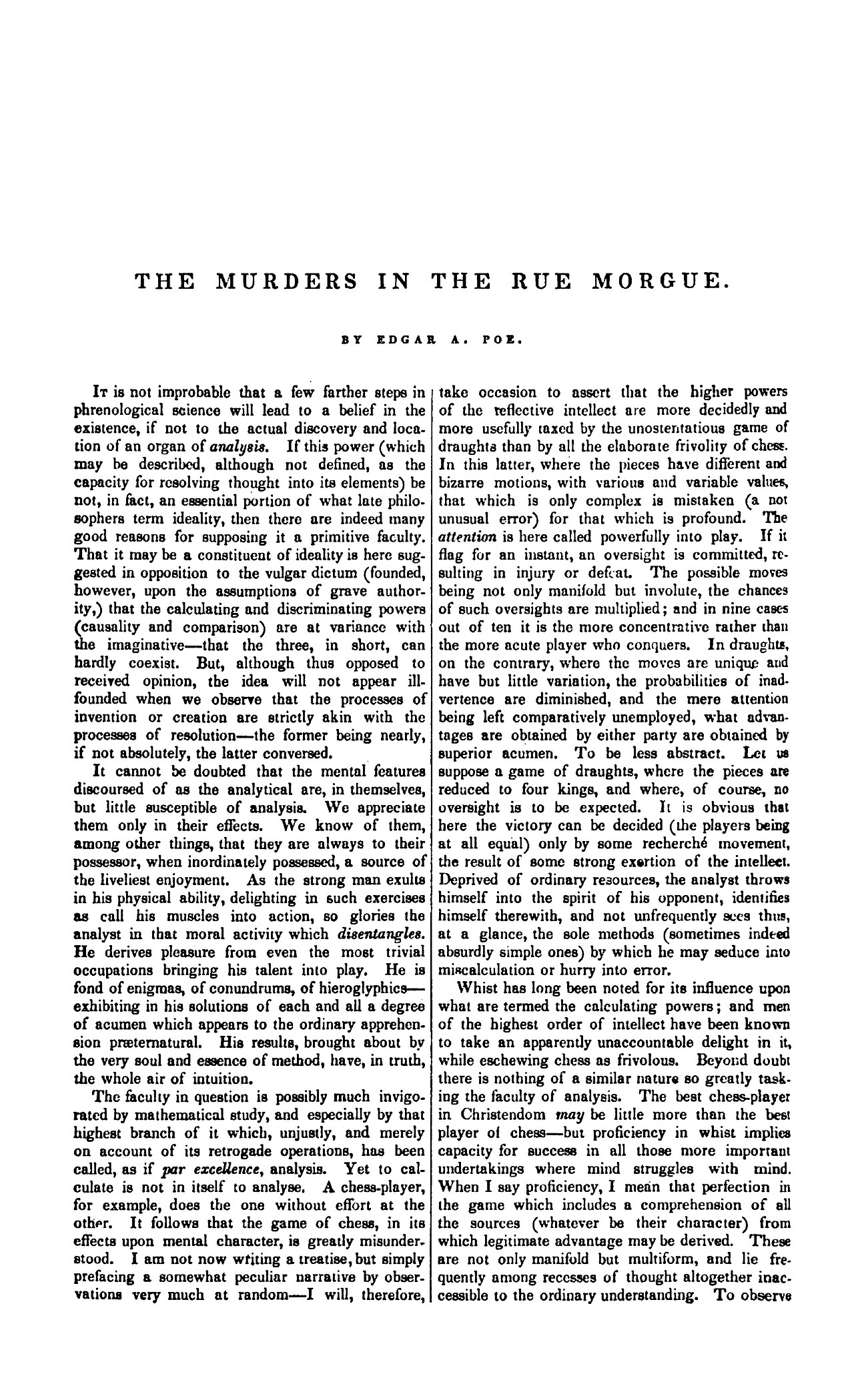
The Murders in the Rue Morgue
Edgar Allan Poe · 1841
Ready when you are
Start chatting with Edgar Allan Poe now.
20 messages free · No credit card · Available in 50+ languages.