


Primary sourceDocument1861
Emancipation Reform of 1861
Alexander II of Russia · 1861
The manifesto and statutes by which Alexander II abolished serfdom across the Russian Empire, freeing over 23 million people.
Alexander II personally signed this manifesto, the central achievement of his reign and the source of his title 'Tsar Liberator'.
About this source
What it is
This is the 1861 Manifesto and accompanying statutes signed by Emperor Alexander II of Russia, which legally ended serfdom throughout the Russian Empire. It freed more than 23 million serfs, giving them rights such as marrying freely, owning property and running businesses.
Why it matters
Serfdom had bound millions of peasants to landowners for generations. Alexander's decision, prepared with reform-minded officials, made him known as the "Tsar Liberator," but the reform required peasants to pay for land through redemption payments, leaving many still burdened by debt and poverty. It reveals both the pressure for change in 19th-century Russia and the limits that rulers placed on reform.
Look closer
- Who benefited most from this reform, and who still faced hardship afterward?
- Why might a ruler choose to grant freedom "from above" rather than wait for change from below?
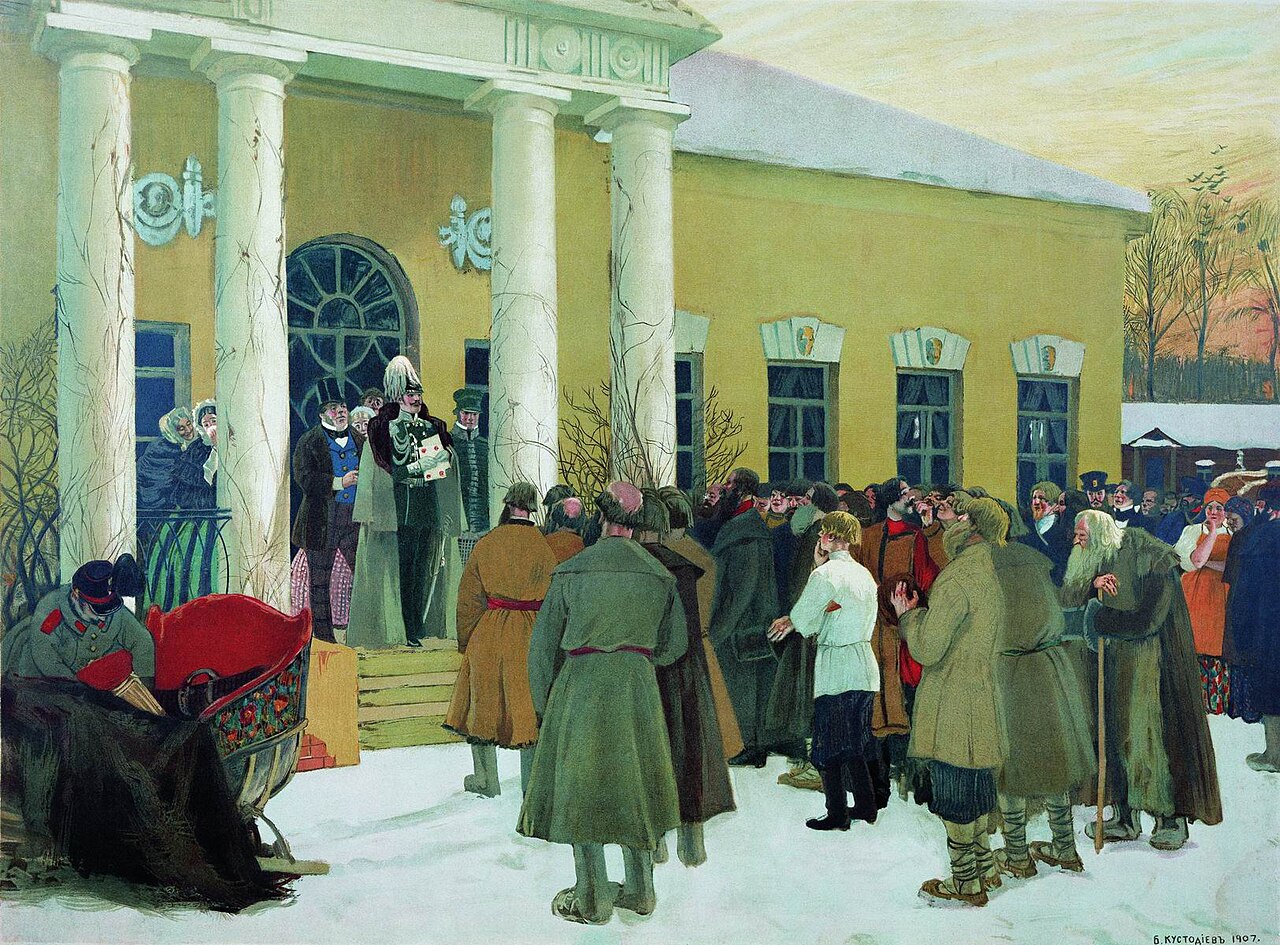
- What does the painting of peasants listening to an official reading the decree suggest about how ordinary people experienced this moment?
This document is part of the curated material that grounds the AI version of Alexander II of Russia on Humy.ai — when students ask about related events, the AI can quote it and cite it.
More Alexander II of Russia sources
Meet the AI Alexander II of Russia → Document
Primary source
Alaska Purchase Treaty
30 March 1867
 Document
Primary source
Treaty of Paris (1856)
30 March 1856
 Document
Secondary source
Loris-Melikov Constitution
Mikhail Loris-Melikov · 13 March 1881
 Photograph
Primary source
Portrait of Alexander II of Russia
Primary source
Treaty of Aigun
28 May 1858
Ready when you are
Start chatting with Alexander II of Russia now.
20 messages free · No credit card · Available in 50+ languages.