


Primary sourcePainting18th century
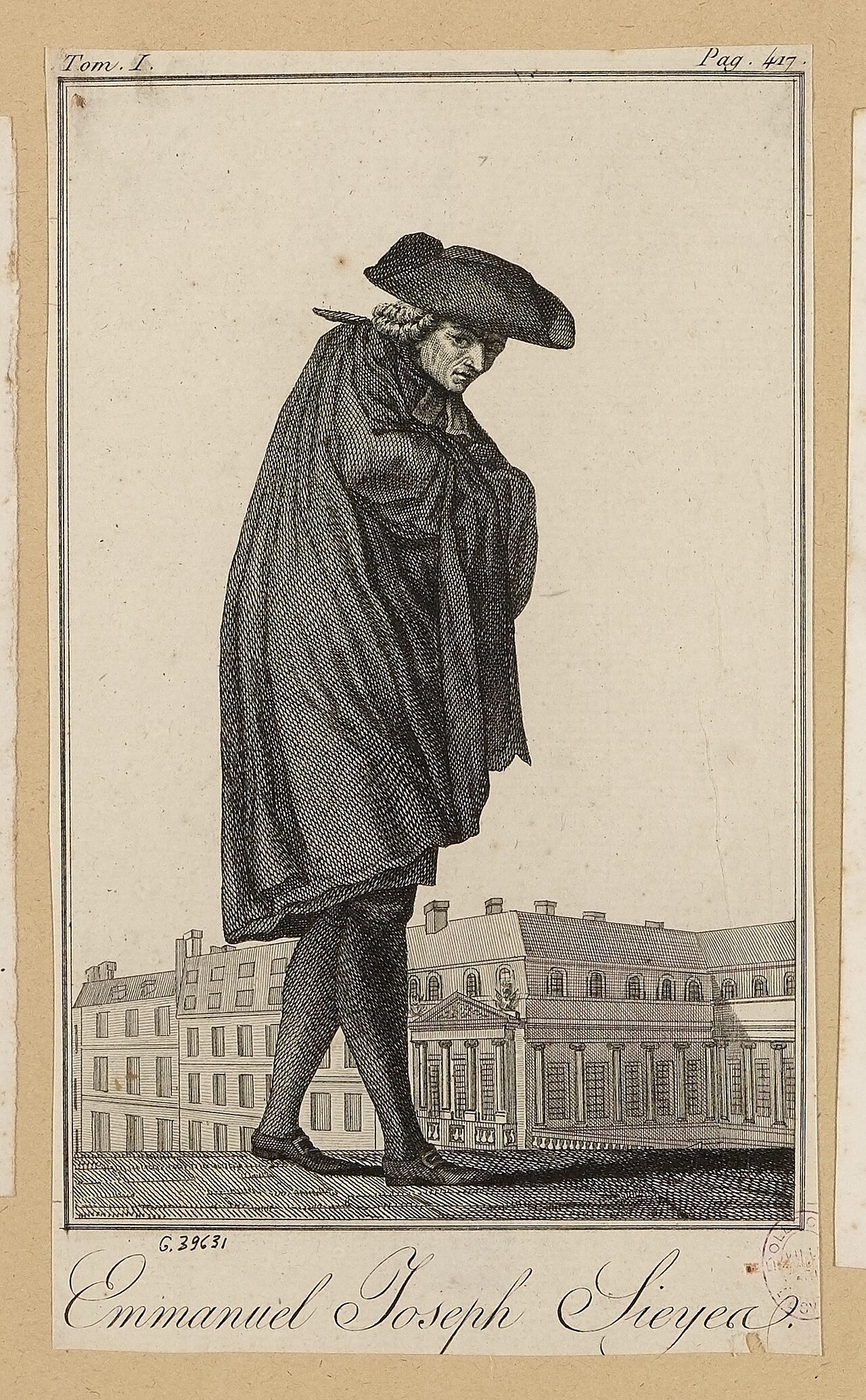
Emmanuel Joseph Sieyès, engraving G.39631
Anonyme, graveur · 18th century
An anonymous 18th-century etching showing Sieyès as a cleric and politician, held by the Musée Carnavalet in Paris.
This etching depicts Sieyès as both clergyman and statesman, reflecting his dual public identity.
About this source
What it is
This etching shows Emmanuel Joseph Sieyès standing in a tricorn hat and long cloak, leaning forward, with a city street scene behind him. It was made by an anonymous engraver and is held by the Musée Carnavalet, Paris, which documents the history of the city.
Why it matters
The image presents Sieyès in an urban Paris setting, reflecting his dual identity as a clergyman ('ecclésiastique') and politician ('homme politique'). Such popular prints helped spread the images of revolutionary figures to the wider public.
Look closer
- What does the street setting behind Sieyès suggest about his public role in Paris?
- Why might an engraver choose to show him standing and leaning forward rather than in a formal seated pose?
- What does the pairing of 'ecclésiastique et homme politique' in the title tell us about how his contemporaries understood him?
This painting is part of the curated material that grounds the AI version of Emmanuel Joseph Sieyès on Humy.ai — when students ask about related events, the AI can quote it and cite it.
More Emmanuel Joseph Sieyès sources
Meet the AI Emmanuel Joseph Sieyès →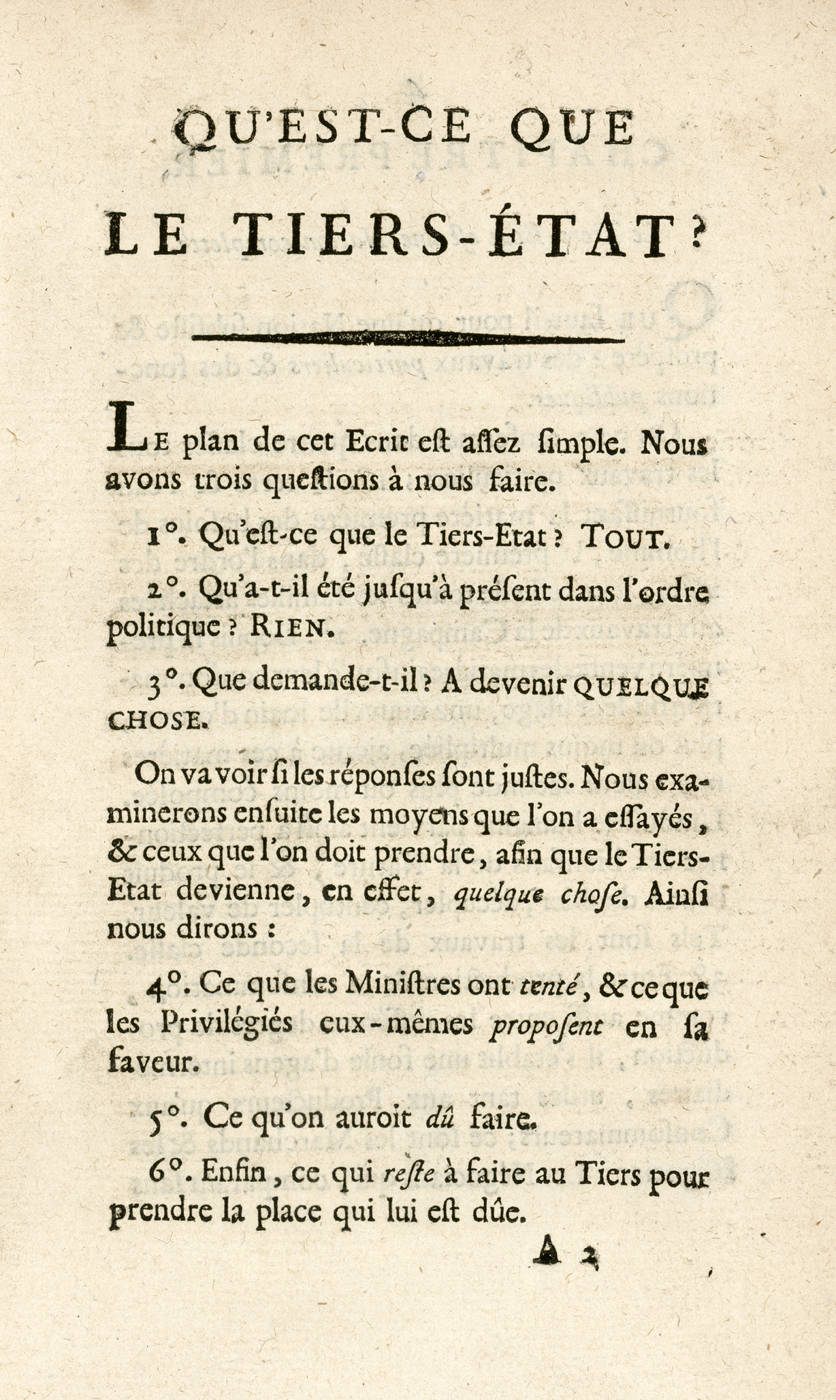 Book
Primary source
What Is the Third Estate?
Emmanuel Joseph Sieyès · January 1789
 Document
Primary source
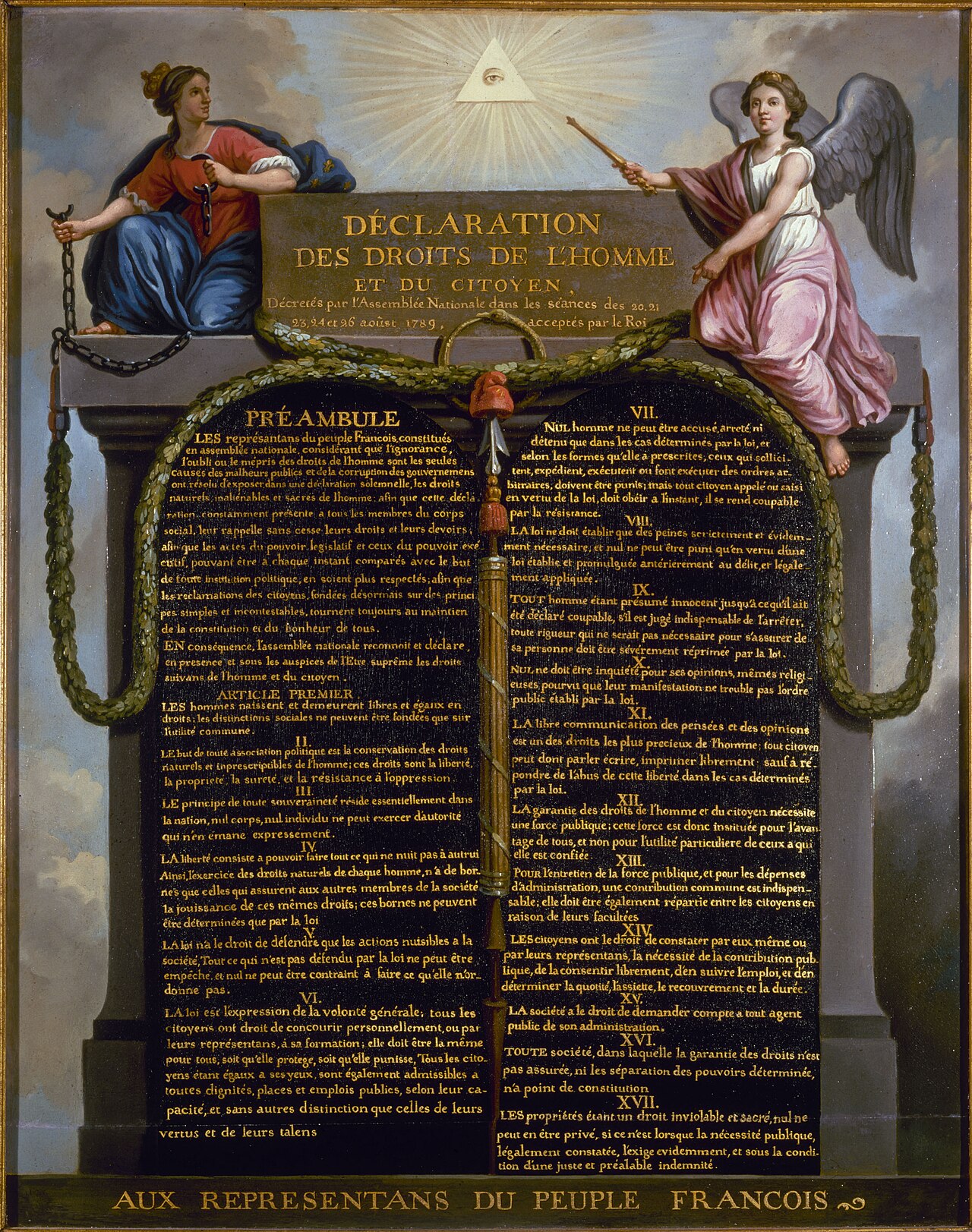
Declaration of the Rights of Man and of the Citizen
National Constituent Assembly · 1789
Primary source
Memoirs of Napoleon Bonaparte, Volume 1
Louis Antoine Fauvelet de Bourrienne
 Book
Primary source
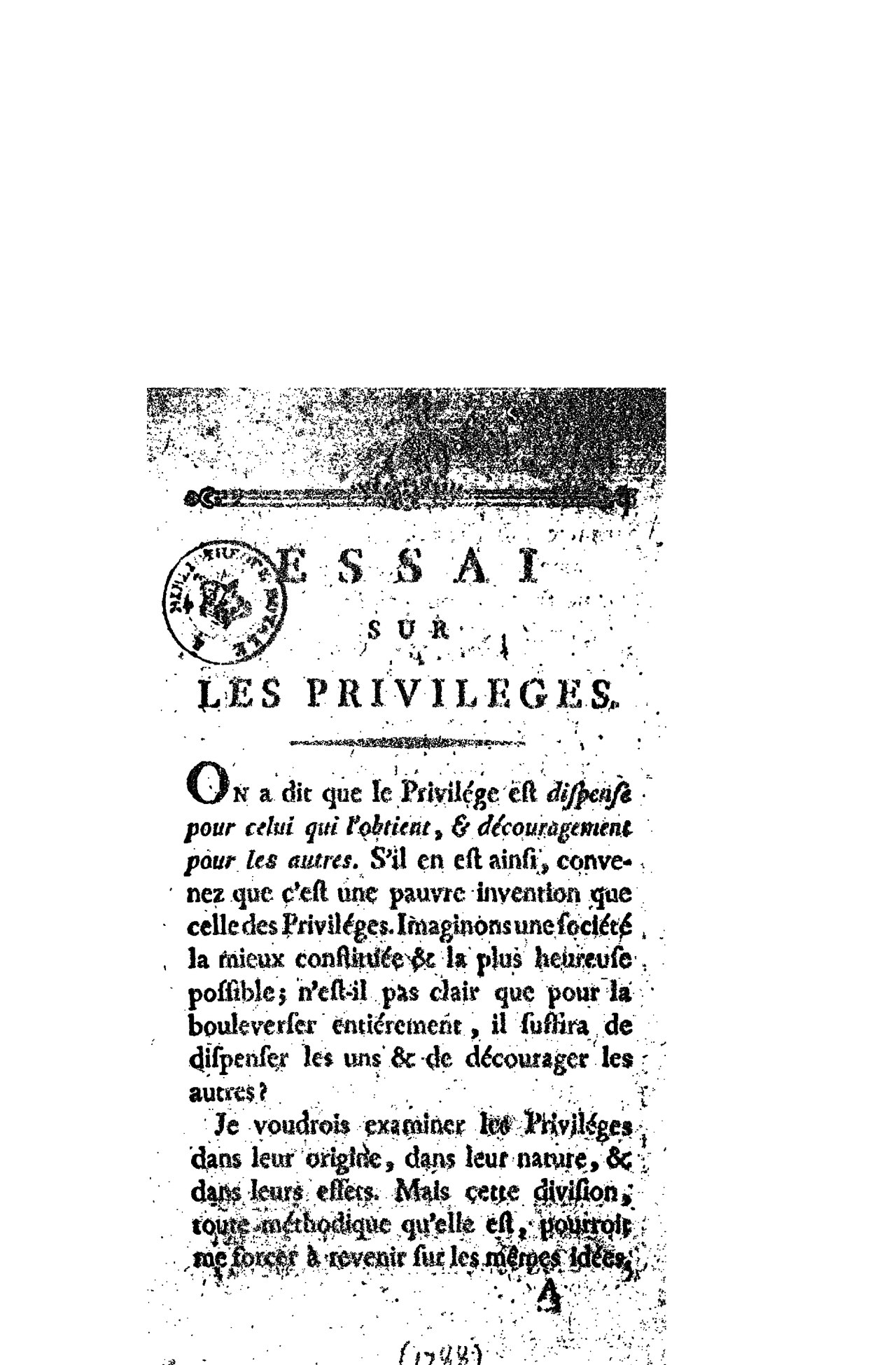
Essai sur les privilèges
Emmanuel Joseph Sieyès · 1788
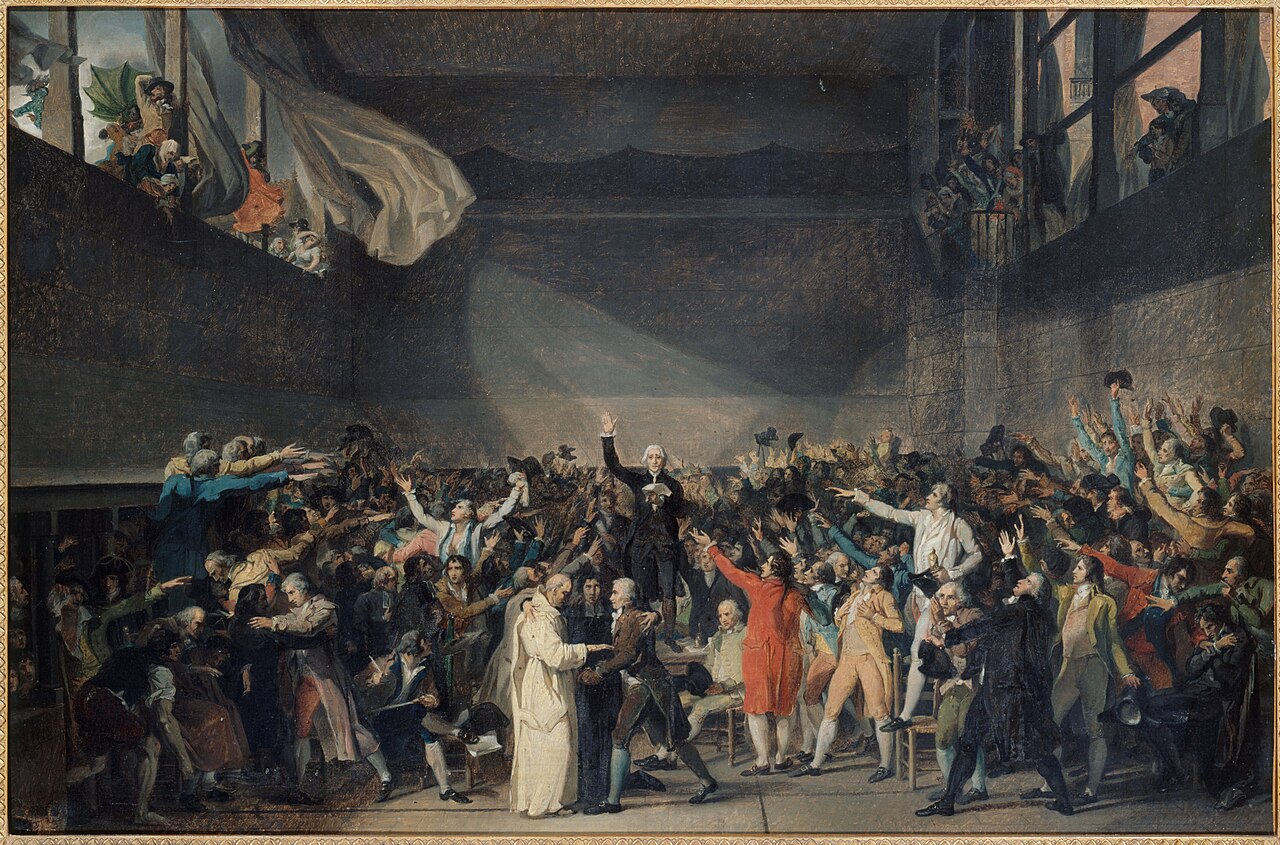 Painting
Secondary source
Tennis Court Oath
Jacques-Louis David · 1791
Ready when you are
Start chatting with Emmanuel Joseph Sieyès now.
20 messages free · No credit card · Available in 50+ languages.