


Primary sourcePainting
Emperor Guangxu
Qing Dynasty Court Painter
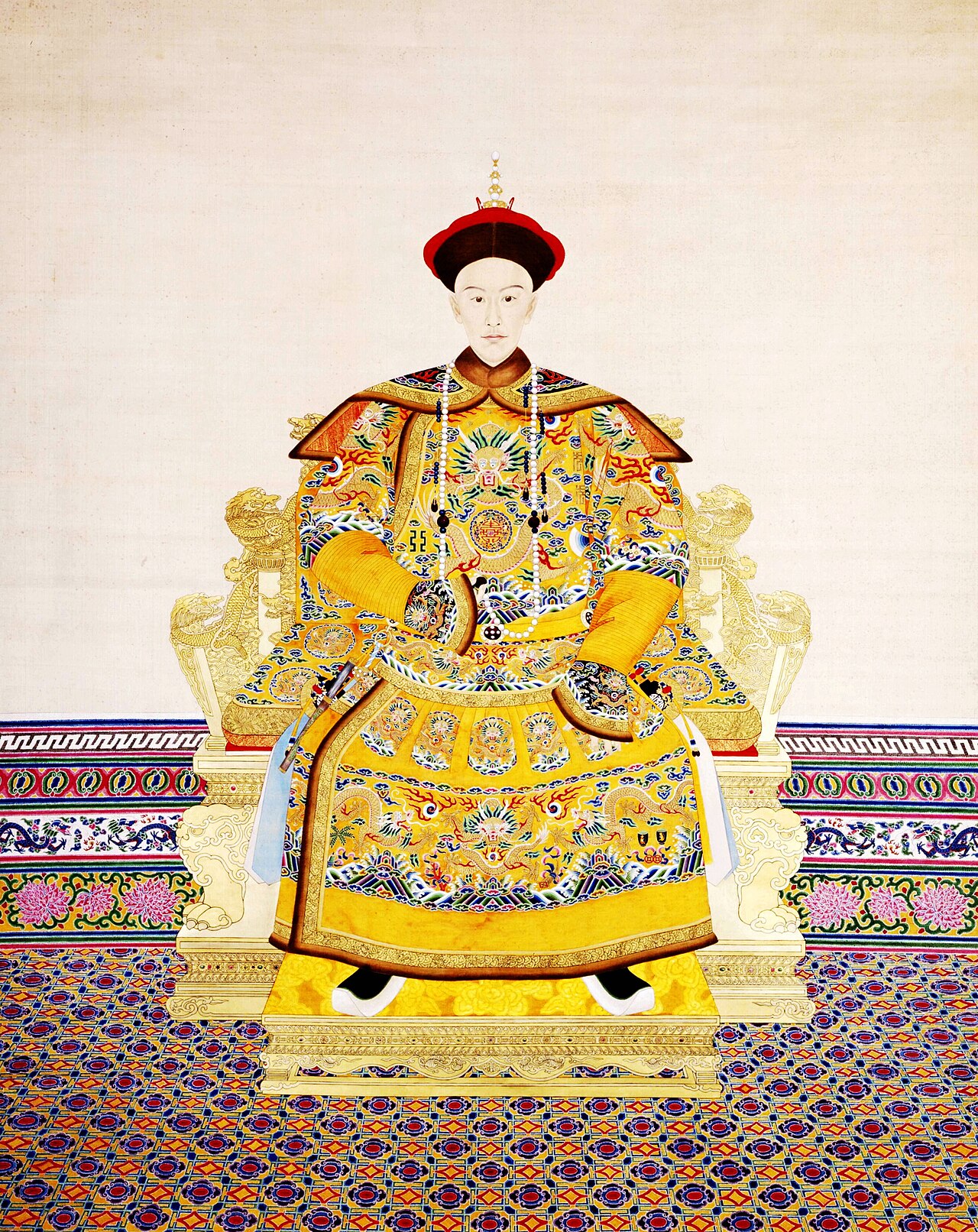
An official court portrait of the Guangxu Emperor seated in imperial dragon robes, the standard lifetime likeness of him as ritual sovereign.
This is the standard official likeness of the Guangxu Emperor himself, shown as ritual sovereign in dragon robes.
About this source
What it is
This is a formal court painting of the Guangxu Emperor, made by a Qing court painter. It shows him seated on a gilded throne, wearing a yellow dragon-patterned robe, a red hat with a gold finial, and a beaded necklace, in the stiff, formal style used for official imperial portraits.
Why it matters
Portraits like this were not meant to capture a personal likeness so much as to present the emperor as the ritual center of the Qing state, radiant with the symbols of heavenly authority. For Guangxu, whose real power was limited for much of his reign by Empress Dowager Cixi, such images projected an authority he did not always hold in practice.
Look closer
- What details in the robe, throne and setting are meant to show the emperor's status?
- Why might a court painter avoid showing personality or individual expression in a portrait like this?
- Does this image tell you anything about how much real power Guangxu held, or only how he was supposed to be seen?
This painting is part of the curated material that grounds the AI version of Guangxu Emperor on Humy.ai — when students ask about related events, the AI can quote it and cite it.
More Guangxu Emperor sources
Browse all 88 →Primary source
Chinese declaration of war against Japan
Guangxu Emperor · 1 August 1894
 Document
Primary source
Treaty of Shimonoseki
17 April 1895
Primary source
Imperial Decree of Declaration of War Against Foreign Powers
Guangxu Emperor · 21 June 1900
 Document
Primary source
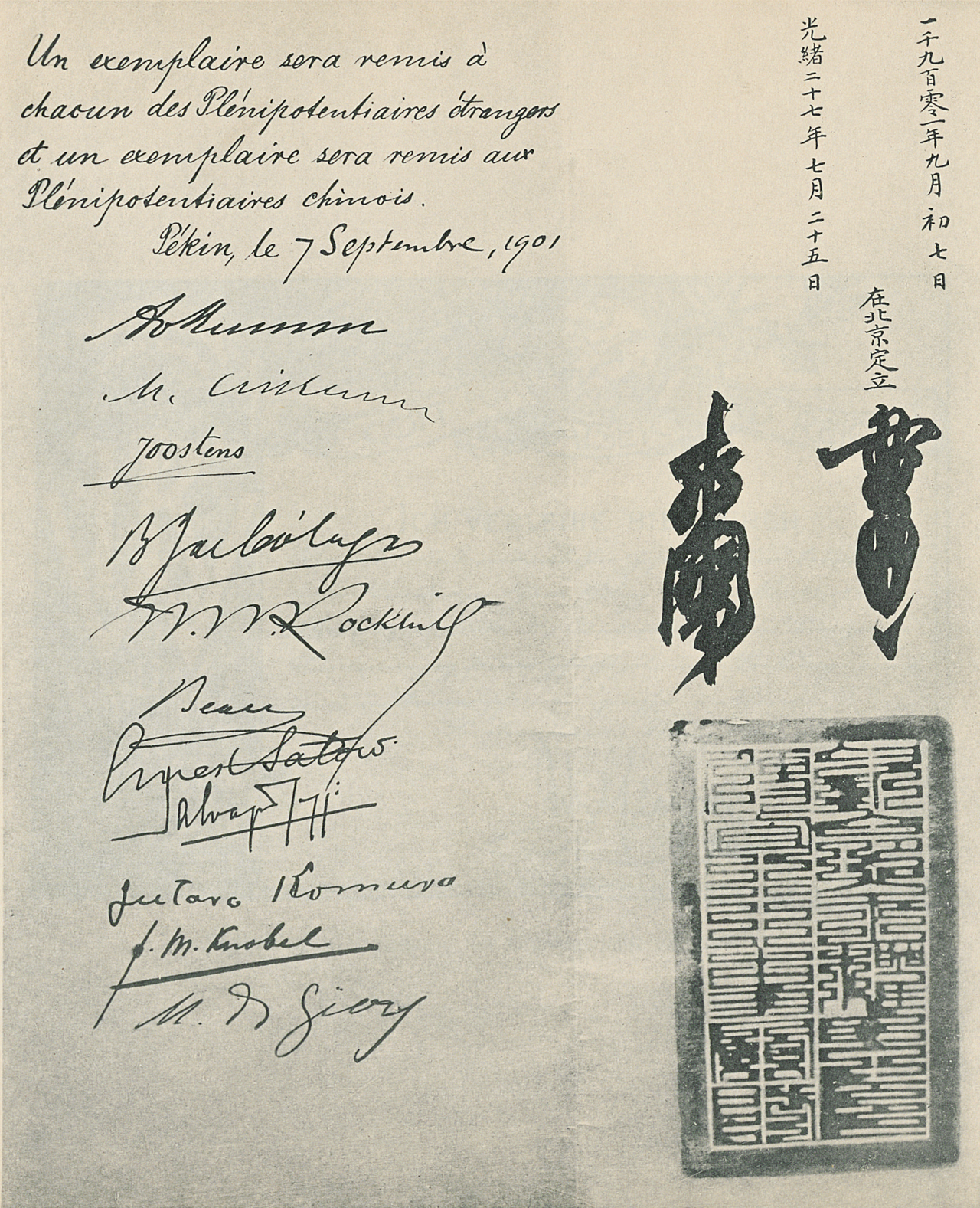
Boxer Protocol
7 September 1901
Free account
Read every Guangxu Emperor source
Sign up free →
Ready when you are
Start chatting with Guangxu Emperor now.
20 messages free · No credit card · Available in 50+ languages.