


Primary sourceDocument24 March 1933
Enabling Act of 1933
24 March 1933
The law passed in March 1933 that let Hitler's cabinet make laws without the Reichstag, forming the legal basis of his dictatorship.
This law transferred lawmaking power to Hitler's cabinet, forming the legal foundation of his dictatorship.
Free Humy account · No credit card · 53,307 sources to read
About this source
What it is
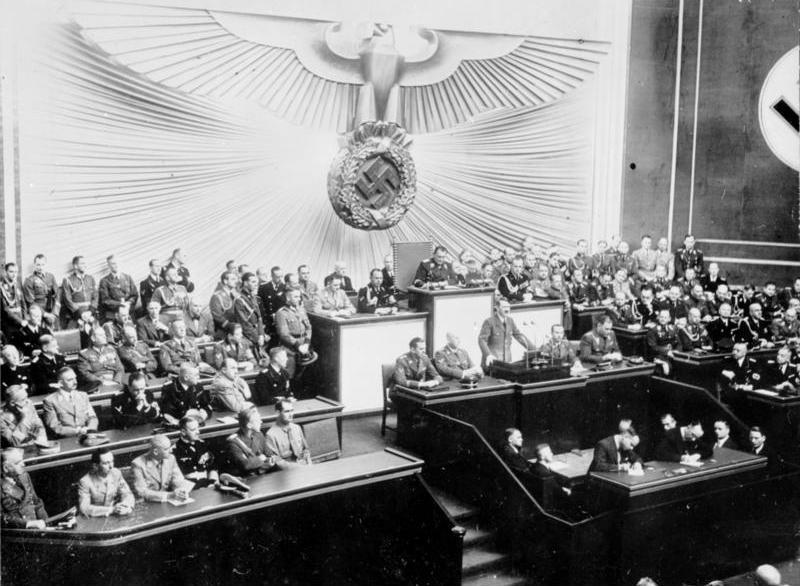
The Enabling Act of 1933, formally the "Law to Remedy the Distress of People and Reich," was passed by the German Reichstag and gave the cabinet led by Chancellor Adolf Hitler the power to make laws without the Reichstag or President Hindenburg. It followed the Reichstag fire and an election marked by intimidation.
Why it matters
This law marked the shift from the democratic Weimar Republic to Hitler's dictatorship. It passed with support from conservative parties and, crucially, the Catholic Centre Party under Ludwig Kaas, after arrests and suppression of Communist and Social Democrat opposition. It shows how legal and political mechanisms, not just force, were used to dismantle democracy.
Look closer
- Why did Hitler need a two-thirds majority, and how was that achieved despite opposition?
- What role did fear and intimidation play in the vote on this law?
- What does it mean for a law to be used to end the rule of law itself?
This document is part of the curated material that grounds the AI version of Adolf Hitler on Humy.ai — when students ask about related events, the AI can quote it and cite it.
More Adolf Hitler sources
Browse all 95 →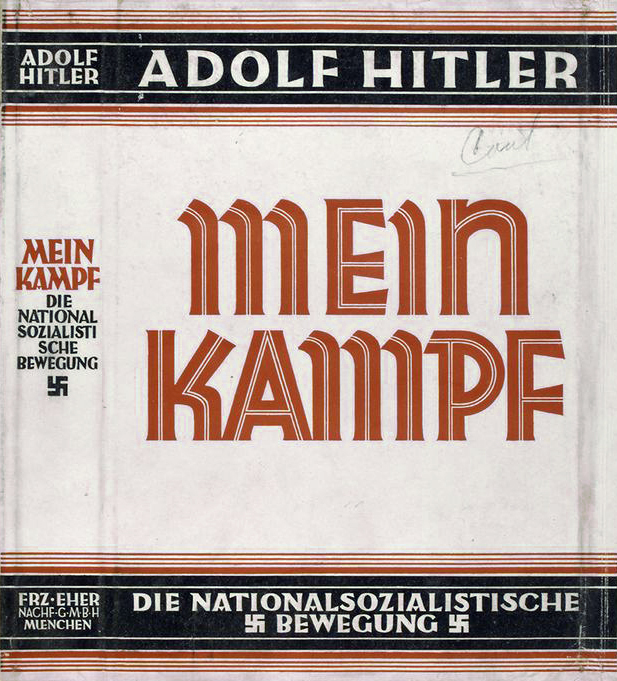 Book
Primary source
Mein Kampf
Adolf Hitler · 1925–1926
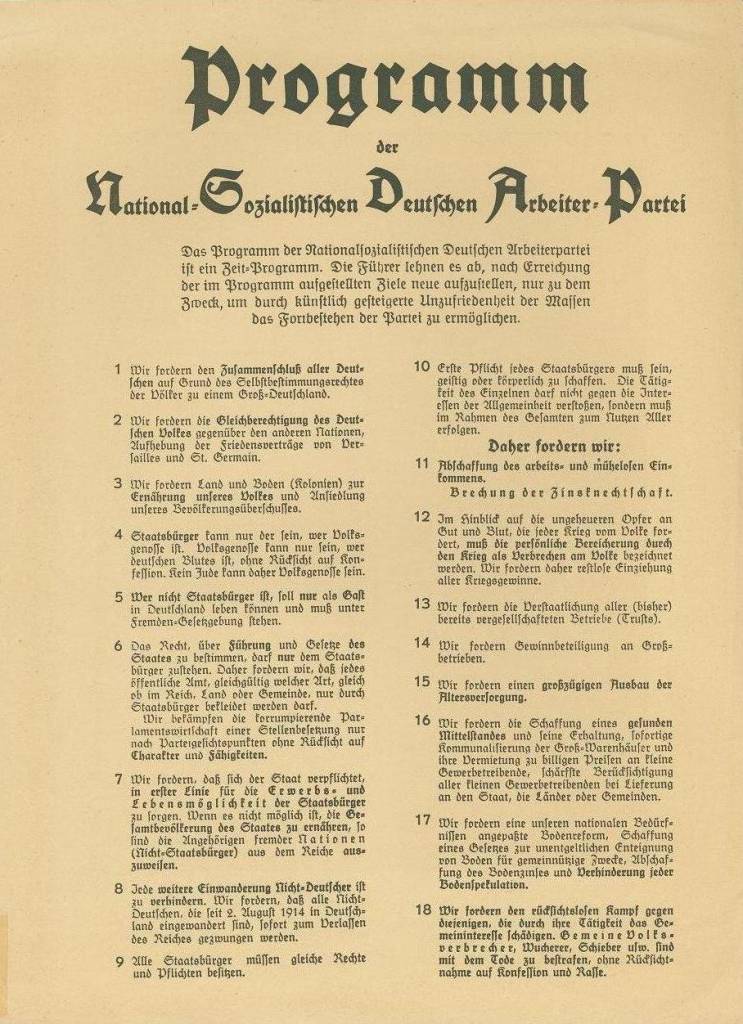 Document
Primary source
National Socialist Program
Adolf Hitler · 24 February 1920
Primary source
Reichstag Fire Decree
28 February 1933
Primary source
Reich Citizenship Law
15 September 1935

Free account
Browse every Adolf Hitler source
Sign up free →
Ready when you are
Start chatting with Adolf Hitler now.
20 messages free · No credit card · Available in 50+ languages.