


Primary sourceArtifact25 June 1941
Executive Order 8802
Franklin D. Roosevelt · 25 June 1941
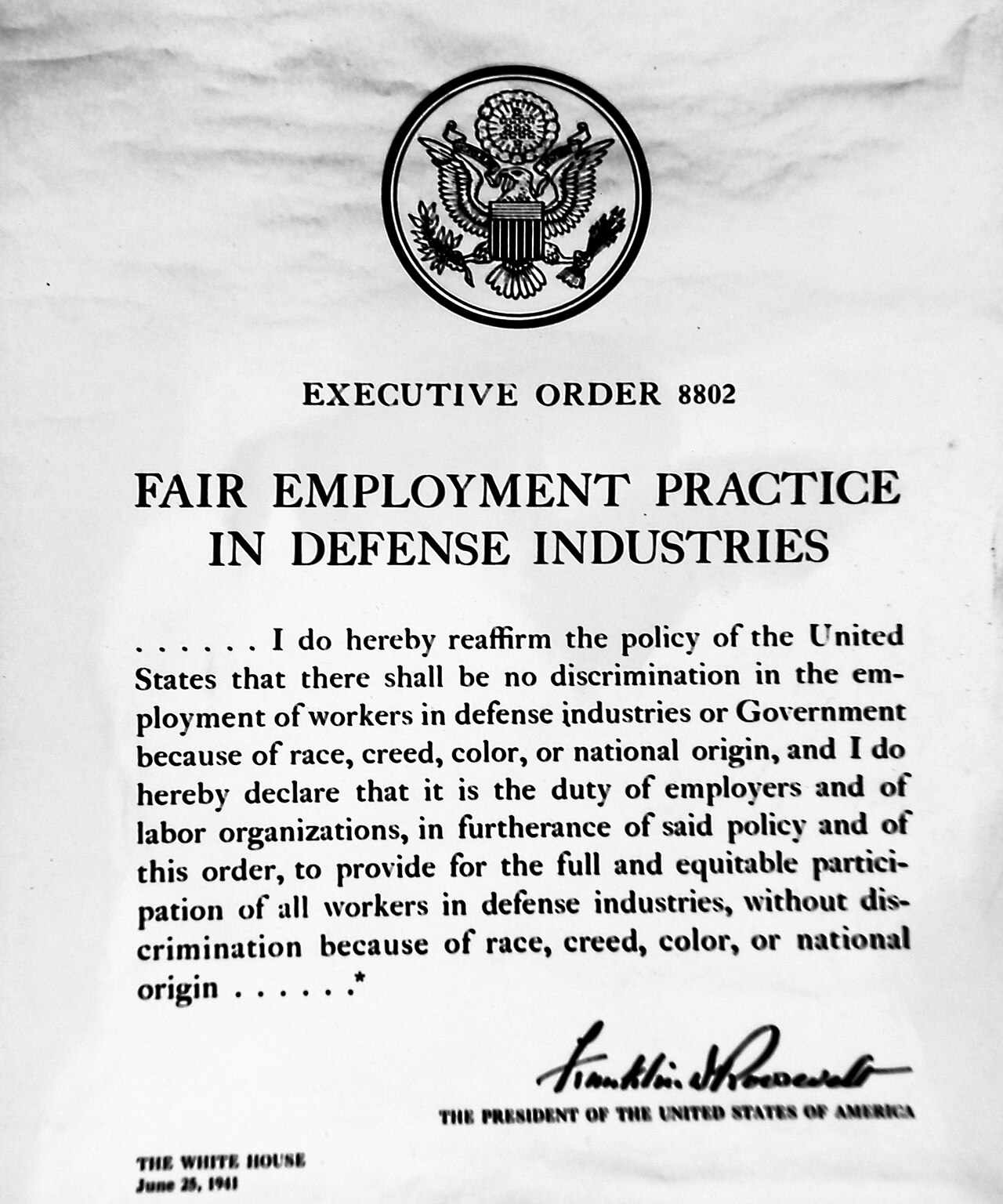
A 1941 presidential order banning discrimination in defense industries and government employment. This Navy museum poster shows how the government publicized the policy that Randolph's campaign helped win.
Shows the government's written policy that Randolph's campaign helped win, and how that victory was publicized.
About this source
What it is
This item is a print showing Executive Order 8802, titled Fair Employment Practice in Defense Industries. The order states that there shall be no discrimination in the employment of workers in defense industries or government because of race, creed, color, or national origin. It is signed by Franklin D. Roosevelt, President of the United States, and dated June 25, 1941, at the White House. The image is a black-and-white photograph of the printed document, bearing the presidential seal. The National Museum of the U.S. Navy holds the record, and the Library of Congress lists the image as part of the Office of War Information Collection.
Why it matters
During World War II, the nation's defense factories often refused to hire Black workers. A. Philip Randolph, a labor leader, pressed the government to act on this, and the order was the result. The museum's curator notes that the poster shows how the government publicized Randolph's victory. Reading the order alongside Roosevelt's signature shows both the power of the federal government and the pressure that organized workers could bring to bear.
Look closer
- What words in the order does the poster emphasize, and why might the government have wanted them seen?
- Who does the order say must act, and what responsibilities does it place on employers and labor organizations?
- What does this document leave out, such as how the order was enforced or how well it worked in practice?
This artifact is part of the curated material that grounds the AI version of A. Philip Randolph on Humy.ai — when students ask about related events, the AI can quote it and cite it.
More A. Philip Randolph sources
Meet the AI A. Philip Randolph →Primary source
Executive Order 9066
Franklin Delano Roosevelt · 19 February 1942
 Document
Primary source
Executive Order 9981
Harry S. Truman · 26 July 1948
 Document
Primary source
Official Program for the March on Washington
28 August 1963
 Newspaper article
Primary source
The Messenger
A. Philip Randolph and Chandler Owen · 1917-1928
 Document
Primary source
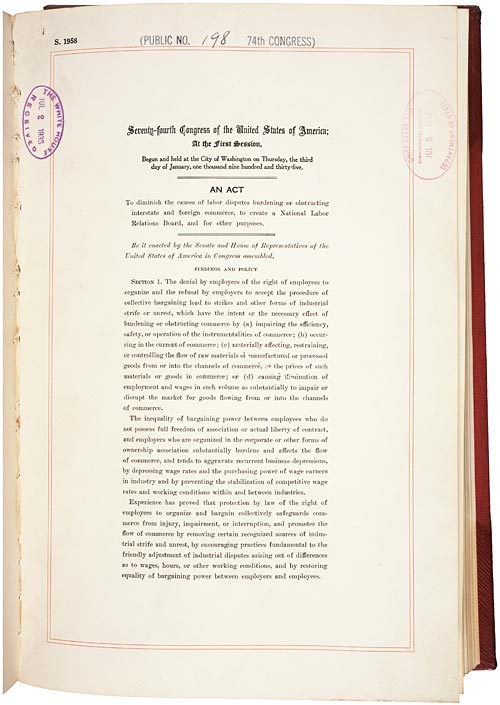
National Labor Relations Act of 1935
Senator Robert F. Wagner / United States Congress · 5 July 1935
Ready when you are
Start chatting with A. Philip Randolph now.
20 messages free · No credit card · Available in 50+ languages.