


Primary sourcePainting15 December 1860
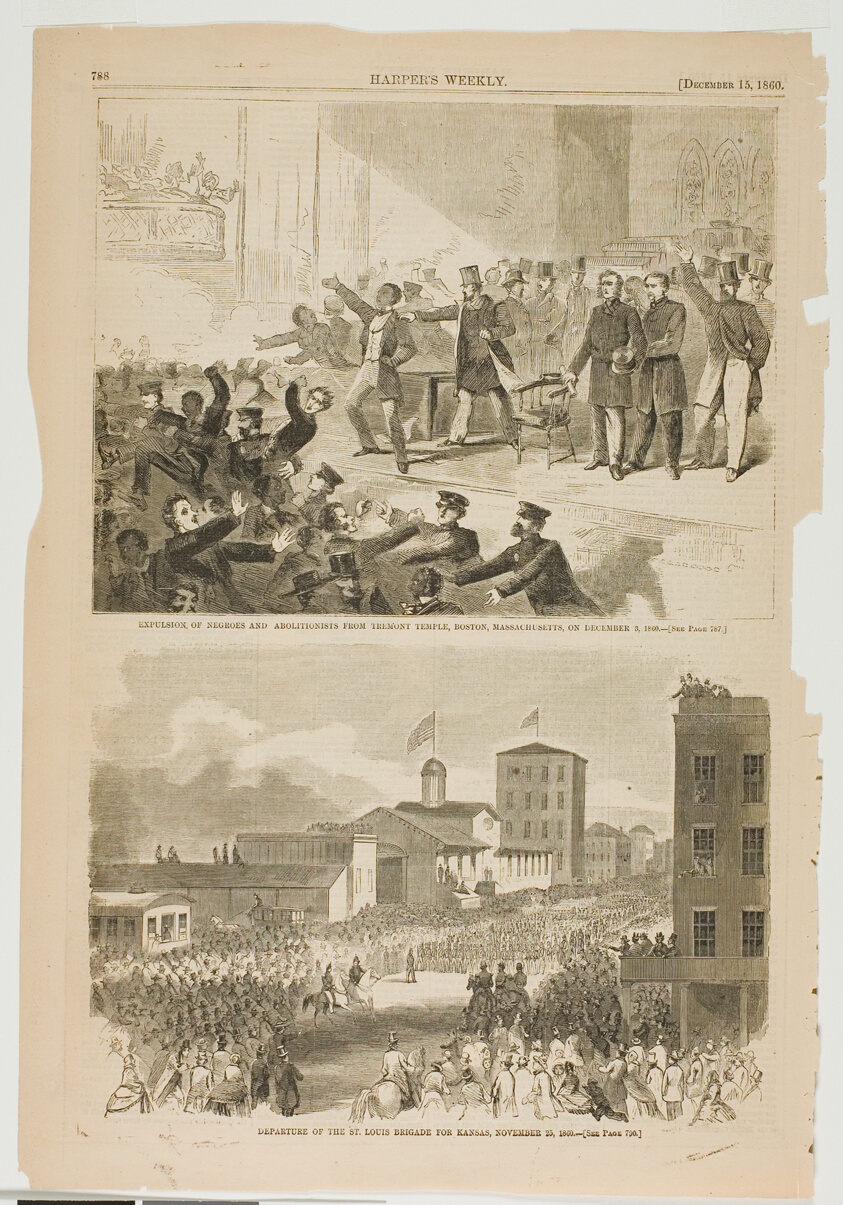
Expulsion of Negroes and Abolitionists from Tremont Temple, 1860
Winslow Homer · 15 December 1860
An 1860 Harper's Weekly wood engraving showing a racist expulsion of Black people and abolitionists from a Boston hall. It reflects the racial exclusion Bethune later worked against.
Shows the hostility toward Black activists and abolitionists in Boston in 1860, the setting in which William Still worked.
About this source
What it is
This is a wood engraving by Winslow Homer, published in Harper's Weekly on 15 December 1860, on page 788. The top panel shows a crowded hall where men in top hats and police officers push and expel a group of Black men and abolitionists. The bottom panel shows a crowd leaving a city street for Kansas. The incident depicted took place at Tremont Temple in Boston, Massachusetts, on 3 December 1860. The print is held by the Art Institute of Chicago.
Why it matters
The engraving records a moment of open racial exclusion in the years before the Civil War. Harper's Weekly was a widely read American magazine, so its images shaped how readers saw events. Bethune was born in 1875, so she did not witness this event. Her later work against racial exclusion makes this source useful for understanding the world she grew up to challenge.
Look closer
- Who is being pushed out, and who appears to be doing the pushing?
- Why might a magazine in 1860 choose to show this scene, and who was its audience?
- What does the engraving leave out about the people who were expelled and how they responded?
This painting is part of the curated material that grounds the AI version of William Still, Mary McLeod Bethune and Levi Coffin on Humy.ai — when students ask about related events, the AI can quote it and cite it.
More William Still sources
Meet the AI William Still →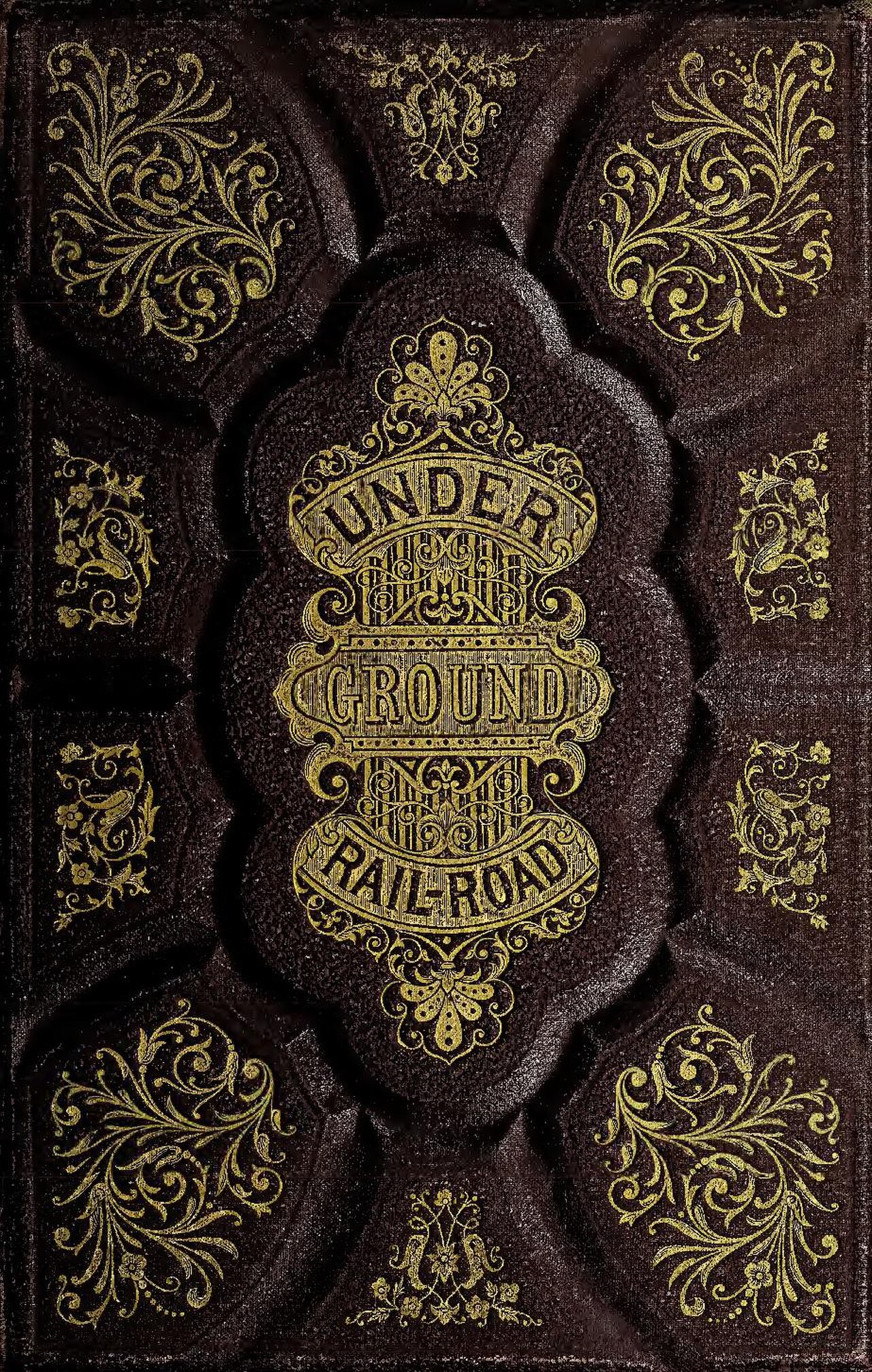 Book
Primary source
The Underground Rail Road
William Still · 1872
 Photograph
Primary source
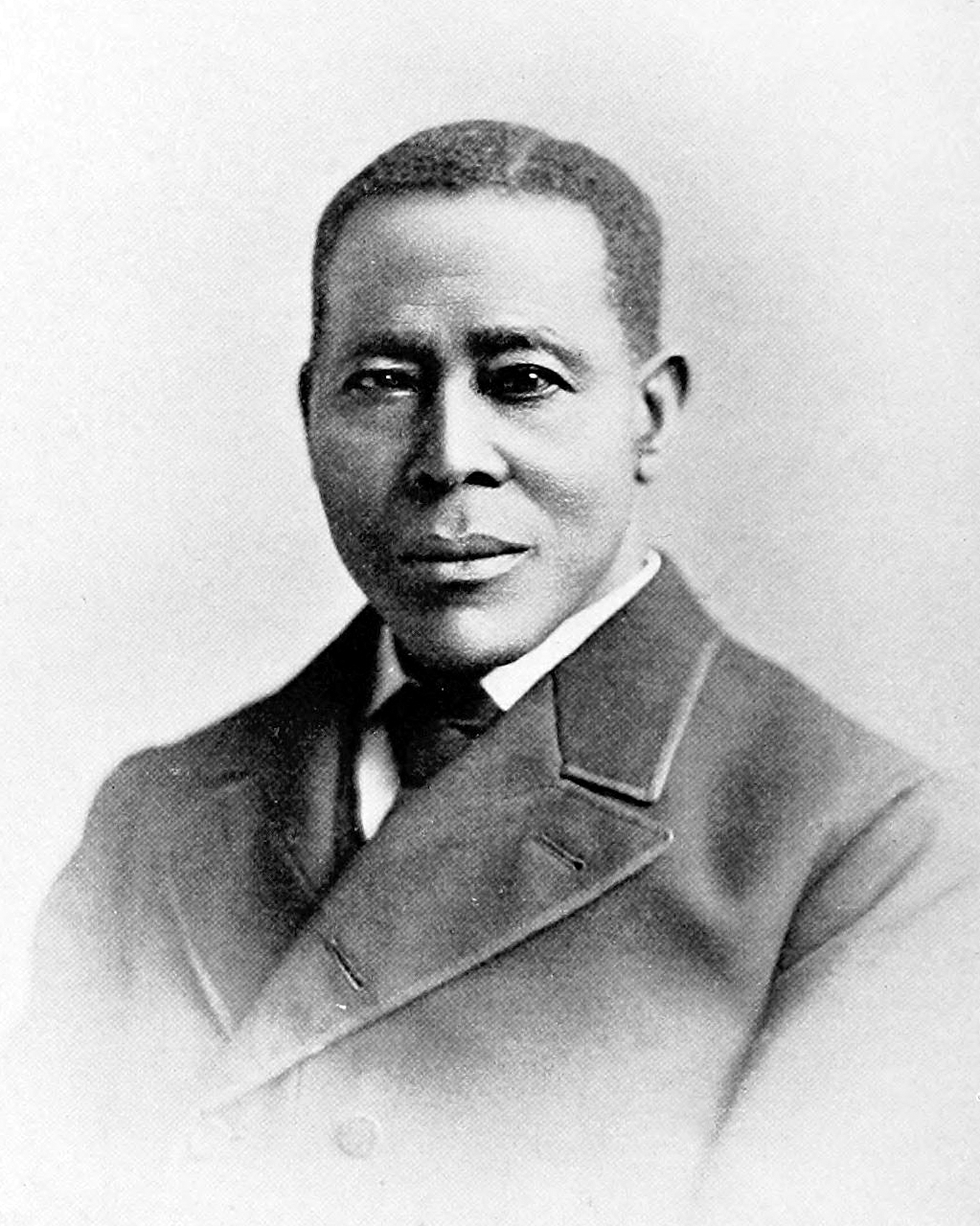
Portrait of William Still
 Painting
Primary source
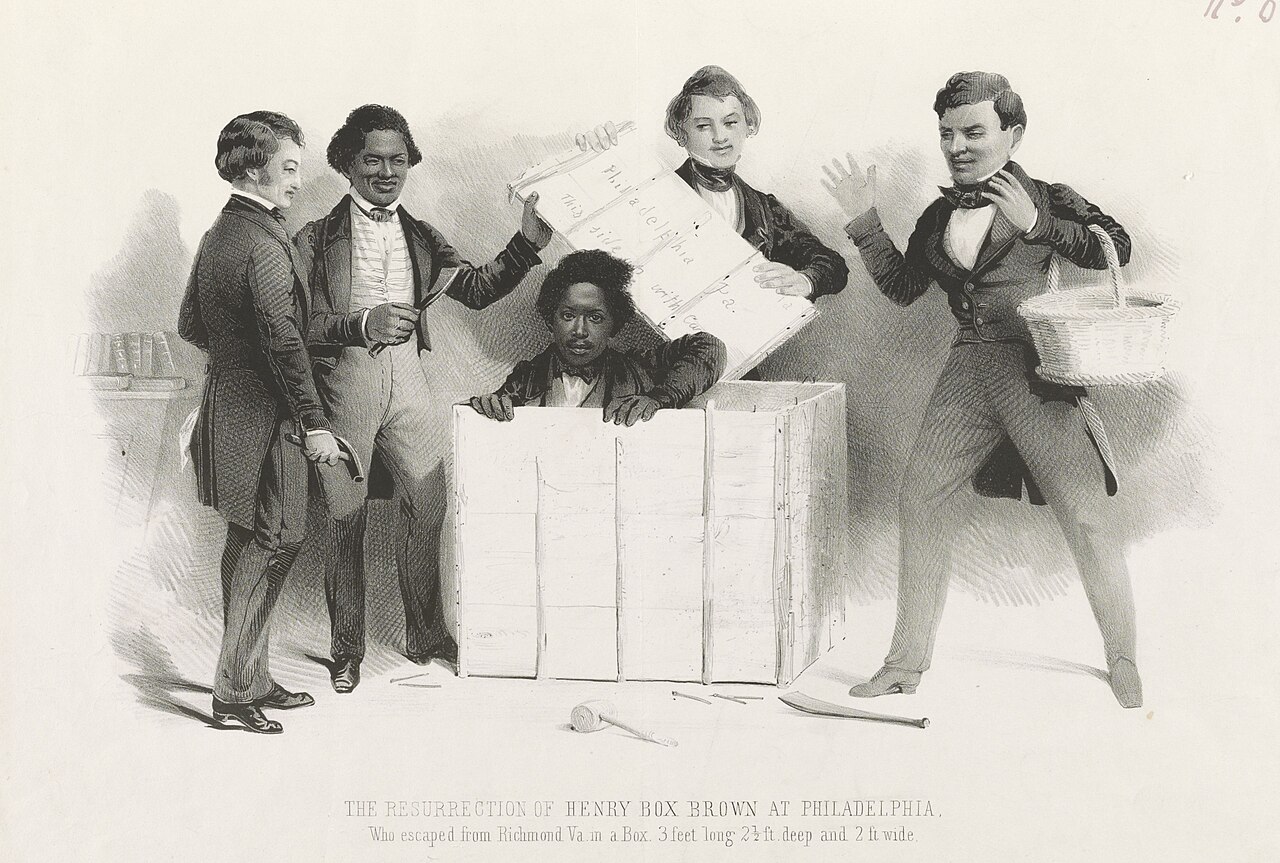
The Resurrection of Henry Box Brown at Philadelphia
Samuel W. Rowse · 1850
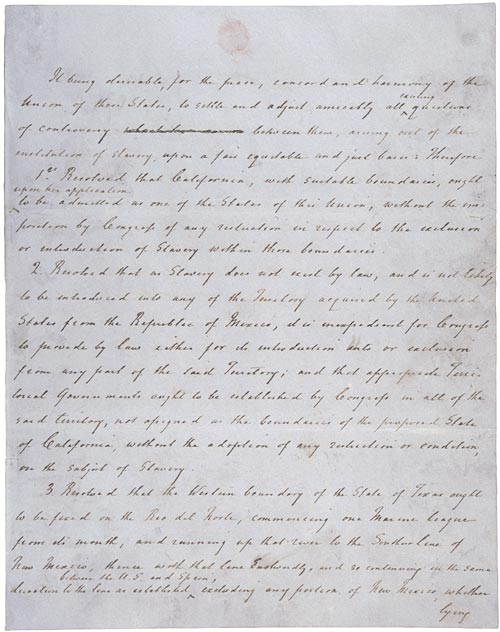 Document
Primary source
Compromise of 1850
Henry Clay · 29 January 1850 (resolutions); statutes enacted September 1850
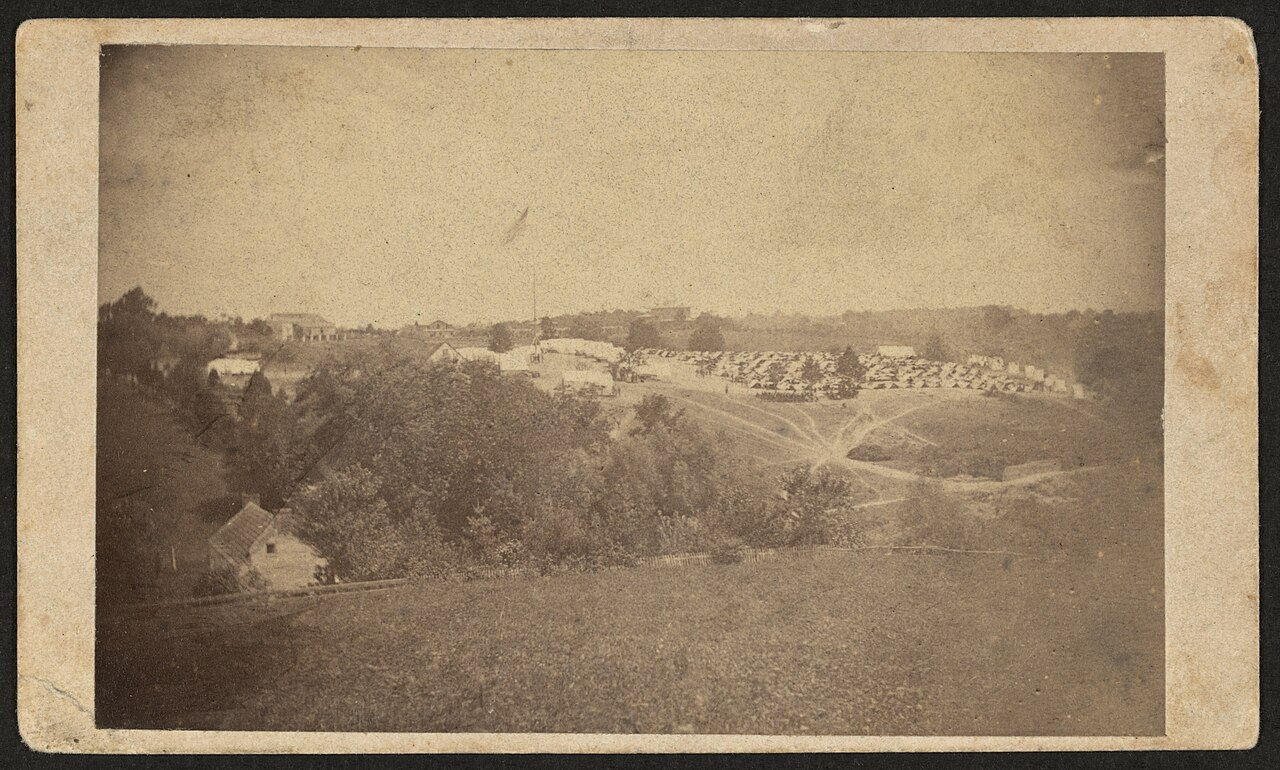 Photograph
Primary source
Camp William Penn
B.F. Reimer · 1863
Ready when you are
Start chatting with William Still now.
20 messages free · No credit card · Available in 50+ languages.