


Primary sourceLetter17th century
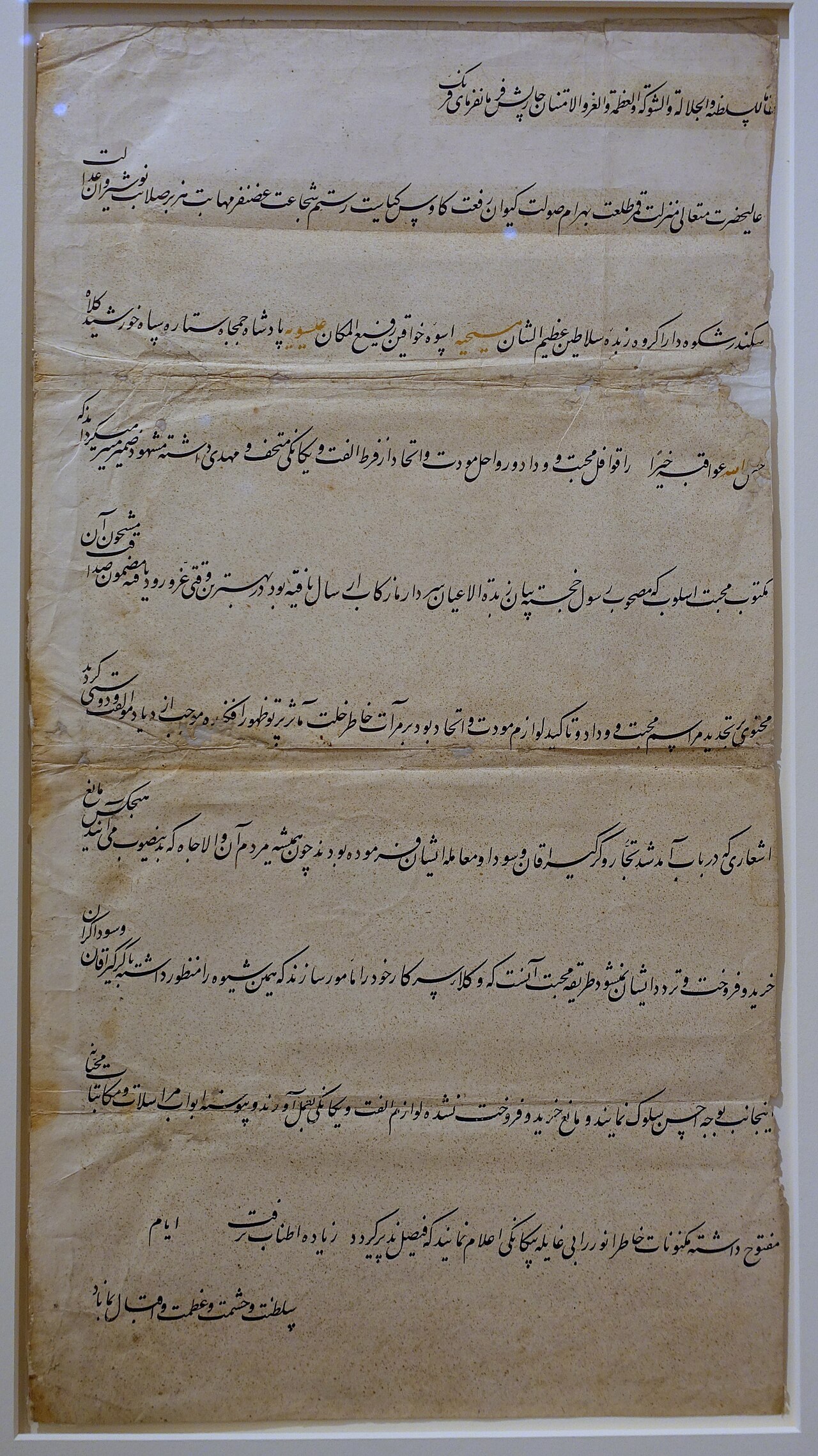
Formal Letter from the Court of Iran to King Charles I of England
17th century
A 17th-century Persian diplomatic letter sent from the Safavid court of Iran to Charles I, now held at the Aga Khan Museum.
This letter from the Iranian court to Charles I shows his kingdom's diplomatic reach beyond Europe.
About this source
What it is
This is a handwritten formal letter in Persian script, sent from the court of Iran to Charles I of England during the 17th century. It is written in black ink with some gold lettering on aged paper, and is now held at the Aga Khan Museum in Toronto.
Why it matters
This letter shows that Charles's reign involved diplomatic and trade contacts stretching well beyond Europe, including the Safavid court in Iran. It is a reminder that early modern English monarchs operated within a wider world of international trade and diplomacy, not just continental politics.
Look closer
- What does the formality of the letter's script and gold lettering suggest about how rulers communicated with each other?
- Why might the Safavid court in Iran want to correspond with the English king?
- What is missing from this object alone that would help you understand what the letter actually says or why it was sent?
This letter is part of the curated material that grounds the AI version of Charles I on Humy.ai — when students ask about related events, the AI can quote it and cite it.
More Charles I sources
Browse all 80 →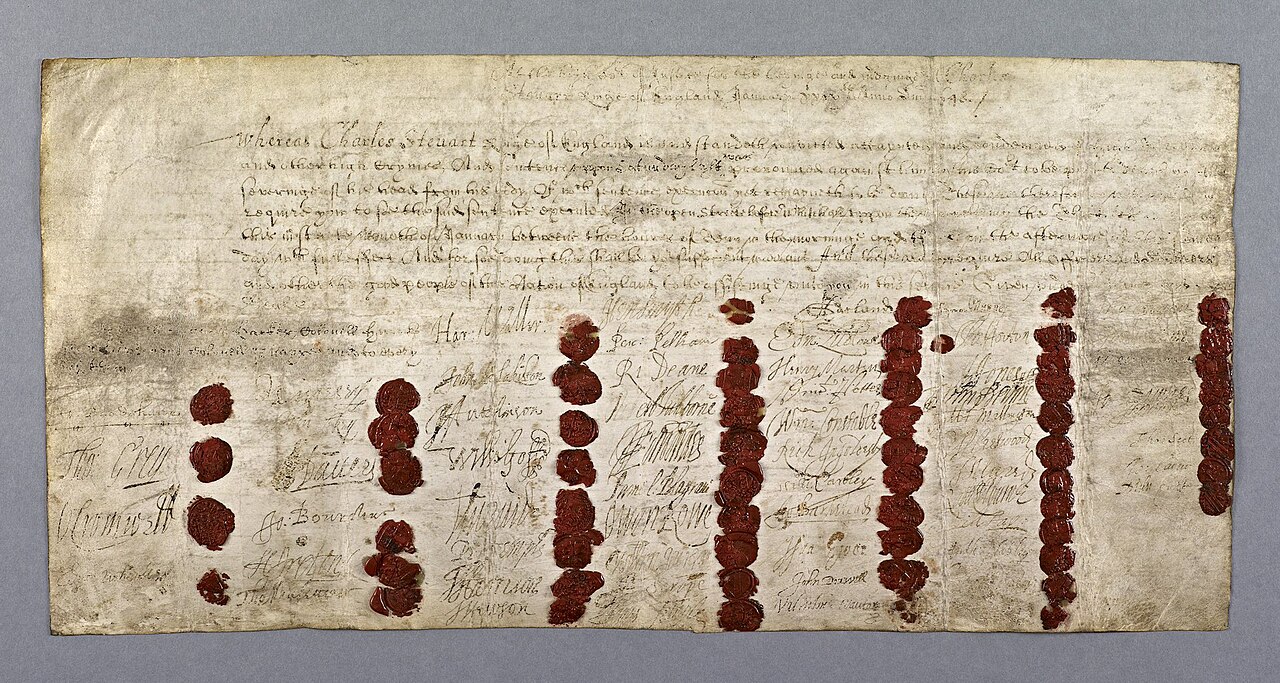 Document
Primary source
Death Warrant of King Charles I
High Court of Justice commissioners · 29 January 1649
 Speech
Primary source
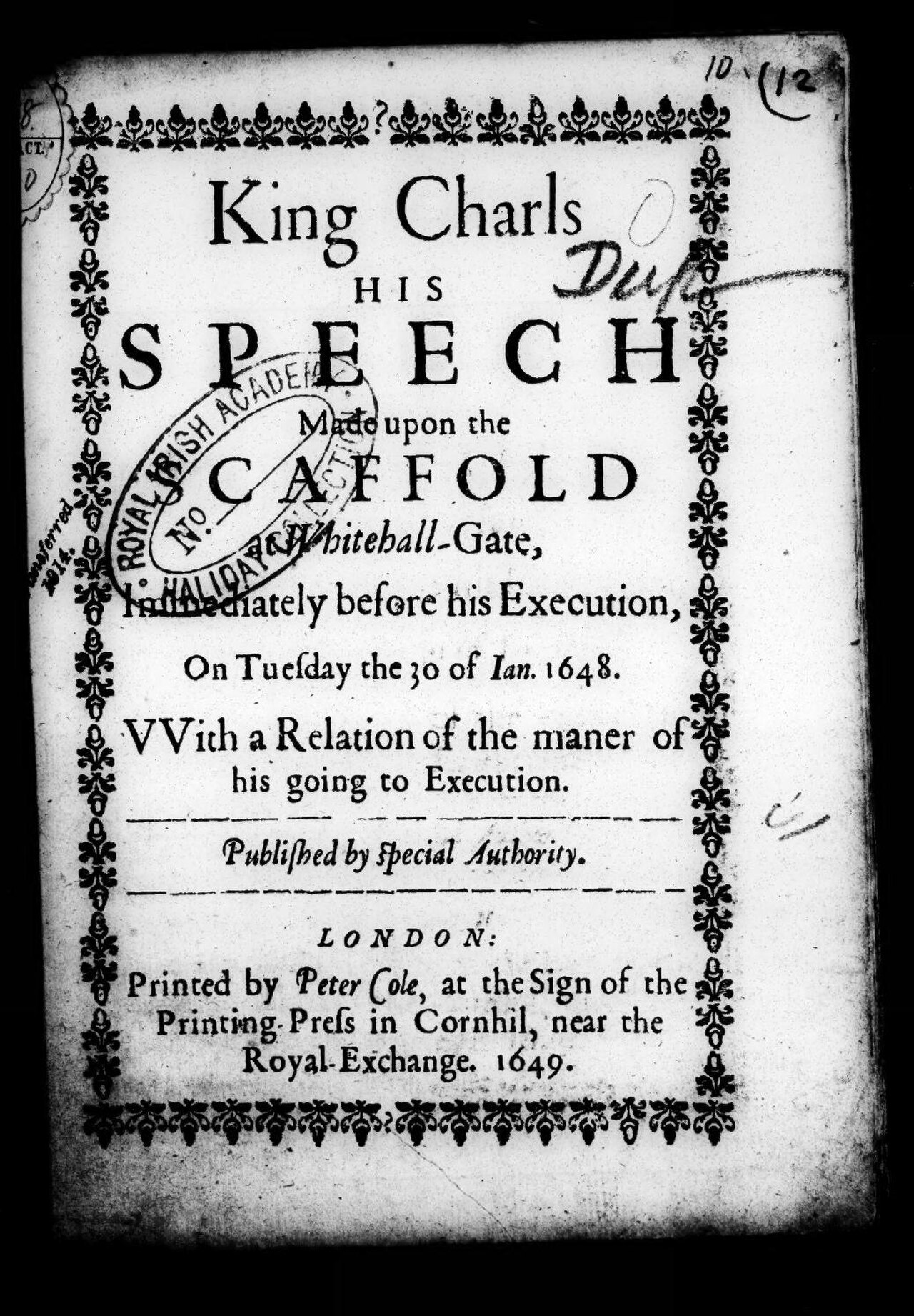
King Charles his Speech made upon the Scaffold at Whitehall-Gate
Charles I · 30 January 1649
 Book
Secondary source
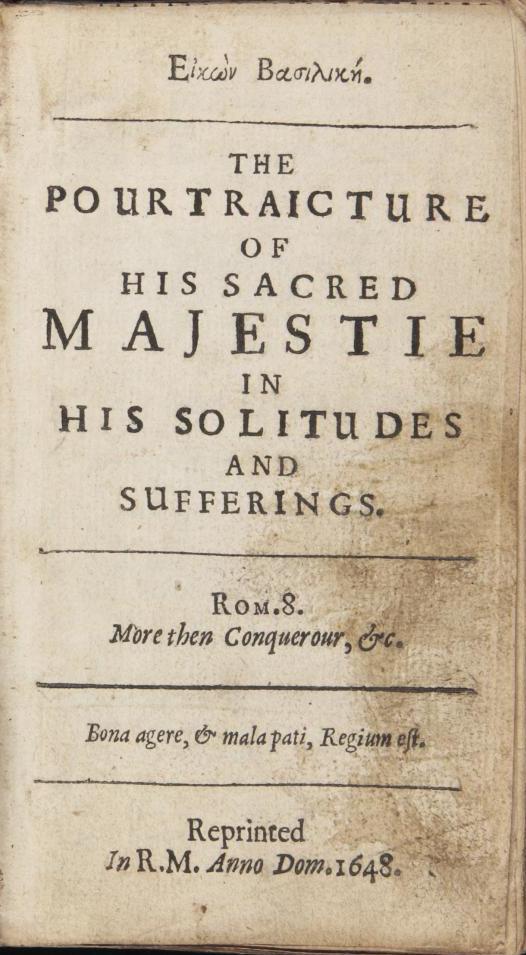
Eikon Basilike
Attributed to Charles I (possibly John Gauden) · 1649
 Document
Primary source
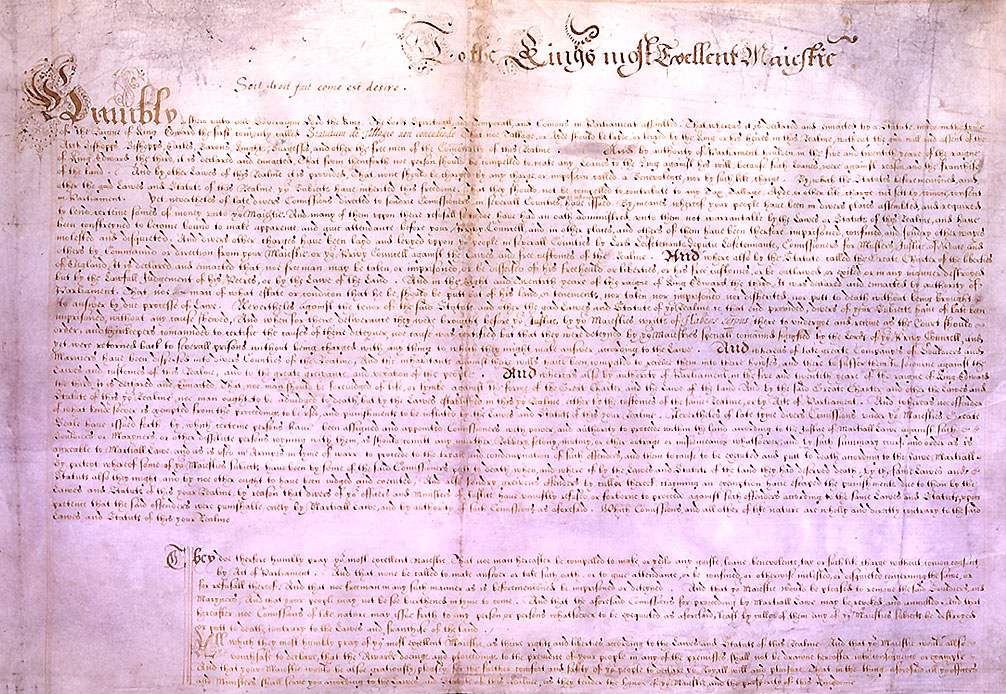
Petition of Right
Edward Coke (drafting committee) · 7 June 1628
Free account
Read every Charles I source
Sign up free →
Ready when you are
Start chatting with Charles I now.
20 messages free · No credit card · Available in 50+ languages.