


Primary sourceDocument1973
Frontiero v. Richardson
1973
The 1973 Supreme Court case in which Ginsburg made her first oral argument, as ACLU amicus, urging strict scrutiny for sex discrimination.
Ginsburg gave her first Supreme Court oral argument in this case, representing the ACLU as amicus curiae.
About this source
What it is
This is the Supreme Court's 1973 decision and record in Frontiero v. Richardson, which struck down a military policy giving benefits automatically to servicemen's wives but not to servicewomen's husbands unless proven dependent. Lieutenant Sharron Frontiero was represented by Joseph J. Levin Jr.; Ruth Bader Ginsburg argued as amicus curiae for the ACLU, her first oral argument before the Court.
Why it matters
A plurality led by Justice William Brennan agreed sex discrimination deserved strict scrutiny, though this was not adopted as the lasting standard. Ginsburg's ten-minute argument, including a quotation from abolitionist Sarah Grimké, shows her early strategy of building legal arguments for women's equality case by case.
Look closer
- Why might Ginsburg have quoted a 19th-century abolitionist in a 1973 legal argument?
- What does the case reveal about how laws treated men and women differently at the time?
- Why did the plurality's strict scrutiny standard not become the lasting rule in later cases?
This document is part of the curated material that grounds the AI version of Ruth Bader Ginsburg on Humy.ai — when students ask about related events, the AI can quote it and cite it.
More Ruth Bader Ginsburg sources
Meet the AI Ruth Bader Ginsburg →Primary source
Dissent in Ledbetter v. Goodyear Tire & Rubber Co.
Ruth Bader Ginsburg · May 29, 2007
 Photograph
Primary source
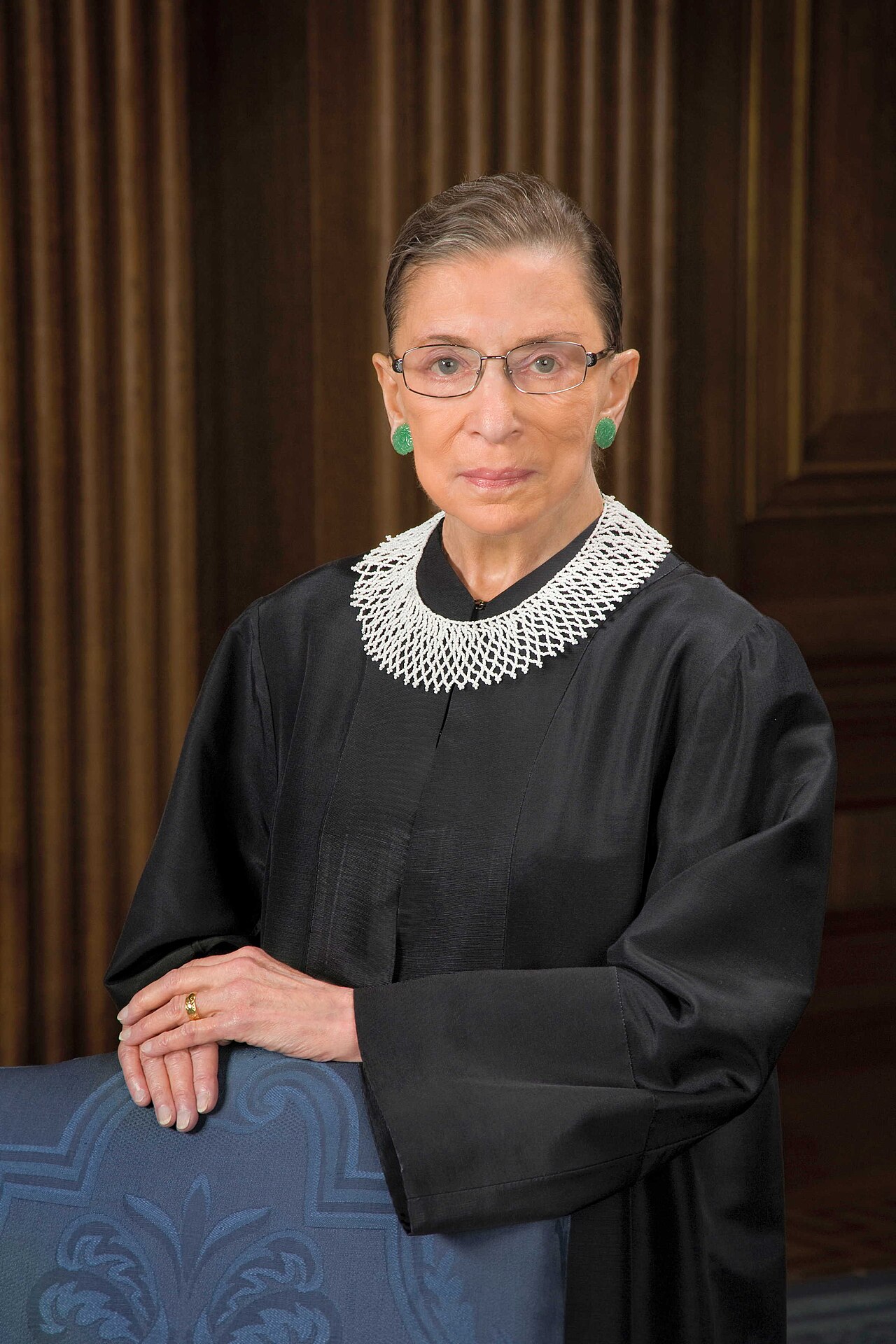
Ruth Bader Ginsburg Official SCOTUS Portrait
Steve Petteway
Primary source
Dissent in Bush v. Gore
Ruth Bader Ginsburg · December 12, 2000
Primary source
Dissent in Gonzales v. Carhart
Ruth Bader Ginsburg · April 18, 2007
 Document
Primary source
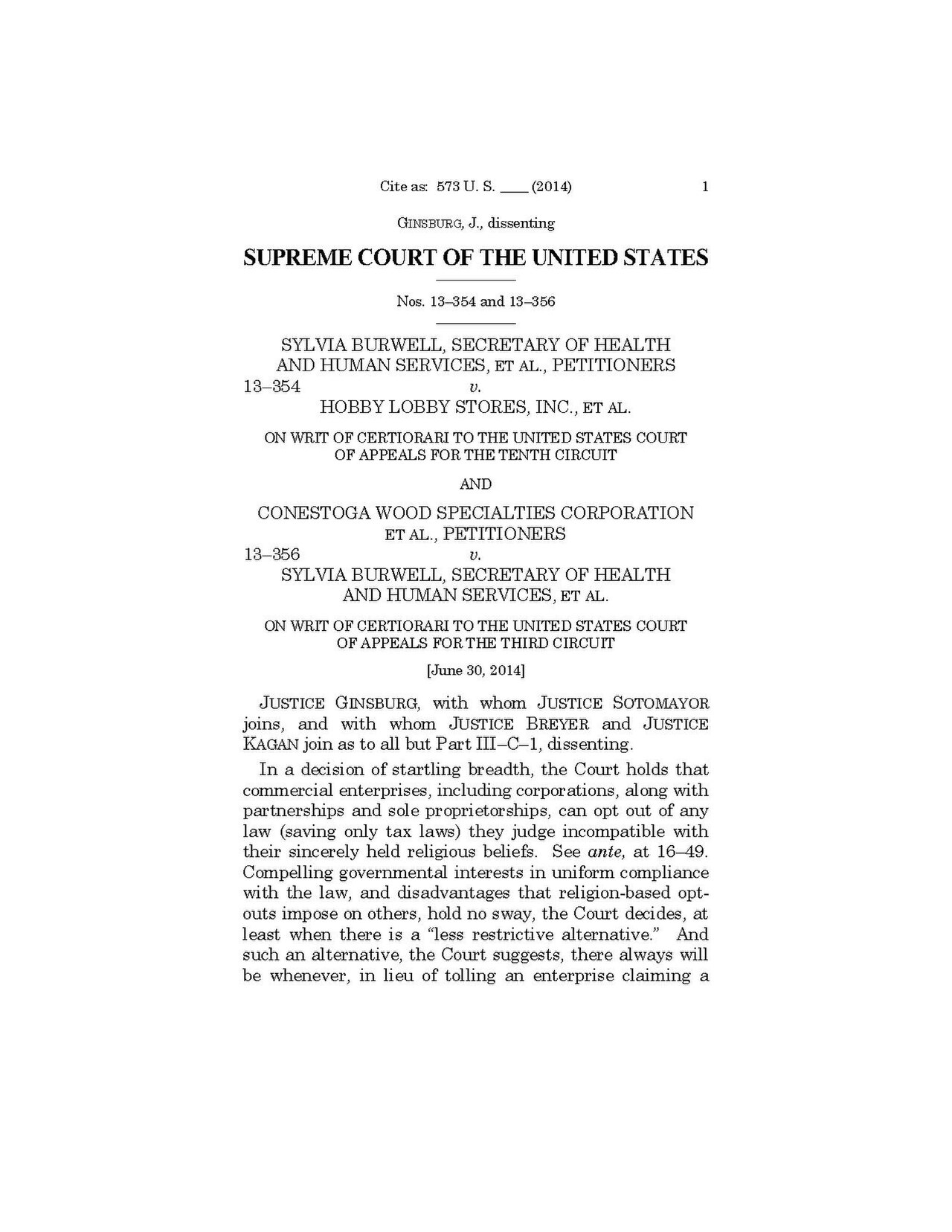
Dissent in Burwell v. Hobby Lobby Stores, Inc.
Ruth Bader Ginsburg · June 30, 2014
Ready when you are
Start chatting with Ruth Bader Ginsburg now.
20 messages free · No credit card · Available in 50+ languages.