


Primary sourcePhotograph1901
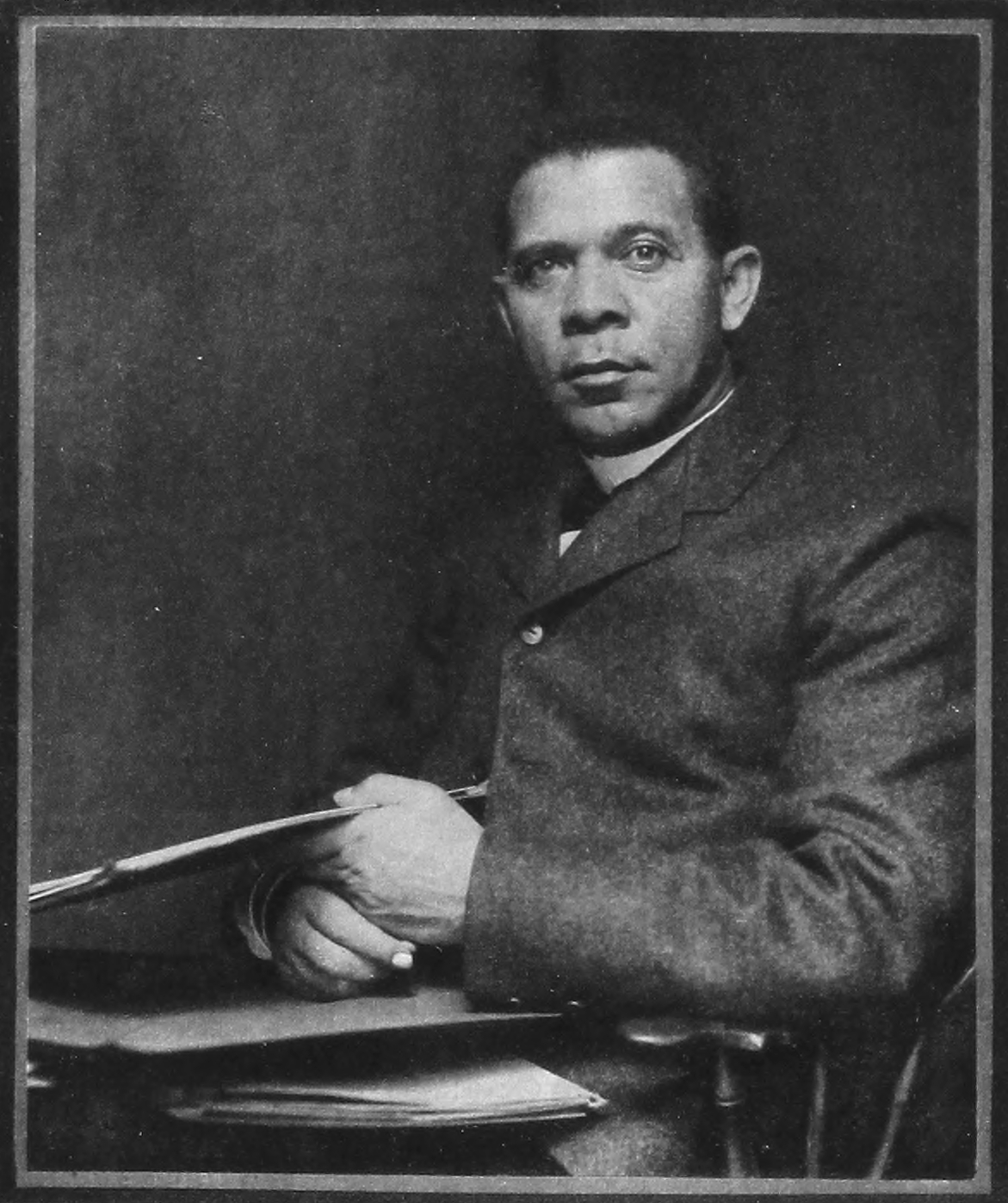
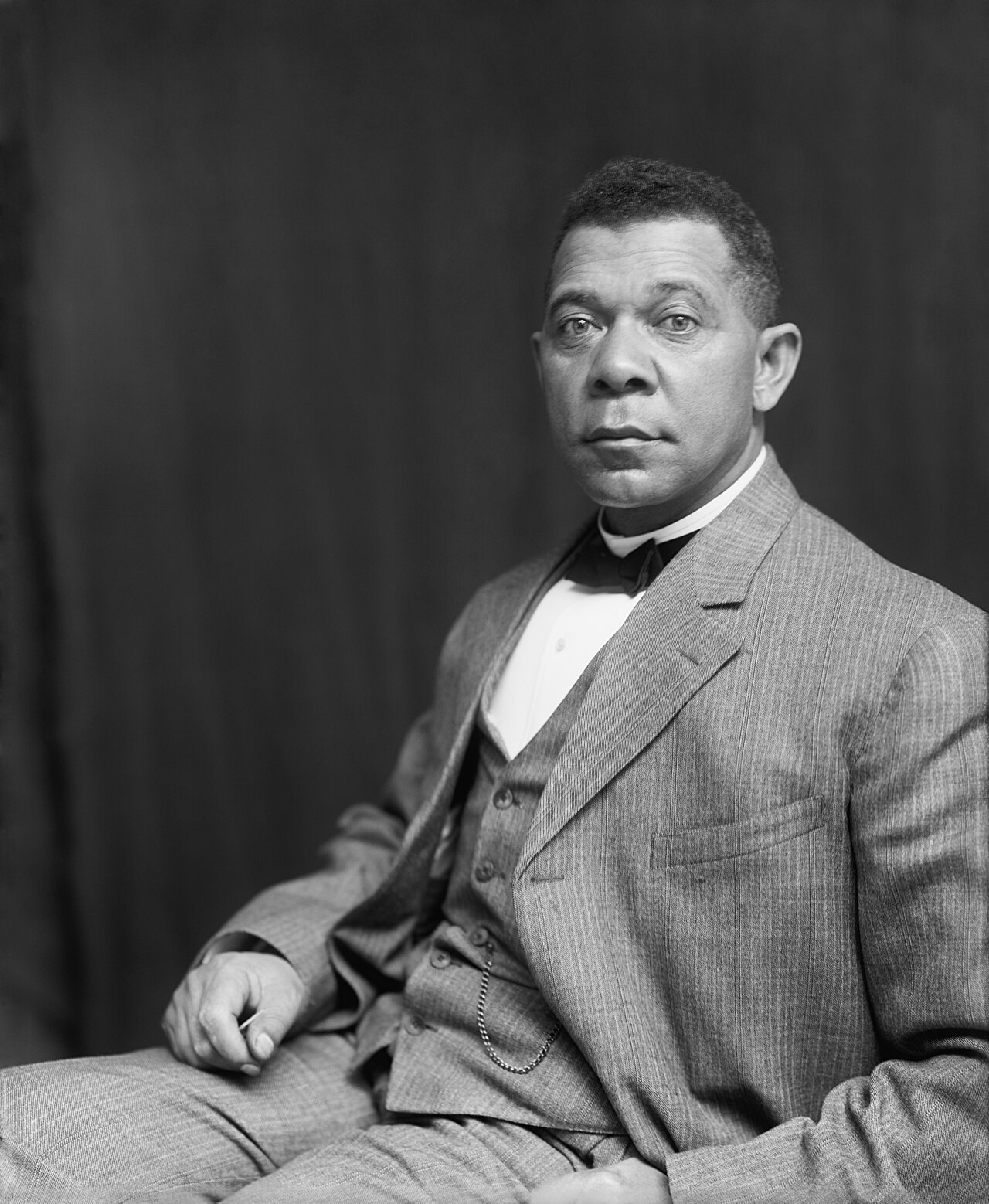
Frontispiece portrait from Up From Slavery
Booker T. Washington · 1901
The frontispiece portrait printed in Booker T. Washington's autobiography Up From Slavery, published in 1901. It shows him as he chose to present himself to readers.
Shows the portrait Washington chose to open his own autobiography, presenting himself to readers in 1901.
About this source
What it is
This is the frontispiece, the picture placed opposite the title page, of Washington's autobiography Up From Slavery, published in 1901. It is a black-and-white framed photographic portrait. It shows a seated man in a dark suit with a high collar and tie, his hands resting on papers on a desk, looking toward the camera against a dark background.
Why it matters
Washington wrote this autobiography about his life, and he chose this portrait to open the book. A frontispiece was one of the first things a reader saw, so it shaped how the book's author was understood. The picture shows how Washington wanted readers to see him: a working, serious man of learning.
Look closer
- What do the desk, the papers and the seated pose suggest about the man in the picture?
- Why might an author choose a portrait like this to open his own life story?
- What might the book itself leave out, and what questions would you ask about the choices made in its telling?
This photograph is part of the curated material that grounds the AI version of Booker T. Washington on Humy.ai — when students ask about related events, the AI can quote it and cite it.
More Booker T. Washington sources
Meet the AI Booker T. Washington →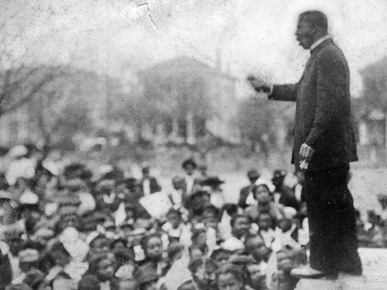 Speech
Primary source
Atlanta Compromise
Booker T. Washington · 18 September 1895
 Book
Primary source
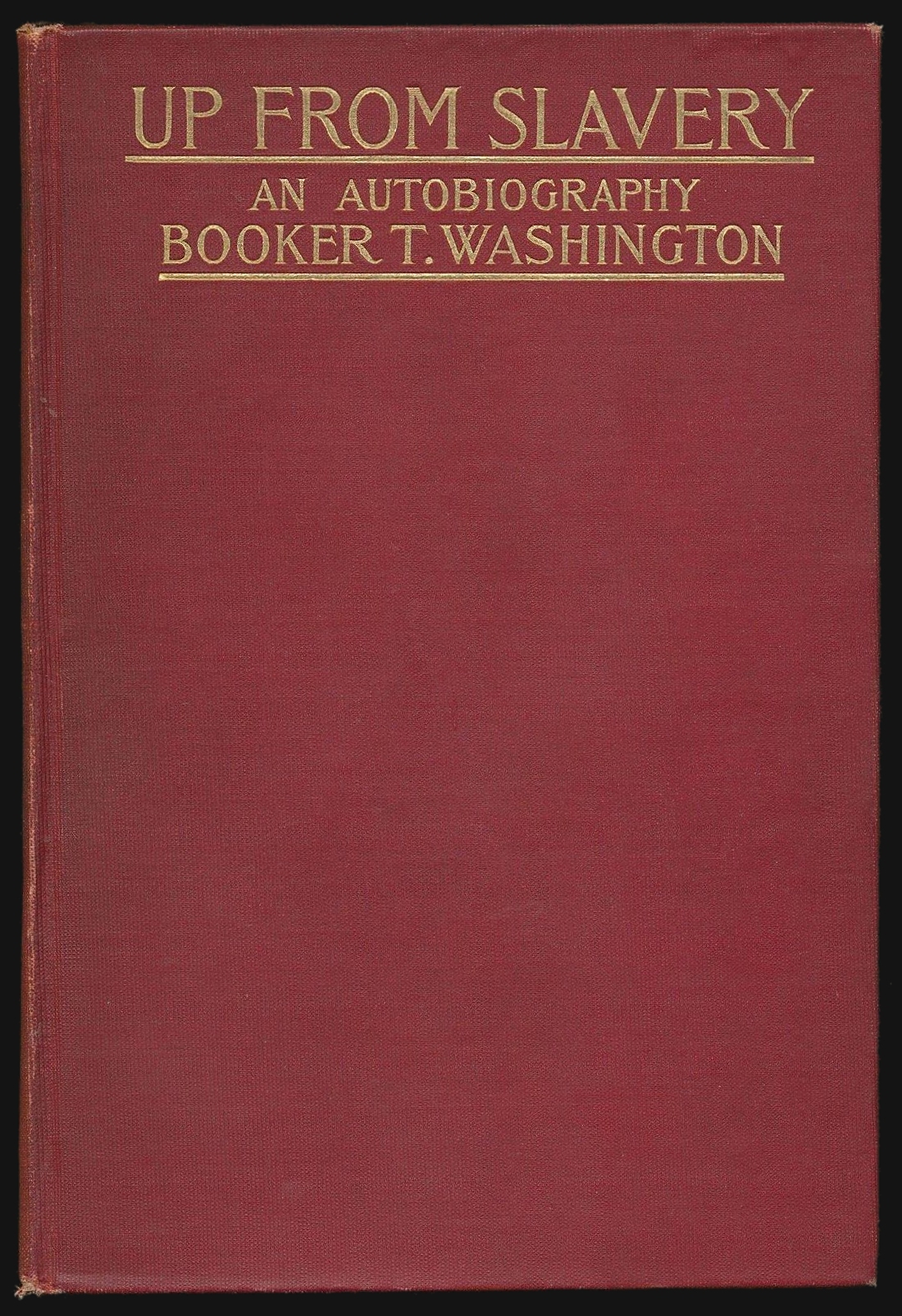
Up from Slavery
Booker T. Washington · 1901
Primary source
Booker T. Washington reading an excerpt from his 1895 Atlanta Compromise speech
Booker T. Washington · 5 December 1908
 Book
Secondary source
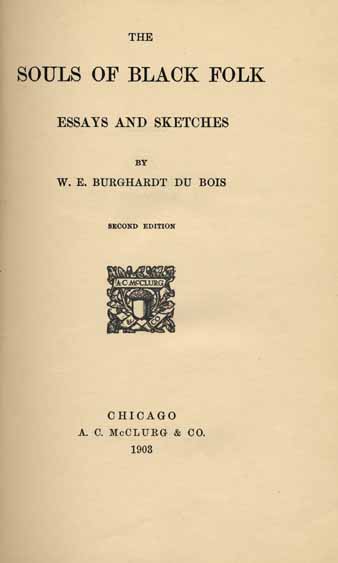
The Souls of Black Folk
W. E. B. Du Bois · 18 April 1903
 Photograph
Primary source
Portrait of Booker T. Washington
Frances Benjamin Johnston · c. 1895
Ready when you are
Start chatting with Booker T. Washington now.
20 messages free · No credit card · Available in 50+ languages.