


Secondary sourcePaintingc. 1872
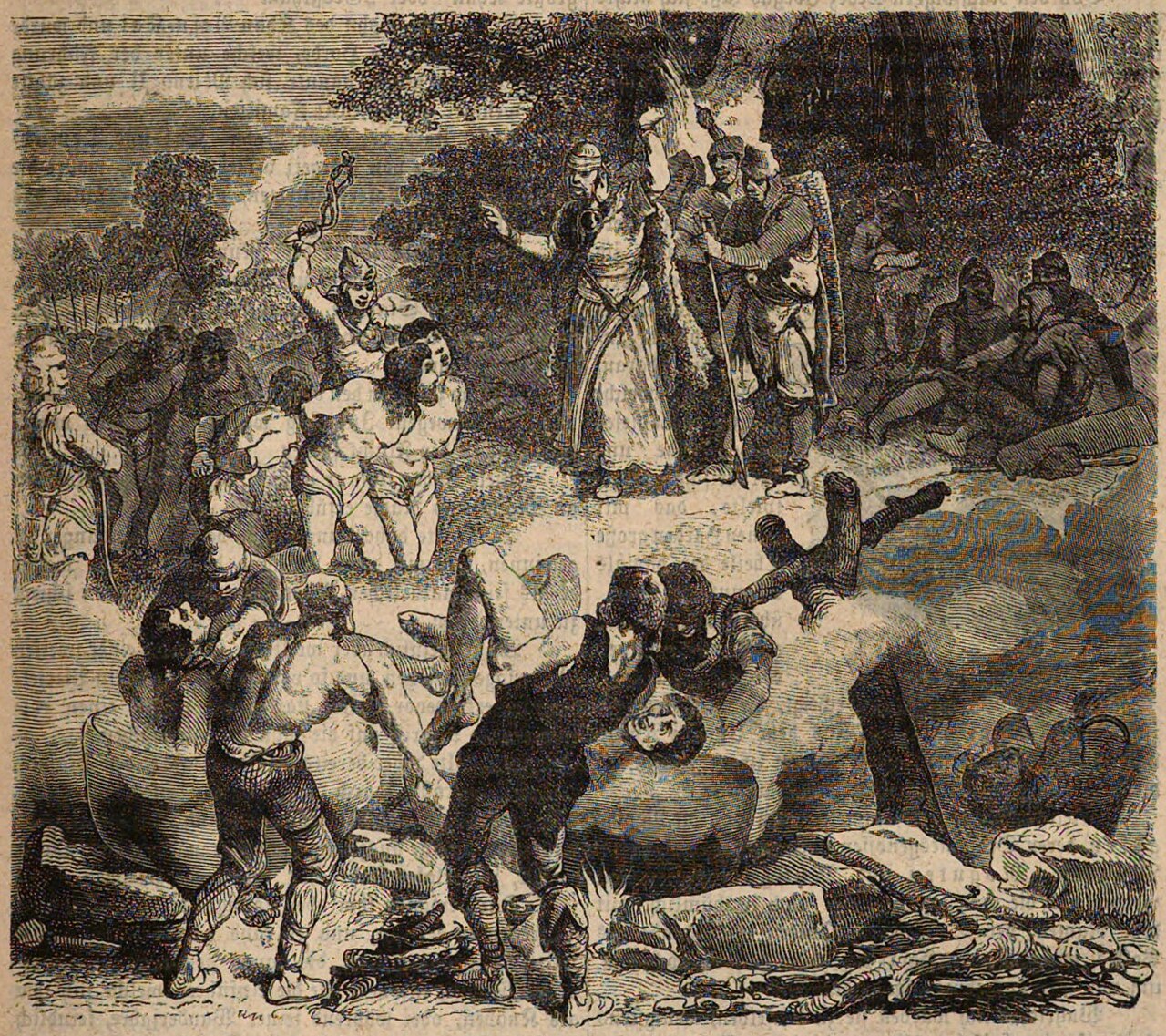
Genghis Khan lets the rebels boil
c. 1872
A c. 1872 engraved print of a legend in which Genghis Khan orders rebels boiled. It is a later 19th-century image, not a contemporary record.
Shows how a later 19th-century print turned a legend about Genghis Khan into a scene of cruelty for popular audiences.
About this source
What it is
This is an engraved print, dated around 1872, of a dramatic legend about Genghis Khan. A robed figure with raised arms stands before a tree while armed soldiers look on. In the foreground, men struggle and a person is dragged toward large cauldrons over a fire. The print's artist is unknown. It is a later image of a story, not a record made at the time.
Why it matters
Prints like this one shaped European and American ideas of Genghis Khan in the nineteenth century, often as a figure of terror. The scene is a legend and should not be read as an exact account of events. It shows what later artists and audiences found dramatic about him, and it reveals more about the time that made it than about the thirteenth century.
Look closer
- What does the artist choose to show in the foreground, and what does he leave out?
- Why would a 19th-century audience want to see a scene of violence like this?
- How can you tell a legend from a record when you look at a dramatic image of a historical figure?
This painting is part of the curated material that grounds the AI version of Genghis Khan on Humy.ai — when students ask about related events, the AI can quote it and cite it.
More Genghis Khan sources
Meet the AI Genghis Khan →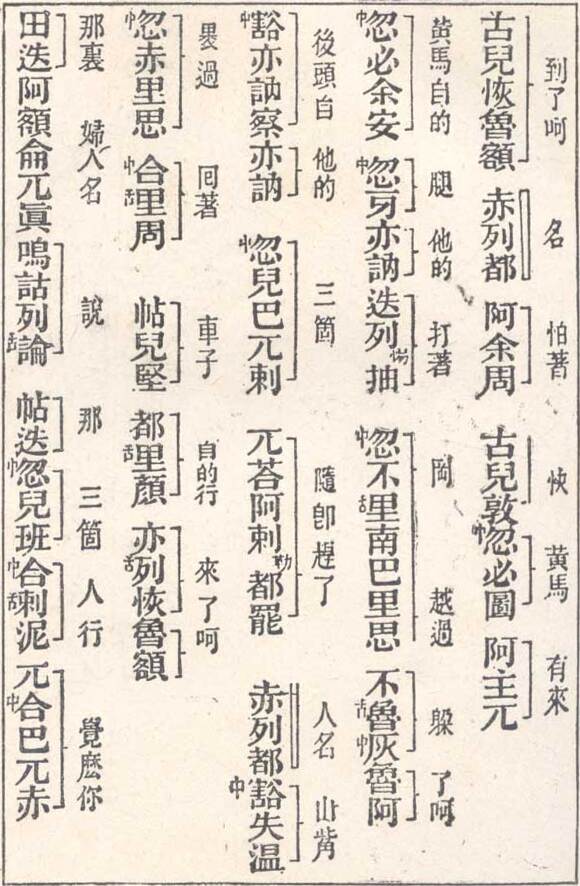 Book
Secondary source
The Secret History of the Mongols
c. 1228 (completed after 1227)
 Painting
Secondary source
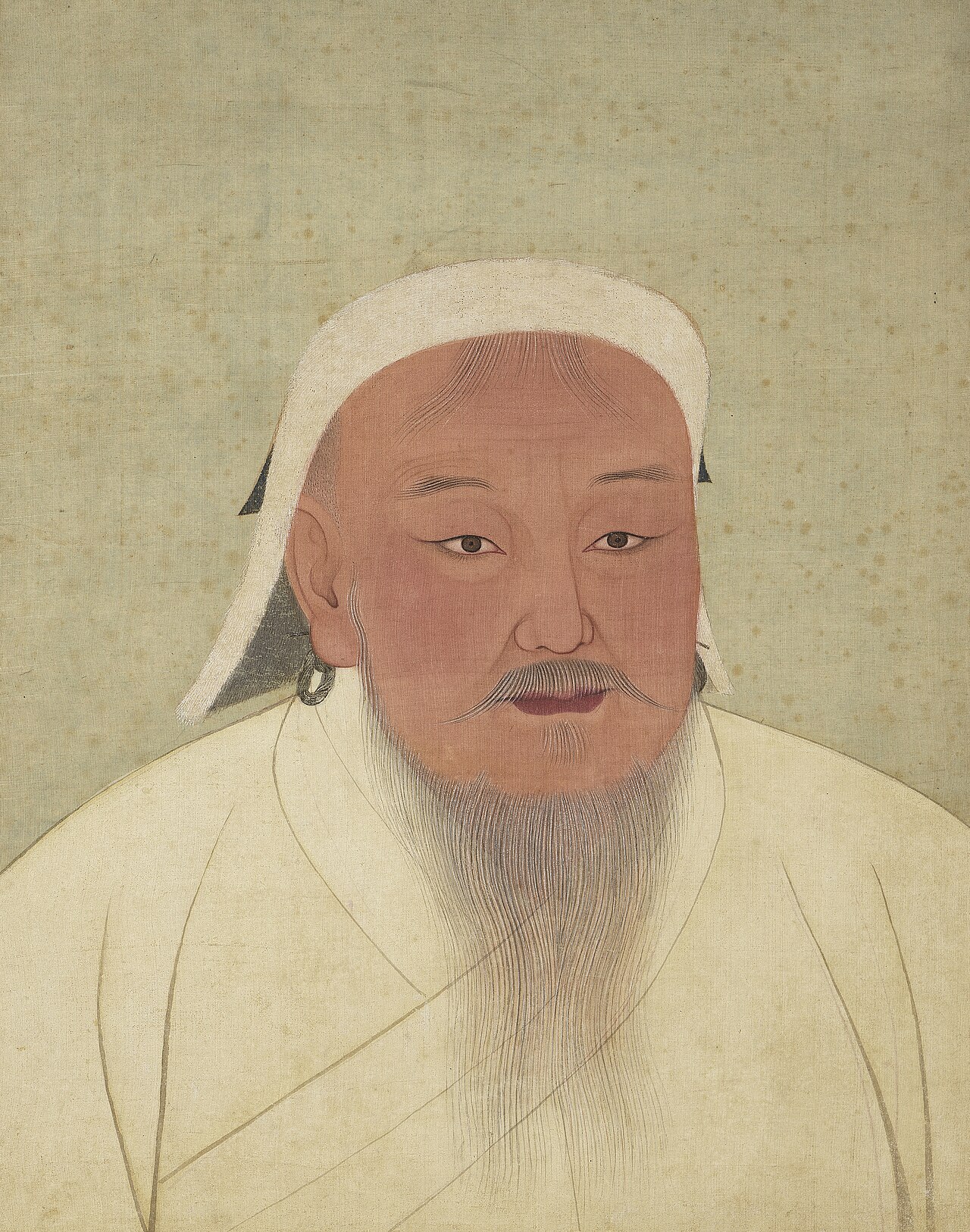
Portrait of Genghis Khan
Unknown Yuan court painter
 Book
Secondary source
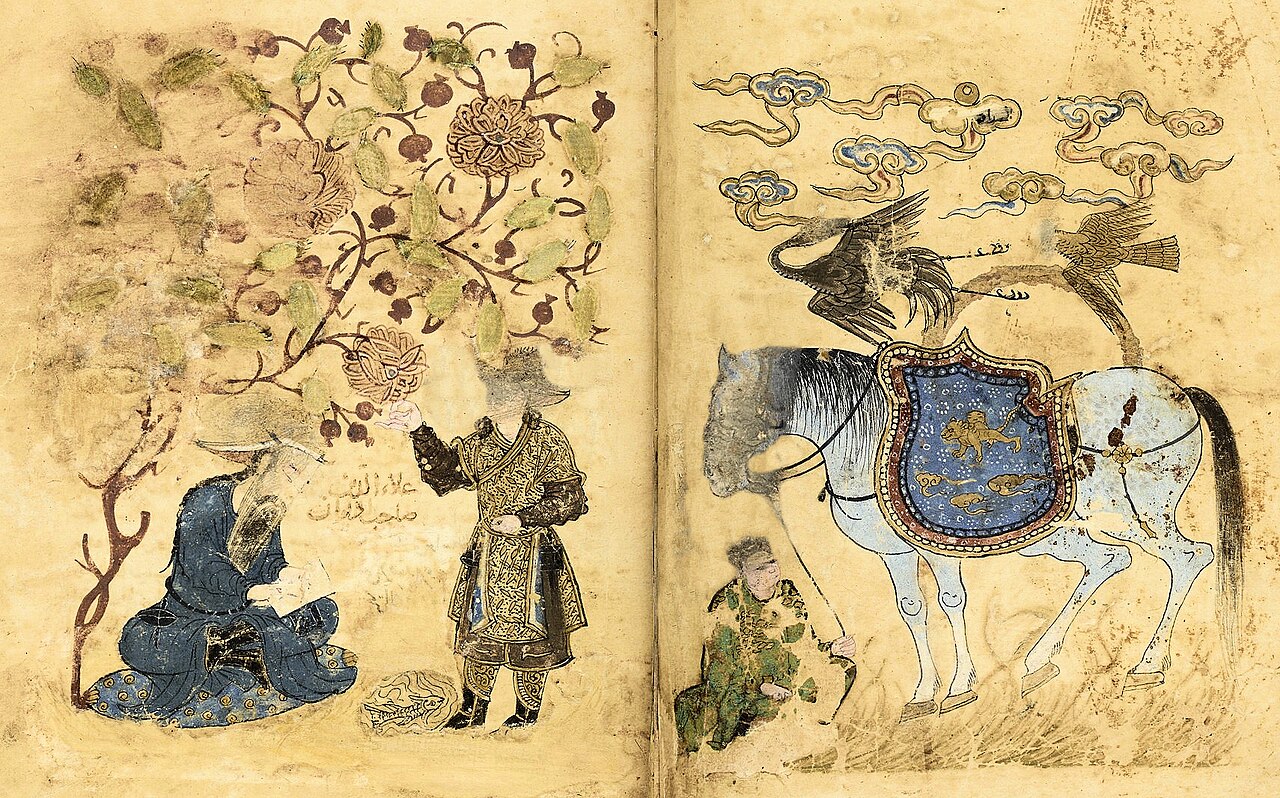
Tarikh-i Jahangushay-i Juvaini
Ata-Malik Juvayni
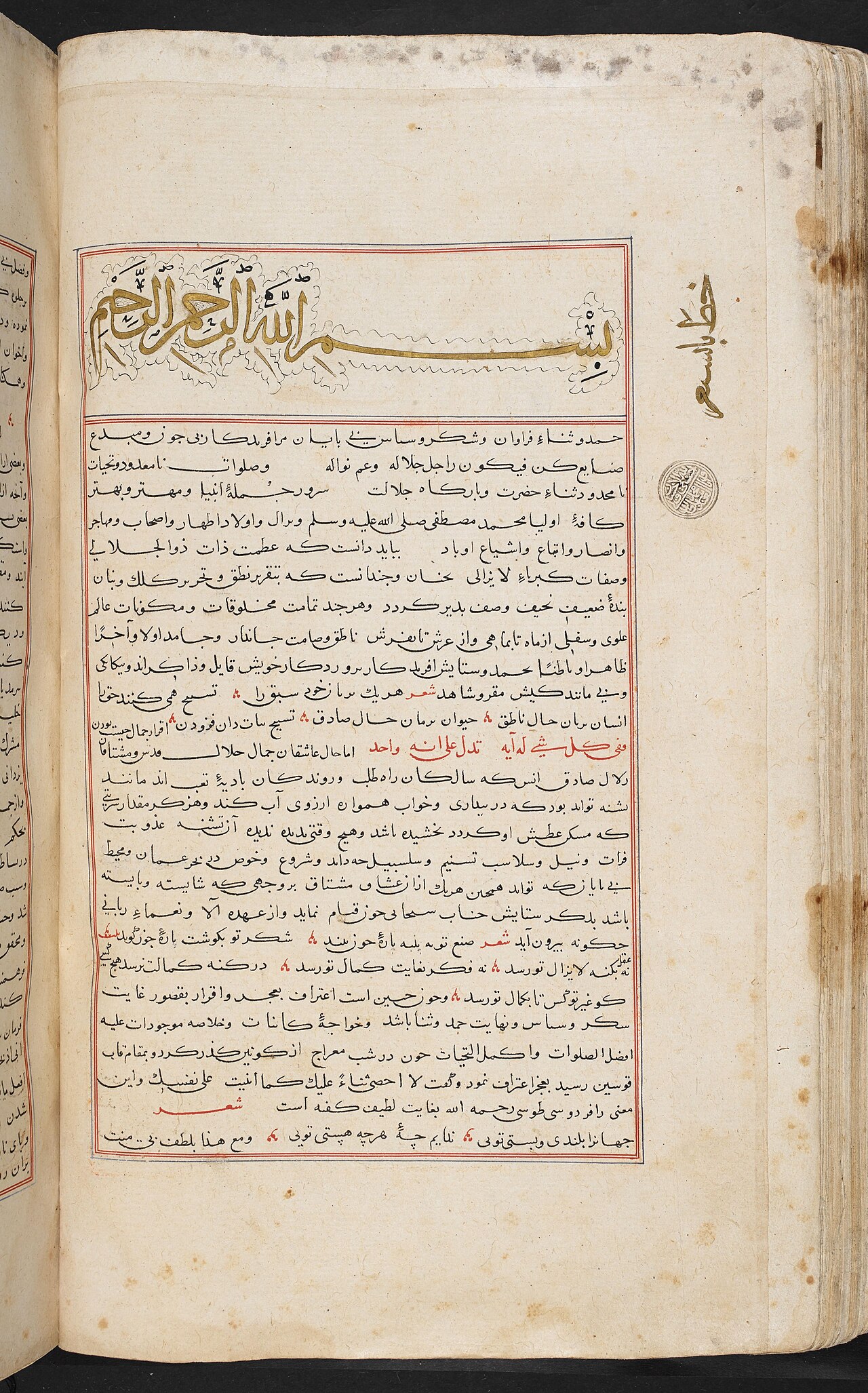 Book
Secondary source
Jami' al-tawarikh
Rashid al-Din Hamadani · c. 1400 (manuscript copy)
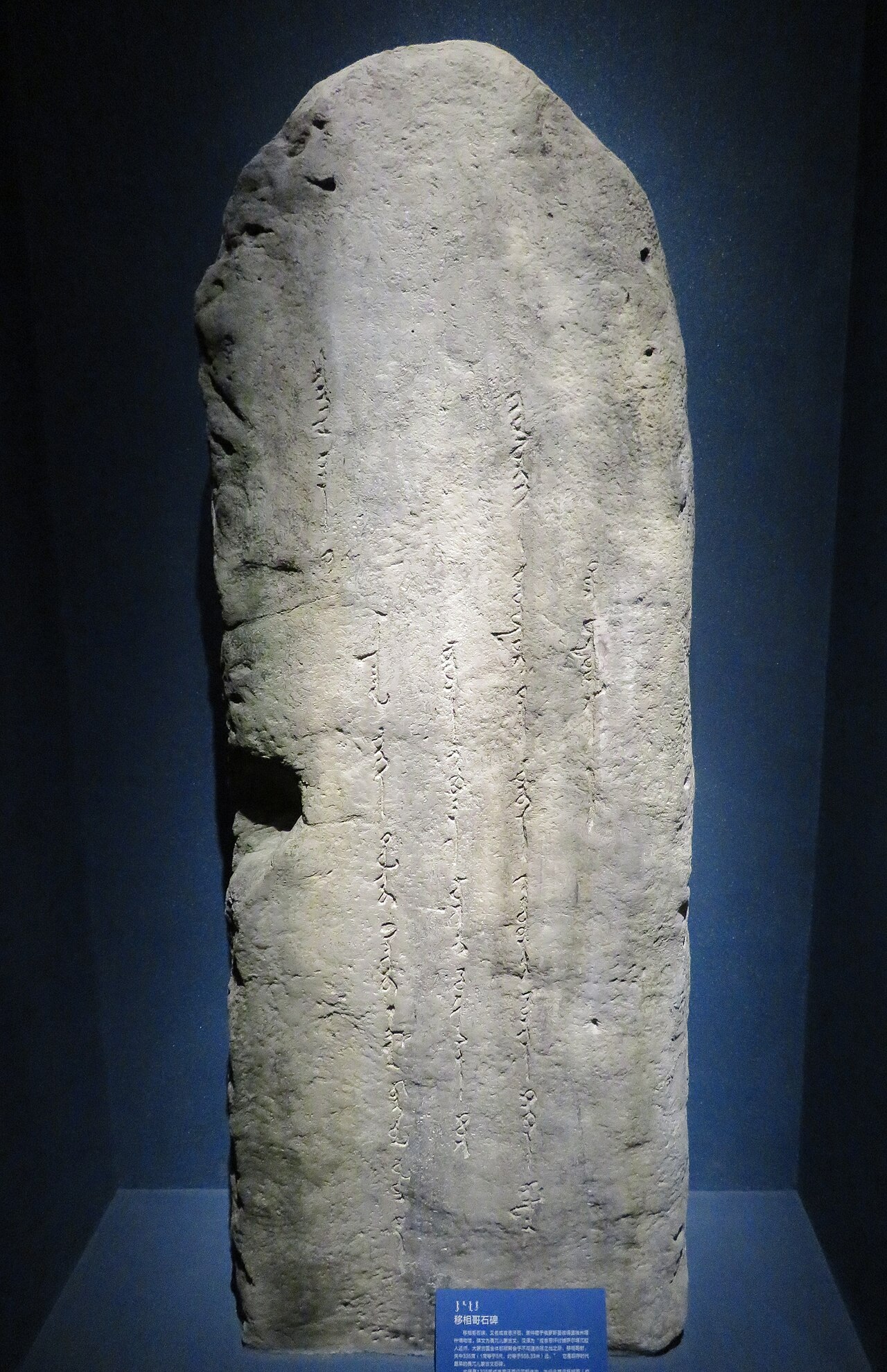 Artifact
Primary source
Stele of Genghis Khan
c. 1224-1225
Ready when you are
Start chatting with Genghis Khan now.
20 messages free · No credit card · Available in 50+ languages.