


Secondary sourcePaintingUnknown date, probably circa 1746-1760
George II and his officials
Thomas Jefferys (floruit 1759), after unknown artists · Unknown date, probably circa 1746-1760
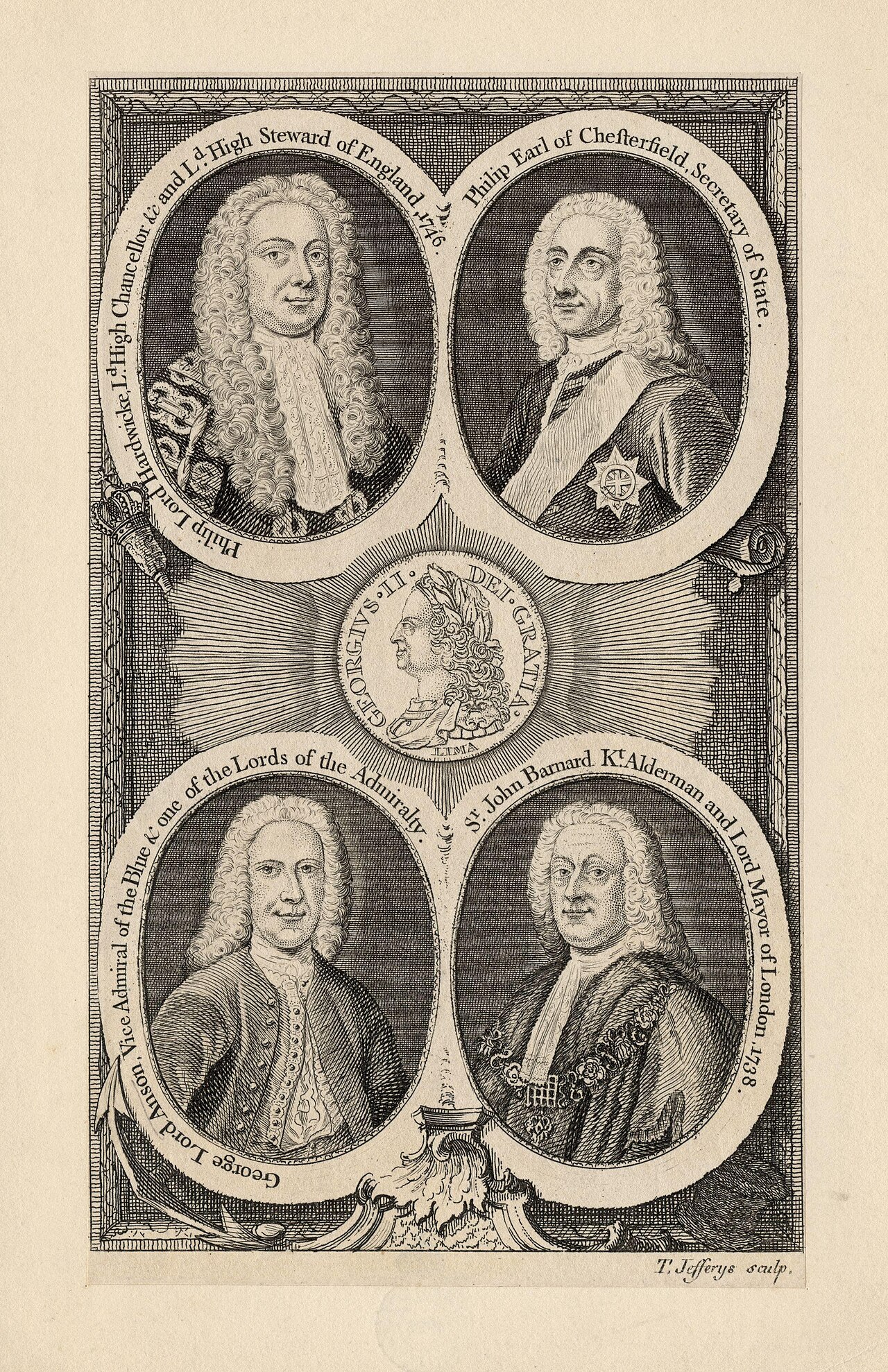
An engraved print by Thomas Jefferys showing George II in a central medallion, surrounded by four portraits of his ministers and officials. It presents the king together with the men who governed under him.
Places George II at the centre of his chief officials, showing the figures who worked with the king in government.
About this source
What it is
This is an engraved print with four oval portraits around a central medallion of King George II in profile, wearing a laurel wreath. The inscription reads GEORGIVS II DEI GRATIA. The four officials are Philip Yorke, Lord Hardwicke, in a judge's wig; Philip Stanhope, Earl of Chesterfield, wearing a star badge; George Anson, Lord Anson, in a coat with lace jabot; and Sir John Barnard, in a fur-trimmed robe. The engraver's credit T. Jefferys sculp. appears at lower right. Thomas Jefferys is recorded as active in 1759, and the print was made after unknown artists. The date is uncertain, probably between about 1746 and 1760. The image was gathered from the National Portrait Gallery, London.
Why it matters
The print places the king at the centre of a group of men who held major offices: the Lord Chancellor, an admiral, the Lord Mayor of London and a statesman. It shows how the reign was presented as a partnership between the monarch and his government. Because the artists of the original portraits are unknown, the print is a copy of earlier work.
Look closer
- Why is the king placed in the centre, and how do the officials' costumes show their jobs?
- Who made the original portraits, and why might Jefferys have copied them?
- What does this print leave out about the disagreements or failures of these men?
This painting is part of the curated material that grounds the AI version of George II on Humy.ai — when students ask about related events, the AI can quote it and cite it.
More George II sources
Meet the AI George II →Primary source
Charter of the Colony of Georgia
George II / Crown of Great Britain · 1732
Primary source
Zadok the Priest
George Frideric Handel · 1727
 Painting
Primary source
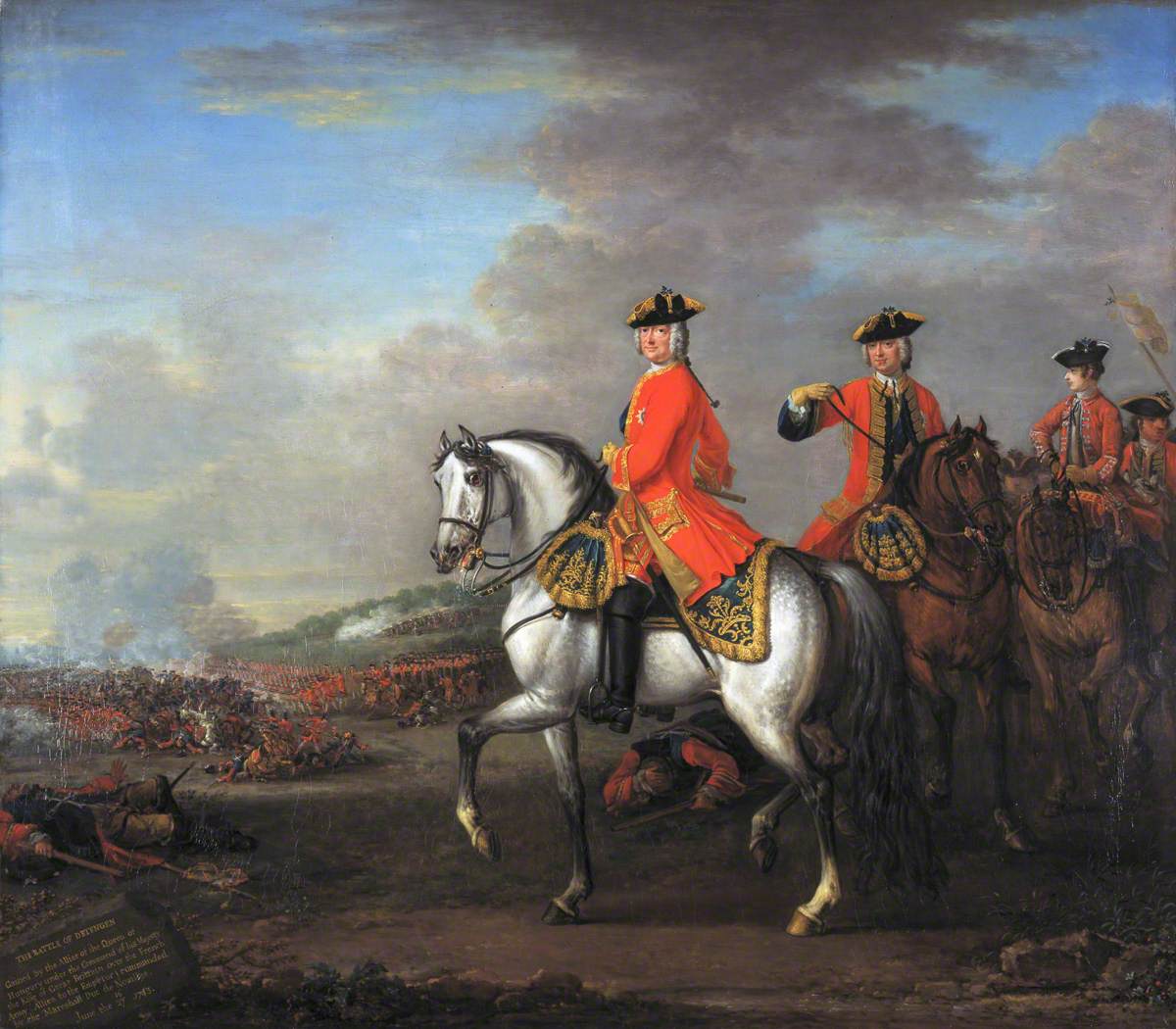
George II at the Battle of Dettingen, with the Duke of Cumberland and Robert, 4th Earl of Holderness
John Wootton · 1743
Primary source
Memoirs of the Reign of George the Second, from his Accession to the Death of Queen Caroline
John Hervey, Baron Hervey
 Document
Primary source
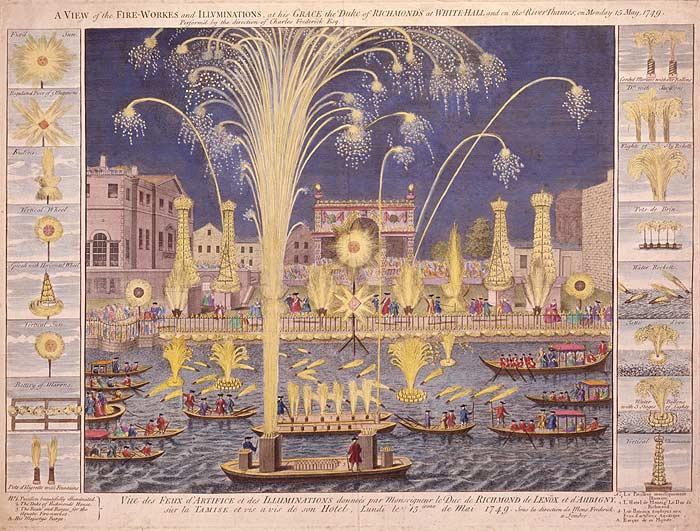
Music for the Royal Fireworks
George Frideric Handel · 1749
Ready when you are
Start chatting with George II now.
20 messages free · No credit card · Available in 50+ languages.