


Secondary sourceArtifactca. 1765
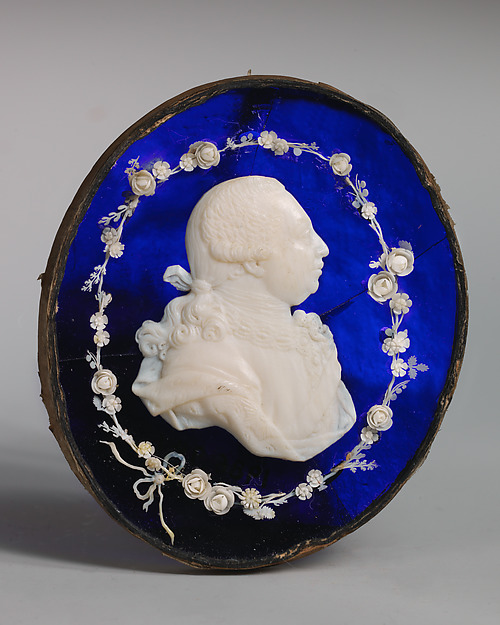
George II ivory relief on blue glass
ca. 1765
A carved ivory relief bust of George II mounted on an oval of blue glass, dated about 1765. It was made after the king died in 1760 and is held by the Metropolitan Museum of Art.
A relief likeness of George II made after his death, showing how his image was kept in circulation.
About this source
What it is
This object is a relief portrait of George II, with a white ivory bust carved in profile. It is mounted on an oval panel of blue glass and shows a man with curled hair and a cravat, surrounded by a garland of white flowers and ribbon bows. The Metropolitan Museum of Art dates it to about 1765 and holds it as a gift of Elna Linborg Friedman, 1986. The image shows the relief against a grey background.
Why it matters
George II died in 1760, so this relief was made some years after his death. It shows that his likeness was still being reproduced and displayed in the decade after he ruled. Objects like this help historians see how a ruler was remembered, and by whom they were made for, though the record does not name the carver.
Look closer
- How does the carver show the king's face and hair in a flat, carved profile?
- What do the flowers and ribbons add to the way the king is presented?
- Who might have owned or displayed an object like this, and what does the record not tell us?
This artifact is part of the curated material that grounds the AI version of George II on Humy.ai — when students ask about related events, the AI can quote it and cite it.
More George II sources
Meet the AI George II →Primary source
Charter of the Colony of Georgia
George II / Crown of Great Britain · 1732
Primary source
Zadok the Priest
George Frideric Handel · 1727
 Painting
Primary source
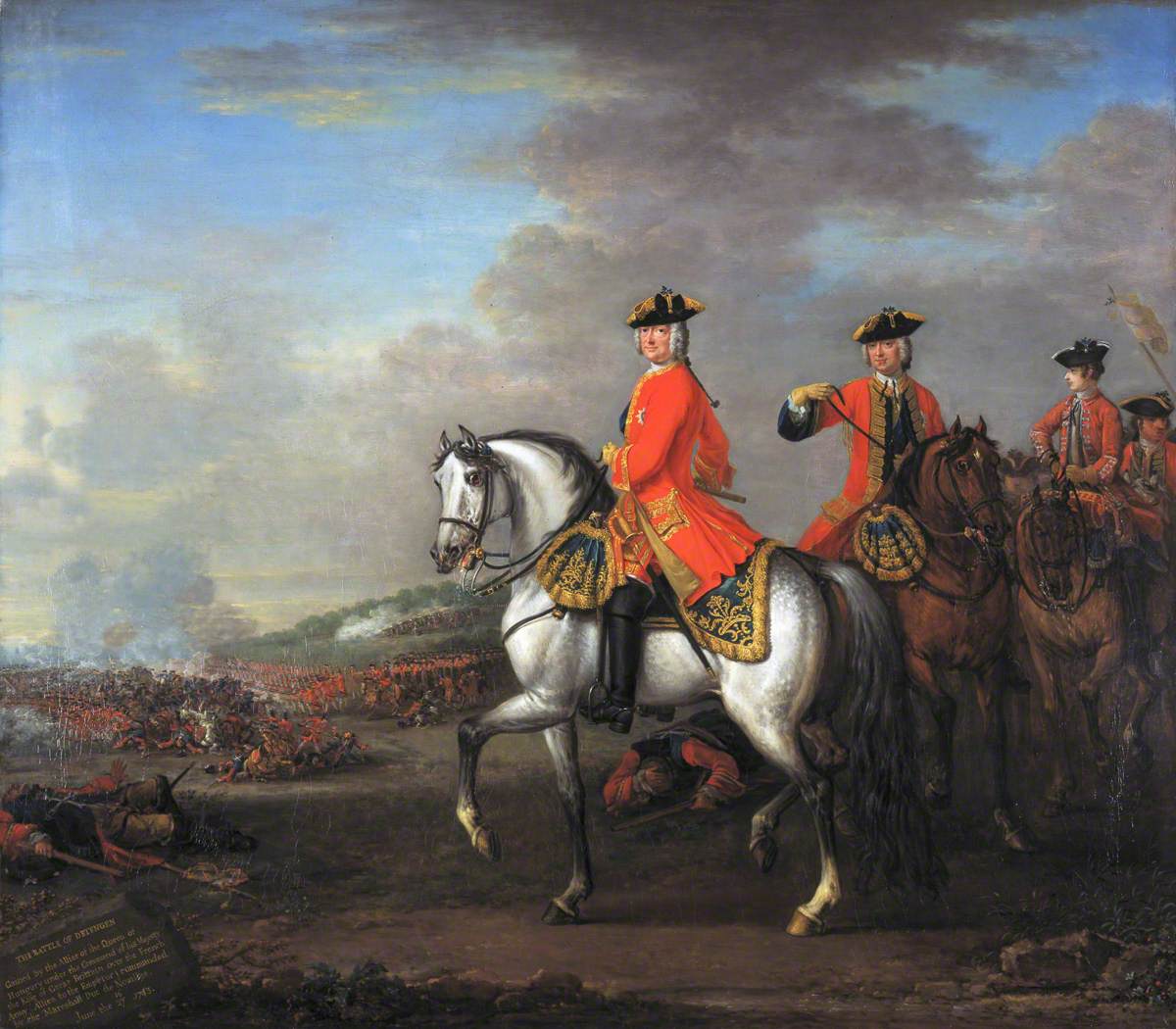
George II at the Battle of Dettingen, with the Duke of Cumberland and Robert, 4th Earl of Holderness
John Wootton · 1743
Primary source
Memoirs of the Reign of George the Second, from his Accession to the Death of Queen Caroline
John Hervey, Baron Hervey
 Document
Primary source
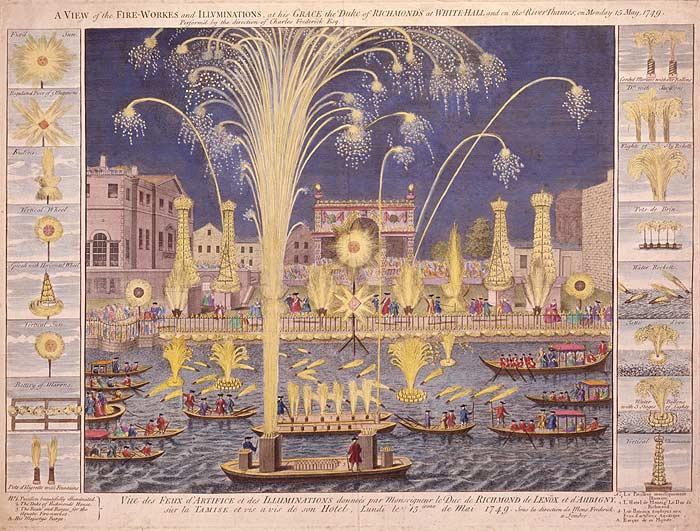
Music for the Royal Fireworks
George Frideric Handel · 1749
Ready when you are
Start chatting with George II now.
20 messages free · No credit card · Available in 50+ languages.