


Primary sourceDocument1824
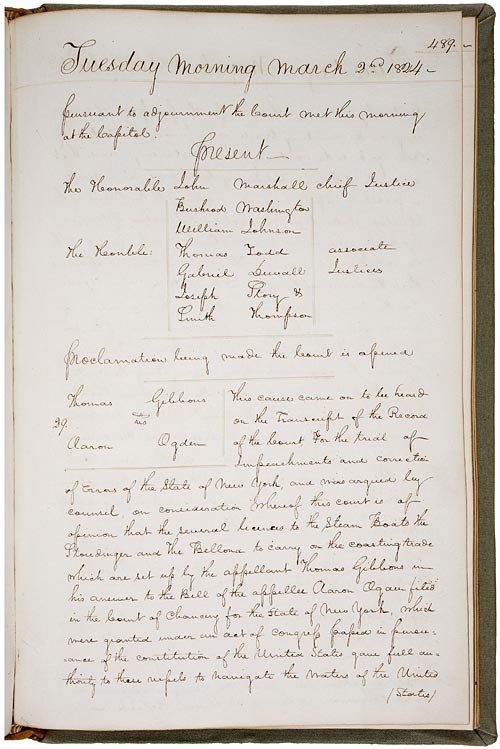
Gibbons v. Ogden
John Marshall · 1824
The 1824 Supreme Court decision, written by Chief Justice John Marshall, giving Congress broad power to regulate interstate commerce.
The Court's ruling rested largely on Webster's argument for Gibbons in this landmark commerce case.
About this source
What it is
This is the Supreme Court's decree in Gibbons v. Ogden, decided in 1824 under Chief Justice John Marshall, held in the Court's engrossed minutes at the U.S. National Archives.
The case grew out of a dispute between Thomas Gibbons and Aaron Ogden over a New York steamboat monopoly granted to Robert Fulton and Robert Livingston.
Why it matters
Marshall ruled that Congress's power to regulate interstate commerce overrides conflicting state laws, striking down New York's monopoly. The decision strengthened federal authority over the economy and affected how new technologies like the steamboat could spread.
Look closer
- Why might a state want to control who can operate steamboats in its waters?
- What does this case show about conflicts between state and federal power in the early United States?
- Who benefited and who lost from Marshall's ruling?
This document is part of the curated material that grounds the AI version of Daniel Webster, William Becknell, John Marshall and Cornelius Vanderbilt on Humy.ai — when students ask about related events, the AI can quote it and cite it.
More Daniel Webster sources
Meet the AI Daniel Webster →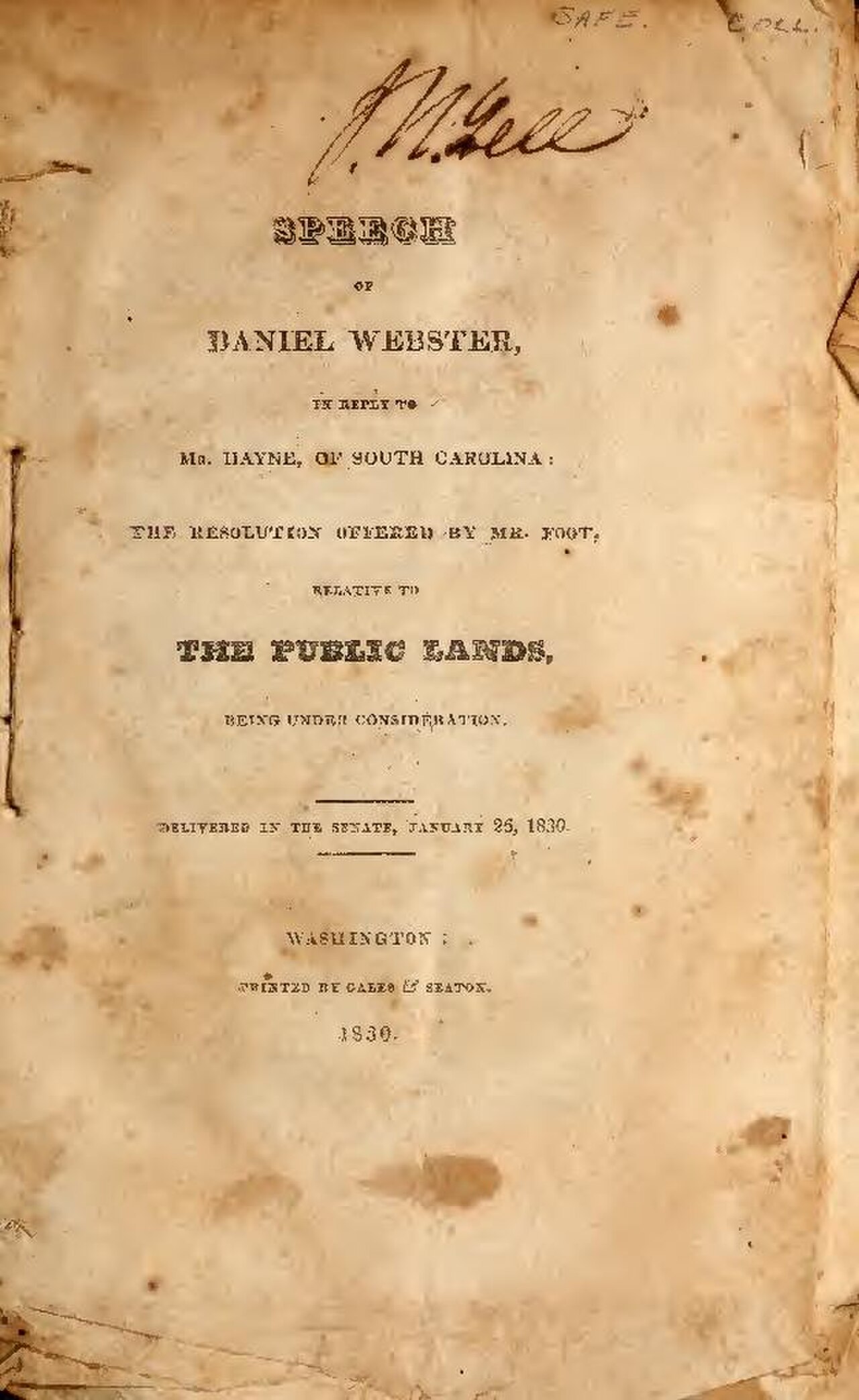 Speech
Primary source
Second Reply to Hayne
Daniel Webster · 26-27 January 1830
Primary source
The Seventh of March Speech
Daniel Webster · 7 March 1850
 Document
Primary source
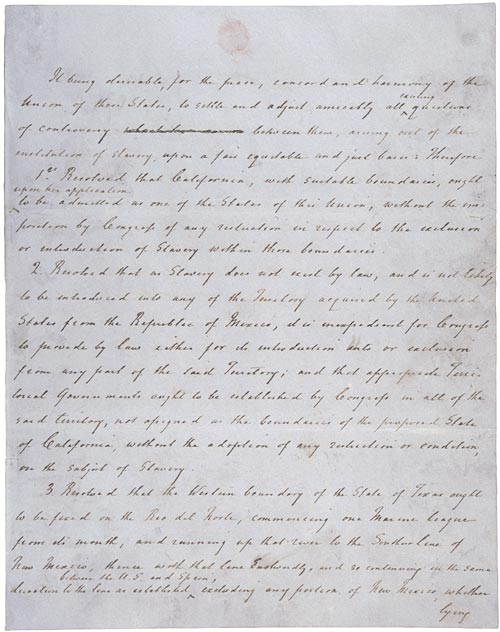
Compromise of 1850
Henry Clay · 29 January 1850 (resolutions); statutes enacted September 1850
 Document
Primary source
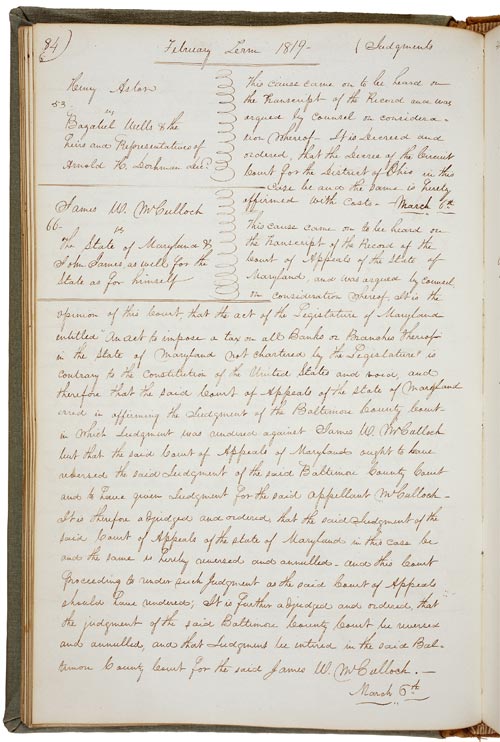
McCulloch v. Maryland
John Marshall · 6 March 1819
 Document
Primary source
Dartmouth College v. Woodward
U.S. Supreme Court · 1819
Ready when you are
Start chatting with Daniel Webster now.
20 messages free · No credit card · Available in 50+ languages.