


Primary sourceDocument1963
Gideon v. Wainwright
Hugo Black · 1963
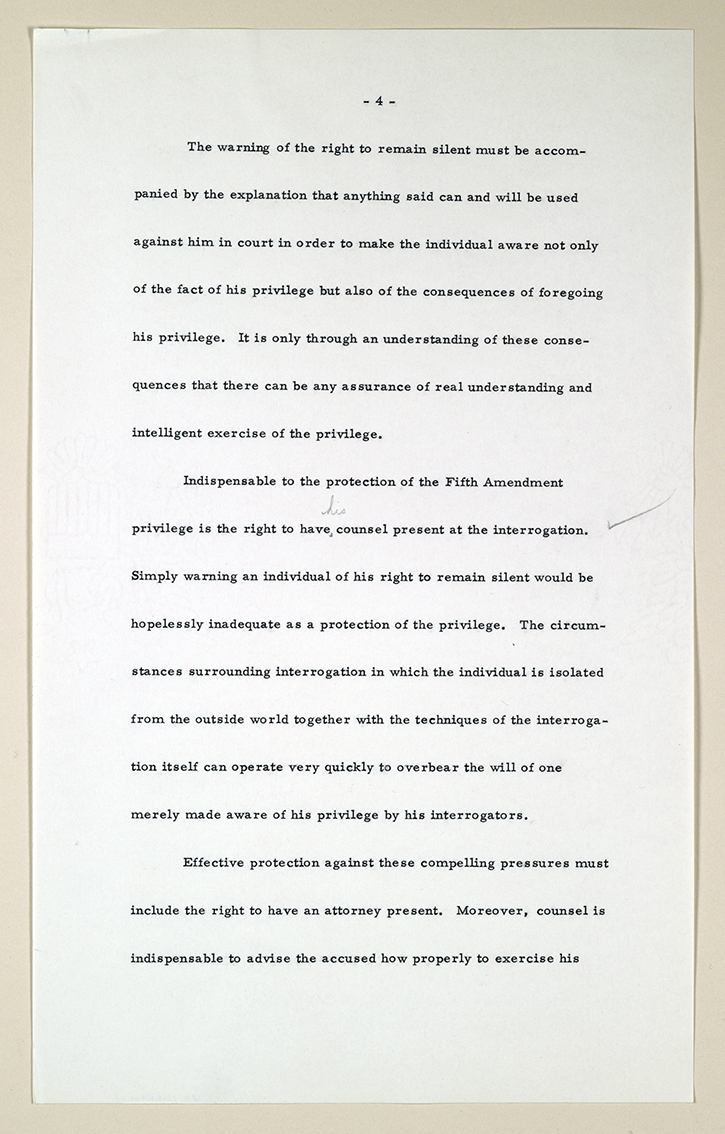
The 1963 Supreme Court decision, written by Justice Hugo Black, ruling that states must provide lawyers to defendants too poor to afford one.
This ruling is the direct legal result of Gideon's case, establishing the right to counsel that gives him his place in history.
Free Humy account · No credit card · 120,912 sources to read
About this source
What it is
This is the Supreme Court's 1963 ruling in Gideon v. Wainwright, written by Justice Hugo Black. It decided that Clarence Earl Gideon, who had been forced to defend himself at trial because he could not afford a lawyer, had been denied his Sixth Amendment rights.
Why it matters
The case overturned an earlier ruling, Betts v. Brady, and established that all states must give free legal counsel to defendants who cannot pay for it. Gideon's appeal was argued before the Court by attorney Abe Fortas, and the decision became one of the most important criminal justice rulings in U.S. history, reshaping how trials work across the country.
Look closer
- Why might a fair trial be impossible without a lawyer, according to the Court?
- What does Gideon's exchange with the judge reveal about the law before this case?
- Why did it take a prisoner's own handwritten appeal to change the law for everyone?
This document is part of the curated material that grounds the AI version of Clarence Earl Gideon on Humy.ai — when students ask about related events, the AI can quote it and cite it.
More Clarence Earl Gideon sources
Browse all 12 →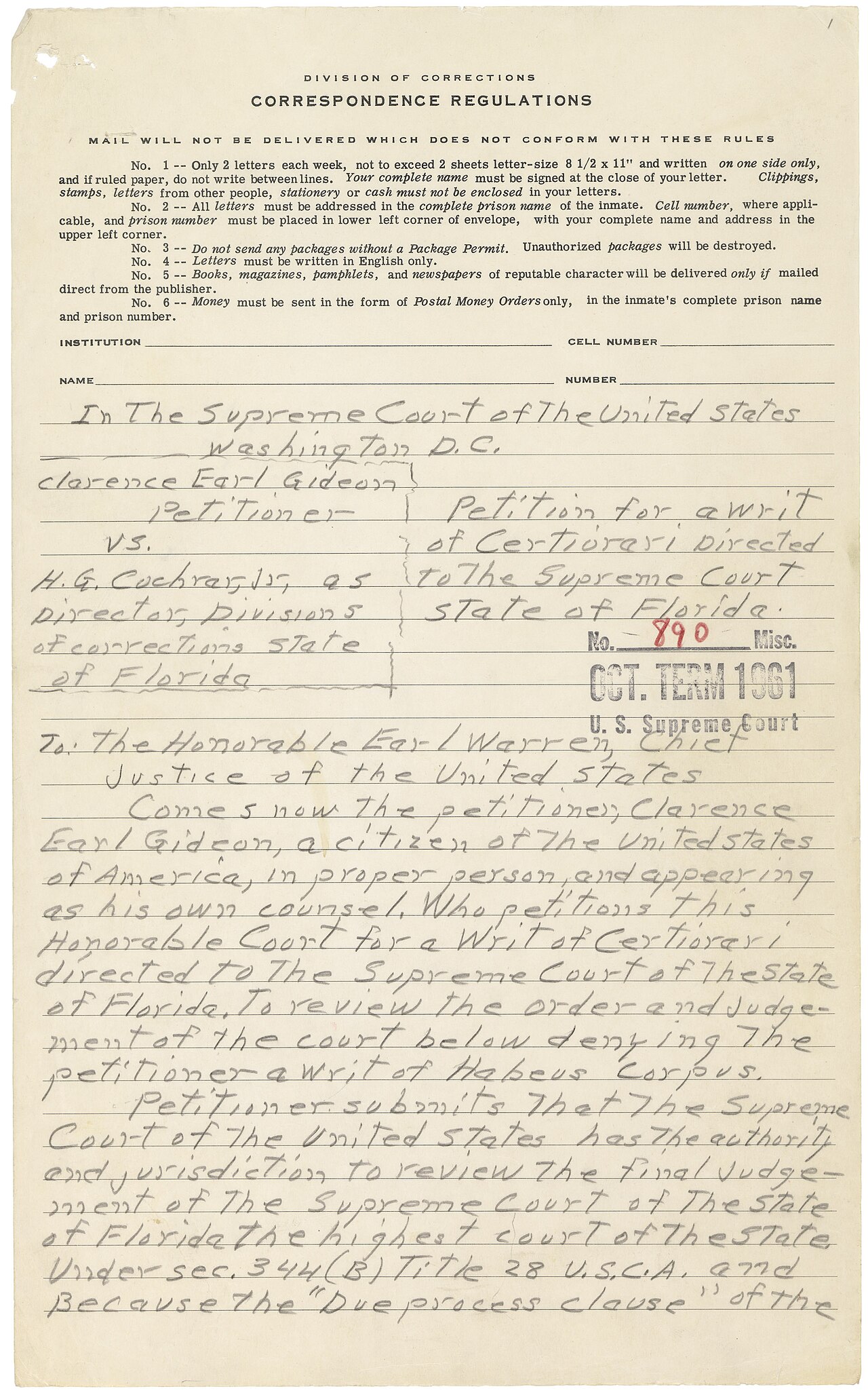 Document
Primary source
Gideon petition for certiorari
Clarence Earl Gideon · 1961
Primary source
Gideon v. Wainwright
Hugo Black · 1963
 Photograph
Primary source
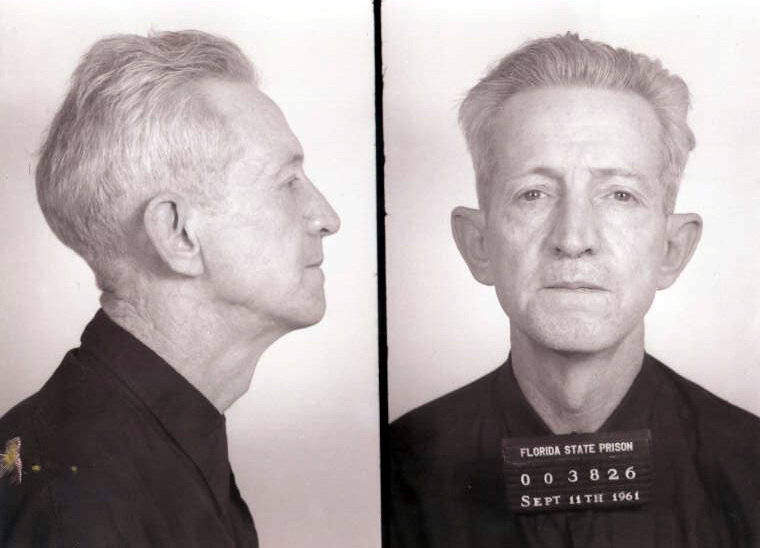
Mug shot of Clarence Earl Gideon
Florida State Prison · 11 September 1961
 Painting
Primary source
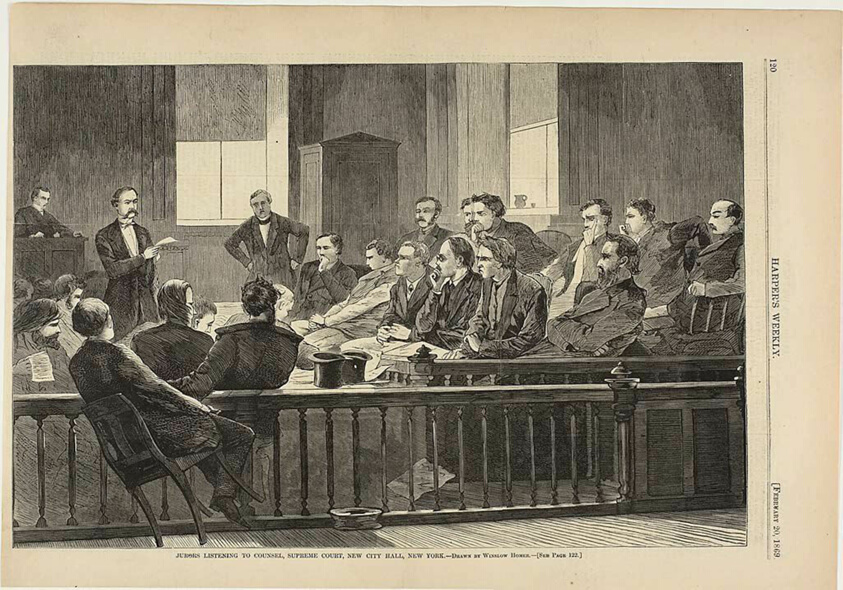
Jurors Listening to Counsel, Supreme Court, New City Hall, New York
Winslow Homer · published February 20, 1869

Free account
Read every Clarence Earl Gideon source
Sign up free →
Ready when you are
Start chatting with Clarence Earl Gideon now.
20 messages free · No credit card · Available in 50+ languages.