


Primary sourceDocumentc. 1890
Gnossiennes
Erik Satie · c. 1890
A set of experimental piano pieces by Erik Satie from around 1890, written without bar-lines or conventional tempo marks.
Satie composed these pieces, showing his early experiments with breaking musical notation conventions.
About this source
What it is
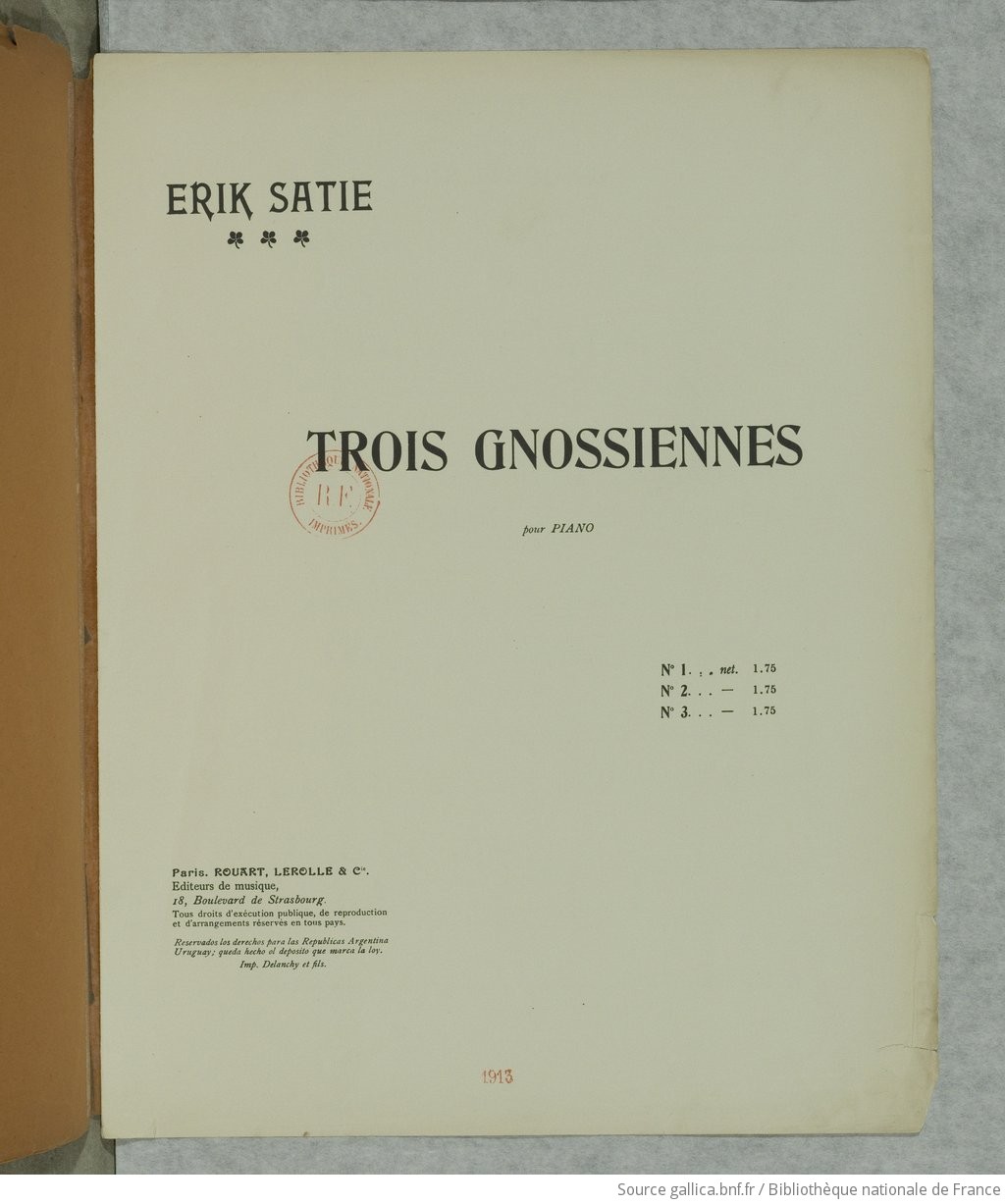
The Gnossiennes are piano compositions by Erik Satie, composed mostly around 1890 and first published in 1893. Shown here is the title page of the Trois Gnossiennes score, published by Rouart-Lerolle.
Why it matters
Satie invented the word 'gnossienne' himself, drawing on ideas linked to ancient ritual dance and to gnosis. The pieces were written while he was involved with Gnostic and Rosicrucian circles in Paris, including his friend Joséphin Péladan, showing how his music was bound up with the esoteric culture of the time. By abandoning bar-lines and ordinary tempo markings, Satie broke sharply with musical convention, continuing the experimental style he had begun with the Gymnopédies.
Look closer
- Why might a composer remove bar-lines and time signatures from a piece of music?
- What does the choice of a made-up title tell you about how Satie thought about his own work?
- What does the publication history—some pieces appearing decades after Satie's death—tell you about how an artist's legacy can be shaped by others?
This document is part of the curated material that grounds the AI version of Erik Satie on Humy.ai — when students ask about related events, the AI can quote it and cite it.
More Erik Satie sources
Browse all 82 →
Ready when you are
Start chatting with Erik Satie now.
20 messages free · No credit card · Available in 50+ languages.