


Primary sourceDocument1888
Gymnopédies
Erik Satie · 1888
Three piano pieces written by Erik Satie in 1888, among his best-known works, whose static harmony became his signature sound.
Satie composed and wrote out these pieces himself, his earliest and most famous work.
About this source
What it is
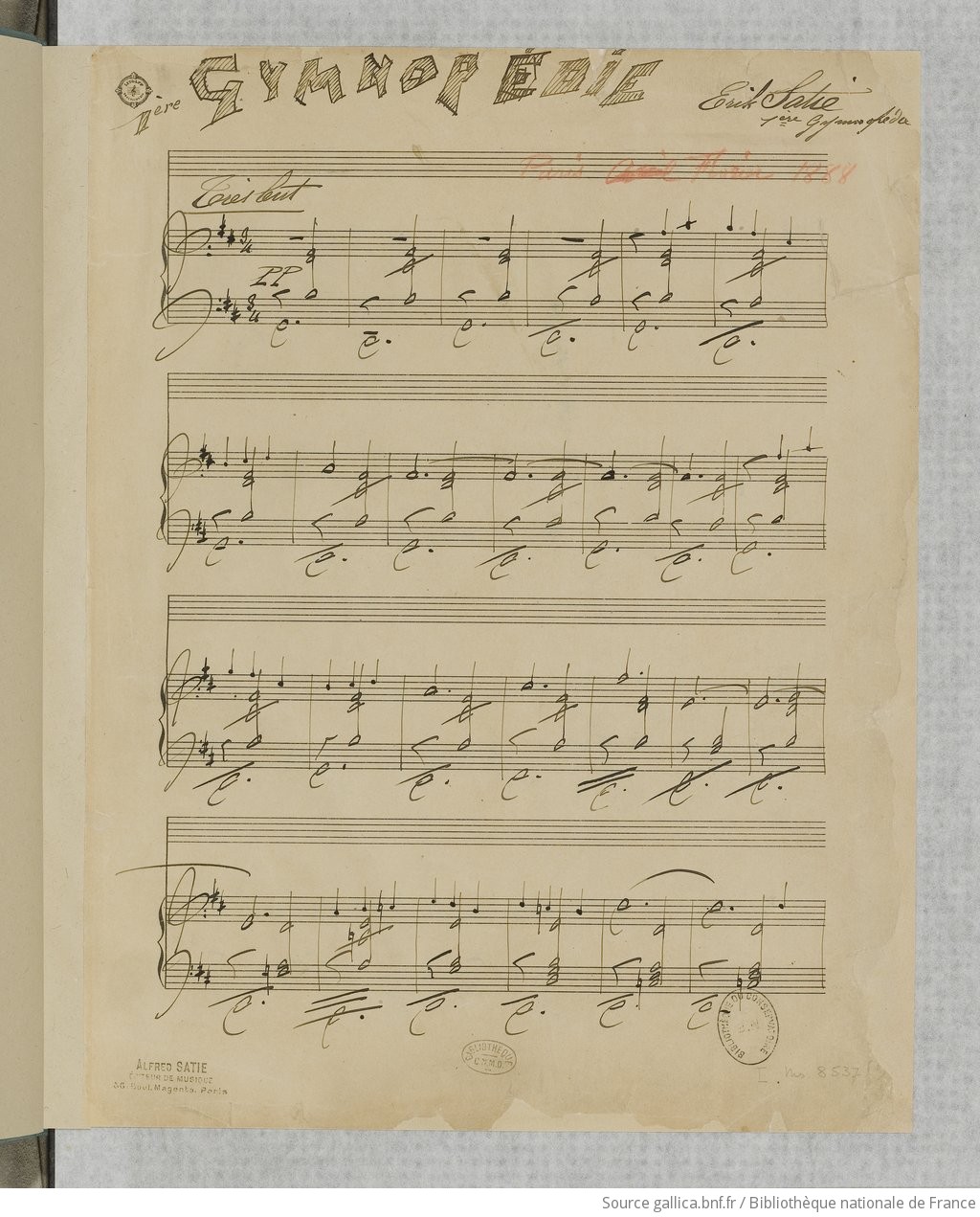
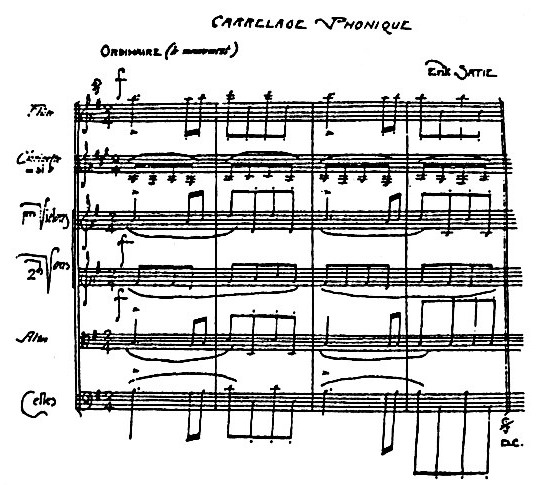
The Gymnopédies are three short piano compositions completed by Erik Satie by April 1888. They were published individually at first; the manuscript shown here is Satie's handwritten first page of the Gymnopédie No. 1.
Why it matters
These pieces, written in Satie's youth in Montmartre, introduced a melancholy, mildly dissonant sound that became his trademark. His friend Claude Debussy helped popularize them by orchestrating two of them. They are now seen as an early ancestor of ambient music, and they show how a young, little-known composer could create something strikingly original outside the mainstream of French music.
Look closer
- What do the performance instructions like 'painfully' or 'sadly' tell you about how Satie wanted this music felt rather than just played?
- Why might a handwritten manuscript tell us something a printed score cannot?
- Why do you think these pieces are still used in films and songs today?
This document is part of the curated material that grounds the AI version of Erik Satie on Humy.ai — when students ask about related events, the AI can quote it and cite it.
More Erik Satie sources
Browse all 82 →
Ready when you are
Start chatting with Erik Satie now.
20 messages free · No credit card · Available in 50+ languages.