


Primary sourceArtifact1235–1270
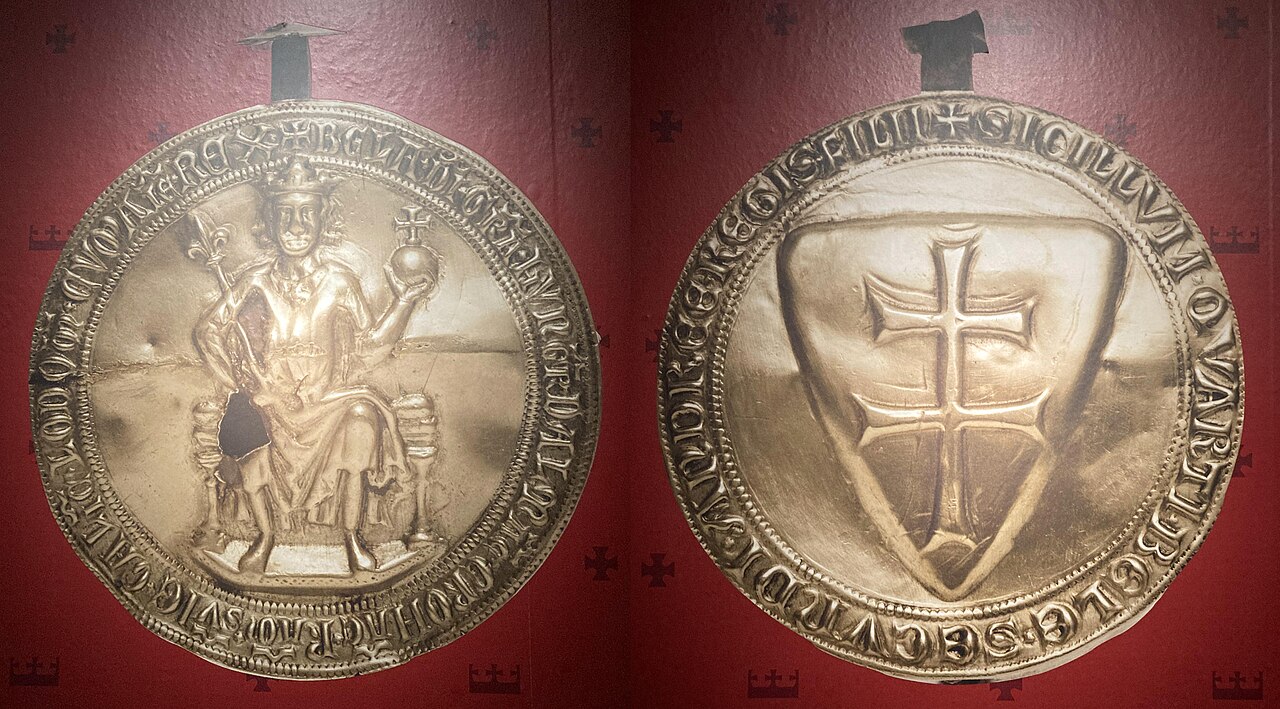
Golden Seal of Béla IV
1235–1270
A gold seal showing Béla IV enthroned on one side and the royal arms on the other, used to authenticate his royal documents.
This is Béla IV's own royal seal, the official emblem of his authority as king.
About this source
What it is
This is the golden seal of King Béla IV of Hungary, made during his reign in the 13th century. One face shows the king seated on his throne, crowned and holding a scepter and orb, with a Latin inscription around the edge; the other shows a shield bearing a cross.
Why it matters
Royal seals like this were attached to official documents to prove they came from the king himself. The image of the enthroned ruler was a carefully chosen symbol of royal power and divine authority, showing how Béla IV wanted to be seen by his subjects and by other rulers.
Look closer
- What does the king's pose and clothing tell you about how he wanted to be seen?
- Why would a king need two different symbols on one object?
- What is missing from this official image of the king?
This artifact is part of the curated material that grounds the AI version of Béla IV of Hungary on Humy.ai — when students ask about related events, the AI can quote it and cite it.
More Béla IV of Hungary sources
Browse all 71 → Artifact
Primary source
Buda Castle
1244 (rebuilt under Matthias after 1476)
 Artifact
Secondary source
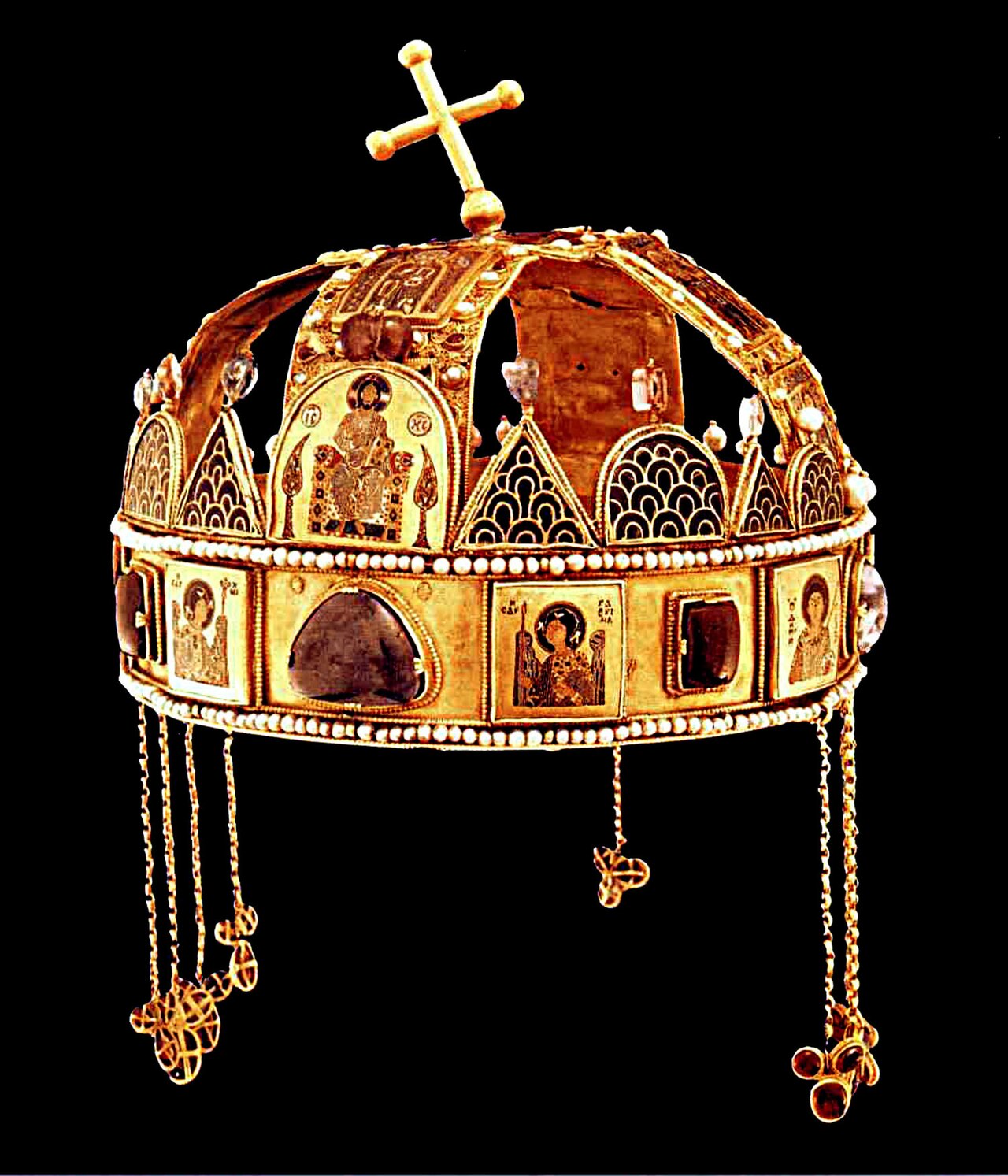
Holy Crown of Hungary
1070s, present form c. late 12th century
 Artifact
Primary source
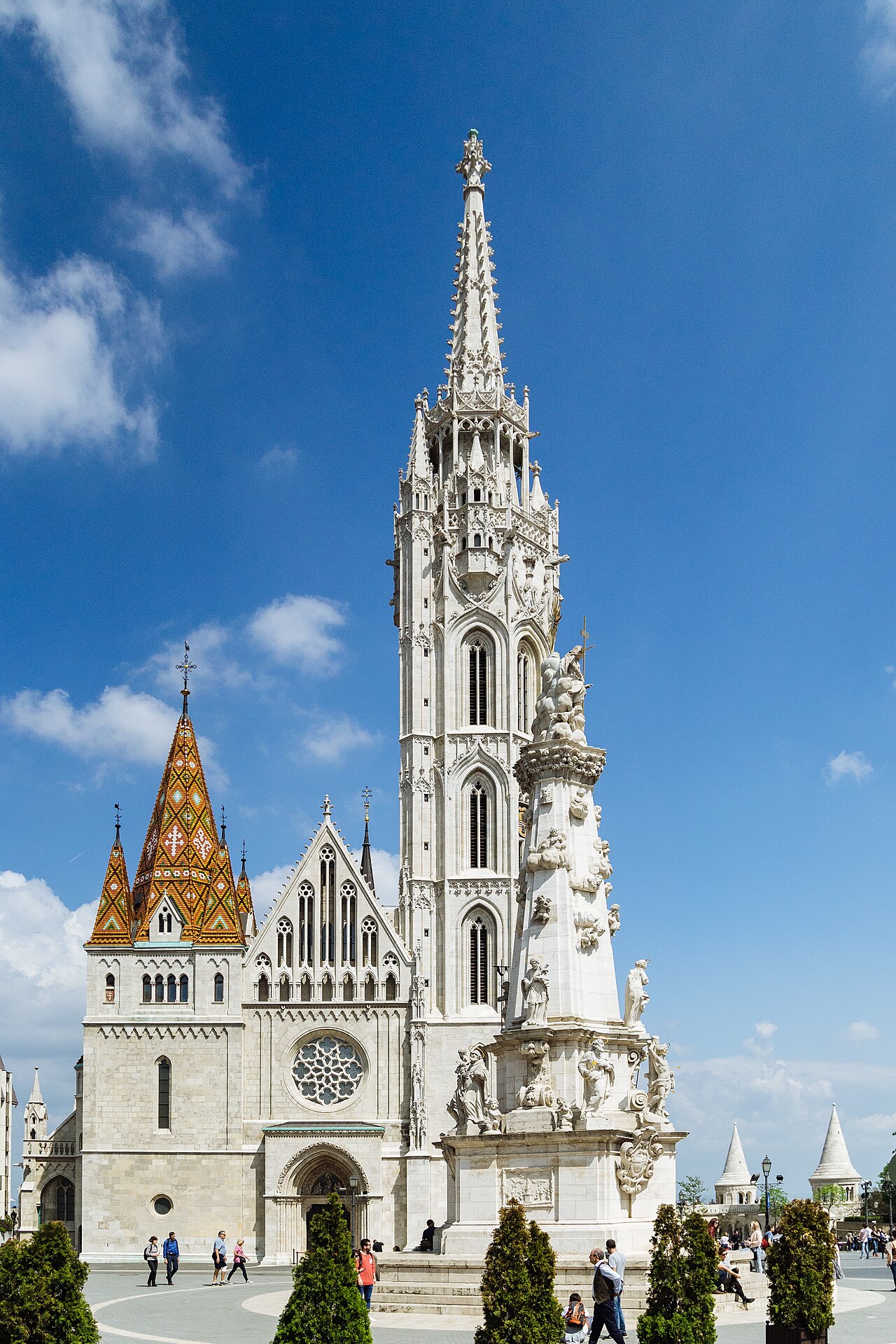
Matthias Church
1255
 Book
Secondary source
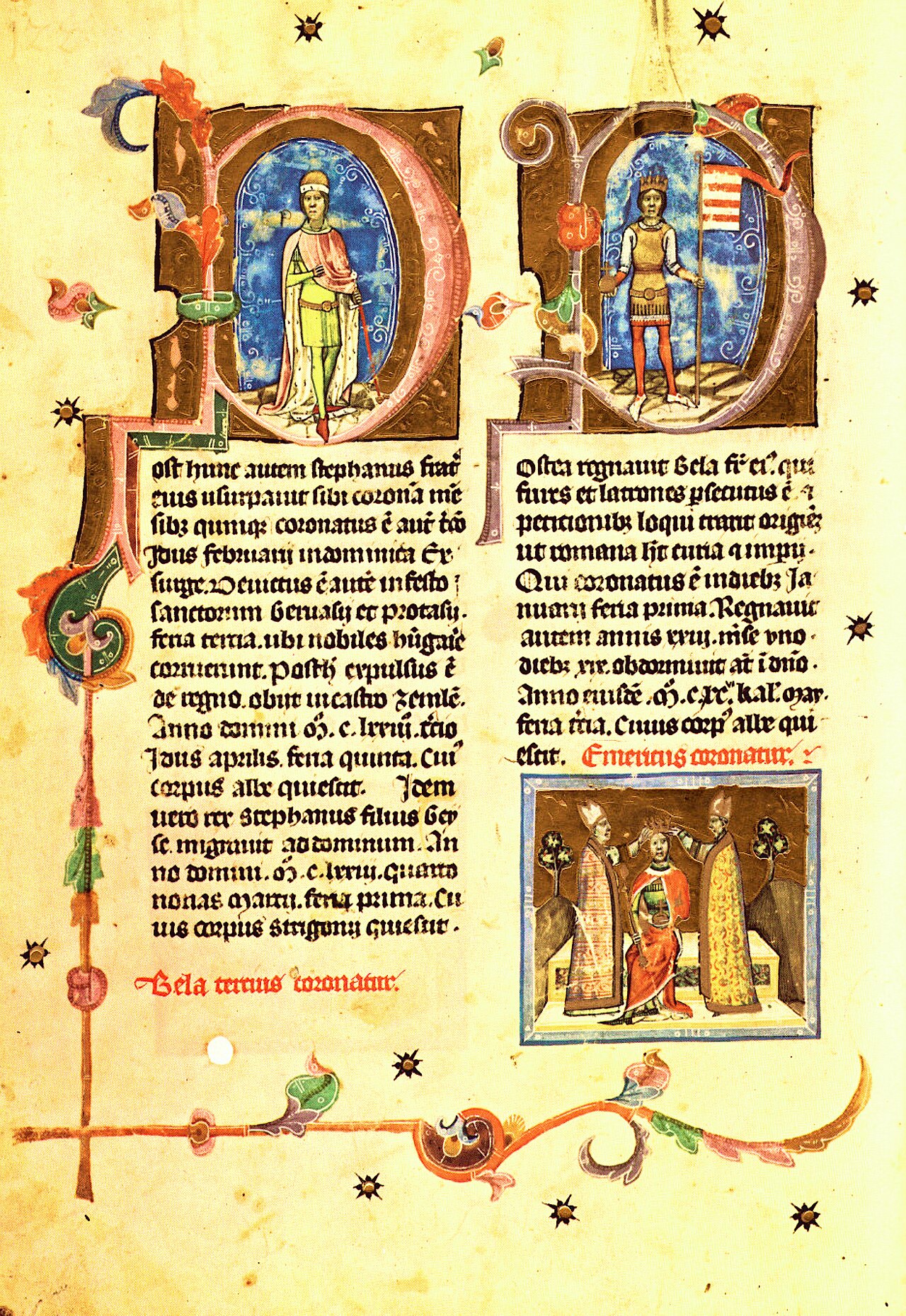
Chronicon Pictum
Márk Kálti · after 1358, no later than 1370
Free account
Read every Béla IV of Hungary source
Sign up free →
Ready when you are
Start chatting with Béla IV of Hungary now.
20 messages free · No credit card · Available in 50+ languages.