


Secondary sourceDocument2nd century BCE (inscriptions); 1918 (edition)
Gracchan Land Commission Boundary Stones (CIL I²)
Corpus Inscriptionum Latinarum · 2nd century BCE (inscriptions); 1918 (edition)
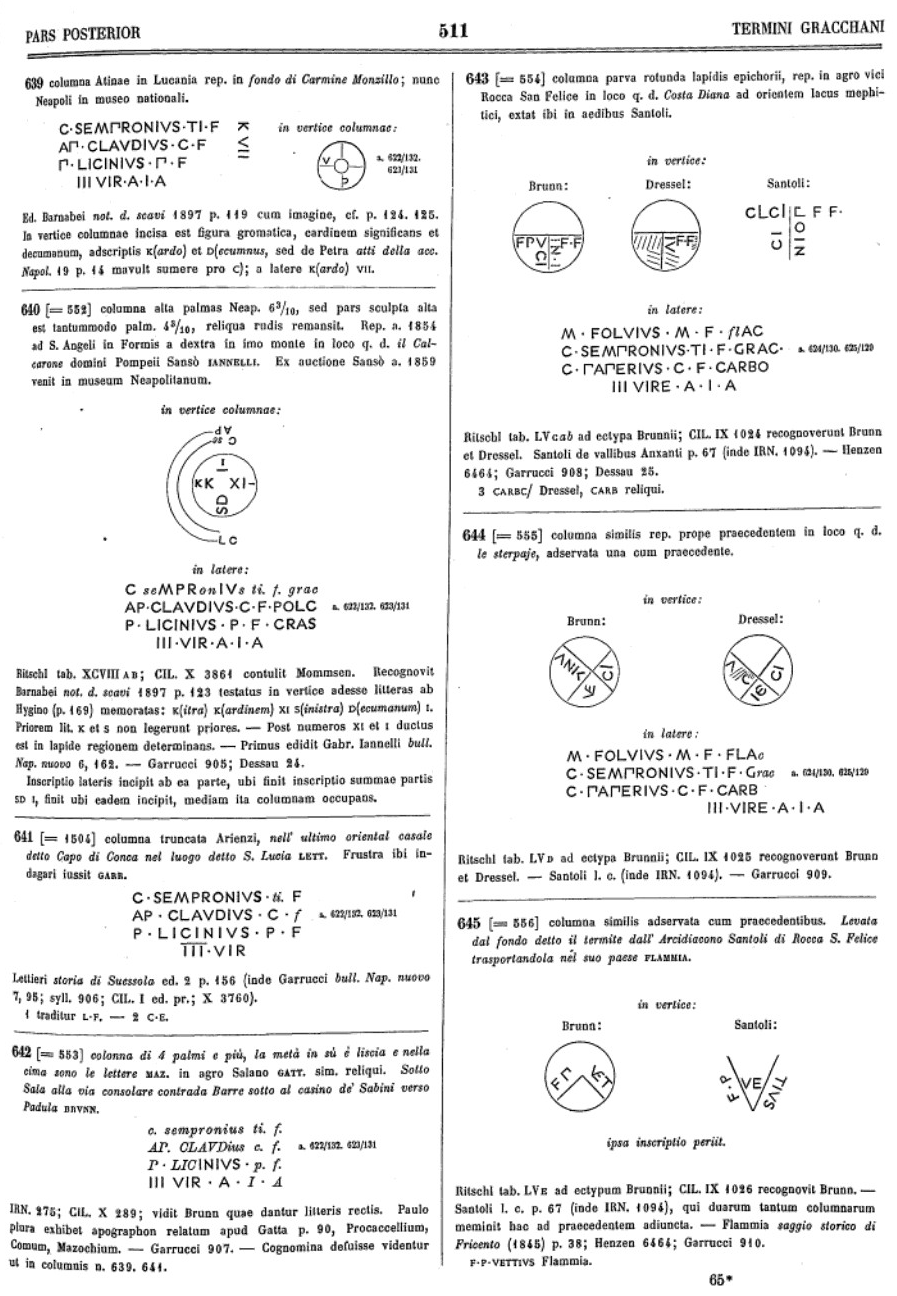
A page from the Corpus Inscriptionum Latinarum recording Roman boundary stones naming Gaius Sempronius Gracchus as one of the triumvirs assigning land.
These boundary stones are rare physical evidence naming Gaius Gracchus as a triumvir who personally administered the land reform commission.
About this source
What it is
This is a printed page from the Corpus Inscriptionum Latinarum, a modern scholarly collection of ancient Latin inscriptions. It records several stone boundary markers (cippi) found in southern Italy, each inscribed with the names of three officials, including Gaius Sempronius Gracchus, son of Tiberius.
Why it matters
These stones are physical evidence of the land commission created by the Gracchan land reforms. The inscriptions name Gaius Gracchus alongside Appius Claudius and Publius Licinius as the triumviri responsible for measuring and assigning farmland to the poor. Unlike literary accounts written later, these stones were actually set up at the time, making them rare direct traces of the commission's work on the ground.
Look closer
- Why would officials need to mark land boundaries with stone pillars rather than just paper records?
- What does it tell us that Gaius Gracchus's name appears on stones found in several different places?
- This is a modern transcription of ancient inscriptions — how might transcribing old, worn stone lettering introduce errors?
This document is part of the curated material that grounds the AI version of Gaius Gracchus on Humy.ai — when students ask about related events, the AI can quote it and cite it.
More Gaius Gracchus sources
Browse all 42 →
Ready when you are
Start chatting with Gaius Gracchus now.
20 messages free · No credit card · Available in 50+ languages.