


Secondary sourceArtifact1546 (burial)
Grave of Martin Luther
1546 (burial)
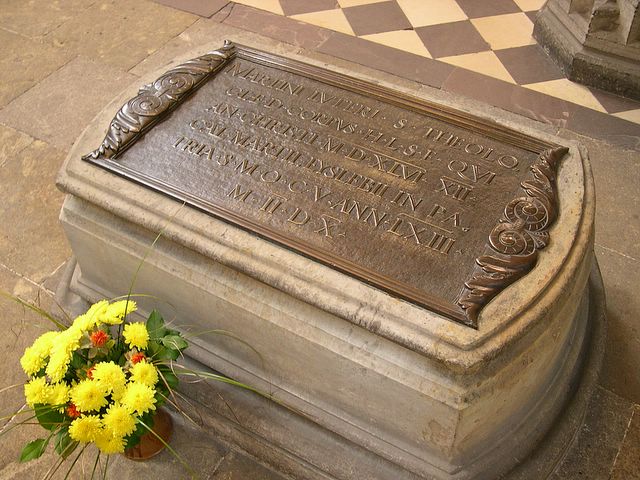
The tomb marker of Martin Luther in the Castle Church at Wittenberg, the church associated with his theses, where he was buried in 1546.
This is Luther's actual burial place, marking the end of his life in the church associated with the start of the Reformation.
About this source
What it is
This is the grave marker of Martin Luther in the Castle Church (Schlosskirche) in Wittenberg, Germany. It is a stone tomb slab with a bronze plaque bearing a Latin inscription.
Why it matters
Luther was buried in the Castle Church, the same church traditionally linked to the posting of his theses that began the Reformation. His burial there ties together the start and end of his public career as a reformer in one building, and the grave remains a site of pilgrimage and remembrance for the history of Protestantism.
Look closer
- Why might Luther have been buried in this particular church rather than elsewhere?
- What does the Latin inscription and formal design of the tomb suggest about how Luther was remembered after his death?
- Why do people still visit and leave flowers at this grave today?
This artifact is part of the curated material that grounds the AI version of Martin Luther on Humy.ai — when students ask about related events, the AI can quote it and cite it.
More Martin Luther sources
Meet the AI Martin Luther → Document
Primary source
Ninety-five Theses
Martin Luther · 1517
 Painting
Secondary source
Domestic Life of Martin Luther at Wittenberg
Pierre-Antoine Labouchère (design); J. D. Nargeot (engraving) · 1800-1899
 Painting
Primary source
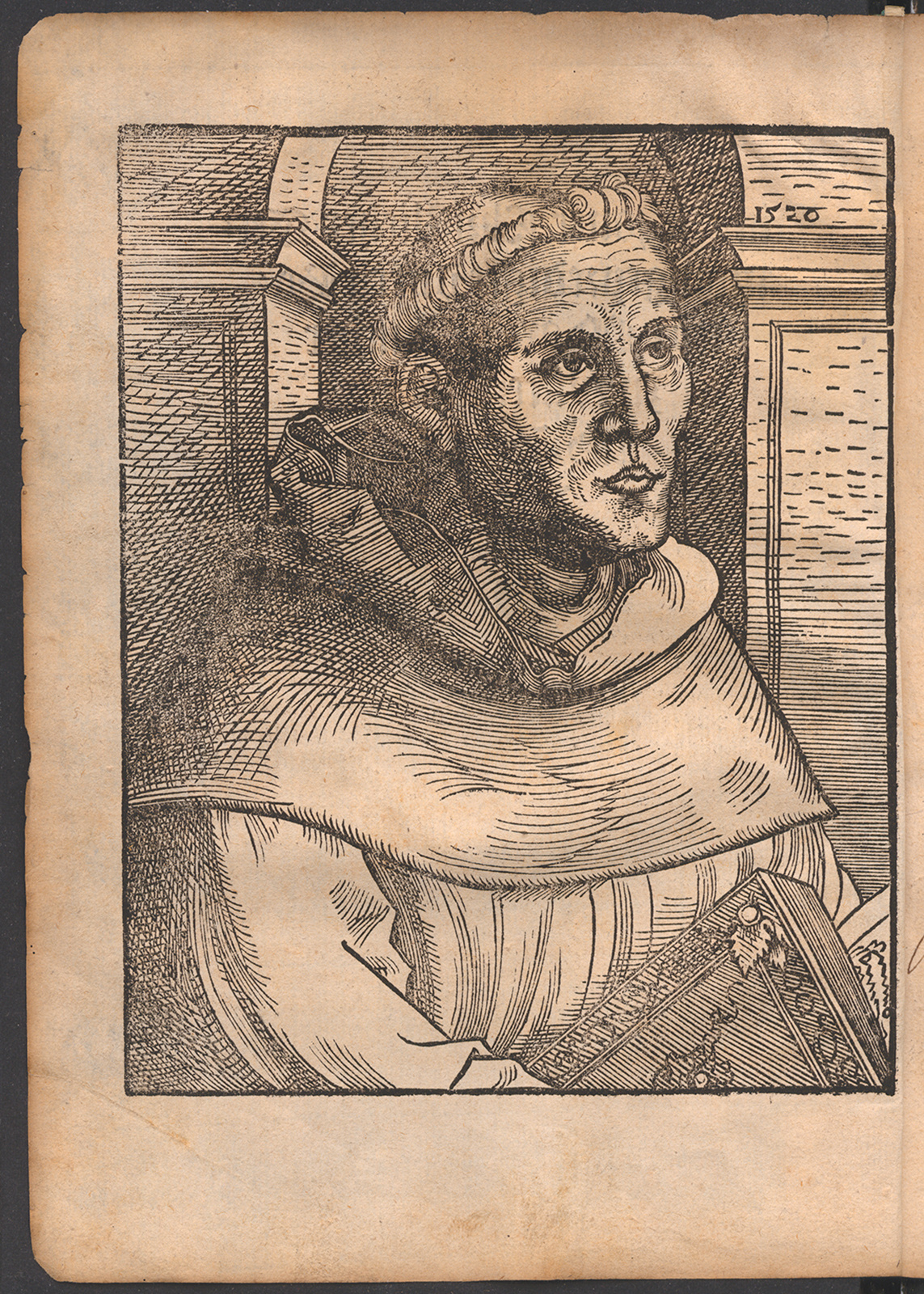
Martinus Luther Woodcut Portrait
Unbekannt (Formschneider)
 Painting
Primary source
Woodcut Portrait of Luther in Sermon Pamphlet
1523
 Book
Secondary source
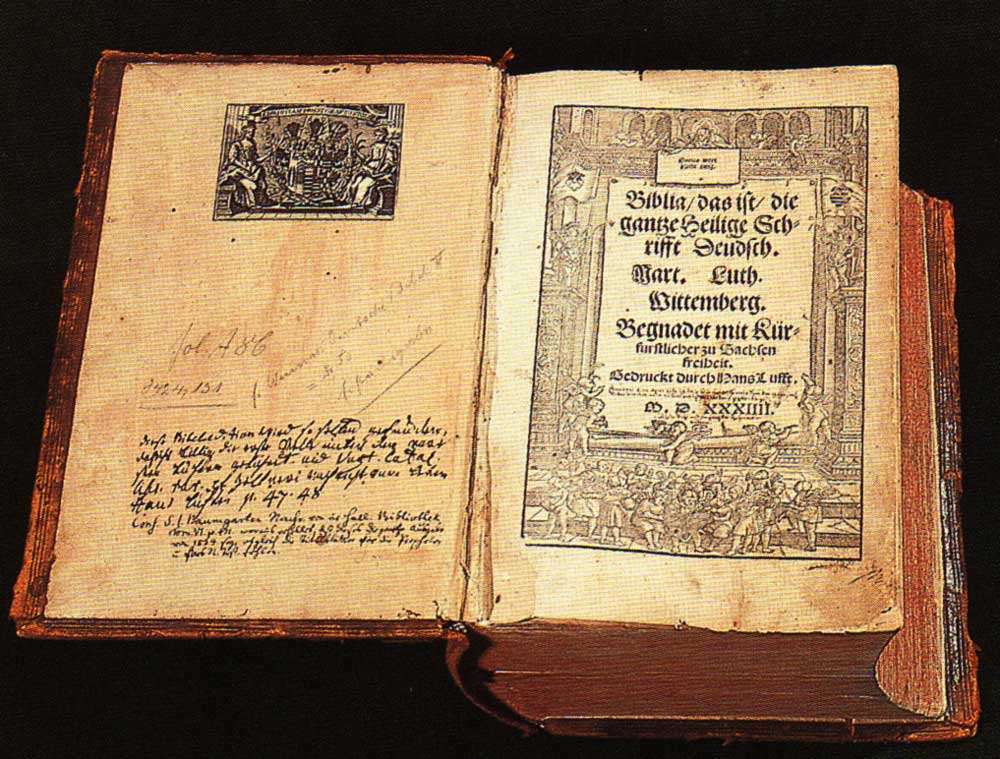
Luther Bible
Martin Luther · 1534
Ready when you are
Start chatting with Martin Luther now.
20 messages free · No credit card · Available in 50+ languages.