


Secondary sourcePhotograph
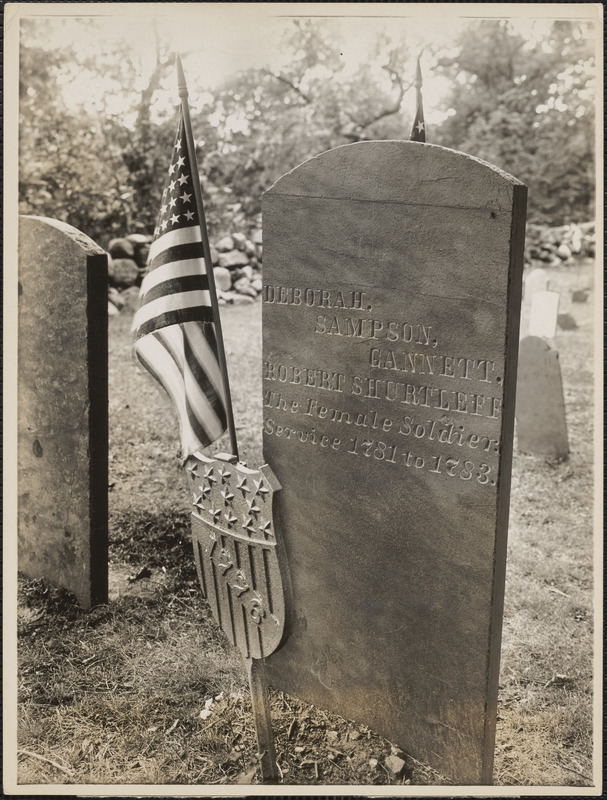
Gravestone of Deborah Sampson Gannett / Robert Shurtleff
Leon H. Abdalian
A photograph of Deborah Sampson's gravestone, which names both her own identity and her wartime alias, Robert Shurtleff.
Her gravestone names both her true identity and her alias 'Robert Shurtleff,' commemorating her disguised military service.
About this source
What it is
This black-and-white photograph by Leon H. Abdalian shows a gravestone at Rock Ridge Cemetery inscribed 'Deborah Sampson Gannett, Robert Shurtleff, The Female Soldier, Service 1781 to 1783,' marked with an American flag and a shield-shaped emblem.
Why it matters
The gravestone publicly links Sampson's real name with 'Robert Shurtleff,' the male alias she used to enlist in the Continental Army. It shows how her dual identity, hidden during her service, became a point of public commemoration after her death, honoring her as a woman who served as a soldier.
Look closer
- Why do you think both names were carved onto the same stone?
- What does the phrase 'The Female Soldier' suggest about how she was remembered?
- What might this memorial leave unsaid about the risks she took serving disguised as a man?
This photograph is part of the curated material that grounds the AI version of Deborah Sampson on Humy.ai — when students ask about related events, the AI can quote it and cite it.
More Deborah Sampson sources
Meet the AI Deborah Sampson →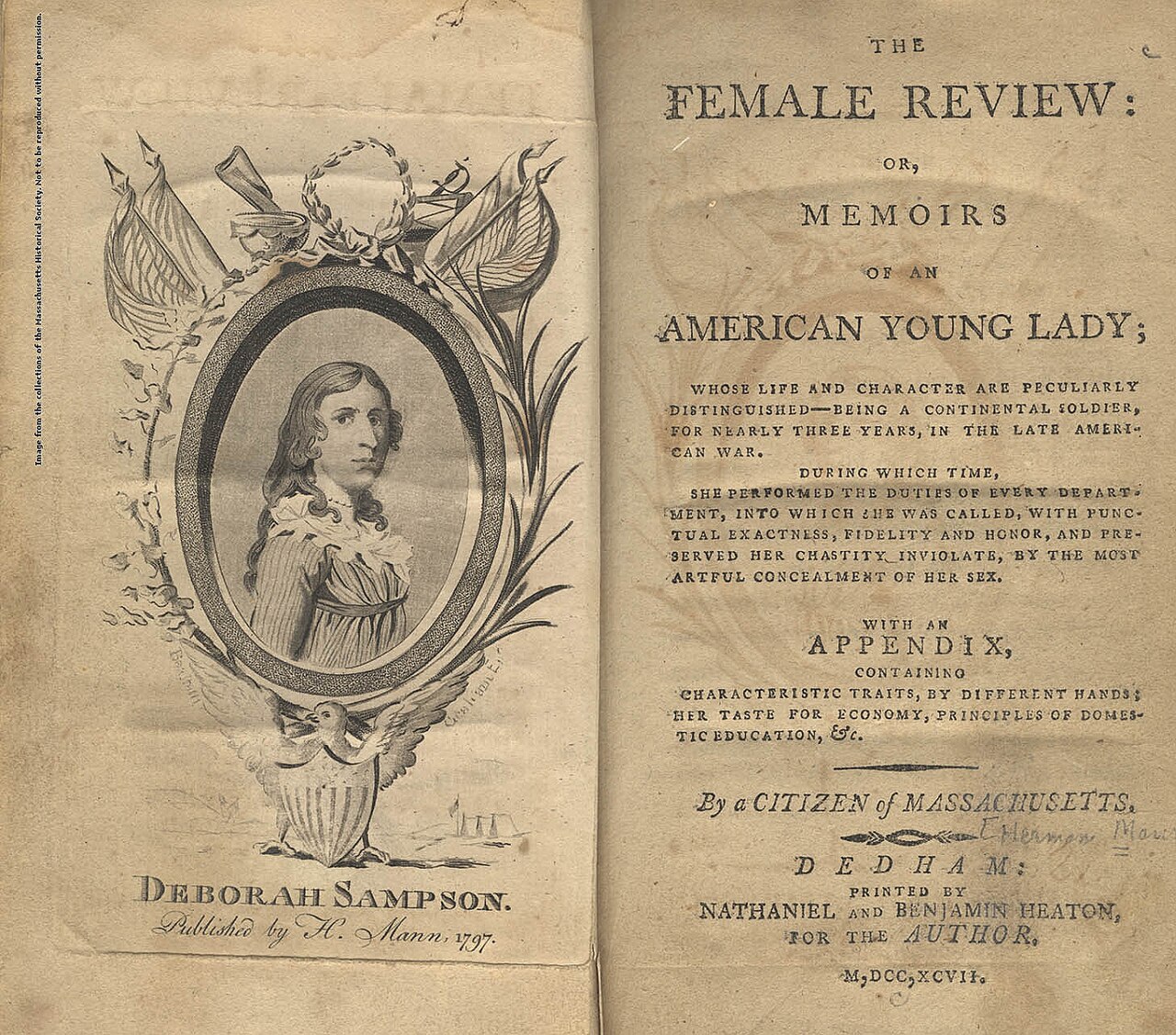 Book
Primary source
The Female Review: Life of Deborah Sampson
Herman Mann · 1797
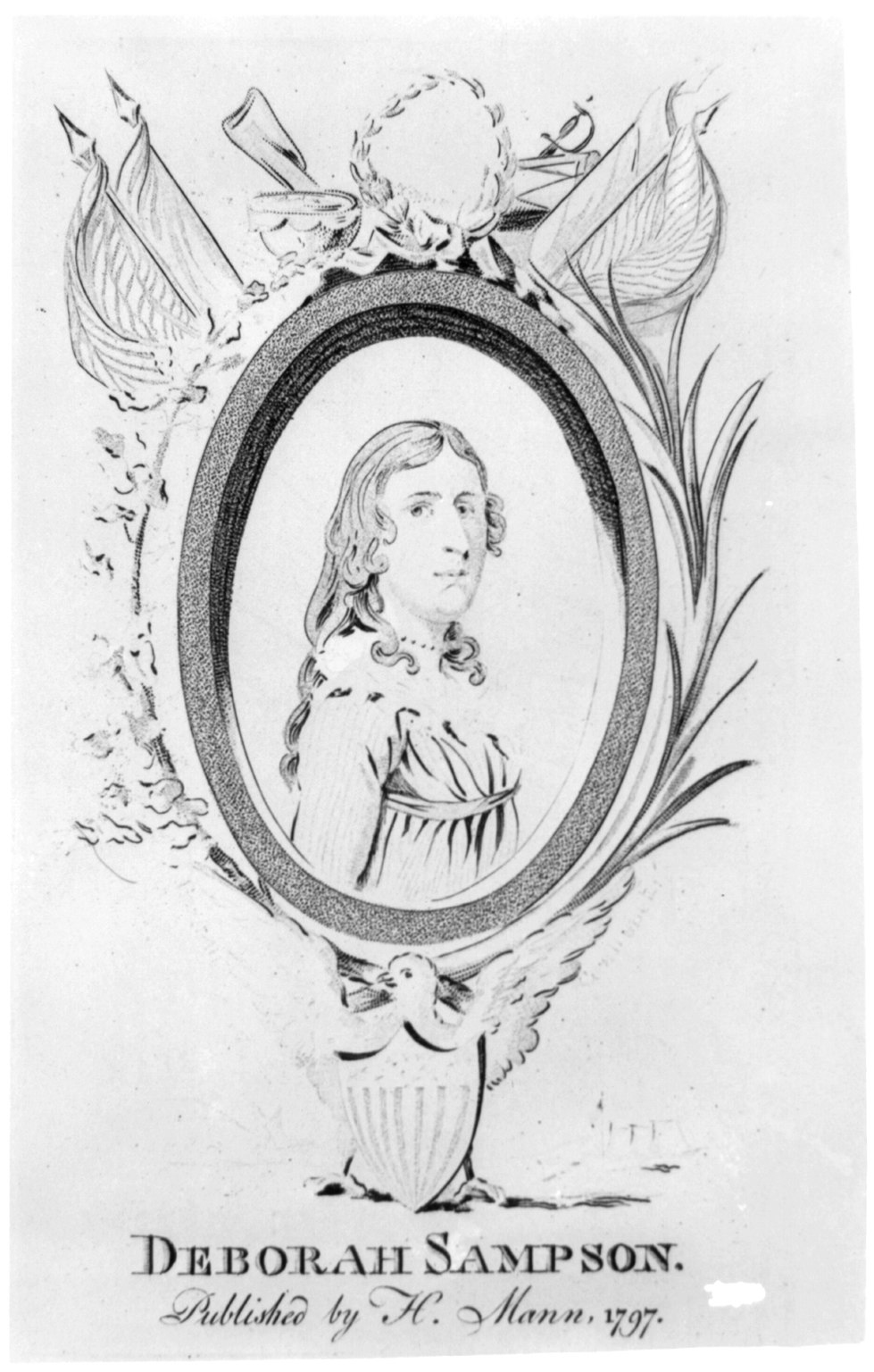 Painting
Primary source
Deborah Sampson Engraving
1797
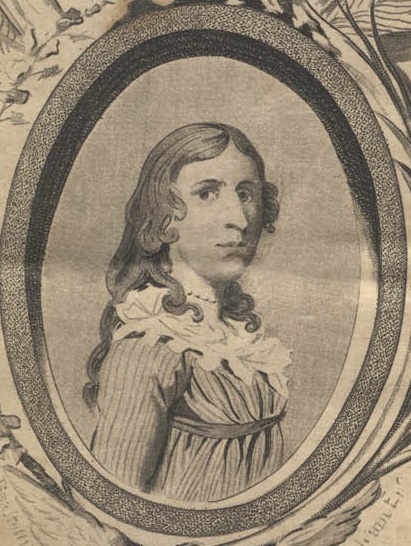 Painting
Primary source
Portrait of Deborah Sampson
Joseph Stone · 1797
 Speech
Primary source
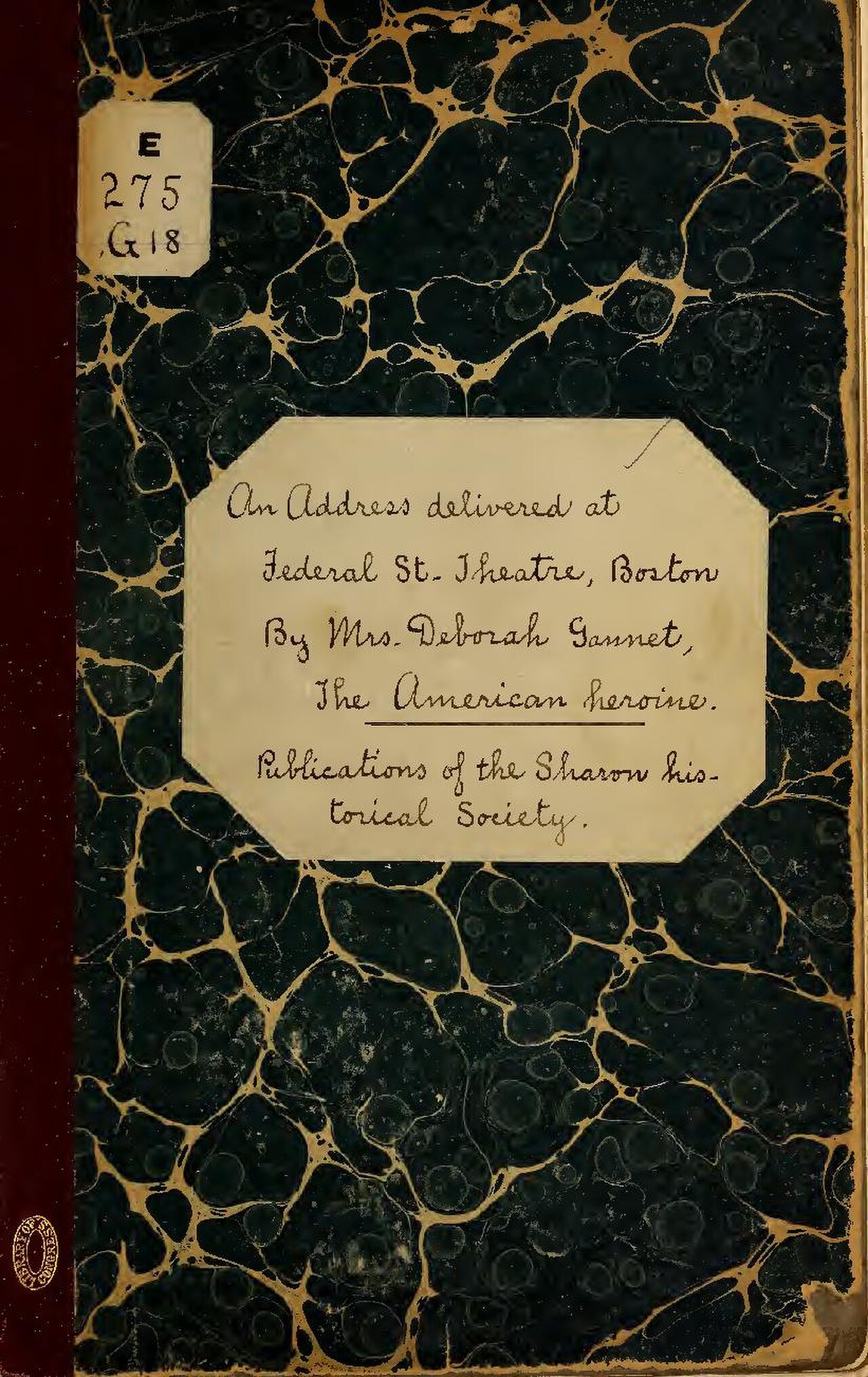
An Address, Delivered with Applause, at the Federal-Street Theatre, Boston
Deborah Sampson Gannett · 1802
 Book
Secondary source
The Female Review (Vinton edition)
Herman Mann; edited by John Adams Vinton · 1866
Ready when you are
Start chatting with Deborah Sampson now.
20 messages free · No credit card · Available in 50+ languages.