


Secondary sourcePainting18th century
Hannibal's Death
Silvestre David Mirys · 18th century
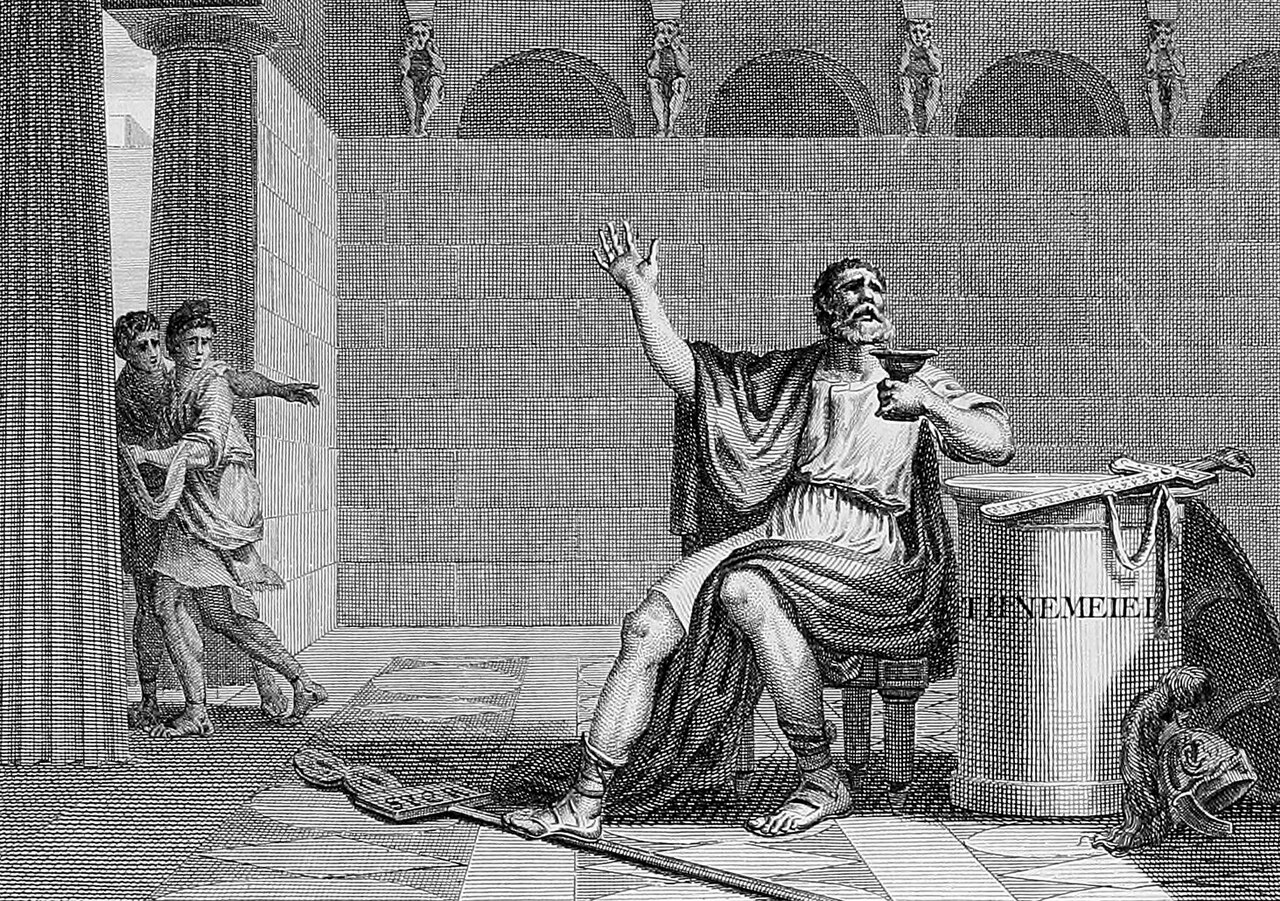
An 18th-century engraving by Silvestre David Mirys showing Hannibal's suicide by poison in Bithynia.
Depicts Hannibal's suicide by poison in Bithynia, the traditional account of his death.
About this source
What it is
This is an engraving by the 18th-century artist Silvestre David Mirys depicting the death of Hannibal. It shows a bearded man in classical robes seated, raising a cup to his mouth, beside an inscribed pedestal, with two onlookers in a doorway.
Why it matters
The scene illustrates the traditional account of Hannibal's end: rather than be captured by the Romans, he is said to have taken poison while in exile in Bithynia. The image reflects how later European artists commemorated his final defiance of Rome, turning his death into a dignified, tragic moment.
Look closer
- What does the calm pose of the figure suggest about how the artist wanted viewers to feel about this moment?
- Why might the artist include onlookers peering from a doorway?
- What is left out of this image that might have been part of the real event?
This painting is part of the curated material that grounds the AI version of Hannibal Barca on Humy.ai — when students ask about related events, the AI can quote it and cite it.
More Hannibal Barca sources
Meet the AI Hannibal Barca → Book
Secondary source
The Histories
Polybius · c. 150 BCE
 Book
Primary source
History of Rome
Titus Livius · 27-9 BC
Secondary source
Life of Hannibal
Cornelius Nepos
 Book
Secondary source
The Hannibalic War and The Punic Wars (Libyca)
Appian of Alexandria · c. AD 150
 Sculpture
Secondary source
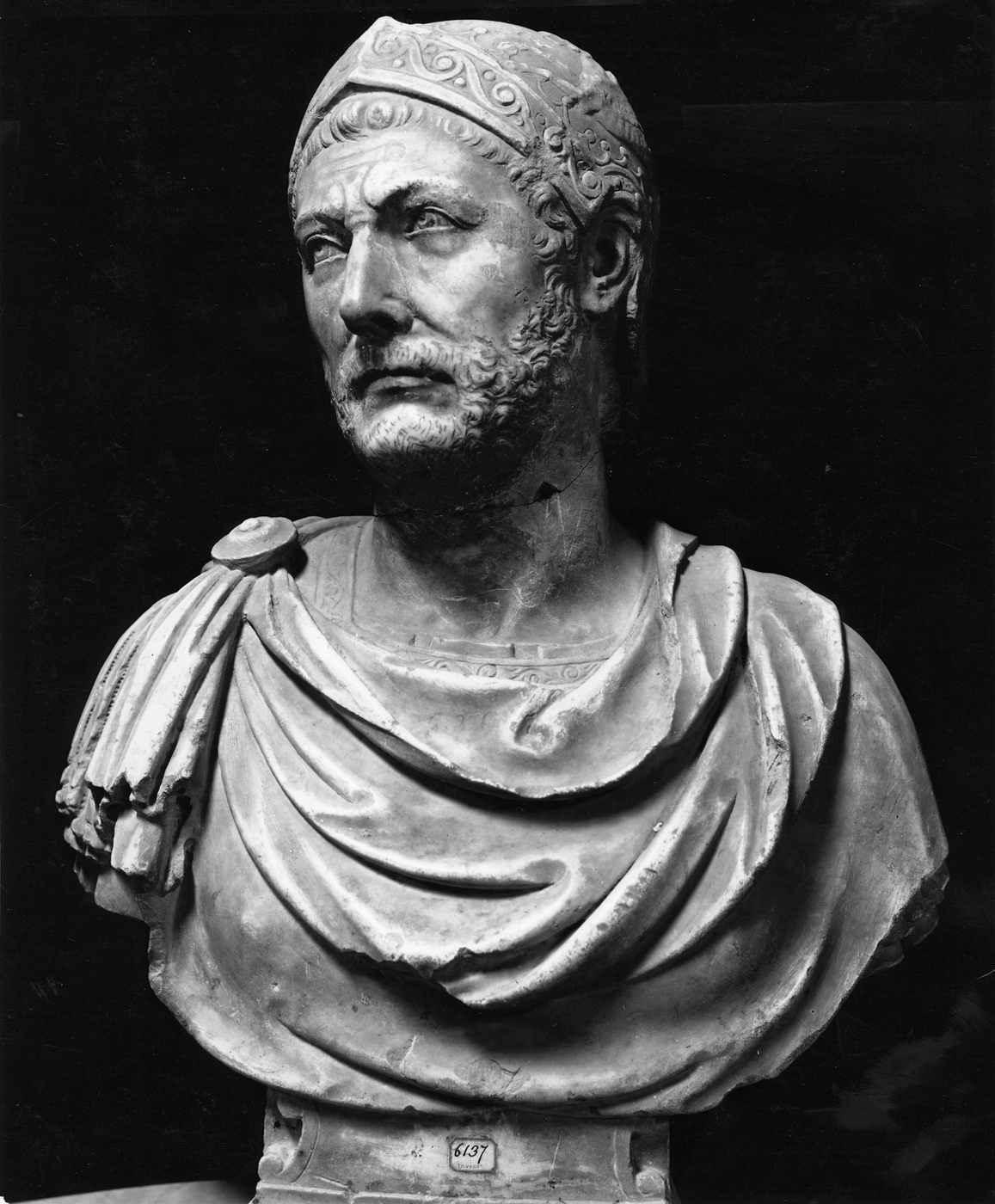
Capuan bust of Hannibal
1st century BC - 4th century AD
Ready when you are
Start chatting with Hannibal Barca now.
20 messages free · No credit card · Available in 50+ languages.