


Primary sourceDocument24 February 1971
Harris v. New York
Supreme Court of the United States · 24 February 1971
A 1971 Supreme Court ruling that limited the protections established in Miranda v. Arizona, decided while Ernesto Miranda was in prison.
Decided while Miranda was imprisoned, this case began narrowing the protections created by his landmark case.
About this source
What it is
This is the written opinion of the U.S. Supreme Court in Harris v. New York, decided in 1971. It was issued by the Supreme Court of the United States and addressed whether a statement obtained in violation of the Miranda standards could still be used in court.
Why it matters
The Court ruled that even if a confession could not be used to prove guilt because police failed to give Miranda warnings, it could still be used to challenge a defendant's credibility if they testified differently at trial. This case shows how quickly courts began narrowing the rule set out in Miranda v. Arizona, just a few years after it was decided. It reflects an ongoing legal struggle over how far the rights named for Ernesto Miranda would actually extend in practice.
Look closer
- Why might courts want to limit a rule meant to protect suspects' rights?
- What does this case suggest about how legal precedents can be reinterpreted over time?
- How does this ruling connect back to the original case that created the Miranda warning?
This document is part of the curated material that grounds the AI version of Ernesto Miranda on Humy.ai — when students ask about related events, the AI can quote it and cite it.
More Ernesto Miranda sources
Meet the AI Ernesto Miranda →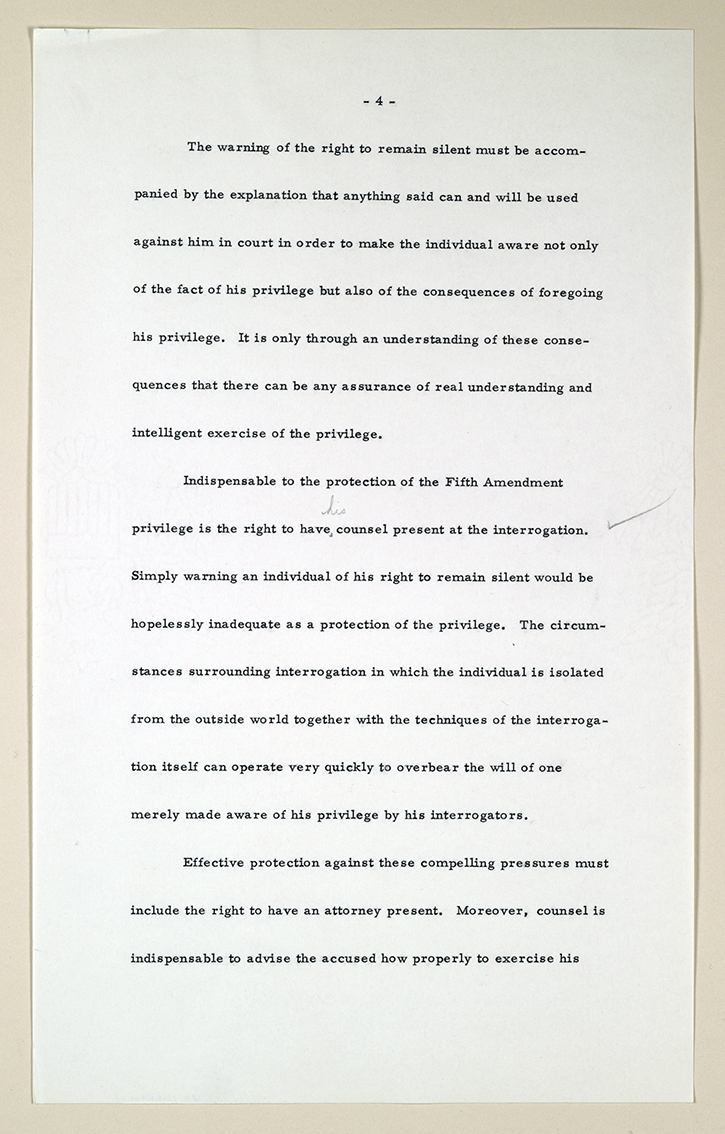 Document
Primary source
Miranda v. Arizona
Earl Warren · 13 June 1966
 Photograph
Primary source
Portrait of Ernesto Miranda
1967
Primary source
Dissenting Opinions in Miranda v. Arizona
John Marshall Harlan II; Byron White · 13 June 1966
 Document
Primary source
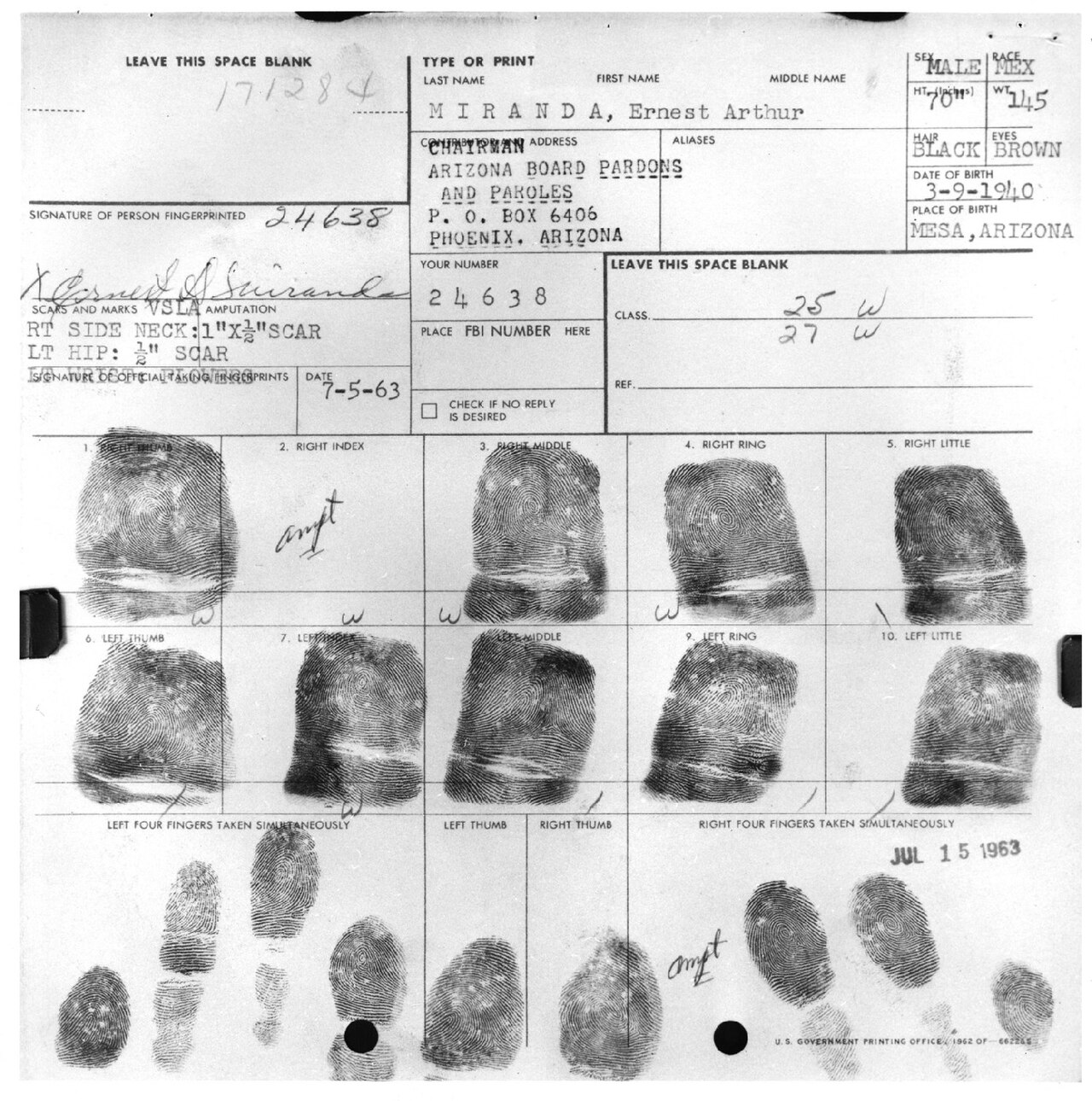
Ernesto Miranda Fingerprints
Arizona Board Pardons and Paroles · 15 July 1963
Primary source
Escobedo v. Illinois
Arthur Goldberg · 1964
Ready when you are
Start chatting with Ernesto Miranda now.
20 messages free · No credit card · Available in 50+ languages.