


Secondary sourceSculpture1875
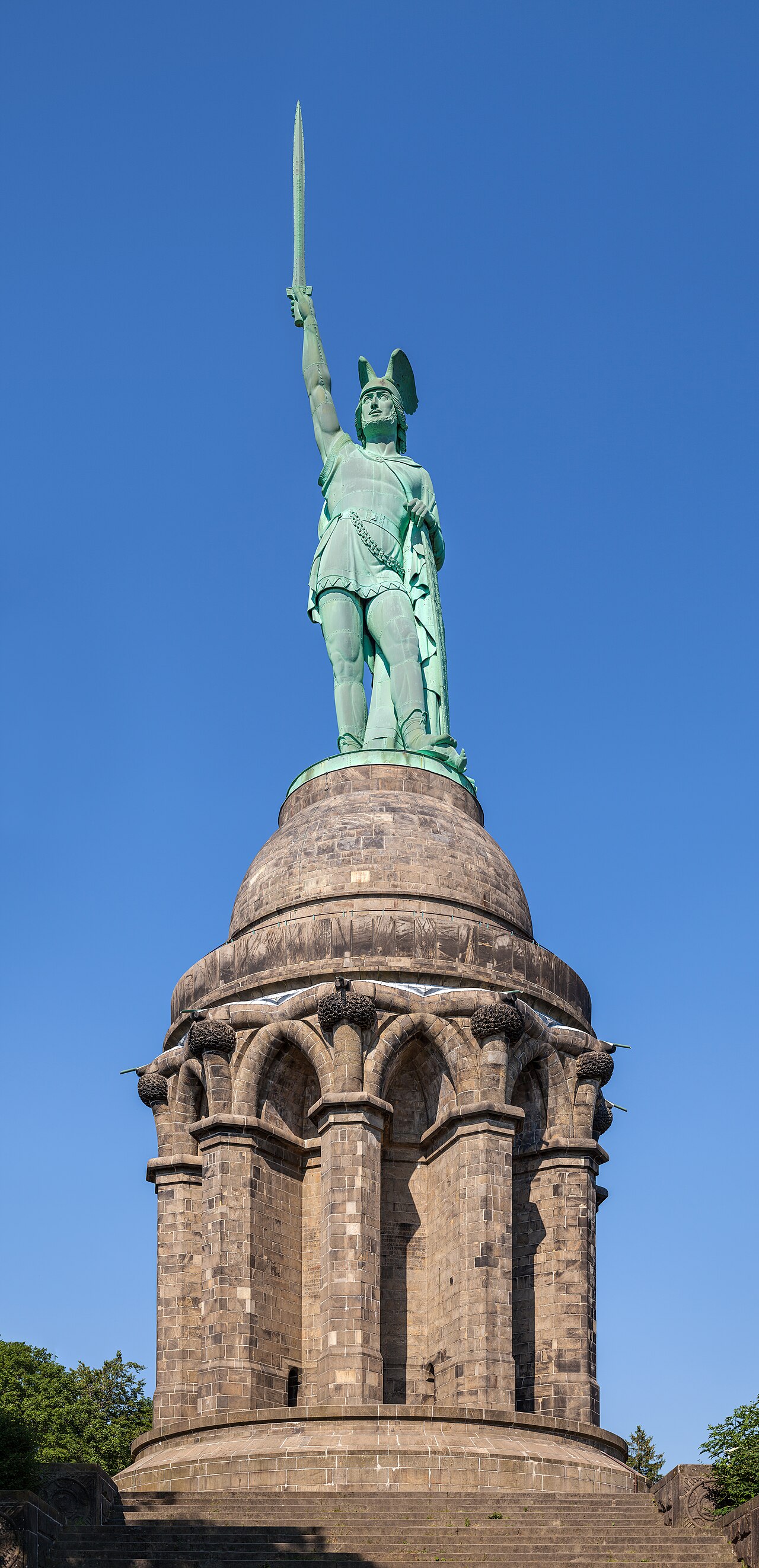
Hermannsdenkmal
Ernst von Bandel · 1875
A huge 19th-century statue of Arminius, raising his sword above the Teutoburg Forest, built as a symbol of German unity.
This 19th-century monument turned Arminius into a national symbol, long after his lifetime.
About this source
What it is
The Hermannsdenkmal is a colossal monument near Detmold, Germany, built between 1838 and 1875 by the sculptor Ernst von Bandel. It depicts Arminius, called "Hermann" in German, and stands on a hill in the Teutoburg Forest region, once believed to be near the site of his famous battle.
Why it matters
The monument was built in a time of growing German nationalism, when people hoped for a unified German nation. Arminius, who had defeated Roman legions in 9 AD, was turned into a symbol of unity against foreign rule, even though ancient sources show the Germanic tribes fought among themselves as much as against Rome. The statue tells us more about 19th-century Germany than about Arminius's own time.
Look closer
- Why was this monument built so long after Arminius lived?
- What message was it meant to send to the people who saw it?
- How does the statue's heroic pose compare with what ancient historians actually wrote about Arminius?
This sculpture is part of the curated material that grounds the AI version of Arminius on Humy.ai — when students ask about related events, the AI can quote it and cite it.
More Arminius sources
Browse all 79 →
Ready when you are
Start chatting with Arminius now.
20 messages free · No credit card · Available in 50+ languages.