


Secondary sourceBookc. AD 116 or later
Annals
Tacitus · c. AD 116 or later
Tacitus's history of the early Roman Empire opens with the death of Augustus, offering a sharply critical verdict on his rule as monarchy disguised as peace.
Contains Tacitus' detailed account of Seneca's forced suicide, the main historical record of his death.
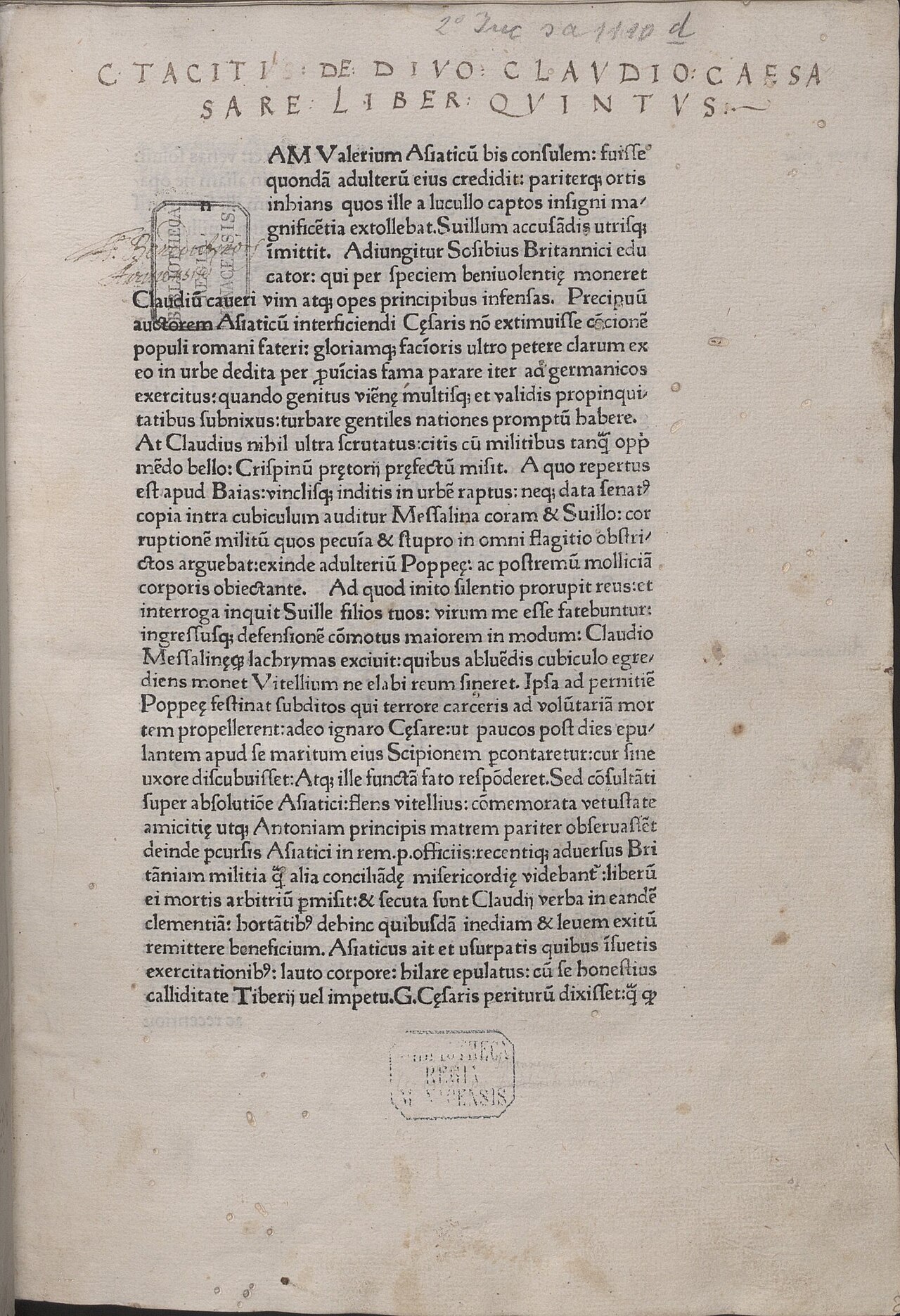
About this source
What it is
The Annals is a history of the Roman Empire written by the senator and historian Tacitus, covering the years from the death of Augustus onward. Of the sixteen original books, roughly half survive today. The image shown is a page from an early printed edition of the text, not the original manuscript.
Why it matters
Tacitus opens his history by judging Augustus's rise to sole power, arguing that Augustus brought peace after civil war but also ended the political freedom the Senate once enjoyed. Written almost a century after Augustus's death, it is one of the most influential ancient critiques of the principate as monarchy in disguise.
Look closer
- Why might a Roman senator like Tacitus be suspicious of one-man rule, even one that brought peace?
- What does the choice to begin the whole history right at Augustus's death tell you about how Tacitus saw his importance?
- How might Tacitus's sources (and his own political career) have shaped his judgement?
This book is part of the curated material that grounds the AI version of Seneca on Humy.ai — when students ask about related events, the AI can quote it and cite it.
More Seneca sources
Meet the AI Seneca → Letter
Primary source
Epistulae Morales ad Lucilium
Seneca · c. 62-65 CE
 Book
Primary source
De Brevitate Vitae
Seneca · c. 49 CE
 Book
Primary source
De Clementia
Seneca · 55-56 CE
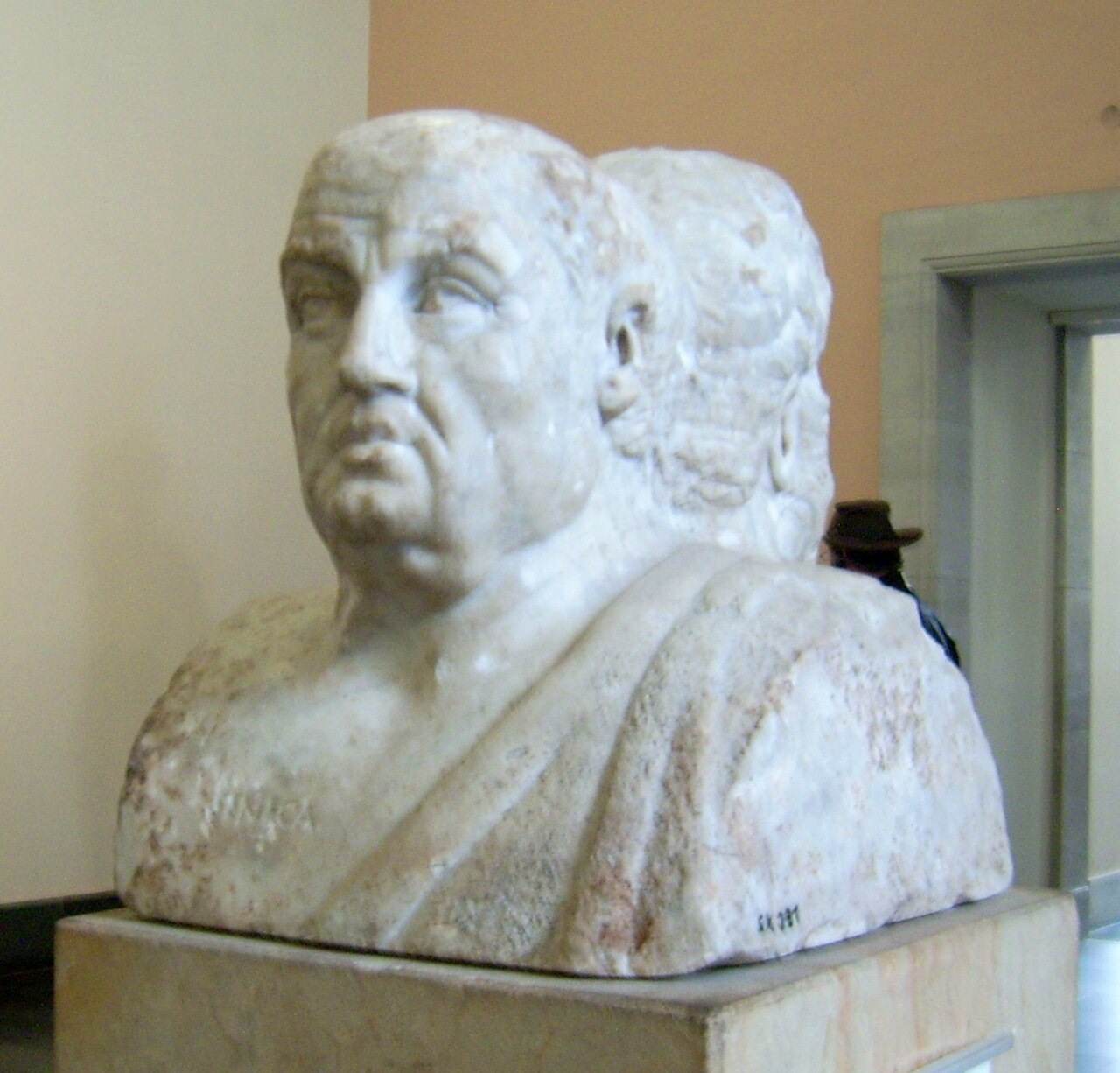 Sculpture
Secondary source
Double Herm of Socrates and Seneca
first half of the 3rd century AD
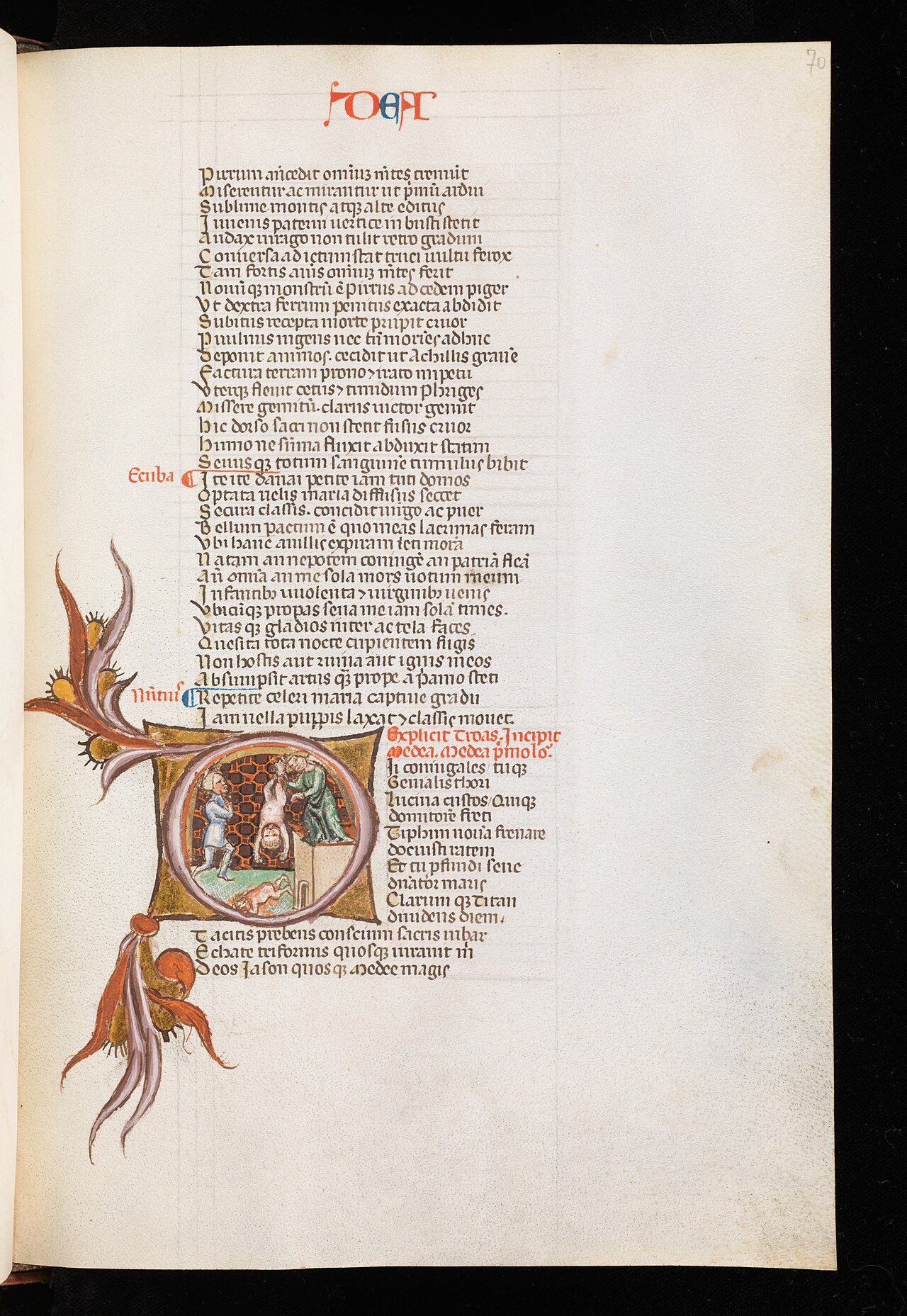 Book
Primary source
Medea
Seneca · c. 50 CE
Ready when you are
Start chatting with Seneca now.
20 messages free · No credit card · Available in 50+ languages.