


Primary sourceArtifact1888 (published 1893)
Hertz Spark Gap Transmitter and Parabolic Antenna
Heinrich Hertz · 1888 (published 1893)
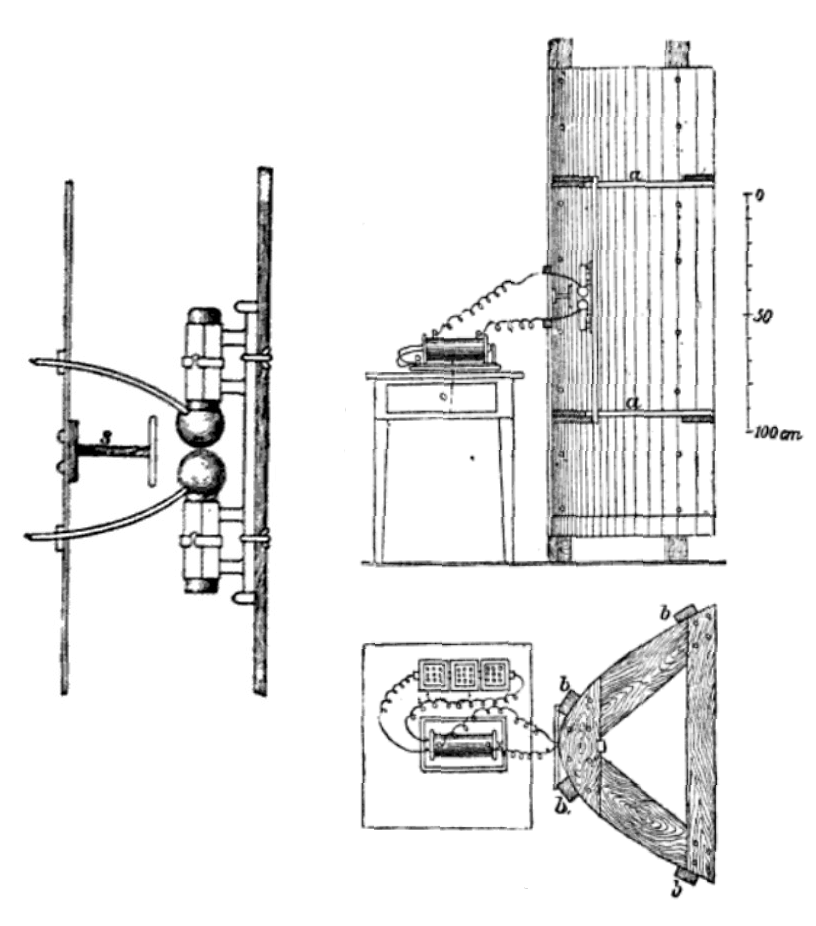
Hertz's own published drawing of the parabolic-mirror transmitter he built in 1888 to prove the existence of radio waves.
This is Hertz's own drawing of the apparatus he built and used to prove the existence of electromagnetic waves.
About this source
What it is
This engraved drawing, published in Hertz's 1893 book, shows the spark-gap transmitter and parabolic reflector apparatus he used in 1888. It details the spark gap, the dipole antenna, and the parabolic zinc reflector mounted on a wooden frame, along with the induction coil and battery that powered it.
Why it matters
This apparatus is considered the earliest example of a parabolic antenna. With it, Hertz performed the historic experiments that demonstrated standing waves, diffraction, refraction and polarization of radio waves, proving they behave like light and confirming Maxwell's electromagnetic theory. The drawing, made for Hertz's own publication, shows exactly how he designed and built the device that changed physics and later made radio technology possible.
Look closer
- Why would a scientist publish a detailed technical drawing of his own apparatus?
- What do the precise measurements included in the description suggest about the care needed in these experiments?
- How does this simple-looking device connect to the invention of radio communication?
This artifact is part of the curated material that grounds the AI version of Heinrich Hertz on Humy.ai — when students ask about related events, the AI can quote it and cite it.
More Heinrich Hertz sources
Browse all 67 → Book
Primary source
Die Prinzipien der Mechanik in neuem Zusammenhange dargestellt
Heinrich Hertz · 1894
 Photograph
Primary source
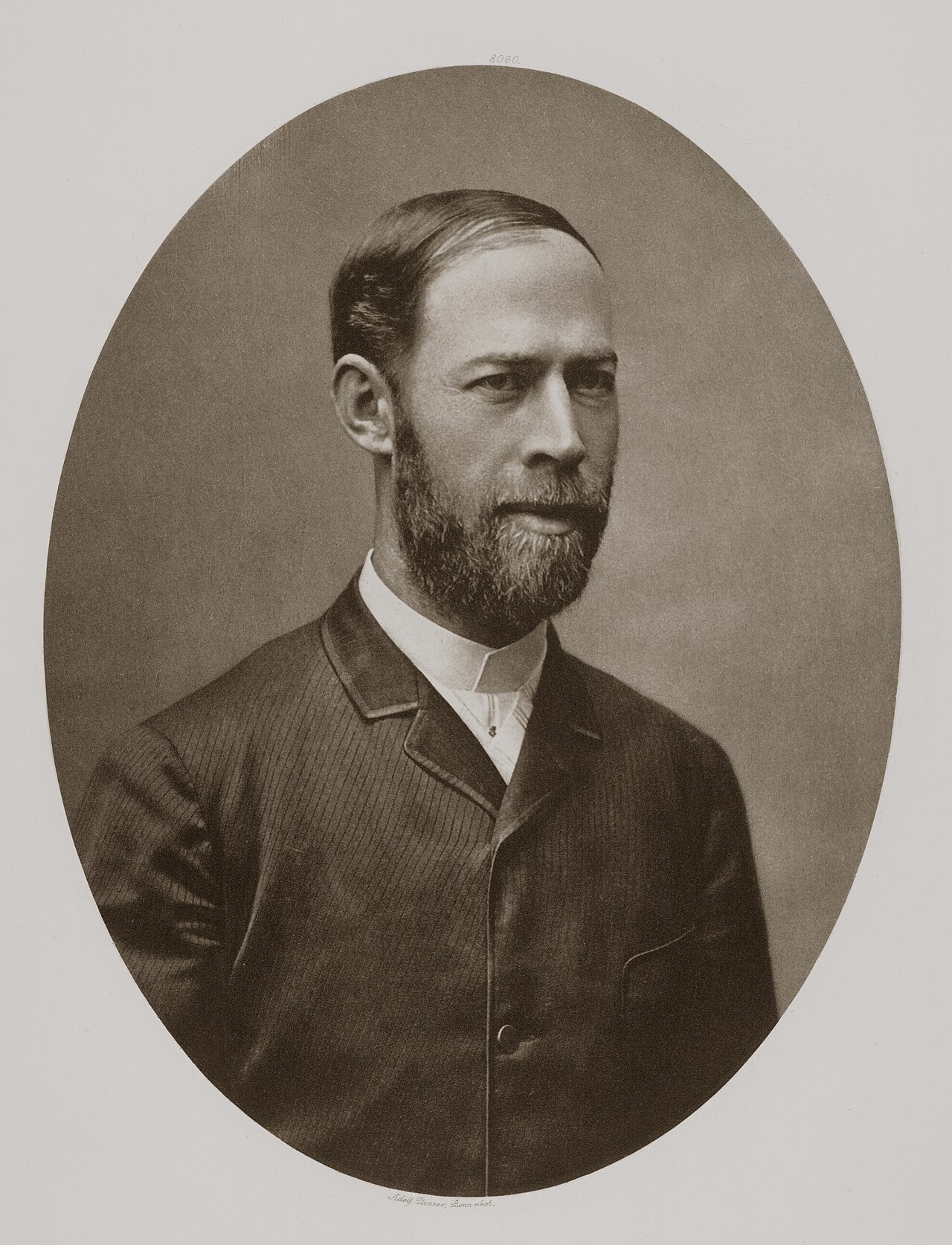
Heinrich Hertz
Robert Krewaldt
 Speech
Secondary source
The Work of Hertz (Royal Institution lecture)
Oliver Lodge · 1 June 1894
 Document
Primary source
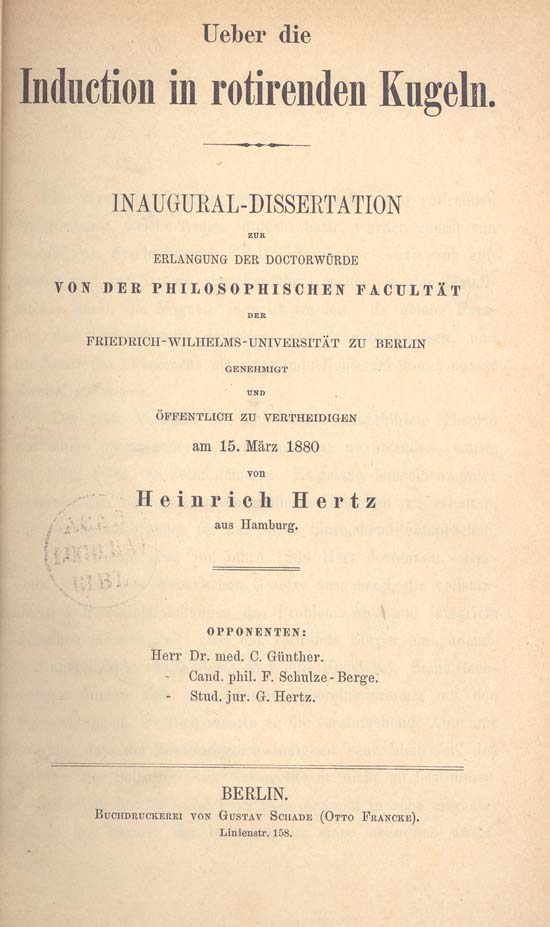
Ueber die Induction in rotirenden Kugeln
Heinrich Hertz · 1880


Free account
Browse every Heinrich Hertz source
Sign up free →
Ready when you are
Start chatting with Heinrich Hertz now.
20 messages free · No credit card · Available in 50+ languages.