


Primary sourceDocument1880
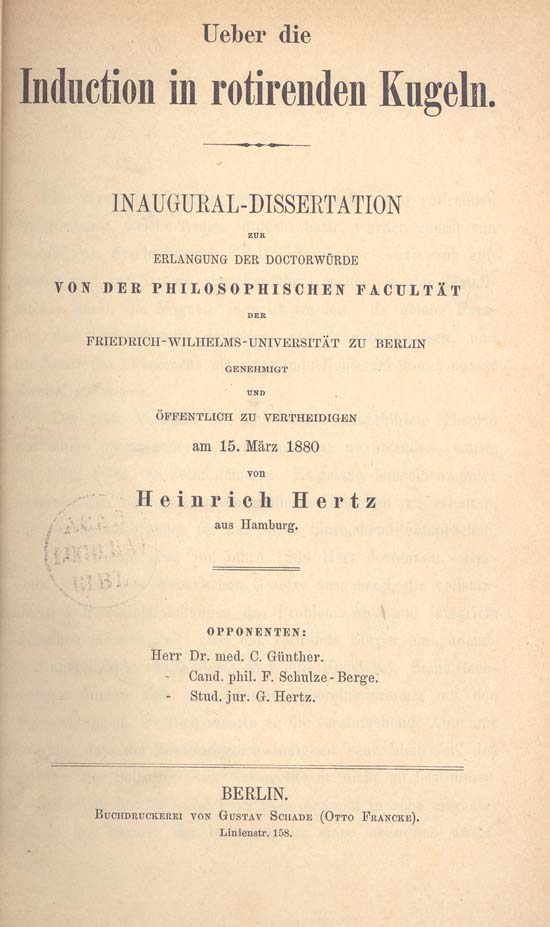
Ueber die Induction in rotirenden Kugeln
Heinrich Hertz · 1880
The title page of Heinrich Hertz's 1880 doctoral dissertation on induction in rotating spheres, defended at Berlin.
This is Hertz's own doctoral dissertation, written and defended by him in 1880.
About this source
What it is
This is the title page of Heinrich Hertz's doctoral dissertation, Ueber die Induction in rotirenden Kugeln (On Induction in Rotating Spheres), printed in Berlin in 1880 for the Friedrich-Wilhelms-Universität. The page lists the defence date of 15 March 1880, Hertz's name and hometown of Hamburg, and the names of his opponents in the exam.
Why it matters
Hertz wrote this dissertation under the physicist Hermann von Helmholtz, one of the leading scientists in Germany. It marks the formal start of Hertz's scientific career, before his later famous work on electromagnetic waves. Documents like this show how a young scientist had to prove his skill to senior professors before being allowed to do independent research.
Look closer
- What formal details does a university require on a dissertation title page, and why?
- What does the library stamp tell you about how this document has been preserved?
- How might Hertz's training under Helmholtz have shaped his later work?
This document is part of the curated material that grounds the AI version of Heinrich Hertz on Humy.ai — when students ask about related events, the AI can quote it and cite it.
More Heinrich Hertz sources
Browse all 67 → Book
Primary source
Die Prinzipien der Mechanik in neuem Zusammenhange dargestellt
Heinrich Hertz · 1894
 Photograph
Primary source
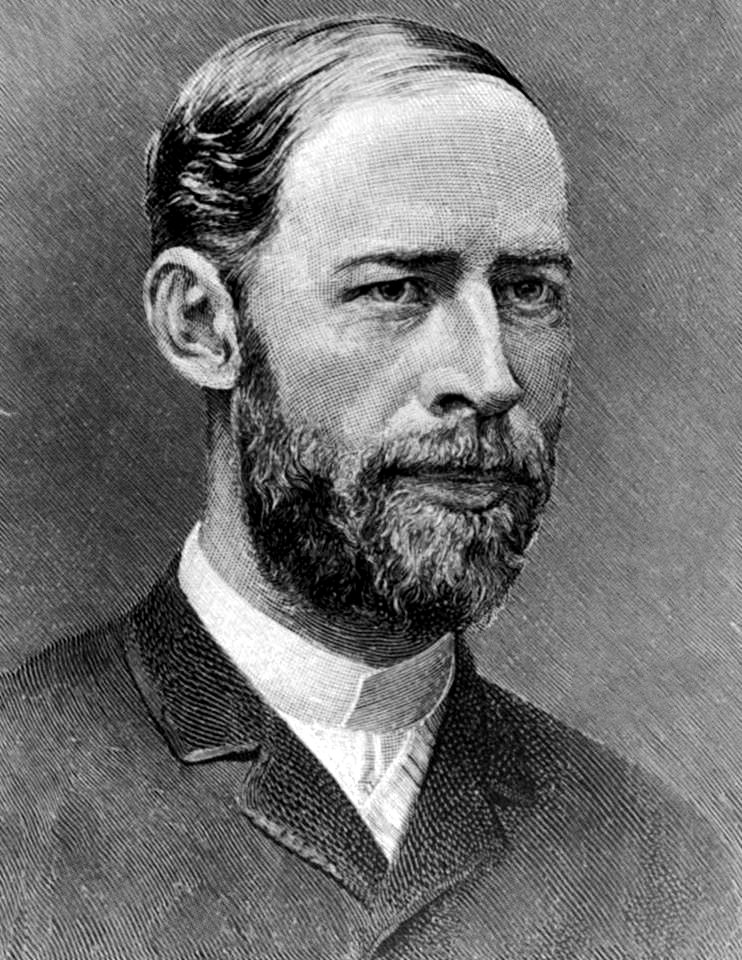
Heinrich Hertz
Robert Krewaldt
 Speech
Secondary source
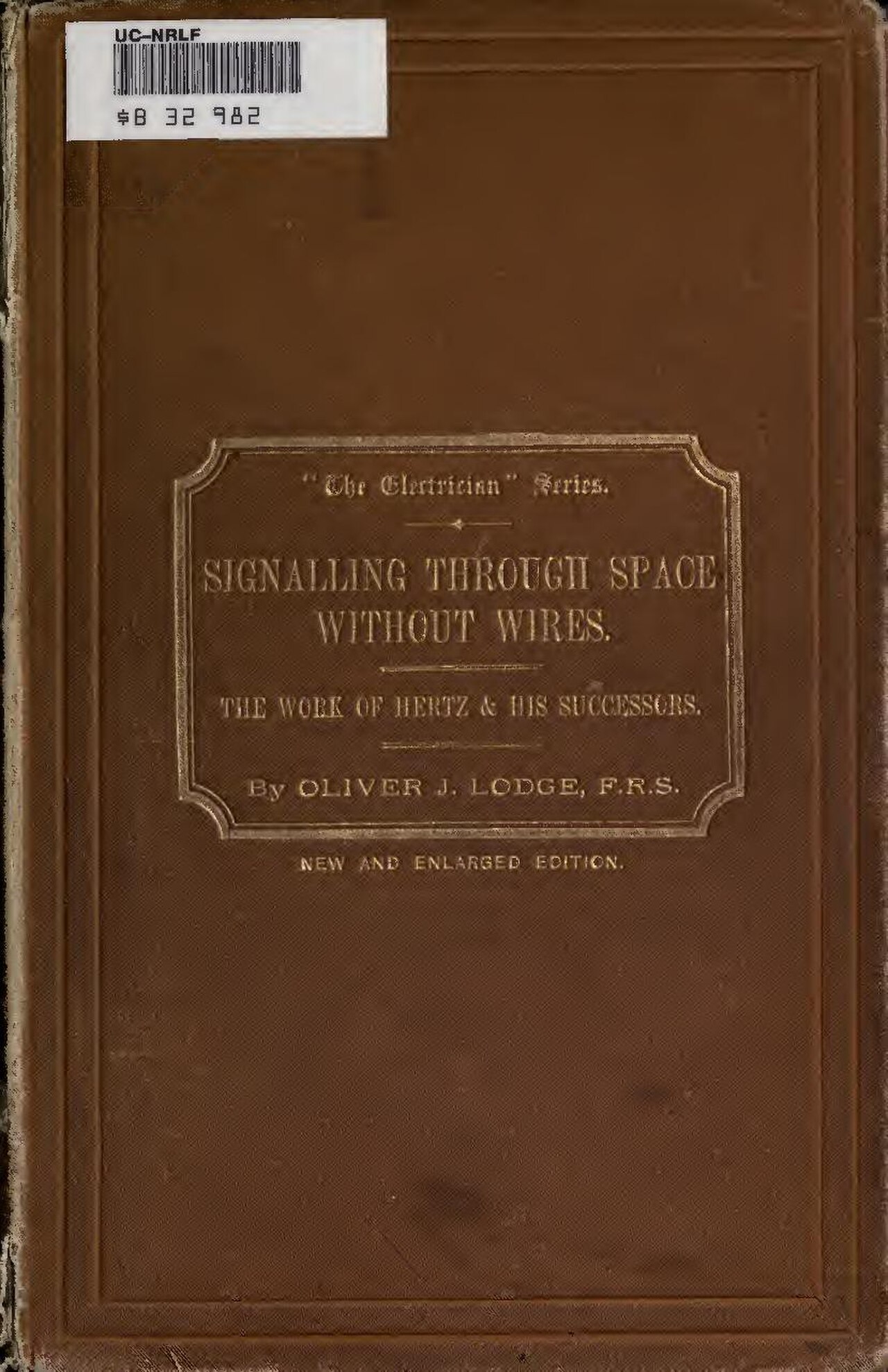
The Work of Hertz (Royal Institution lecture)
Oliver Lodge · 1 June 1894
 Artifact
Primary source
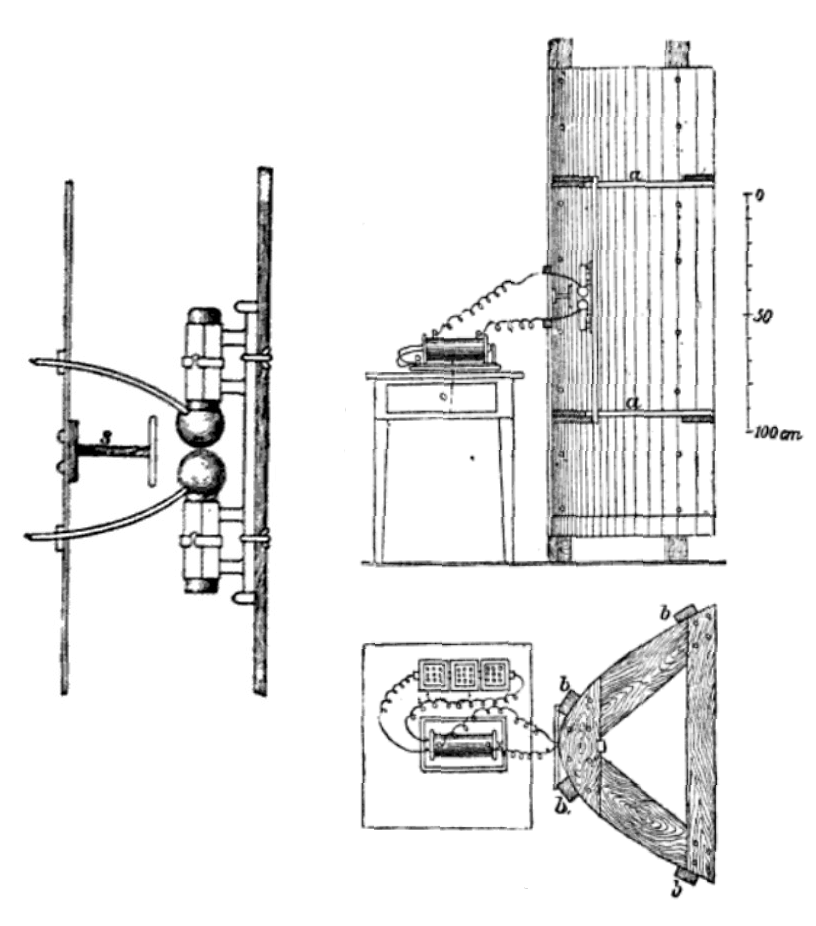
Hertz Spark Gap Transmitter and Parabolic Antenna
Heinrich Hertz · 1888 (published 1893)


Free account
Browse every Heinrich Hertz source
Sign up free →
Ready when you are
Start chatting with Heinrich Hertz now.
20 messages free · No credit card · Available in 50+ languages.