


Primary sourcePainting1841
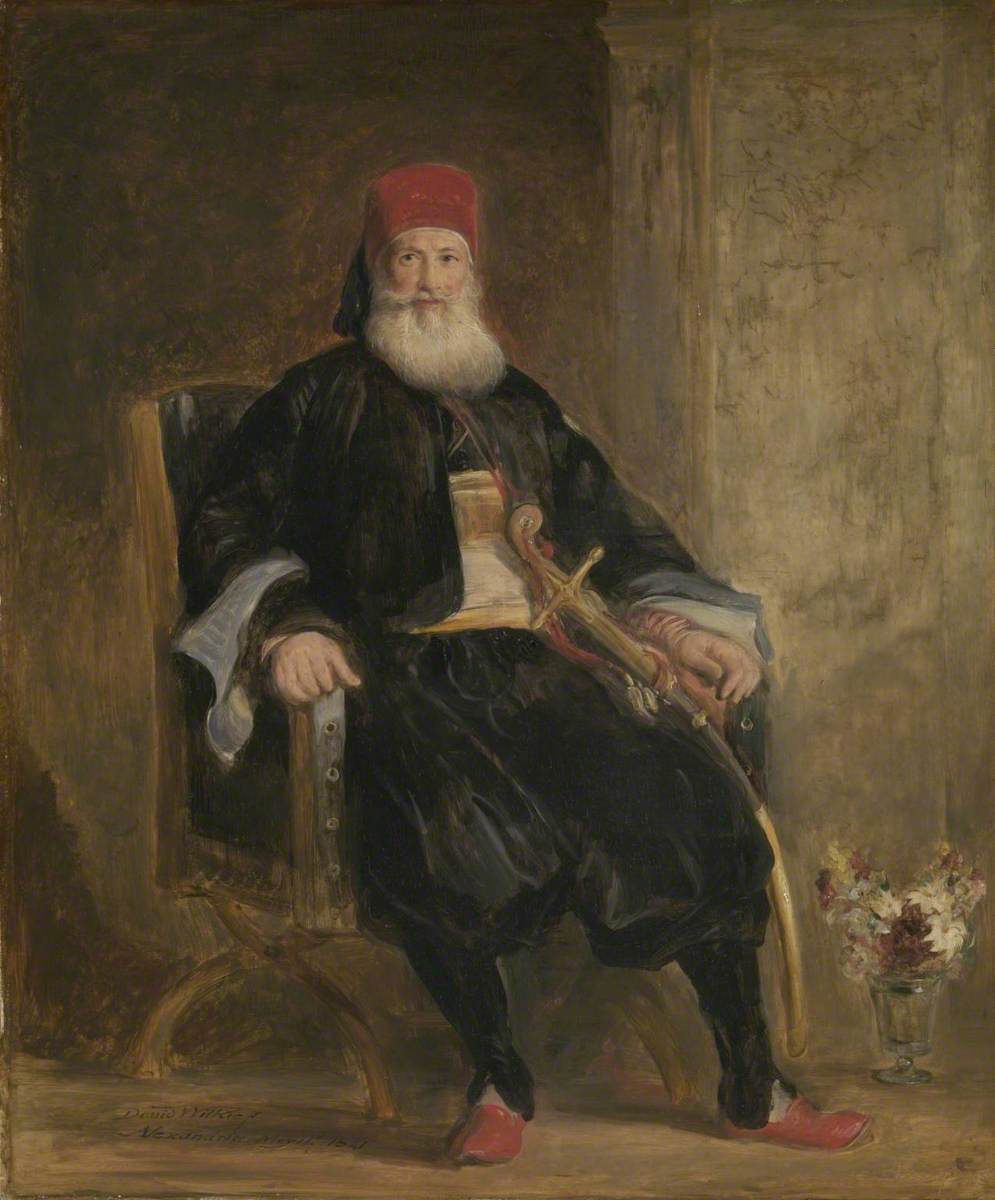
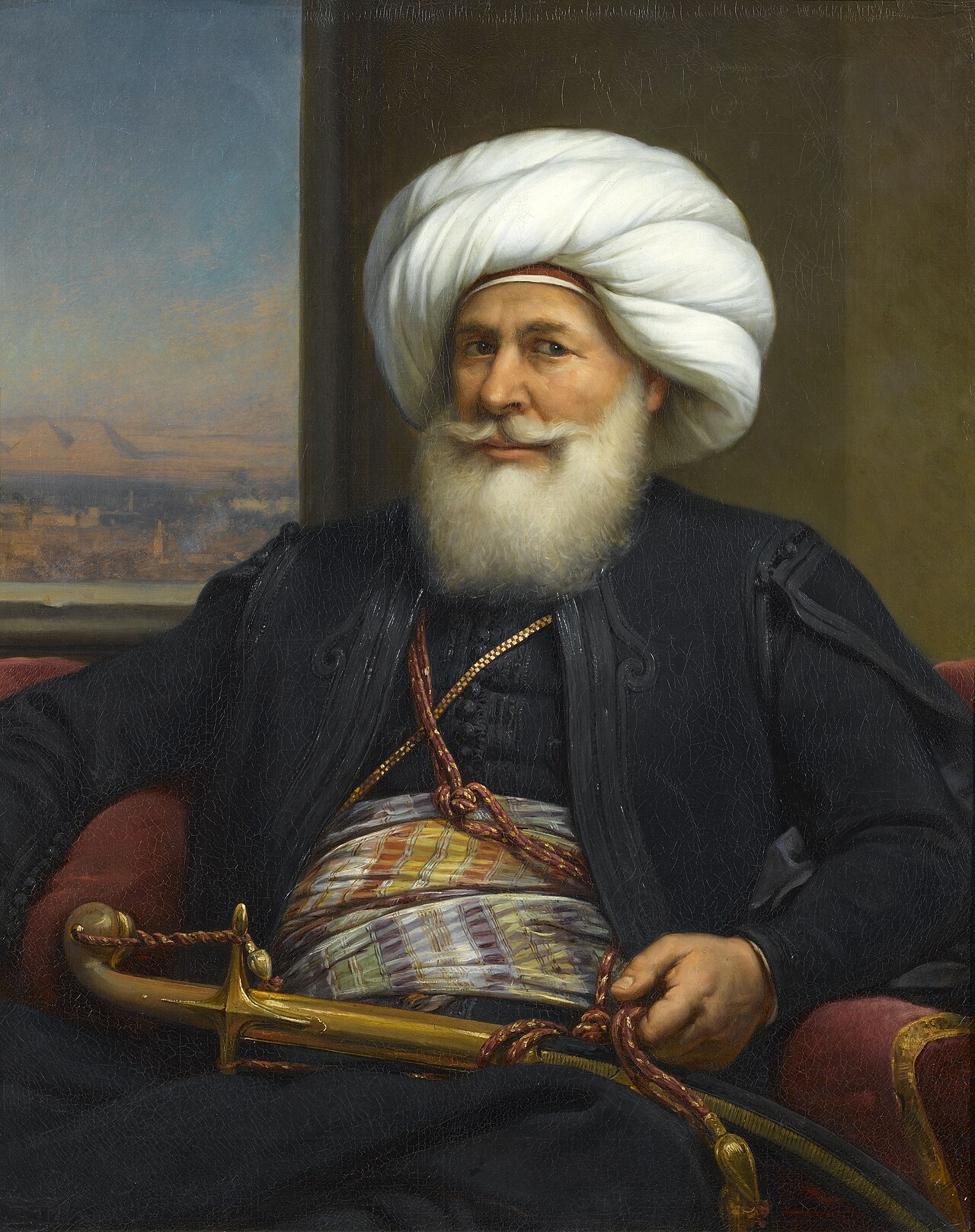
His Highness Muhemed Ali, Pacha of Egypt
David Wilkie · 1841
A portrait of Muhammad Ali painted from life in Alexandria in 1841 by British artist David Wilkie.
This life portrait shows Muhammad Ali as an elderly ruler, painted at the time of the 1841 London settlement.
About this source
What it is
This oil painting was made by the British artist David Wilkie in 1841, while he was waiting in Alexandria for a ship home after travelling in the Middle East. It shows Muhammad Ali, the Albanian-born Pasha of Egypt, seated and dressed in traditional costume with a fez. It was Wilkie's last painting; he died at sea on the journey home. The work is now held by Tate Britain in London.
Why it matters
Painted from life near the end of both men's active careers, the portrait captures Muhammad Ali around the time of a major diplomatic settlement with European powers in London. It shows how a British artist chose to present the aging ruler to a European audience, mixing respect with exotic costume details.
Look closer
- What objects has Wilkie placed with the sitter, and what might they suggest about his status?
- Why would a British painter travel to Egypt to paint this portrait?
- What does the choice of clothing and setting tell you about how Europeans viewed Muhammad Ali?
This painting is part of the curated material that grounds the AI version of Muhammad Ali of Egypt on Humy.ai — when students ask about related events, the AI can quote it and cite it.
More Muhammad Ali of Egypt sources
Browse all 84 →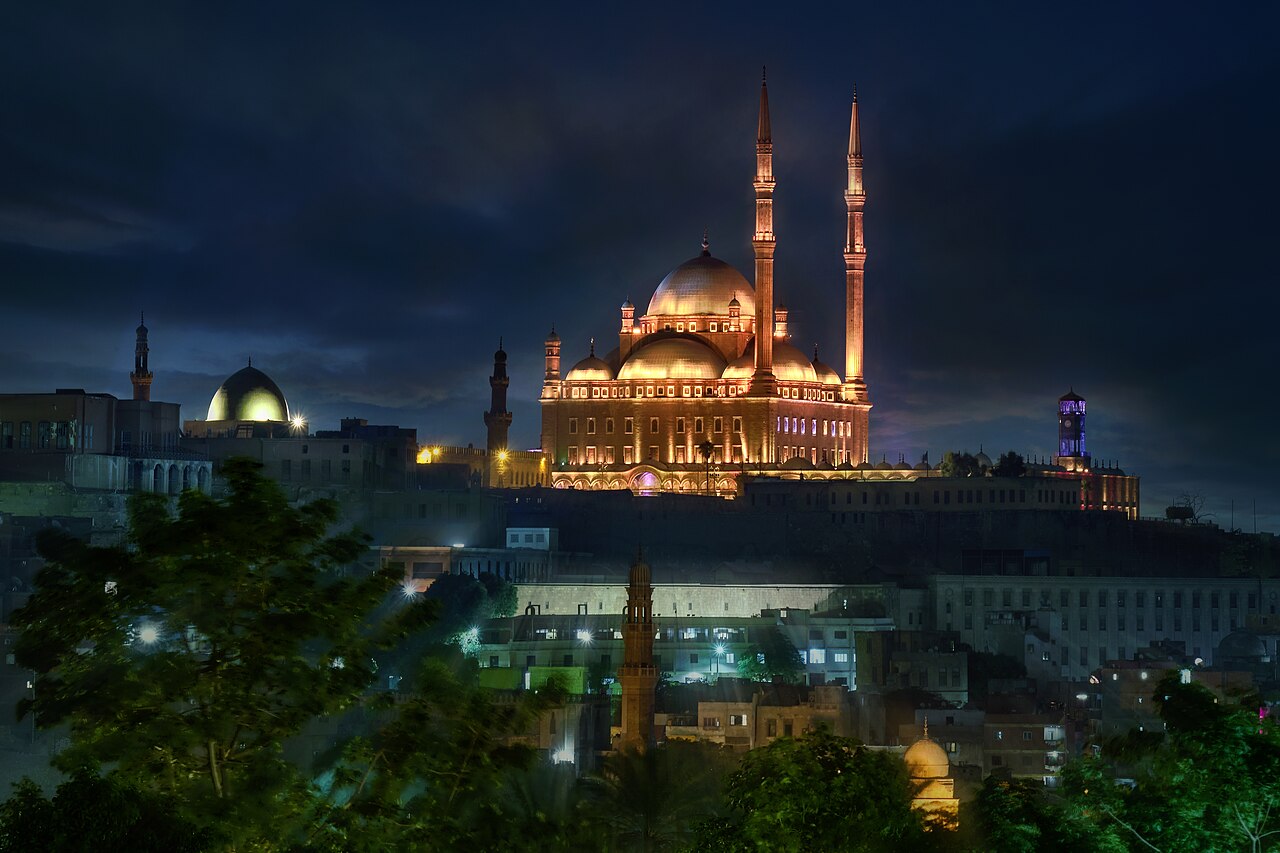 Artifact
Primary source
Muhammad Ali Mosque
1848
 Painting
Primary source
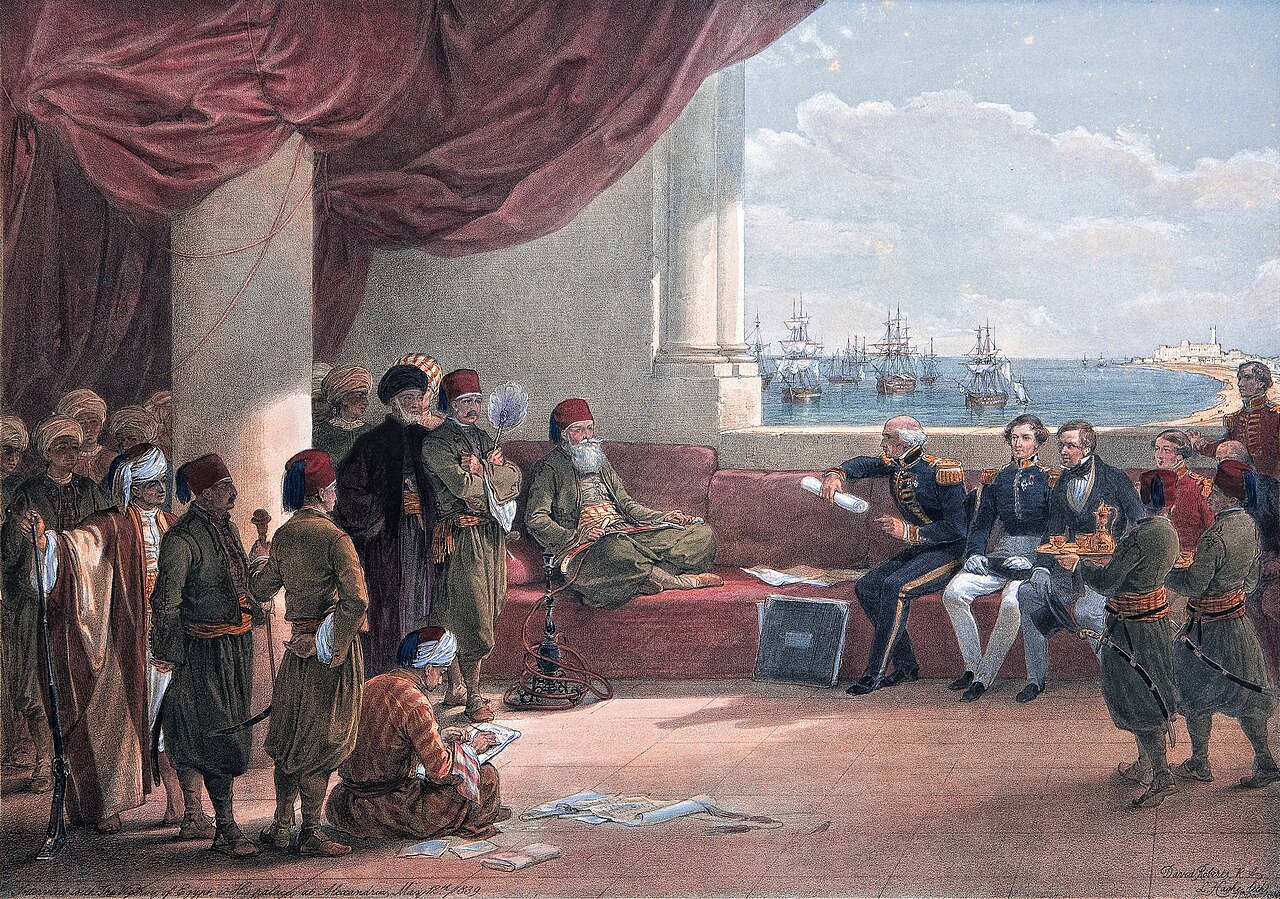
Interview with Mehemet Ali in his Palace at Alexandria
David Roberts and Louis Haghe · 12 May 1839
 Photograph
Primary source
Portrait of Muhammad Ali
Bernard Gotfryd · c. 1975
 Artifact
Secondary source
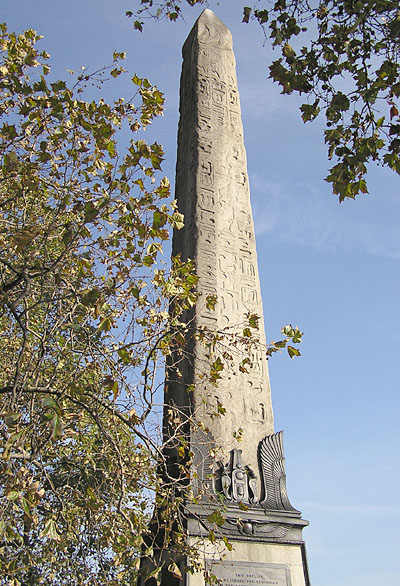
Cleopatra's Needle
c. 1450 BC (moved to Alexandria 12 BC)
Free account
Read every Muhammad Ali of Egypt source
Sign up free →
Ready when you are
Start chatting with Muhammad Ali of Egypt now.
20 messages free · No credit card · Available in 50+ languages.