


Secondary sourceArtifact1525-1526
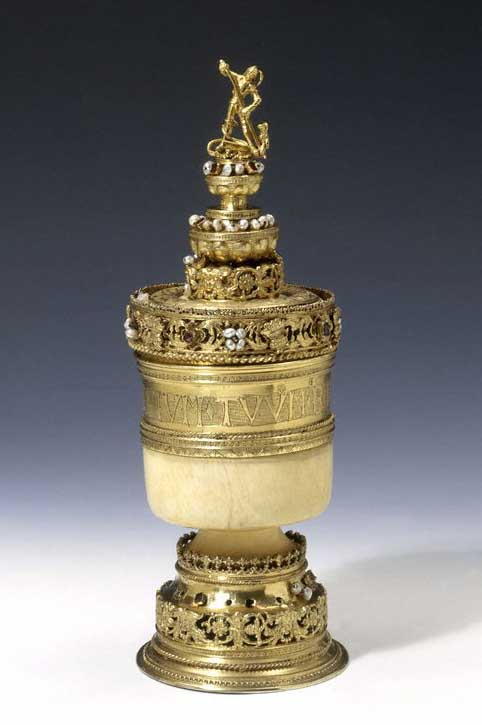
Howard Grace Cup
1525-1526
A Tudor silver-mounted ivory cup traditionally said to have belonged to Thomas Becket, reflecting the lasting tradition of relics connected to him.
A later cup traditionally, but not actually, linked to Becket, showing how relic traditions about him persisted into the Tudor period.
About this source
What it is
This tall cup, made in London around 1525-1526, has a turned ivory bowl set in silver-gilt mounts decorated with pearls and gemstones. It is held by the Victoria and Albert Museum.
Why it matters
The cup was traditionally said to have belonged to Thomas Becket, though it was actually made centuries after his death, in the Tudor period. This shows how objects could become attached to the memory of a famous saint long after the fact, and how relic traditions persisted even as the Reformation was about to challenge the veneration of saints in England.
Look closer
- Why might a family want to own an object linked to Becket, even if the object was made long after his death?
- What does the fine craftsmanship (ivory, silver-gilt, pearls) suggest about who owned this cup?
- How can you tell the difference between an object that truly belonged to a historical figure and one that was later associated with their name?
This artifact is part of the curated material that grounds the AI version of Thomas Becket on Humy.ai — when students ask about related events, the AI can quote it and cite it.
More Thomas Becket sources
Meet the AI Thomas Becket →Primary source
Constitutions of Clarendon
Henry II of England · 1164
 Artifact
Primary source
Canterbury Cathedral
founded 597
 Artifact
Secondary source
Becket Casket
c. 1180-1190
 Artifact
Secondary source
Fermo Chasuble of St. Thomas Becket
12th century
 Artifact
Secondary source
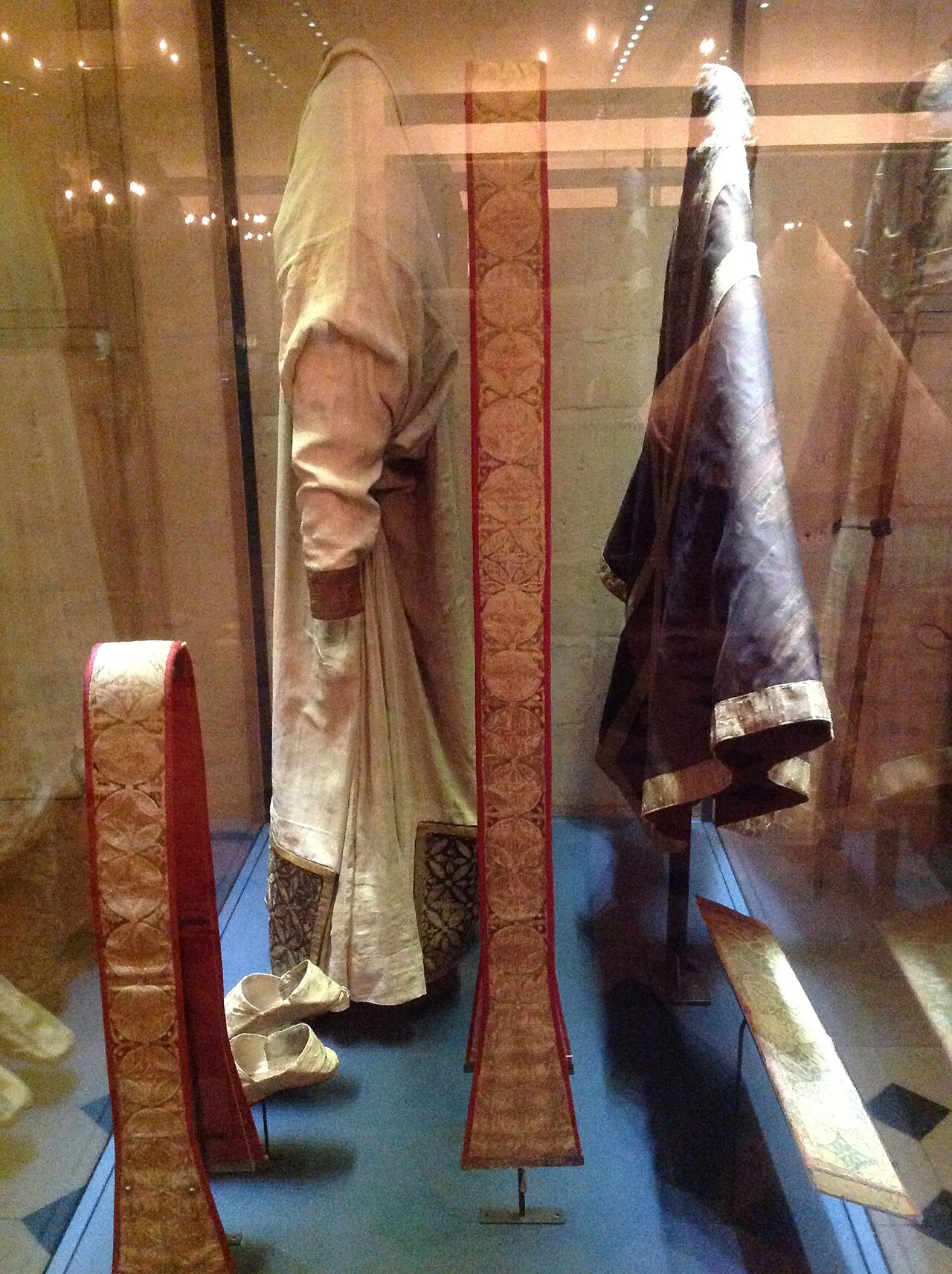
Becket Liturgical Garments, Sens Cathedral
12th century
Ready when you are
Start chatting with Thomas Becket now.
20 messages free · No credit card · Available in 50+ languages.