


Primary sourceDocument15th century
Hrisov of Vlad Țepeș (Signature Detail)
Vlad Țepeș · 15th century
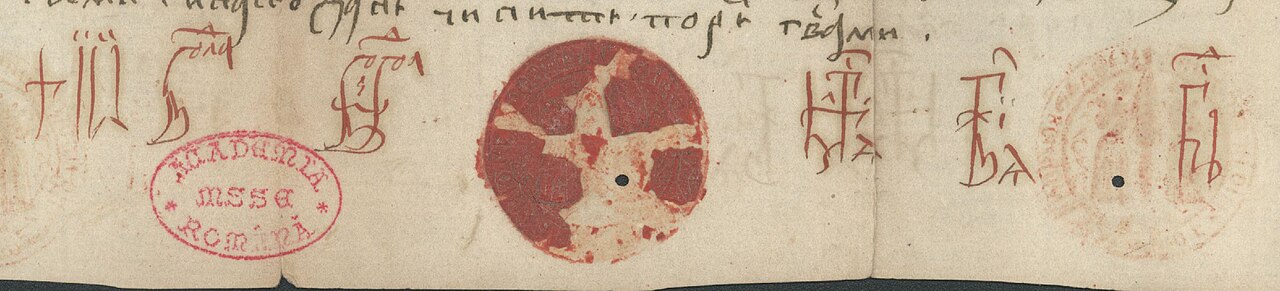
A close-up of Vlad the Impaler's princely charter showing his chancery's Slavonic signatures and official seal.
This close-up of Vlad the Impaler's own charter highlights his chancery's signature practices and seal.
About this source
What it is
This is a detail view of a hrisov, a princely charter, issued by Vlad Țepeș to his boyars concerning an estate. It shows the handwritten Slavonic signatures and monograms used in his chancery, along with a wax-style seal and an archive stamp.
Why it matters
This close view lets students examine the physical details of how Vlad's authority was expressed on paper: through script, seal, and signature. It is a reminder that rulers like Vlad relied on written bureaucracy as much as on military reputation.
Look closer
- What can the style of handwriting tell us about who wrote official documents for a ruler?
- Why would a seal be added to a document like this?
- What is the difference between a ruler's spoken command and this kind of written record?
This document is part of the curated material that grounds the AI version of Vlad the Impaler on Humy.ai — when students ask about related events, the AI can quote it and cite it.
More Vlad the Impaler sources
Browse all 83 →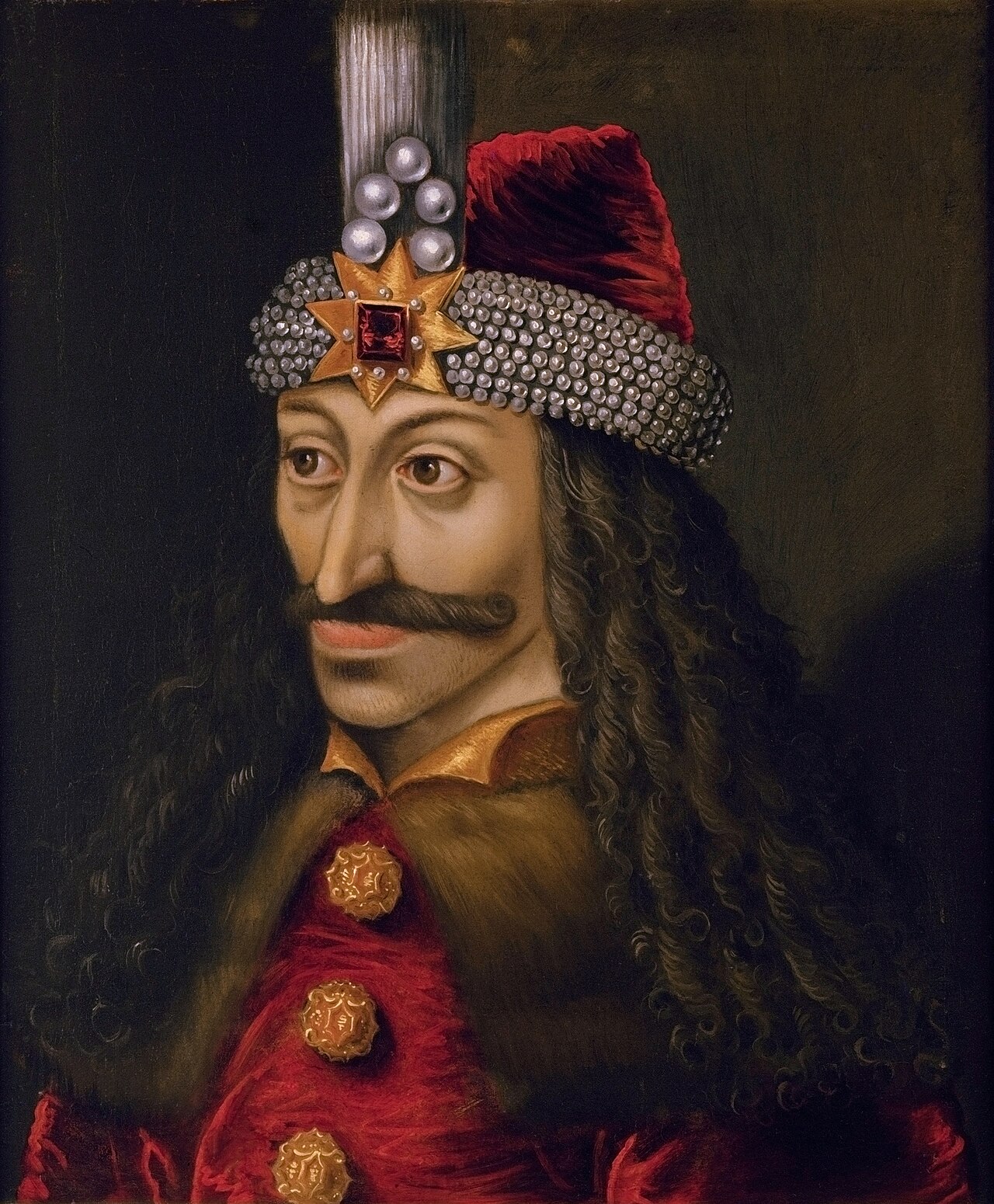 Painting
Secondary source
Portrait of Vlad Țepeș (Ambras Castle)
Unknown · c. 1560 (copy of lost original)
 Document
Primary source
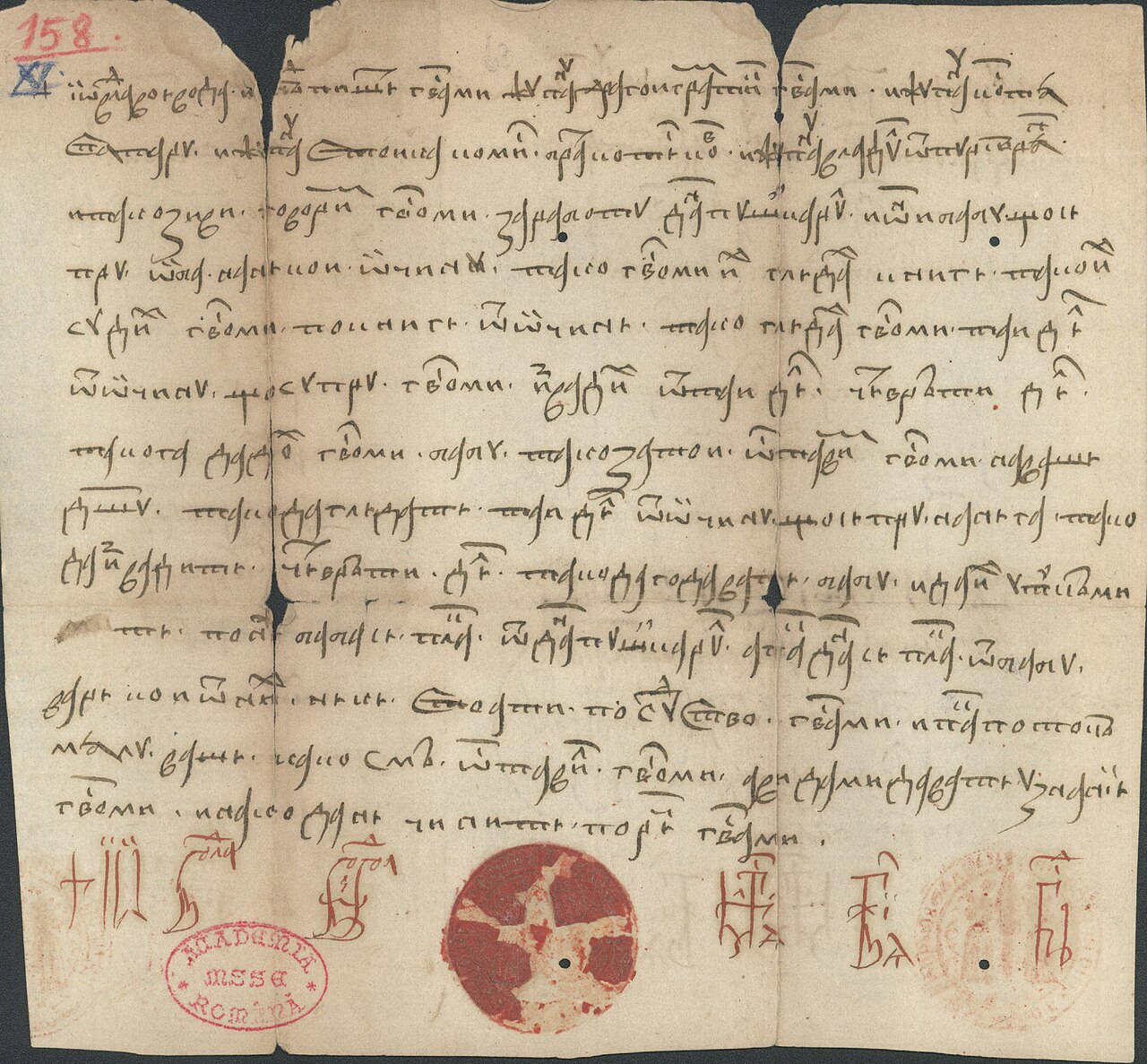
Hrisov of Vlad Țepeș to his Boyars (Baba Estate)
Vlad Țepeș · 15th century
 Letter
Primary source
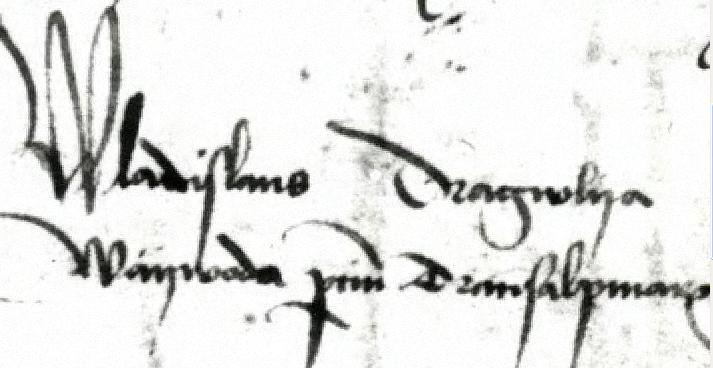
Letter Signed 'Wladislaus Dragwlya'
Vlad III of Wallachia · 15th century
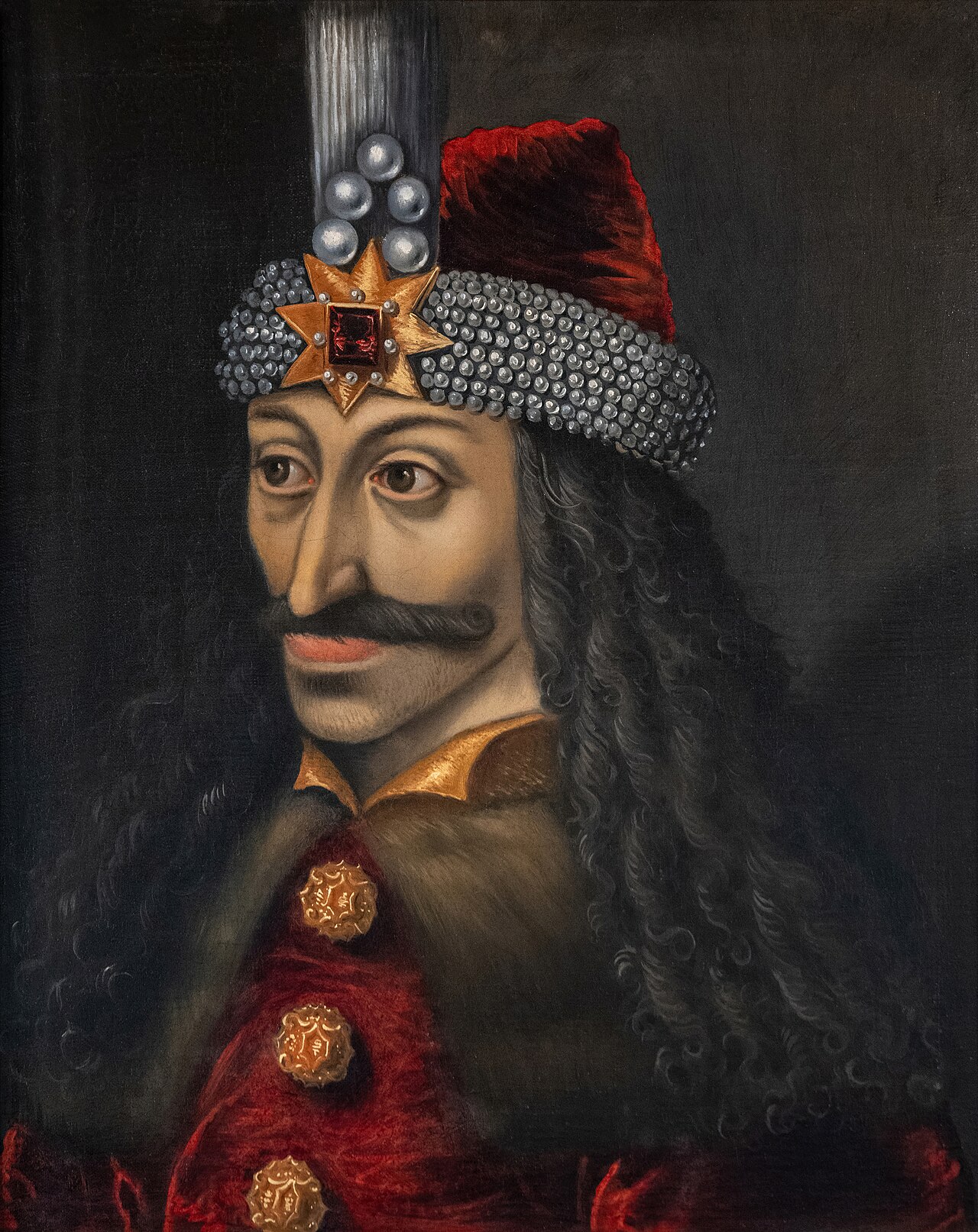 Painting
Secondary source
Portrait of Vlad the Impaler, Prince of Wallachia
Unknown · 16th century (copy of lost original)
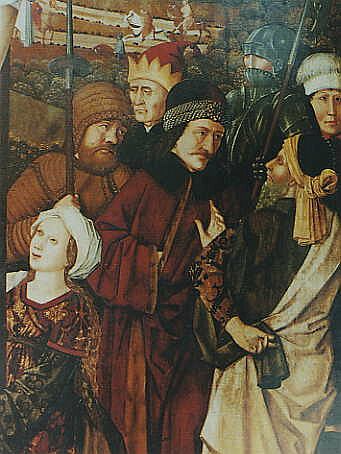
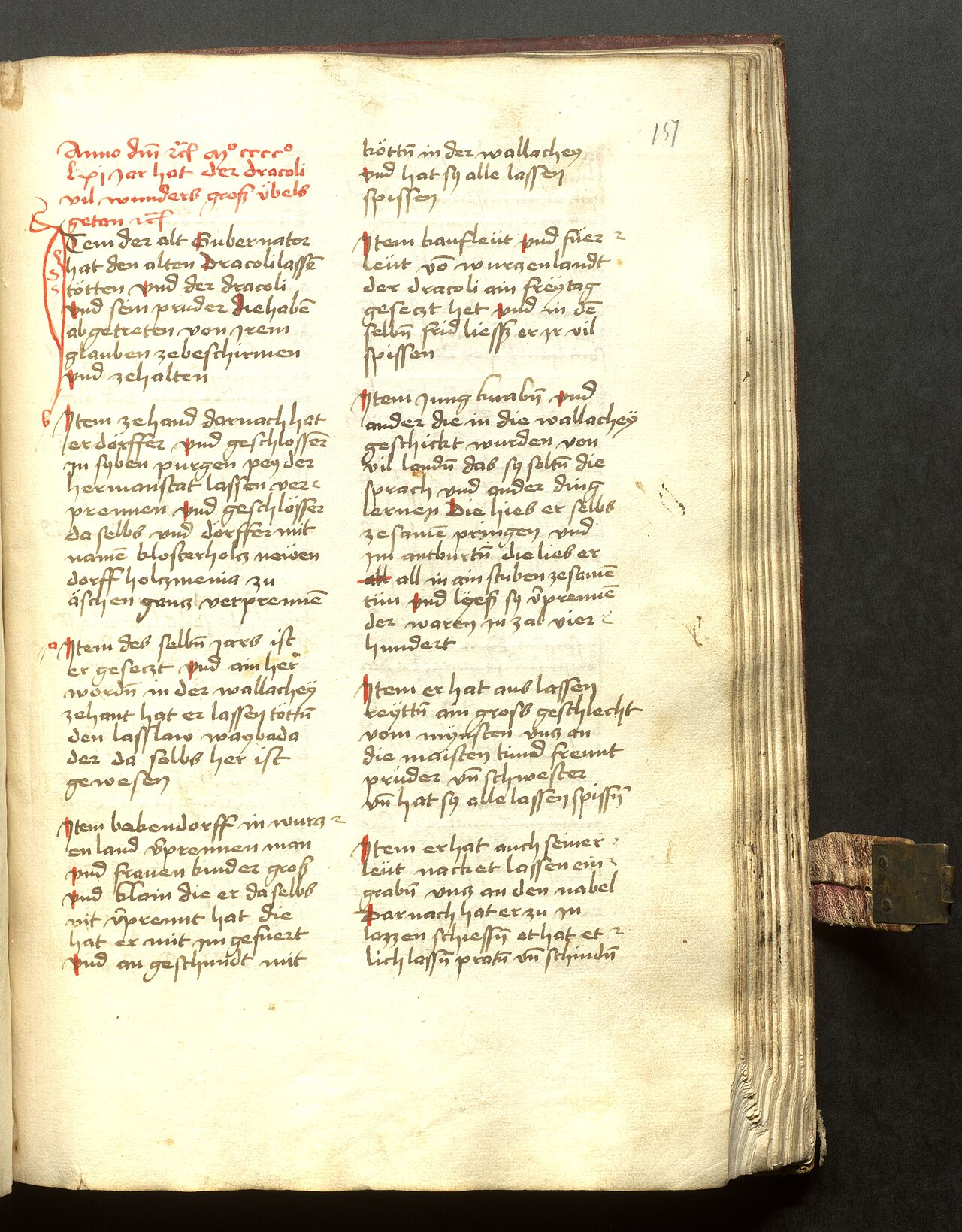
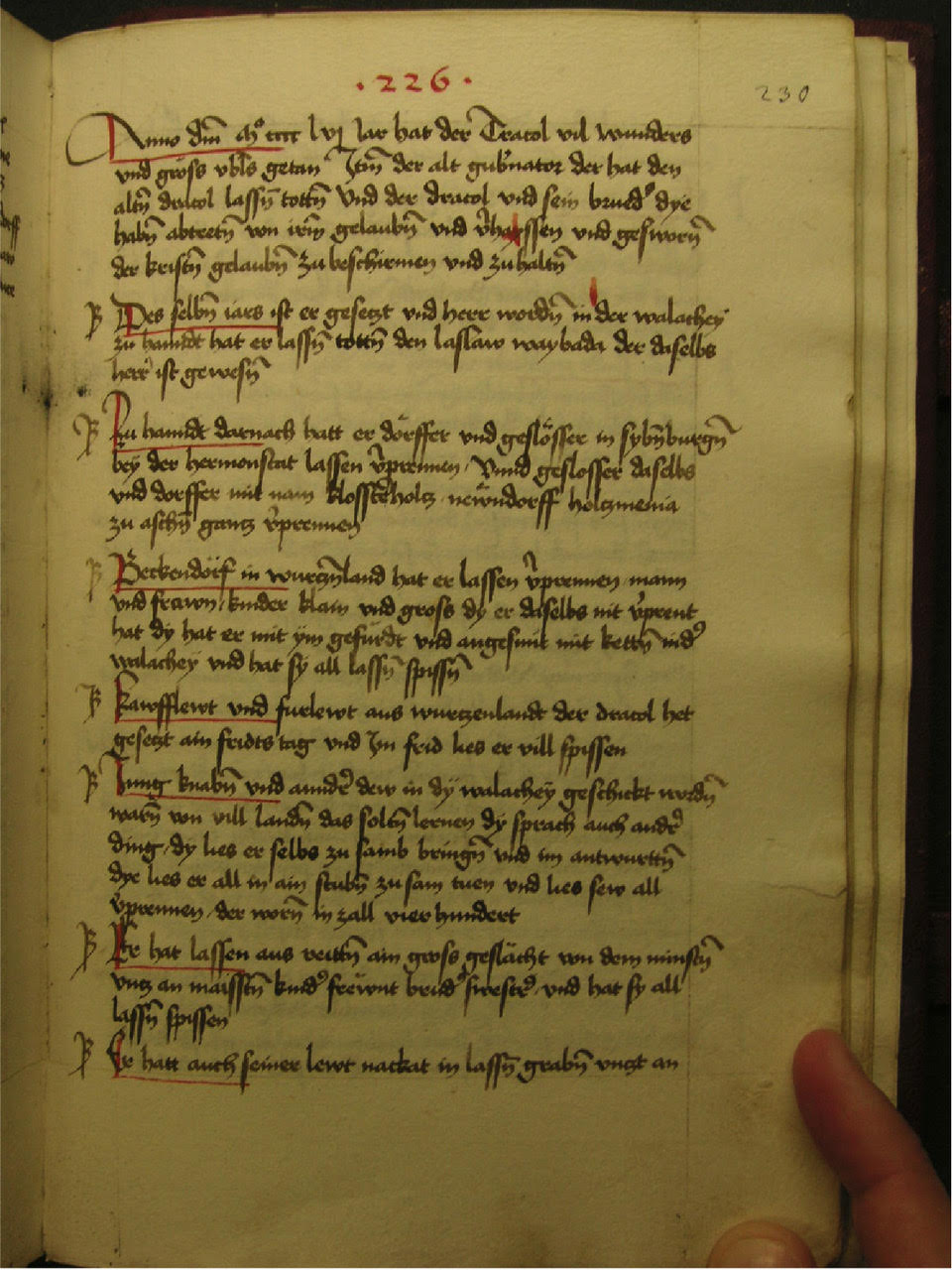
Free account
Read every Vlad the Impaler source
Sign up free →
Ready when you are
Start chatting with Vlad the Impaler now.
20 messages free · No credit card · Available in 50+ languages.