


Secondary sourceArtifact1560
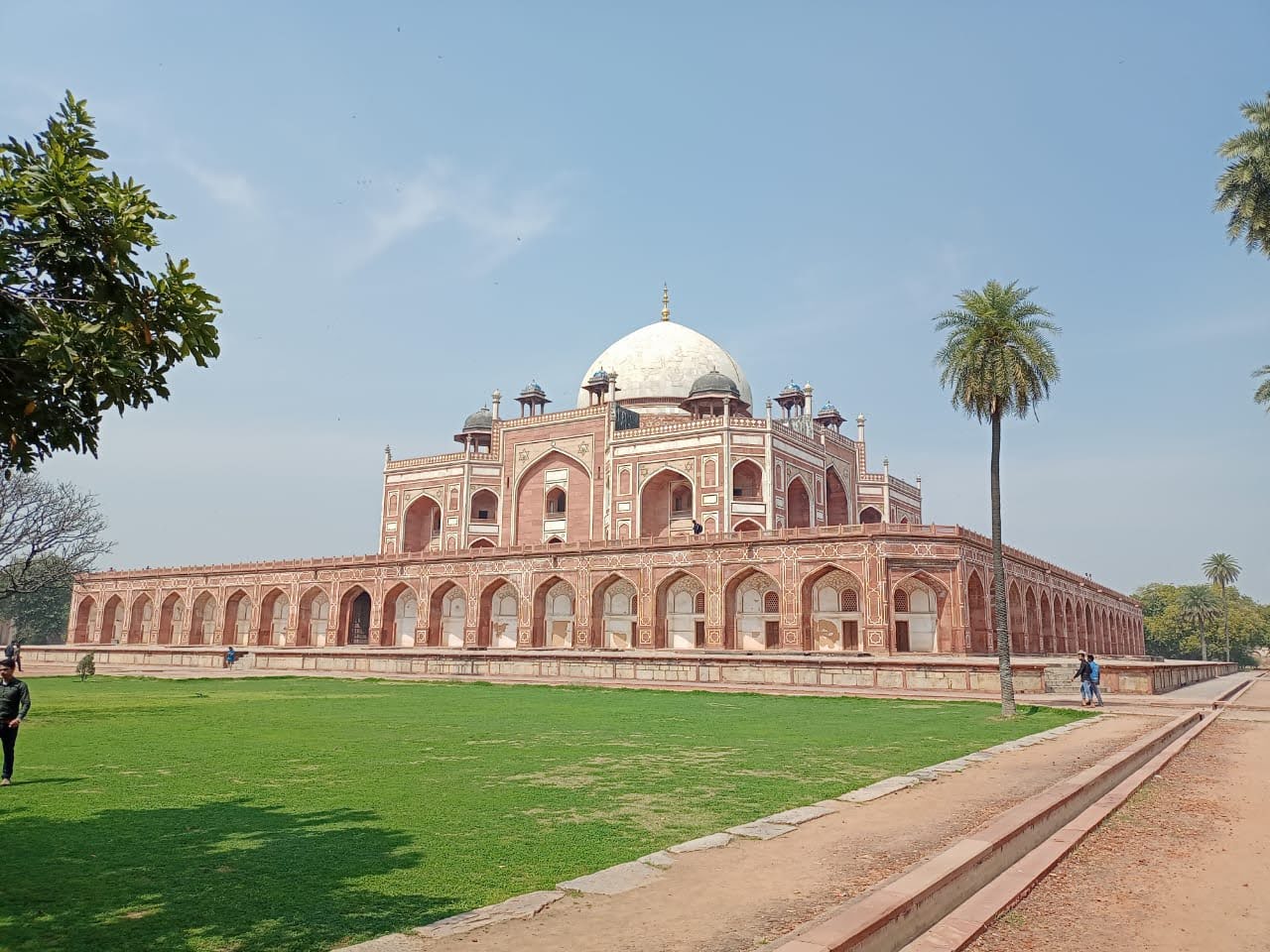
Humayun's Tomb
Mirak Mirza Ghiyas · 1560
The grand garden-tomb of Akbar's father Humayun, built in Delhi during Akbar's reign and setting the pattern for later Mughal royal mausolea.
Built for Akbar's father during the early years of Akbar's own reign, this tomb set the architectural style his dynasty would follow.
About this source
What it is
Humayun's Tomb in Delhi was commissioned by Empress Bega Begum, Humayun's widow, and built between 1565 and 1572 by the Persian architects Mirak Mirza Ghiyas and his son Sayyid Muhammad. Akbar visited the site in 1571 as it neared completion.
Why it matters
As the first great garden-tomb built on the Indian subcontinent, it set a precedent followed by later Mughal monuments, eventually leading to the Taj Mahal. Though built for Humayun and paid for by Bega Begum, it stands as a monument from the early years of Akbar's own reign and shows the architectural ambitions of the dynasty he led.
Look closer
- Who paid for and oversaw this tomb's construction, and what does that tell you about women's influence at the Mughal court?
- What does the use of a garden setting and red sandstone suggest about new building styles arriving in India?
- Why might later Mughal buildings, including the Taj Mahal, have looked back to this tomb as a model?
This artifact is part of the curated material that grounds the AI version of Akbar the Great on Humy.ai — when students ask about related events, the AI can quote it and cite it.
More Akbar the Great sources
Meet the AI Akbar the Great →
Ready when you are
Start chatting with Akbar the Great now.
20 messages free · No credit card · Available in 50+ languages.