


Primary sourceArtifact16th century
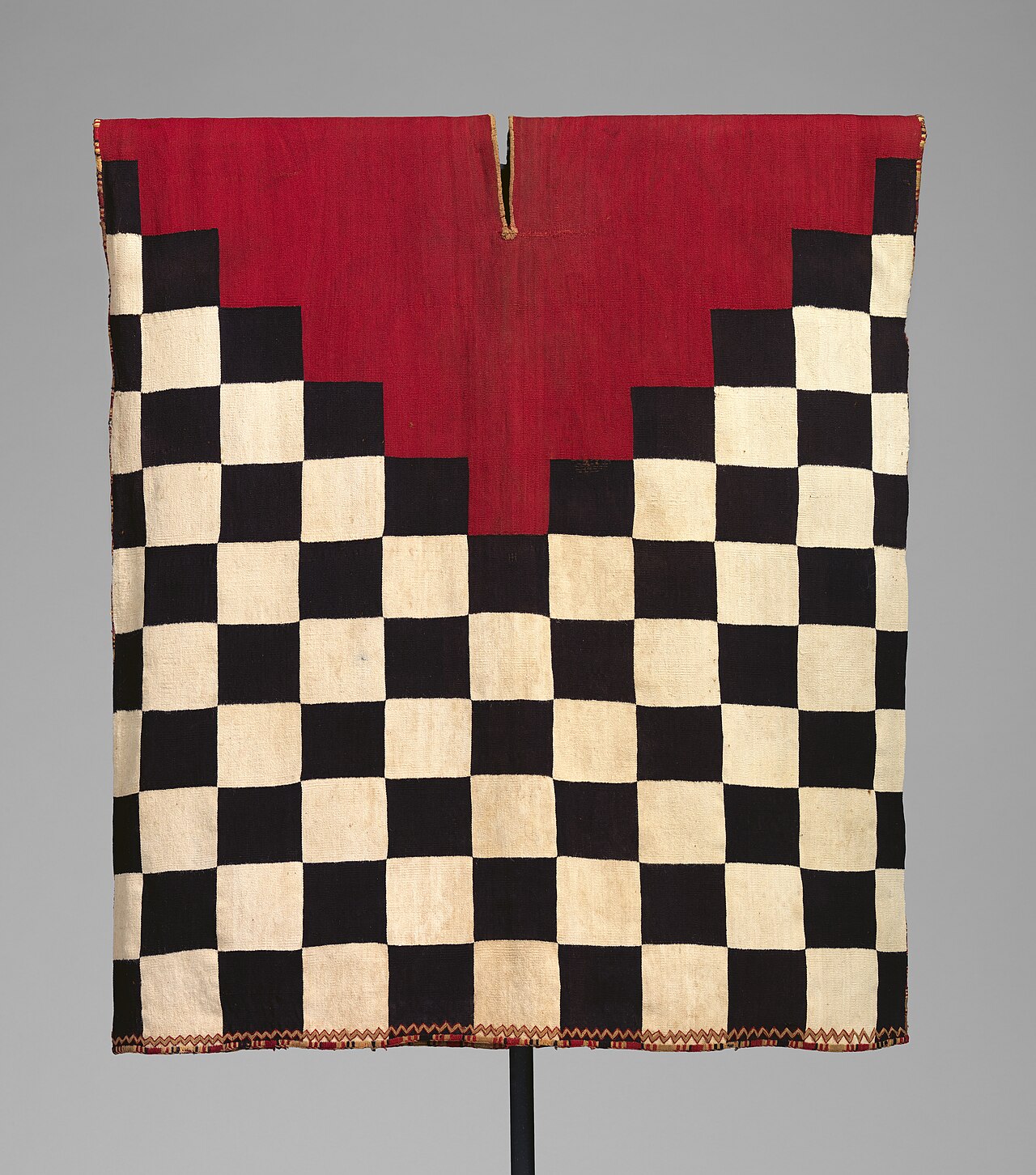
Inca Checkerboard Tunic with Red V-Yoke
Inca artist · 16th century
A tapestry tunic in the checkerboard pattern worn by Inca soldiers, described by a chronicler who witnessed Atahualpa's meeting with Pizarro.
This checkerboard tunic matches the livery worn by Atahualpa's soldiers as described by a chronicler present at his meeting with Pizarro.
About this source
What it is
This tapestry-woven tunic, made in the 16th century by an Inca artist, features a black-and-white checkerboard design with a red V-shaped yoke. Such garments were worn by Inca men as markers of identity.
Why it matters
This type of checkerboard tunic was first described in 1532 by Francisco de Jerez, secretary to the conquistador Francisco Pizarro, who recorded the meeting between Atahualpa and Pizarro's men at Cajamarca. Jerez noted that the Inca army's first regiment wore this checkerboard livery, making this tunic a direct link to the described clothing worn around Atahualpa at the moment of his capture.
Look closer
- Why might soldiers all wear matching patterned clothing like this?
- What does it mean that this garment was first described by a Spanish chronicler rather than an Inca source?
- How might clothing have signaled rank or loyalty in the Inca army?
This artifact is part of the curated material that grounds the AI version of Atahualpa on Humy.ai — when students ask about related events, the AI can quote it and cite it.
More Atahualpa sources
Meet the AI Atahualpa →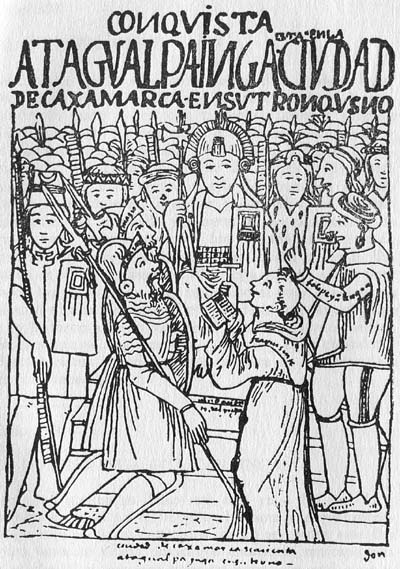 Painting
Secondary source
Atawallpa Pizarro tinkuy
Felipe Guaman Poma de Ayala · 1532 (depicted); drawing later
 Book
Primary source
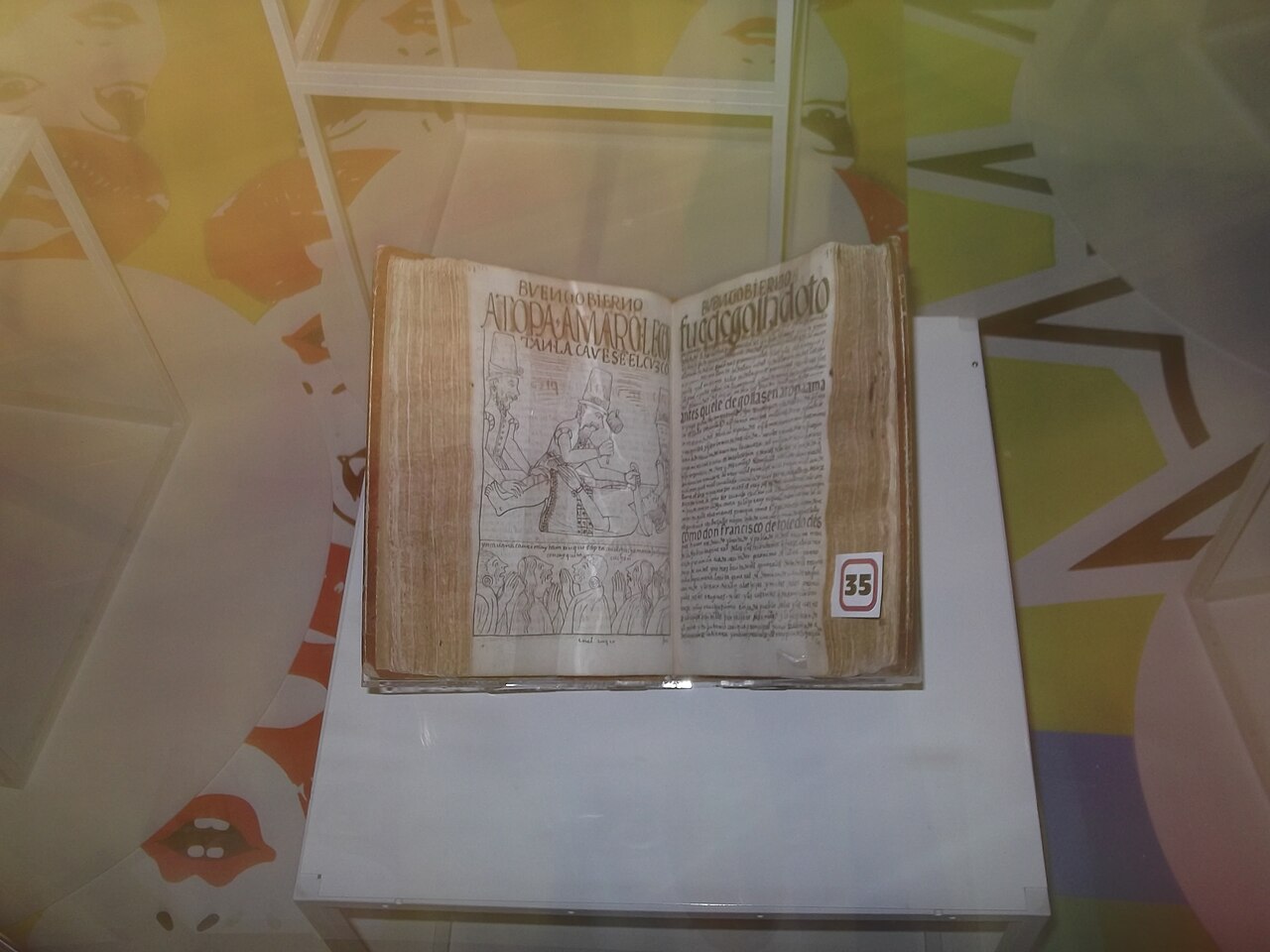
El primer nueva corónica y buen gobierno
Felipe Guaman Poma de Ayala · c. 1615
 Painting
Secondary source
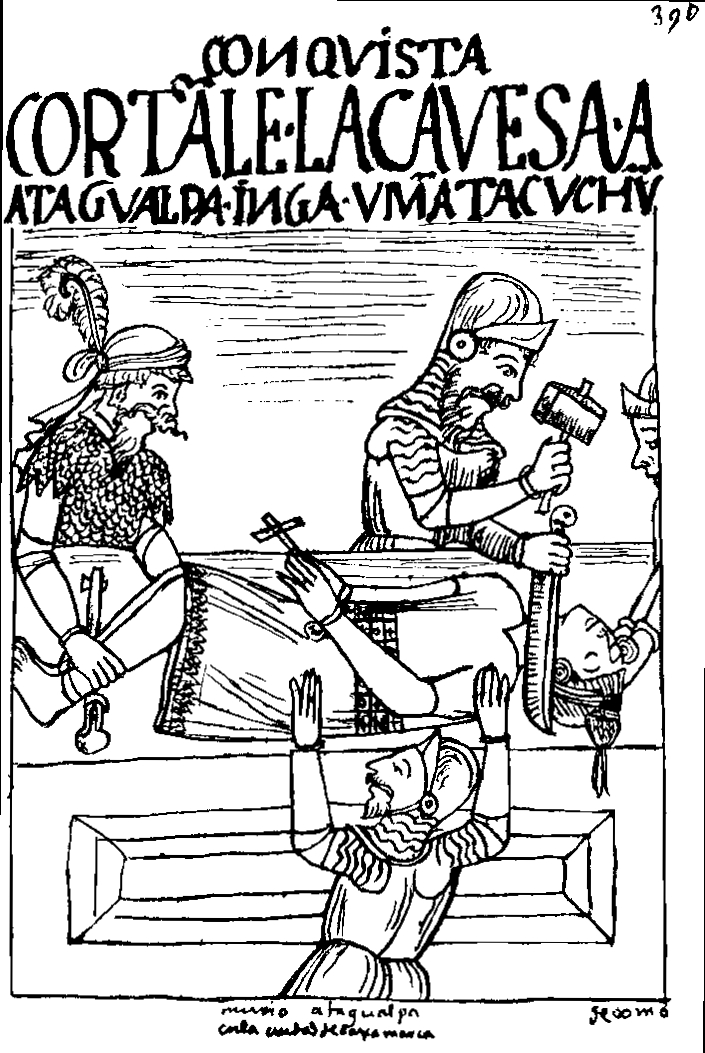
Muerte de Atagualpa Inca
Felipe Huaman Puma de Ayala · c. 1615
 Artifact
Secondary source
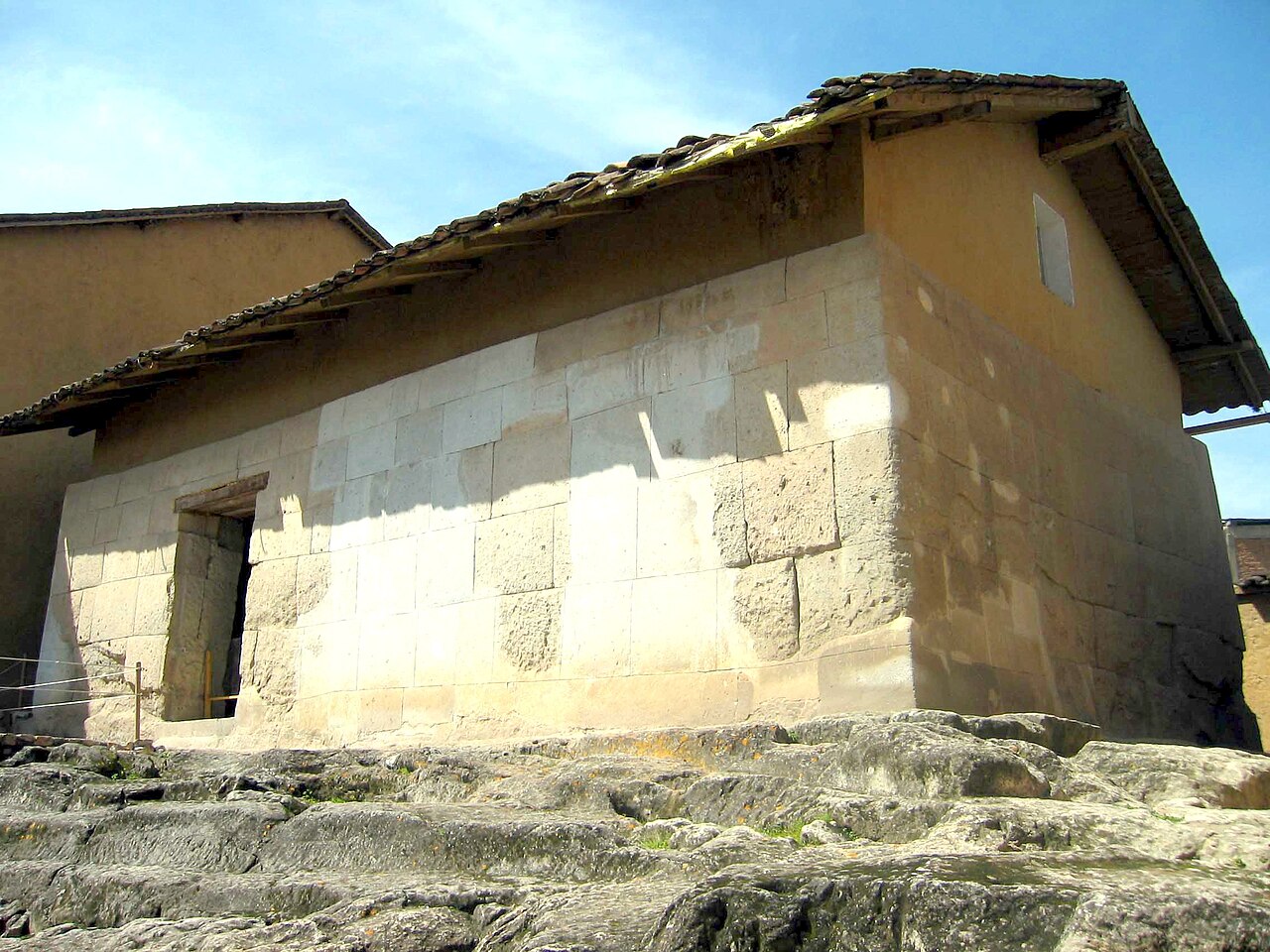
Ransom Room
Secondary source
Suma y Narración de los Incas
Juan de Betanzos · 1551
Ready when you are
Start chatting with Atahualpa now.
20 messages free · No credit card · Available in 50+ languages.