


Primary sourceArtifact16th century
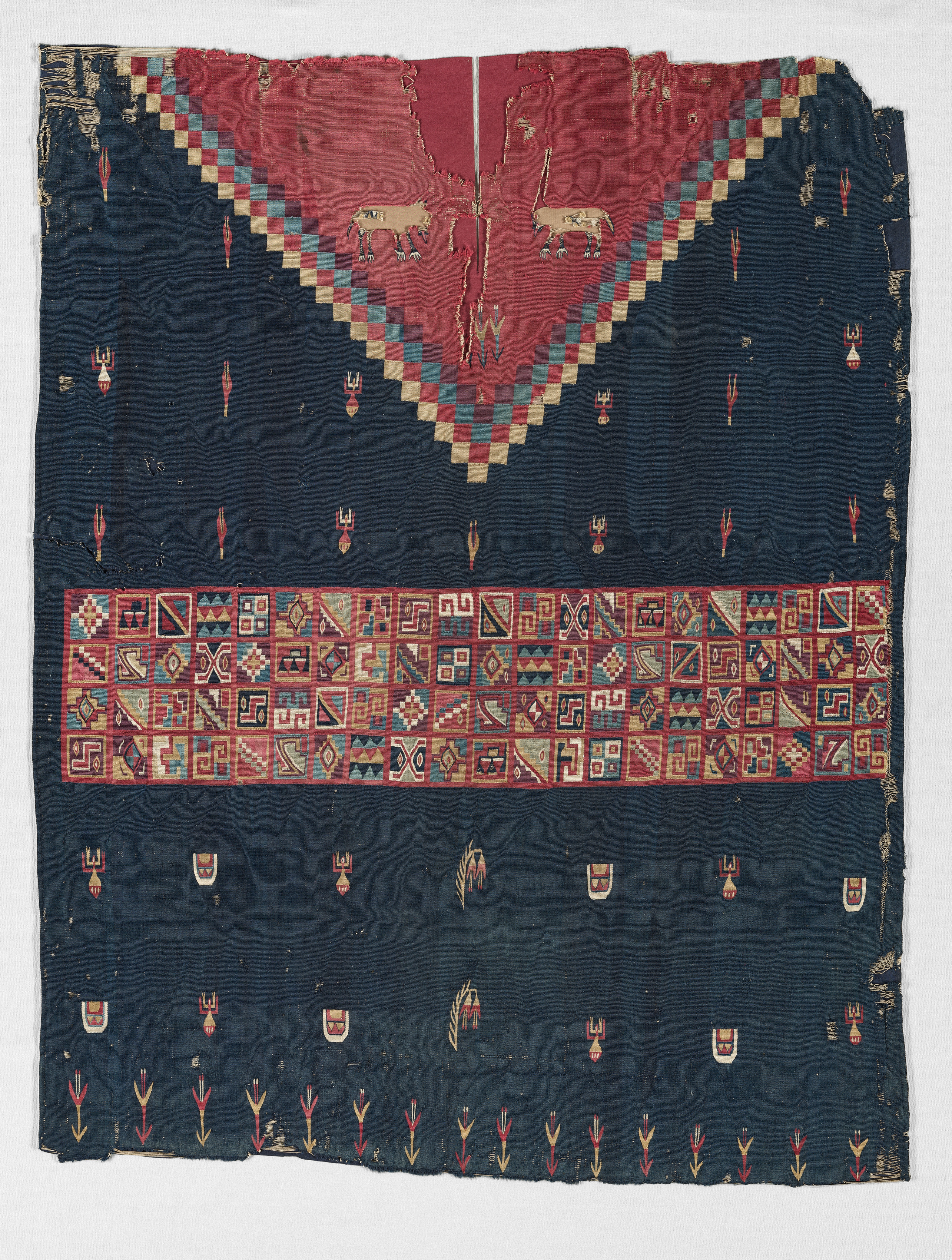
Inca Half Tunic with T'oqapu Waistband
16th century
A 16th-century Inca tunic made in the colonial period, showing the textile traditions of the empire Atahualpa once ruled.
This tunic reflects the textile traditions of the Inca world Atahualpa ruled, made as his empire fell under Spanish control.
About this source
What it is
This half tunic dates from the 16th century and was made in the South Coast region of Peru during the Inca and early colonial period. It is held by the Cleveland Museum of Art.
Why it matters
The tunic's t'oqapu waistband and V-yoke were standard Inca decorations, but the fantastic animals and floral motifs show influence from after the Spanish Conquest of 1532, the event that ended Atahualpa's reign. It illustrates how Inca material culture changed under colonial rule.
Look closer
- What details in the design suggest this tunic was made after the Spanish arrived?
- Why might clothing patterns change after a major political conquest?
- What does this object tell you about Inca craftsmanship, even though it doesn't show Atahualpa himself?
This artifact is part of the curated material that grounds the AI version of Atahualpa on Humy.ai — when students ask about related events, the AI can quote it and cite it.
More Atahualpa sources
Meet the AI Atahualpa →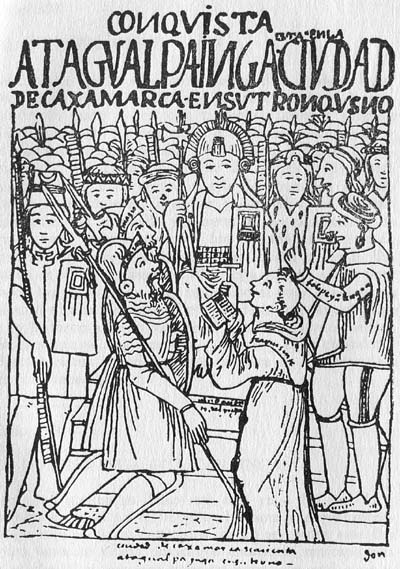 Painting
Secondary source
Atawallpa Pizarro tinkuy
Felipe Guaman Poma de Ayala · 1532 (depicted); drawing later
 Book
Primary source
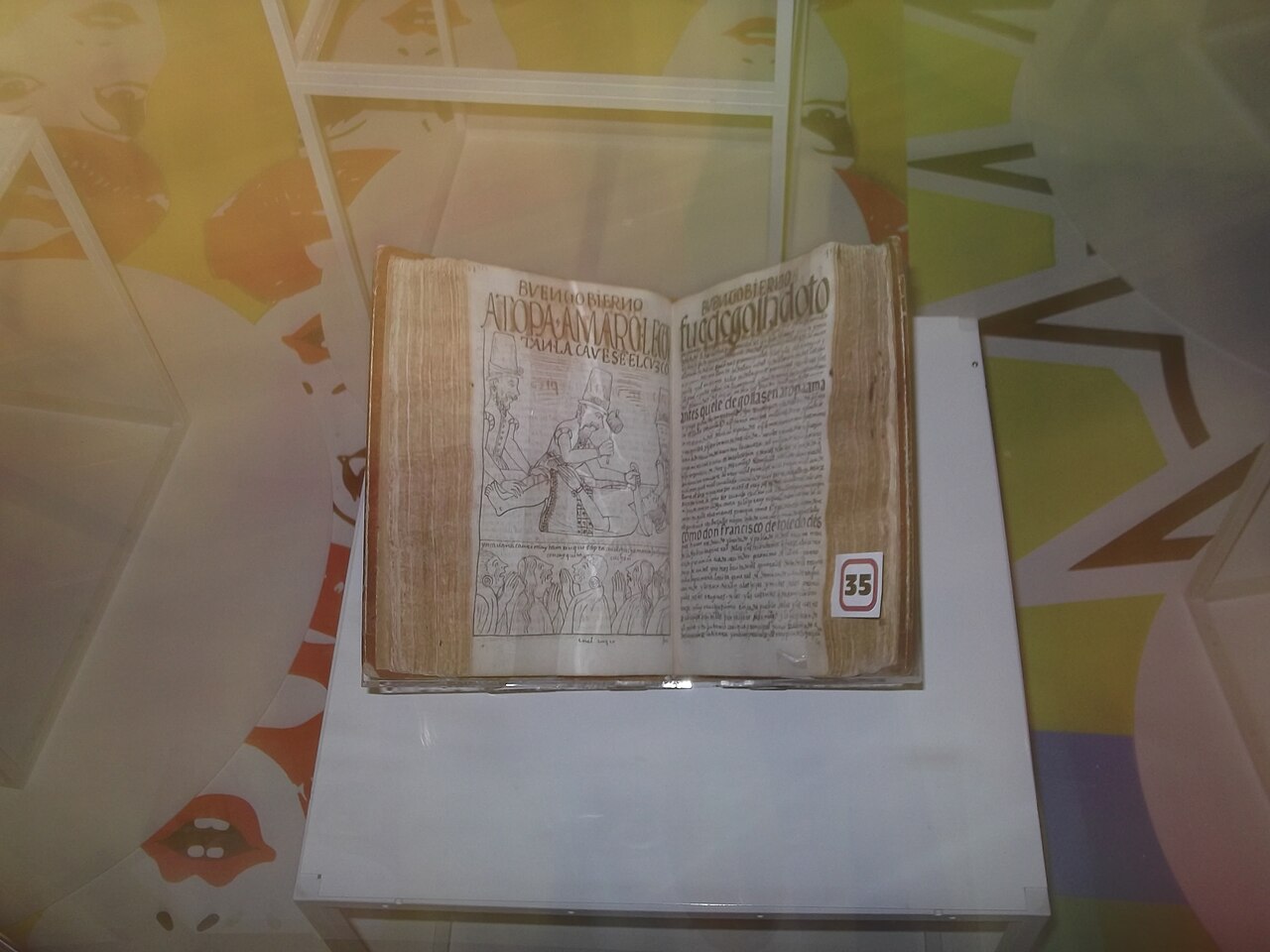
El primer nueva corónica y buen gobierno
Felipe Guaman Poma de Ayala · c. 1615
 Painting
Secondary source
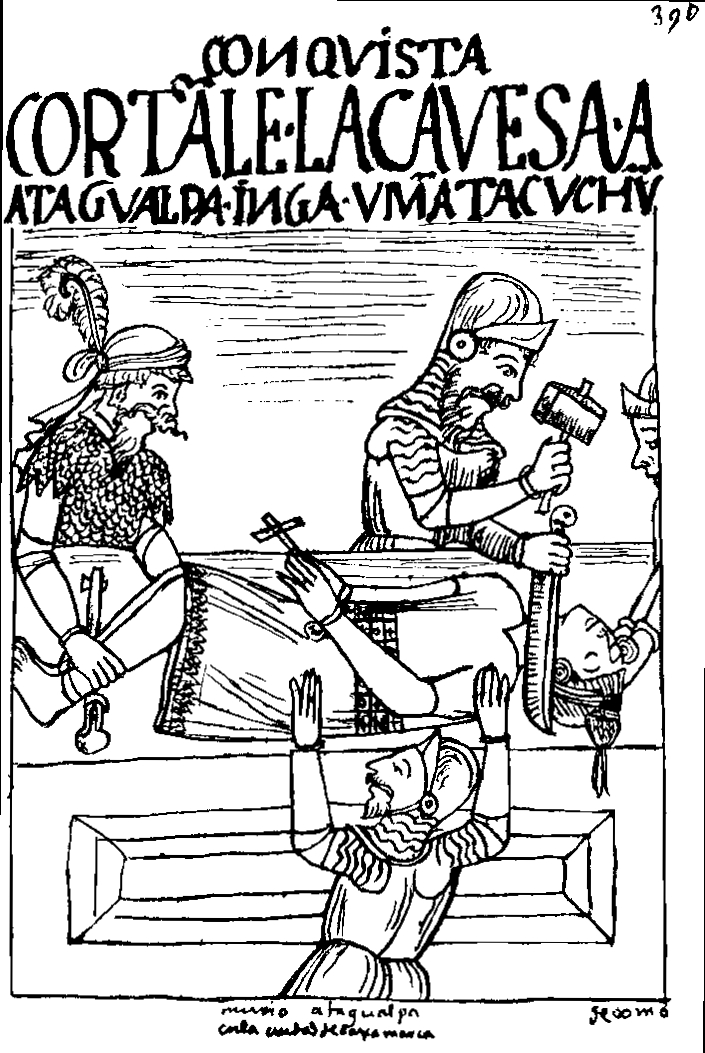
Muerte de Atagualpa Inca
Felipe Huaman Puma de Ayala · c. 1615
 Artifact
Secondary source
Ransom Room
Secondary source
Suma y Narración de los Incas
Juan de Betanzos · 1551
Ready when you are
Start chatting with Atahualpa now.
20 messages free · No credit card · Available in 50+ languages.