


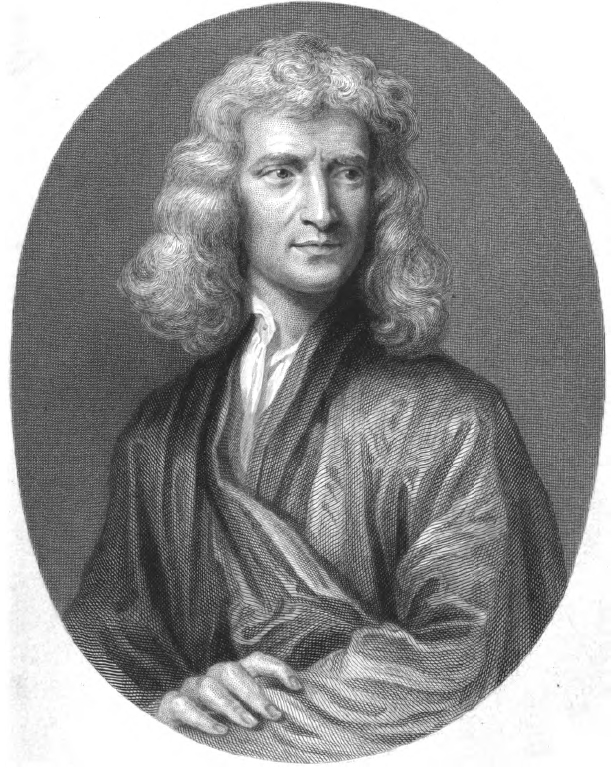
Secondary sourcePainting6 June 1850 (etching), after a 1689 portrait
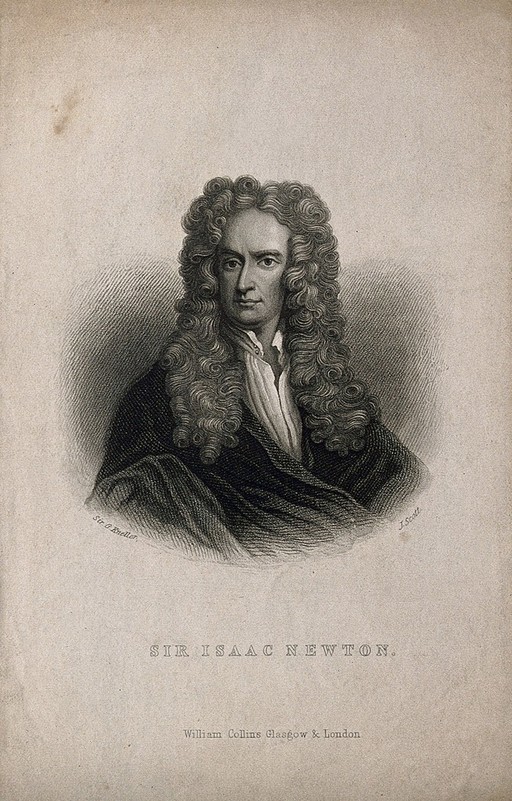
Isaac Newton frontispiece, Cotes correspondence
T. O. Barlow, after Godfrey Kneller · 6 June 1850 (etching), after a 1689 portrait
An 1850 etching based on a 1689 portrait of Newton, used as the frontispiece to a book of his correspondence.
A later copy of a portrait painted during Newton's lifetime, used to illustrate his published letters.
About this source
What it is
This oval engraving by T. O. Barlow is based on a 1689 portrait of Newton painted by Godfrey Kneller. It was published in 1850 as the frontispiece to a book of correspondence between Newton and Professor Cotes, edited by J. Edleston.
Why it matters
Although made in 1850, this image copies a portrait painted during Newton's own lifetime by Kneller, a leading portraitist of the period, so it preserves something close to Newton's real appearance. Its use in a scholarly edition of his letters shows how later historians worked to make Newton's own writings and image available to readers.
Look closer
- Why might publishers choose to include a portrait at the front of a book of letters?
- What does the difference between the original 1689 portrait and this 1850 copy tell you about how images get passed down?
- What might this formal portrait not tell you about Newton as a person?
This painting is part of the curated material that grounds the AI version of Isaac Newton on Humy.ai — when students ask about related events, the AI can quote it and cite it.
More Isaac Newton sources
Meet the AI Isaac Newton →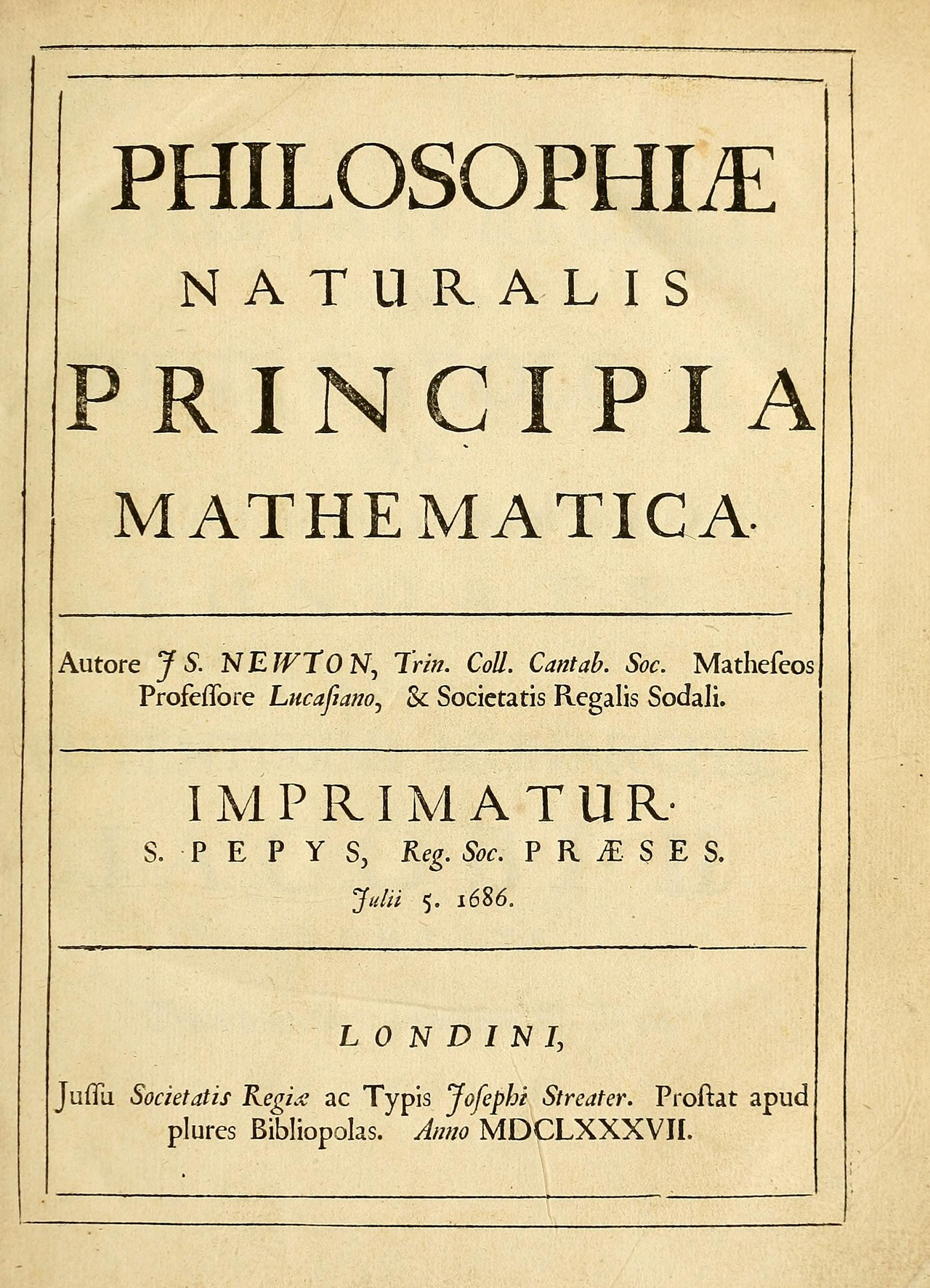 Book
Primary source
Philosophiæ Naturalis Principia Mathematica
Isaac Newton · 1687
 Book
Primary source
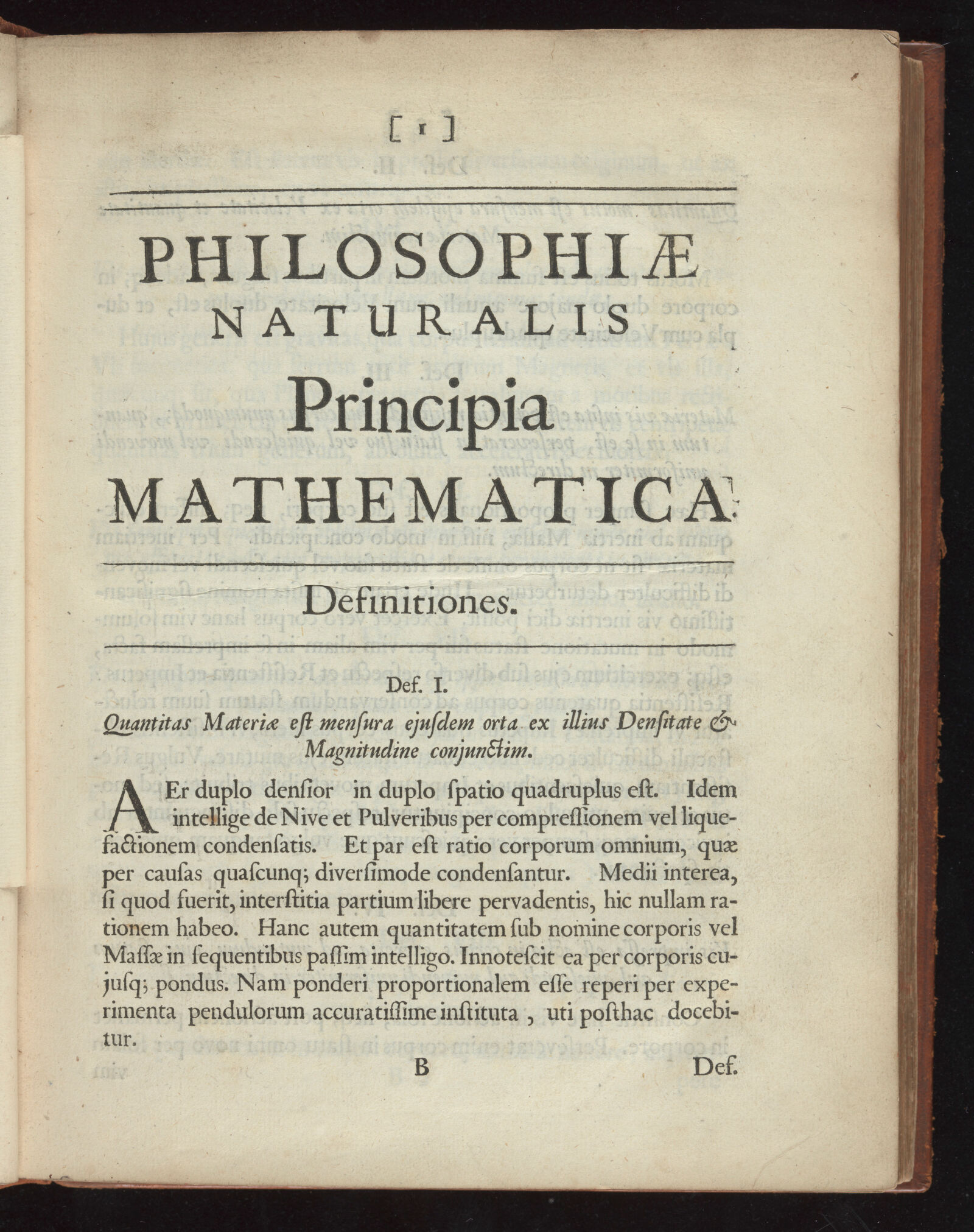
Principia Mathematica, Page 1: Definitions
Isaac Newton · 1687
 Painting
Primary source
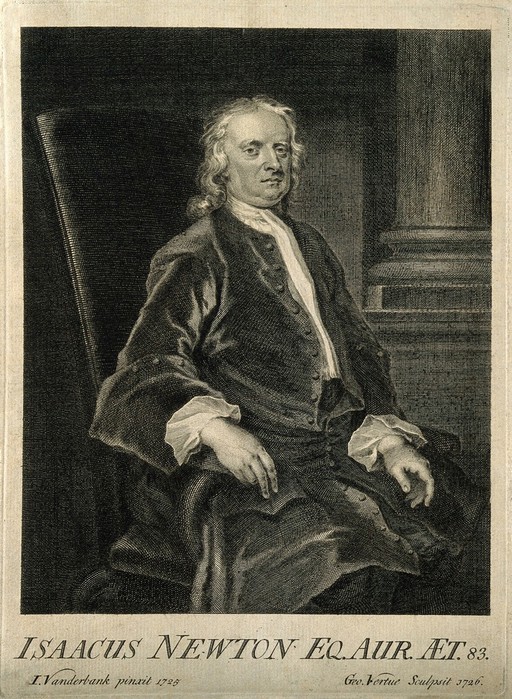
Sir Isaac Newton, line engraving by Vertue, 1726
George Vertue · 1726
 Document
Primary source
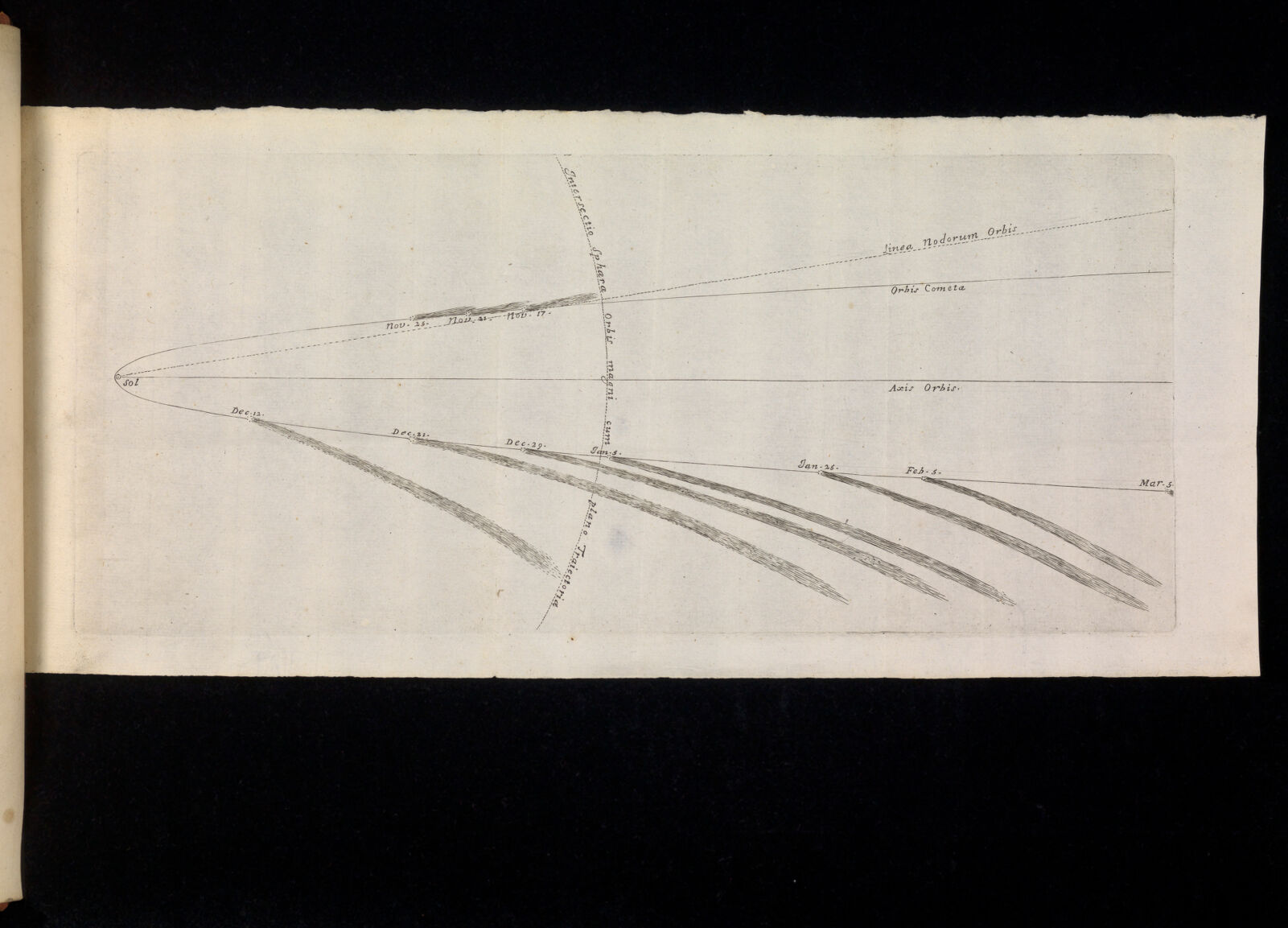
Principia Mathematica, Fold-out Diagram
Isaac Newton · 1687
 Painting
Primary source
Sir Isaac Newton, stipple engraving by J. Scott after Kneller, 1702
J. Scott, after Sir Godfrey Kneller · 1702 (print made later)
Ready when you are
Start chatting with Isaac Newton now.
20 messages free · No credit card · Available in 50+ languages.