


Primary sourceDocument15th century
Johanna darc dicta puella
15th century
A Latin phrase from a 15th-century trial manuscript naming Joan of Arc as 'the Maiden,' showing how court officials formally recorded her identity.
This official Latin naming of Joan as 'the Maiden' comes from the trial records concerning her case, showing how authorities labeled her.

About this source
What it is
This is a close detail from a 15th-century manuscript, part of the records connected to the trial that later cleared Joan of Arc's name. The Latin phrase reads 'Johanna darc dicta puella' — 'Joan Darc, called the Maiden.' It is held in a manuscript known as the 'Urfé manuscript' at the Bibliothèque nationale de France.
Why it matters
The way a court names someone tells us how officials saw them. Here Joan is identified by her nickname 'the Maiden,' showing how her unusual role as a young woman leading soldiers was understood and recorded by church and legal authorities of her time.
Look closer
- Why might a court choose to record someone's nickname alongside their legal name?
- What does the handwriting style tell you about who wrote official documents in the 1400s?
- What is missing from a short label like this about who Joan really was?
This document is part of the curated material that grounds the AI version of Joan of Arc on Humy.ai — when students ask about related events, the AI can quote it and cite it.
More Joan of Arc sources
Meet the AI Joan of Arc →Primary source
Letter to the English
Joan of Arc · 22 March 1429
 Artifact
Secondary source
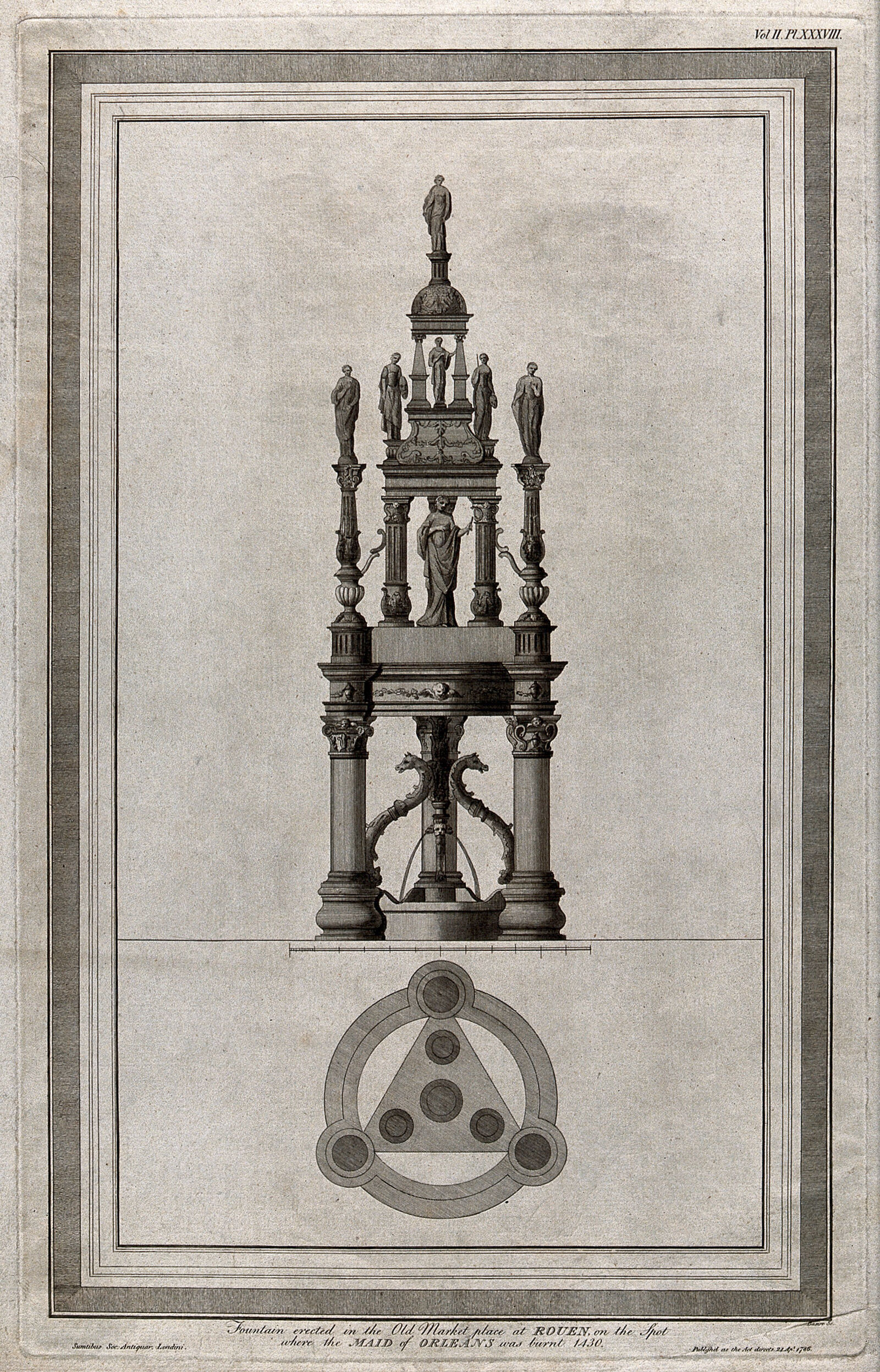
Fountain on the Site of Joan of Arc's Execution
James Basire · 21 April 1786
 Painting
Primary source
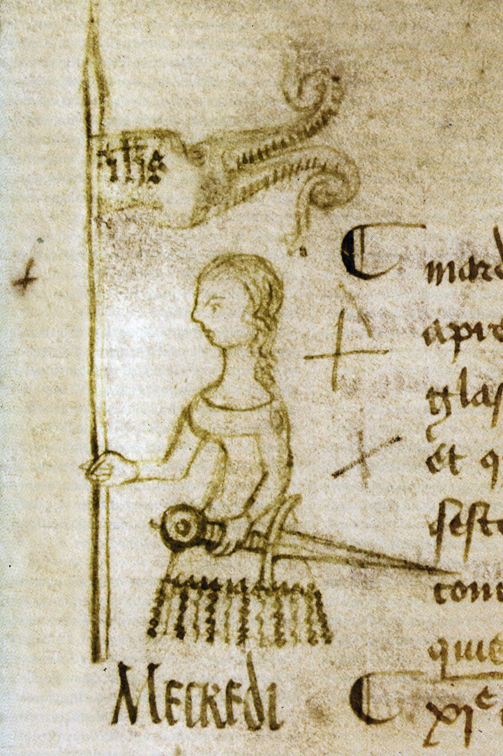
Marginal Drawing of Joan of Arc
Clément de Fauquembergue · May 1429
 Document
Primary source
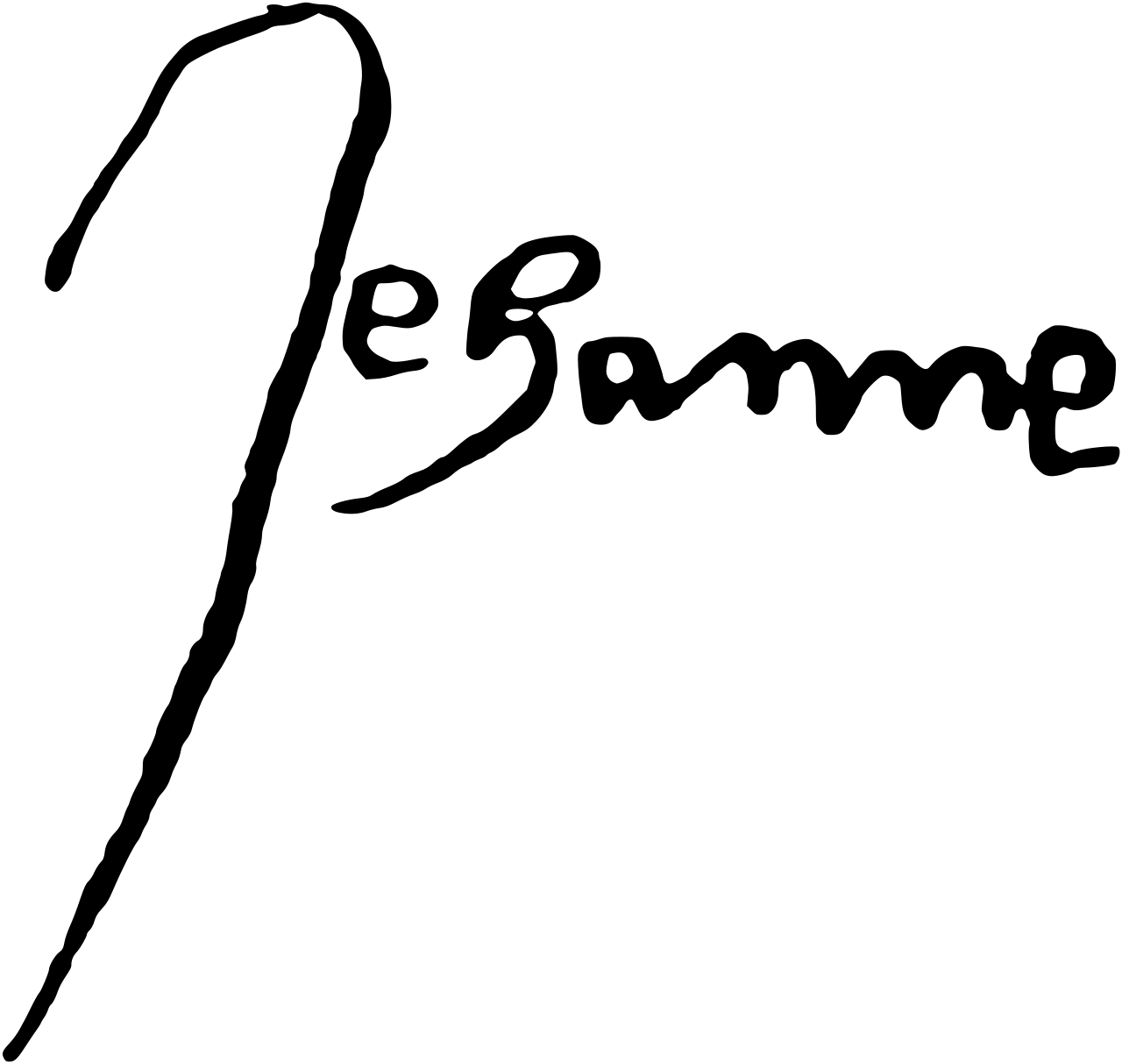
Signature of Joan of Arc
Joan of Arc · 16 March 1430
 Letter
Primary source
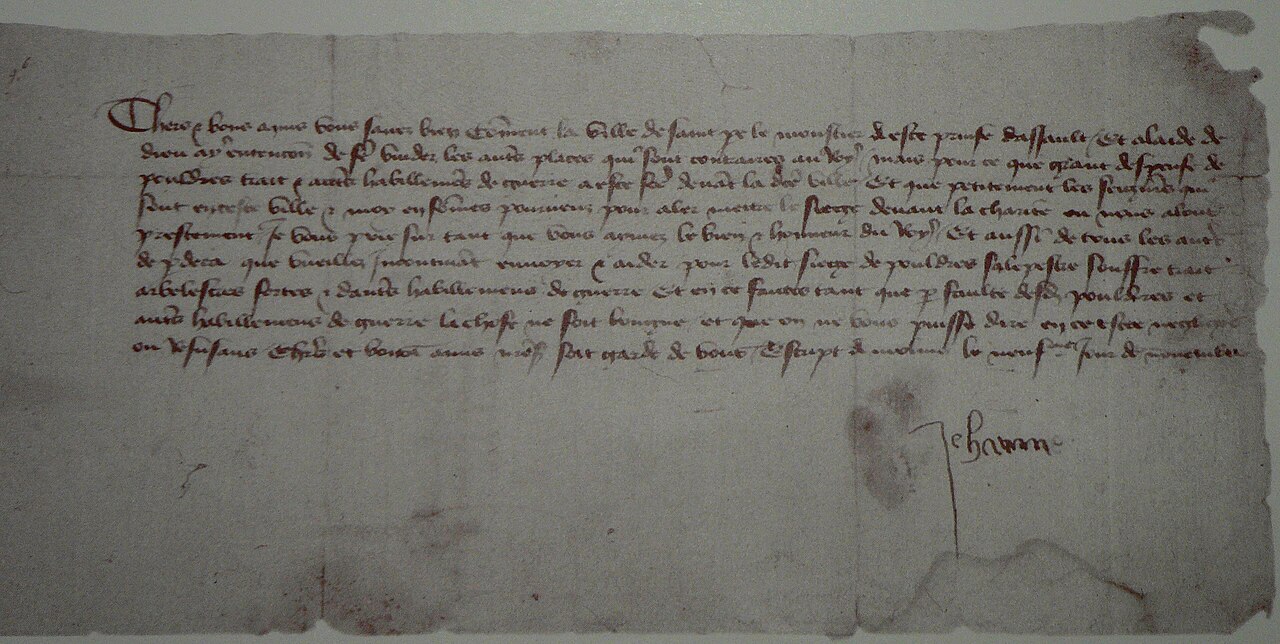
Letter to the People of Riom
Joan of Arc · 9 November 1429
Ready when you are
Start chatting with Joan of Arc now.
20 messages free · No credit card · Available in 50+ languages.