


Secondary sourceArtifactfound 1898
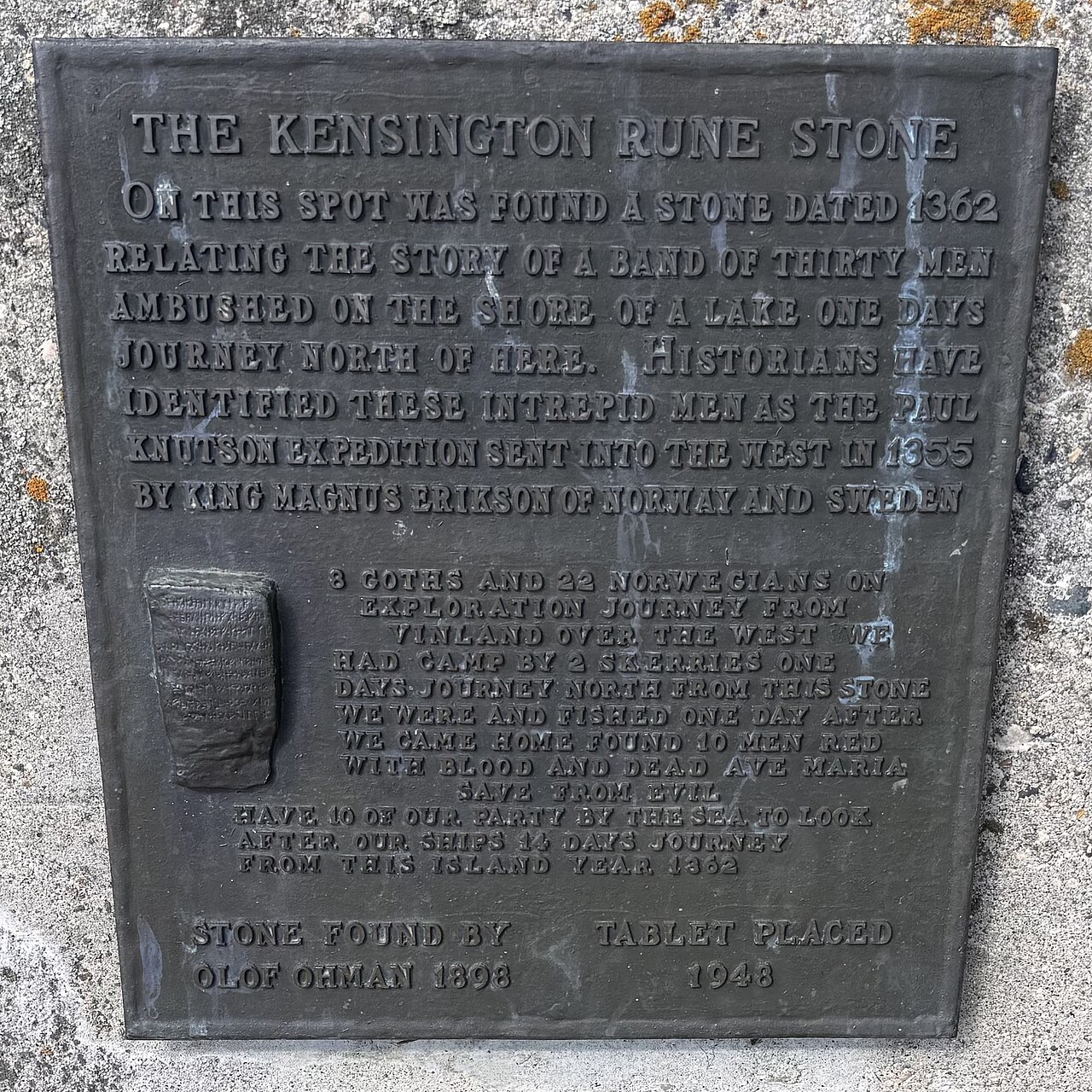
Kensington Runestone
Unknown · found 1898
A stone inscribed with runes, found in Minnesota in 1898 and generally considered a 19th-century hoax claiming Norse exploration.
A hoax linked to claims of Norse exploration, showing how eagerness to prove Leif Erikson's legacy produced false evidence.
About this source
What it is
This is a stone bearing a runic inscription, found in 1898 near Kensington, Minnesota, by Olof Ohman. It is now held at the Runestone Museum in Alexandria, Minnesota. Most historians consider it a hoax created in the 19th century rather than a genuine medieval artifact.
Why it matters
The stone shows how eagerness to prove that Norse explorers like Leif Erikson reached deep into North America led some people to produce false evidence. It is a lesson in how desire to connect to a famous figure's legacy can shape, or even fabricate, history.
Look closer
- Why might people in 1890s Minnesota have wanted to find proof of Norse exploration there?
- What makes historians doubt the stone's authenticity?
- How does this object compare to other claimed evidence of Norse presence in America, like the Vinland Map?
This artifact is part of the curated material that grounds the AI version of Leif Erikson on Humy.ai — when students ask about related events, the AI can quote it and cite it.
More Leif Erikson sources
Meet the AI Leif Erikson →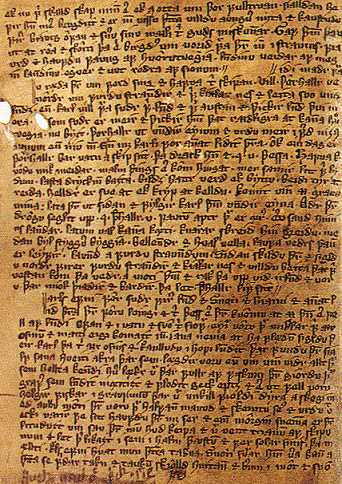 Book
Secondary source
Saga of Erik the Red
c. 1300 (manuscript); events set c. 1000
 Document
Secondary source
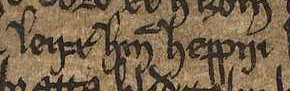
Leifr hinn heppni
early 14th century
 Artifact
Primary source
L'Anse aux Meadows Norse site
Norse Greenlanders · c. 1000-1021
 Book
Secondary source
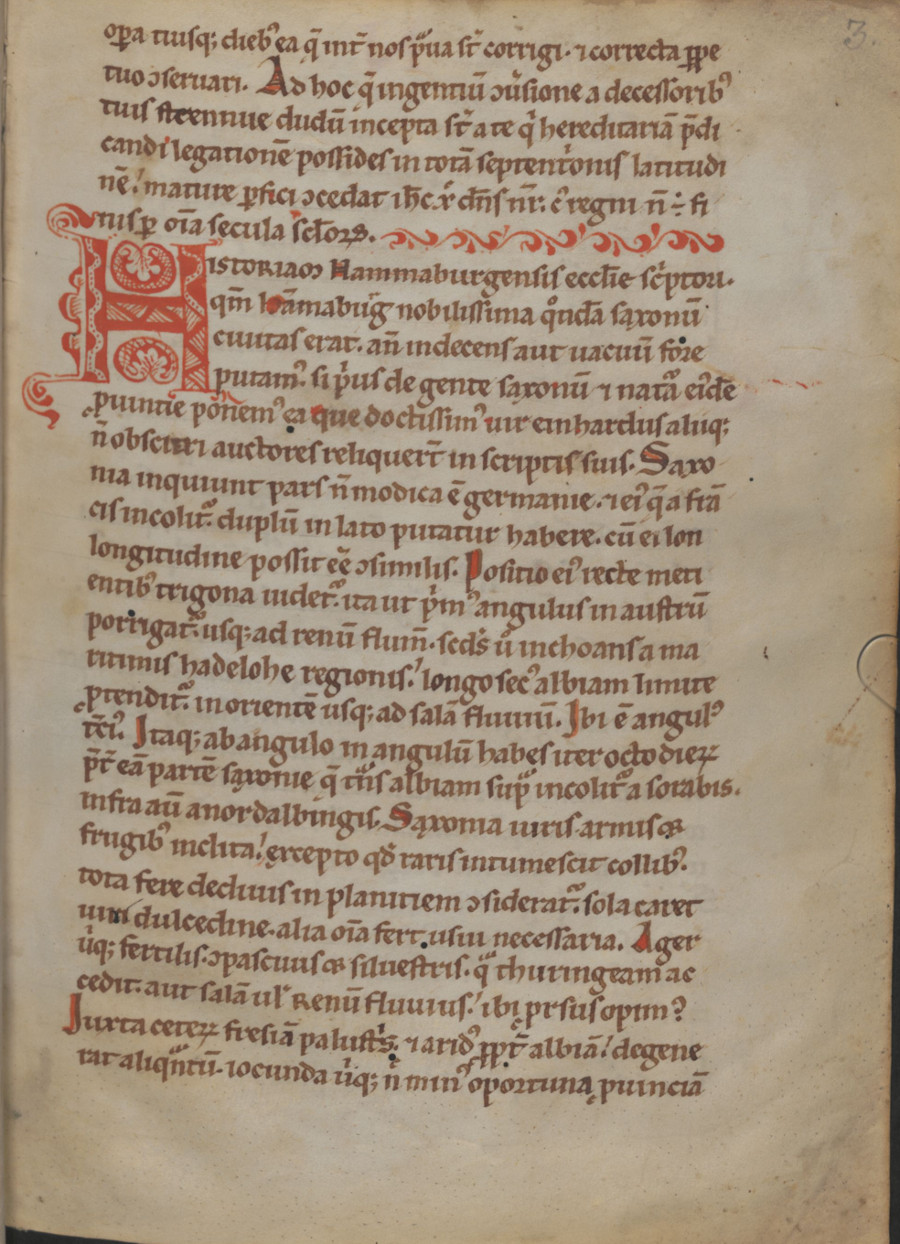
Gesta Hammaburgensis ecclesiae pontificum
Adam of Bremen · 1073-1076
 Book
Secondary source
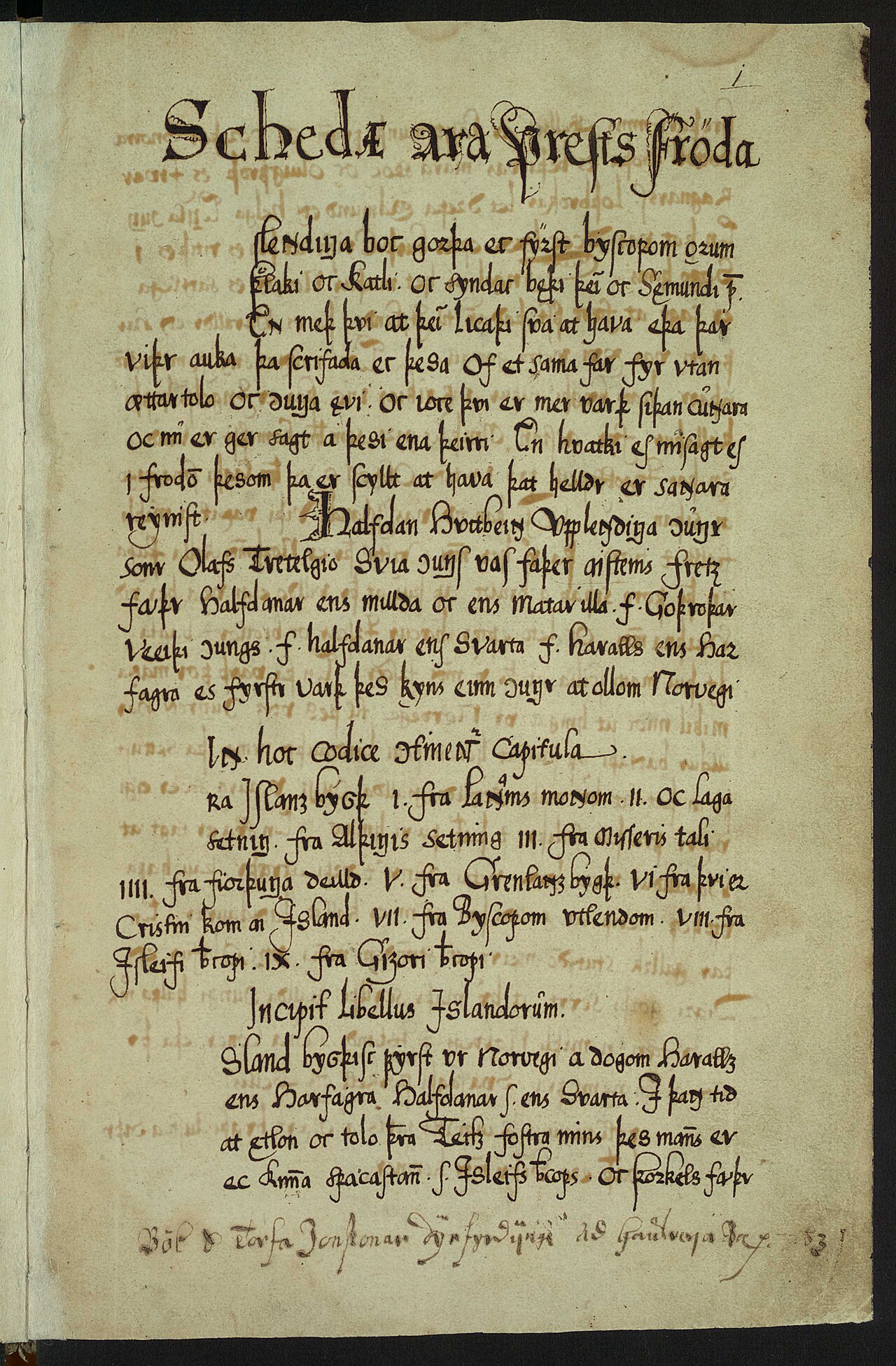
Íslendingabók
Ari Þorgilsson · c. 1122-1133
Ready when you are
Start chatting with Leif Erikson now.
20 messages free · No credit card · Available in 50+ languages.