


Primary sourceSculptureca. 1760
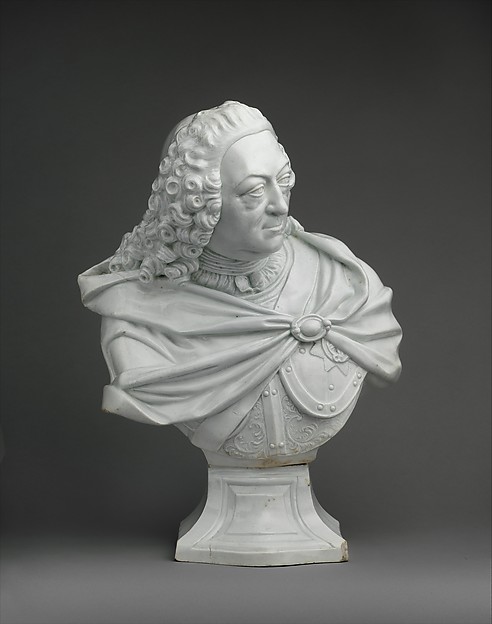
King George II porcelain bust by Vauxhall
Vauxhall · ca. 1760
A soft-paste porcelain bust of George II made by Vauxhall around 1760, held by the Metropolitan Museum of Art in New York. It is a likeness of the king near the end of his reign.
A soft-paste porcelain likeness of George II made around his lifetime's end, held by a major museum as a record of his image.
About this source
What it is
This is a photograph of a white glazed porcelain bust of the king. He wears a long curled wig and a draped cloak fastened with a ring brooch over an armour-like cuirass. The bust stands on a stepped octagonal pedestal against a dark grey background. The Metropolitan Museum of Art lists it as soft-paste porcelain, dated around 1760, and as a gift of Irwin Untermyer in 1964.
Why it matters
The museum's record describes the bust as a likeness of the king made around the end of his life. Objects like this show how a ruler's image was reproduced in luxury materials. Comparing it with other portraits of George II can show how makers chose to present him.
Look closer
- How does the bust show royal status through clothing, wig and armour?
- What does the photograph's dark background or pedestal change about how we see the king?
- Who would have bought an object like this, and what might they have wanted from it?
This sculpture is part of the curated material that grounds the AI version of George II on Humy.ai — when students ask about related events, the AI can quote it and cite it.
More George II sources
Meet the AI George II →Primary source
Charter of the Colony of Georgia
George II / Crown of Great Britain · 1732
Primary source
Zadok the Priest
George Frideric Handel · 1727
 Painting
Primary source
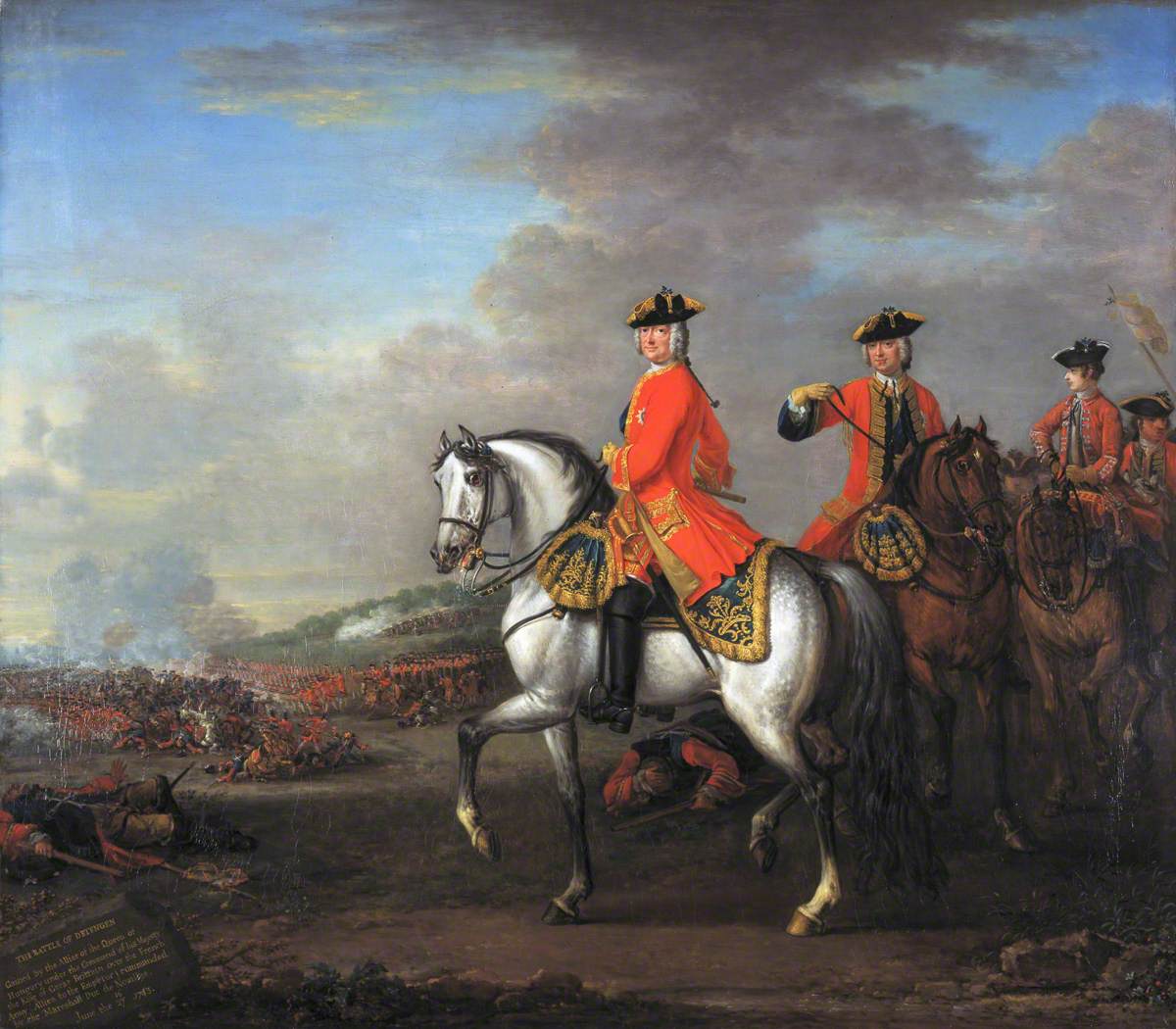
George II at the Battle of Dettingen, with the Duke of Cumberland and Robert, 4th Earl of Holderness
John Wootton · 1743
Primary source
Memoirs of the Reign of George the Second, from his Accession to the Death of Queen Caroline
John Hervey, Baron Hervey
 Document
Primary source
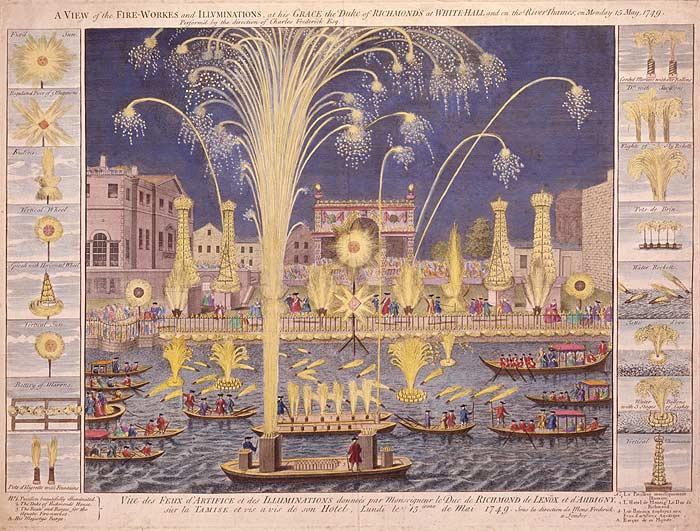
Music for the Royal Fireworks
George Frideric Handel · 1749
Ready when you are
Start chatting with George II now.
20 messages free · No credit card · Available in 50+ languages.