


Secondary sourcePainting
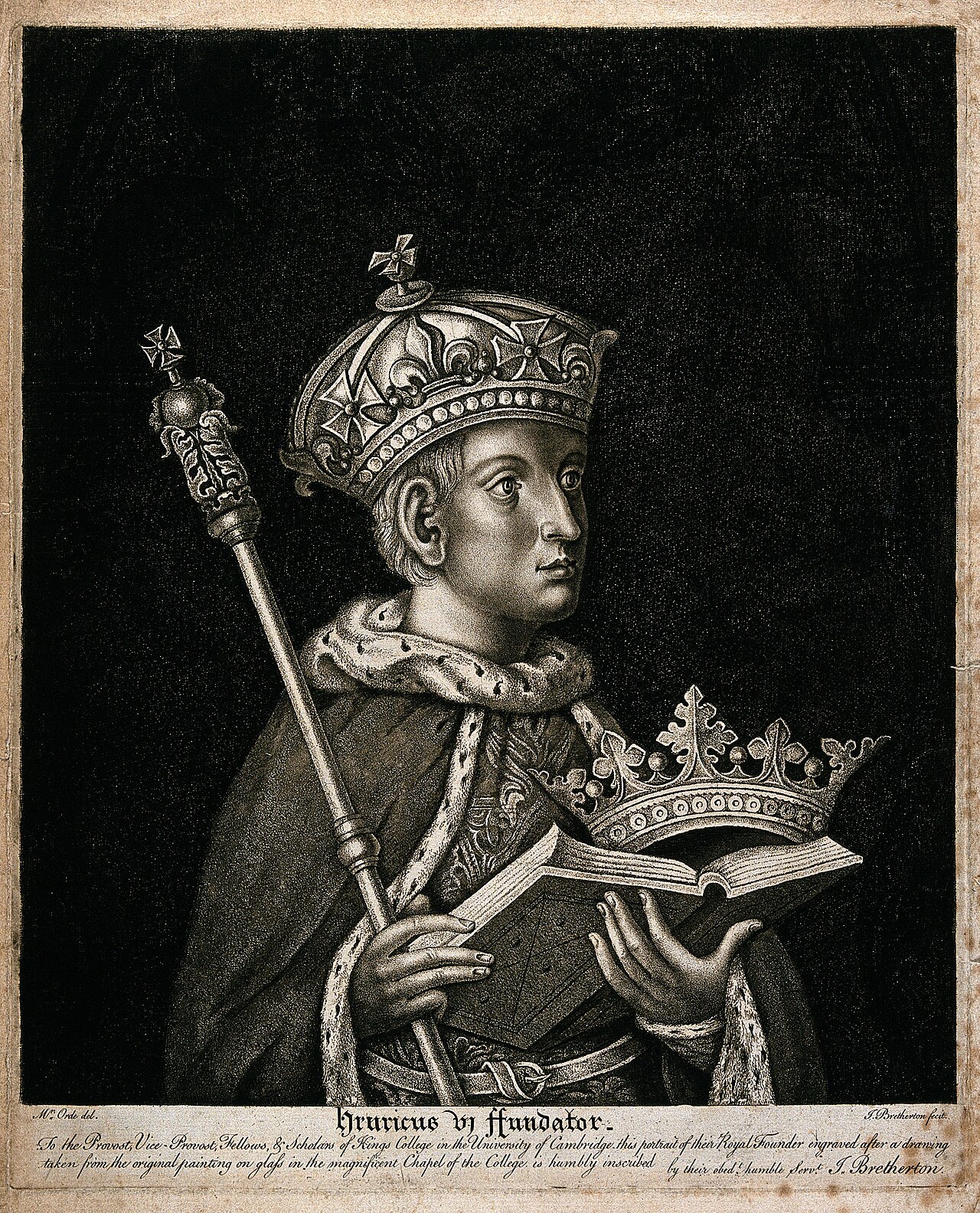
King Henry VI, engraving by James Bretherton after Orde-Powlett
James Bretherton
A black-and-white engraved portrait of Henry VI, made by James Bretherton from a copy after Thomas Orde-Powlett, 1st Baron Bolton. It is not a contemporary image.
A later engraved portrait of Henry VI showing him as a founder and king, made from an 18th-century copy of an image by Thomas Orde-Powlett.
About this source
What it is
This is an engraved portrait of Henry VI, King of England, by James Bretherton. It is based on a copy made after Thomas Orde-Powlett, 1st Baron Bolton, and that copy dates from the 18th century. The engraving shows a young crowned king in ermine-trimmed robes, holding a scepter in his left hand and an open book in his right, with a separate crown resting on the book. The inscription reads 'Henricus VI Fundator' and includes a dedication to King's College, Cambridge.
Why it matters
Henry VI founded King's College, Cambridge, and the engraving links him to that college. Because the print was made centuries after his death, it tells us more about how later people wanted him to be seen than about his own appearance. The engraving is a copy of a copy, so students should treat it as a later interpretation. The collection record also describes Henry losing the Wars of the Roses and being put to death by Edward IV in 1471.
Look closer
- Which objects does the king hold, and what might a scepter, a book and a crown each say about kingship?
- The inscription names the king as a founder. Why would a college want its founder shown in a print like this?
- The original portrait came from a copy made in the 1700s. What might be lost or changed each time an image is copied?
This painting is part of the curated material that grounds the AI version of Henry VI on Humy.ai — when students ask about related events, the AI can quote it and cite it.
More Henry VI sources
Meet the AI Henry VI →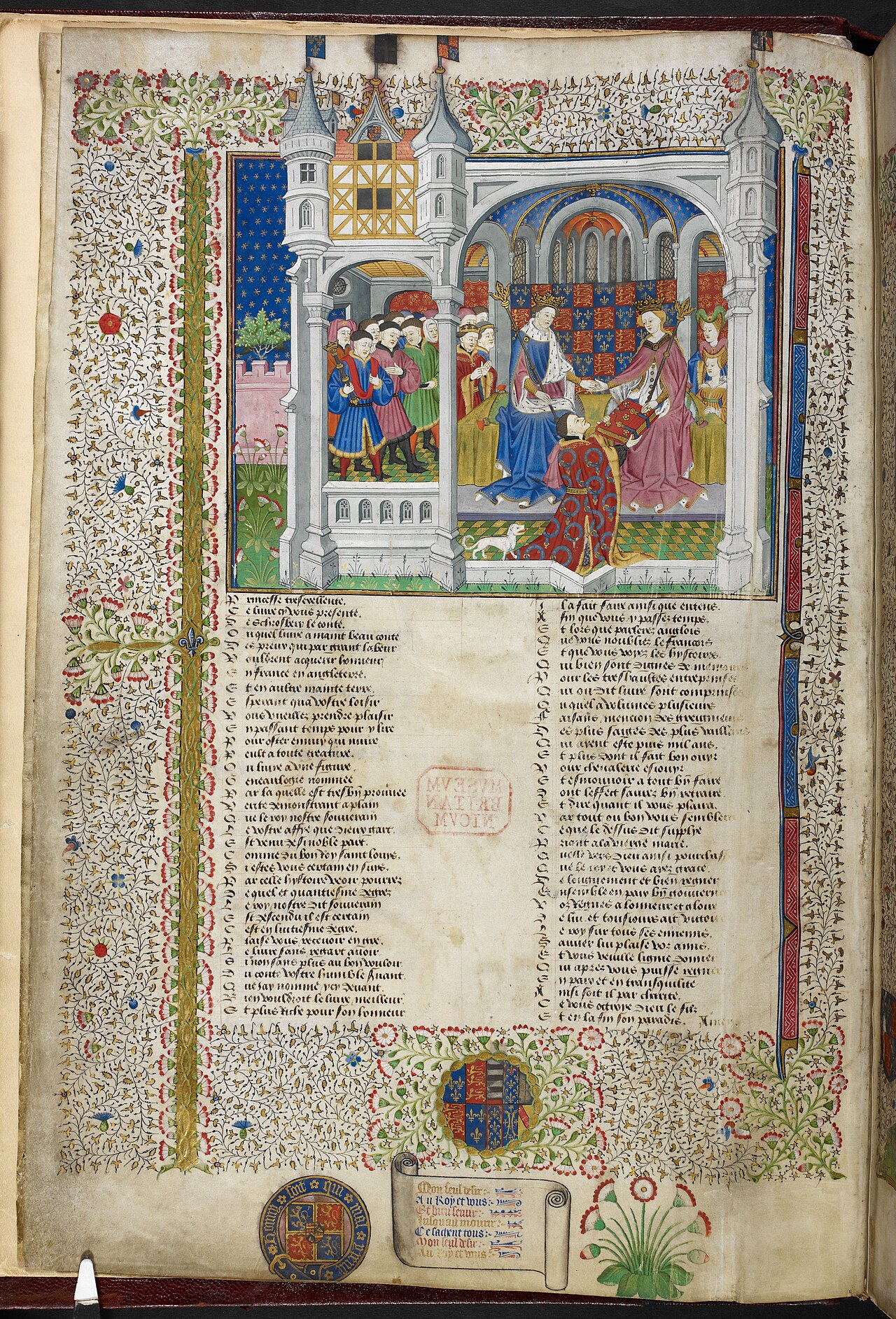 Book
Primary source
Talbot Shrewsbury Book
Master of the Munich Golden Legend · 1444/1445
 Painting
Secondary source
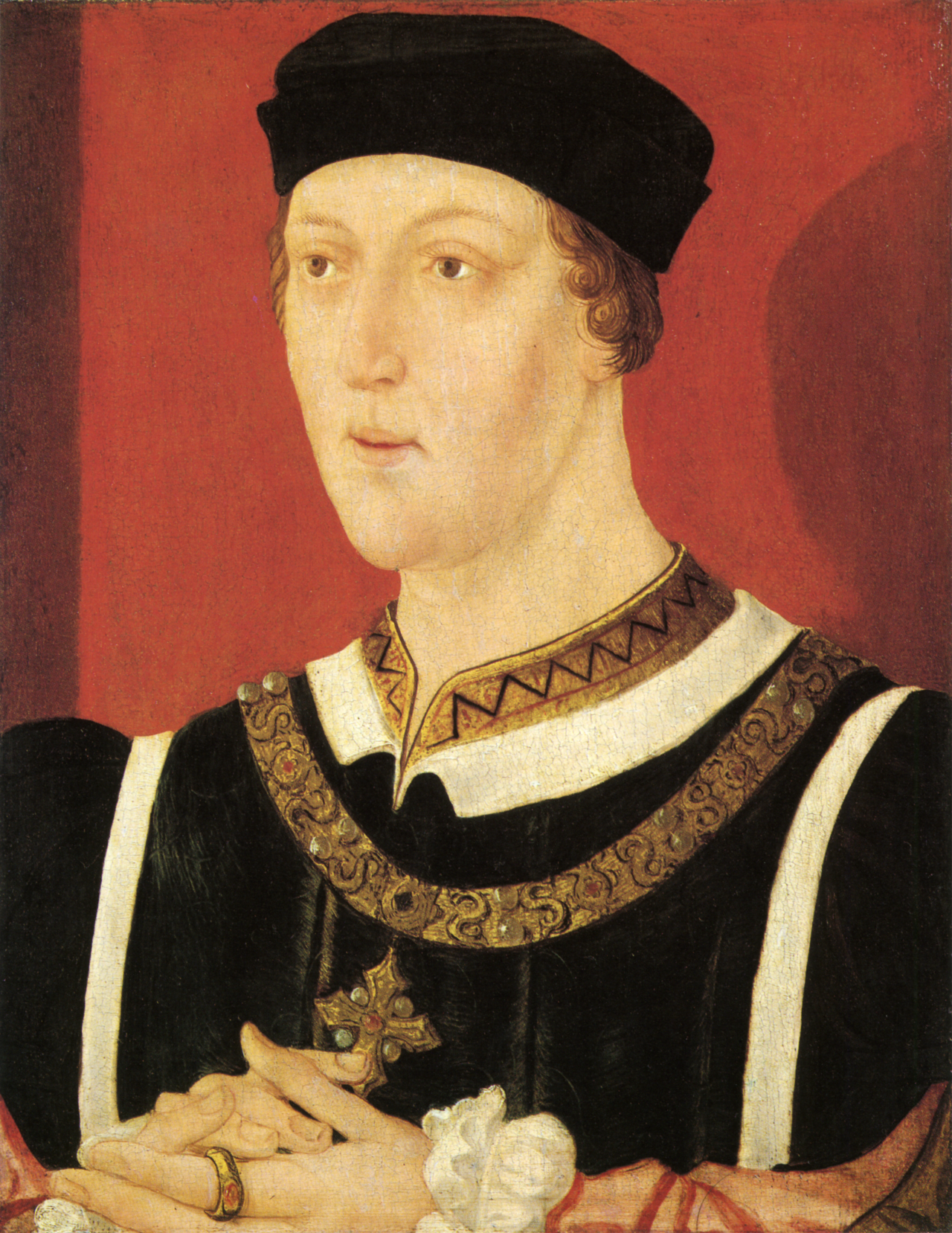
King Henry VI
Unknown English artist · c. 1540
 Artifact
Primary source
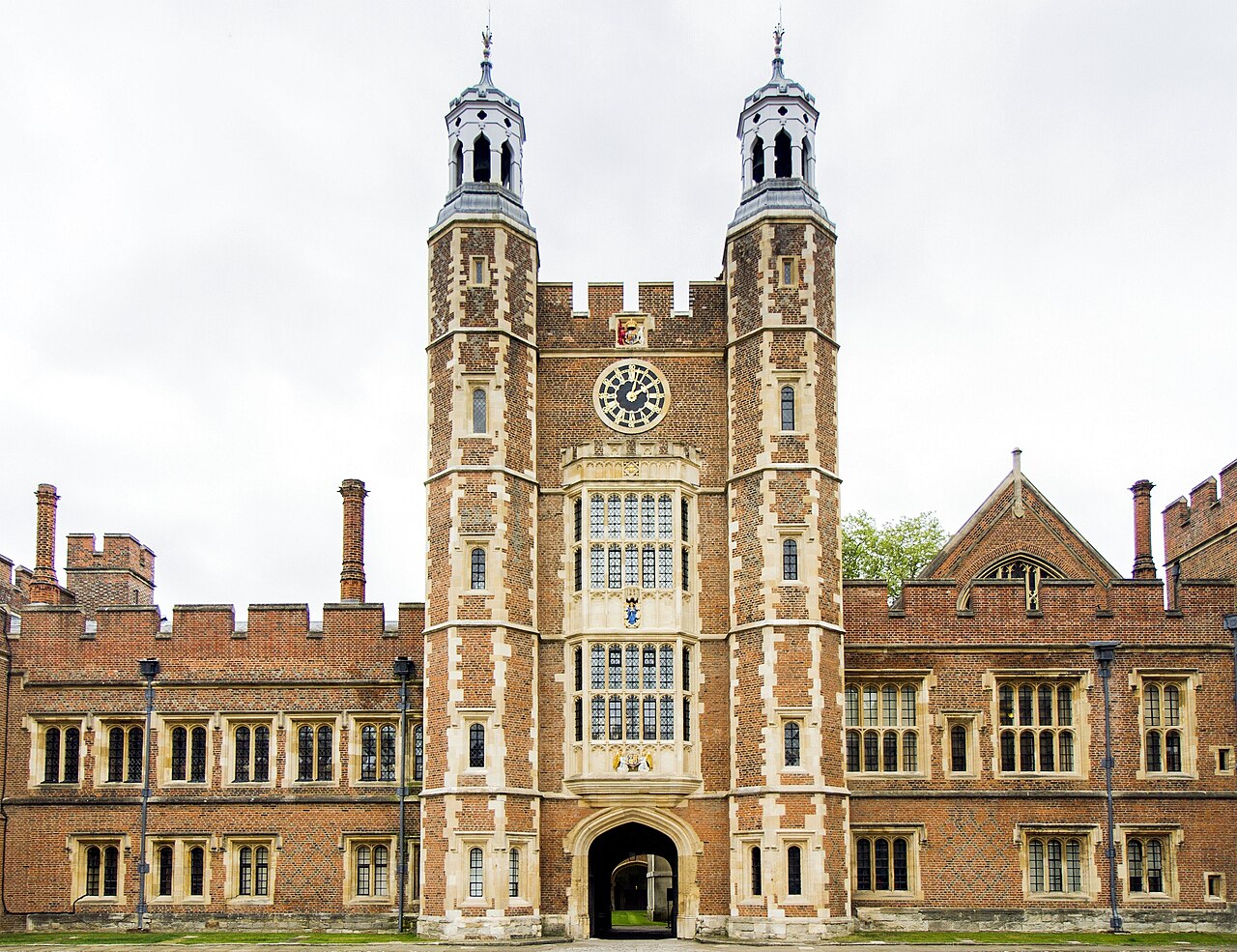
Eton College
1440
 Artifact
Primary source
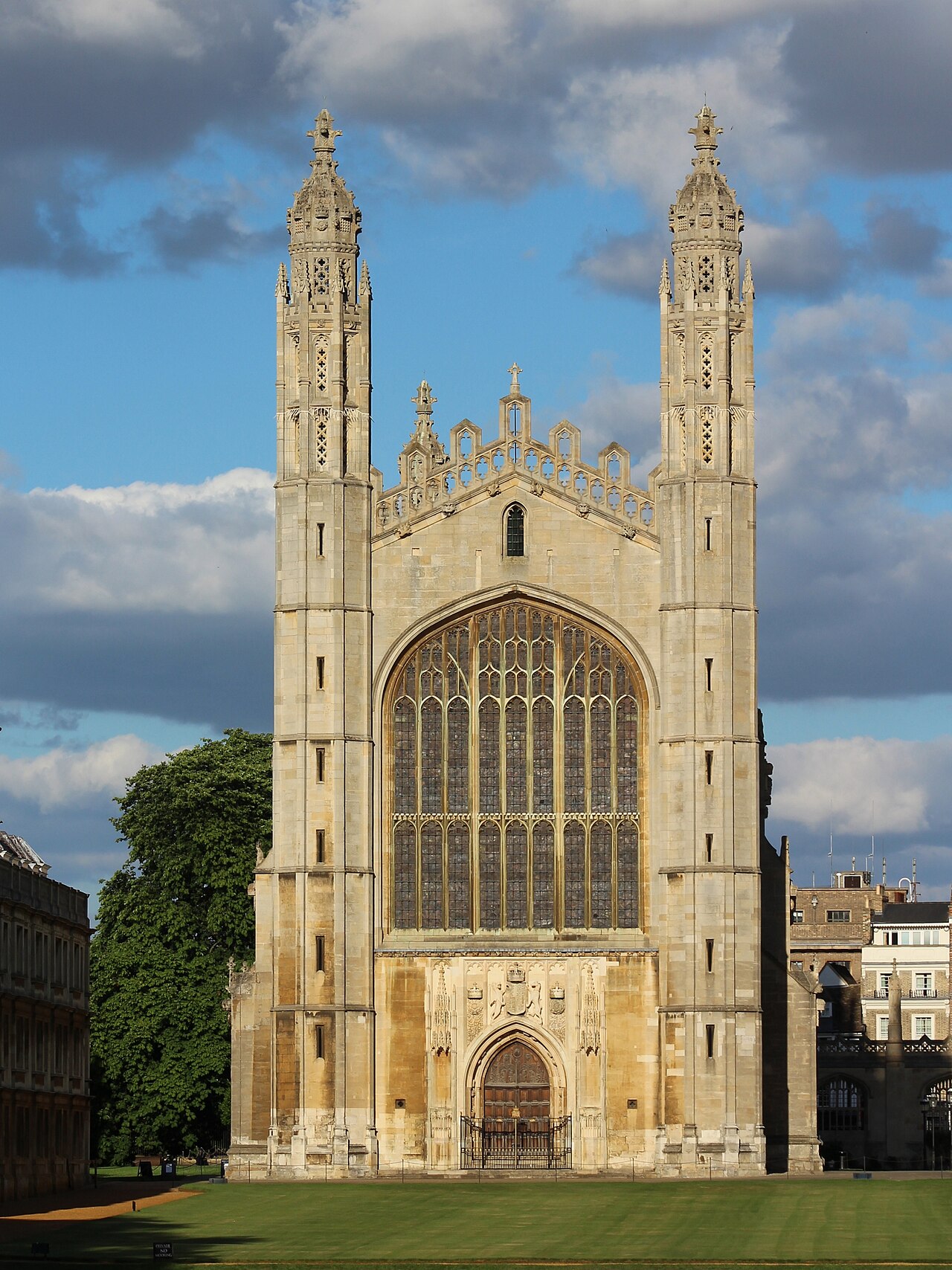
King's College Chapel
1446–1515
 Book
Secondary source
The Historie of the Arrivall of Edward IV
Unknown (servant of Edward IV) · c. 1500
Ready when you are
Start chatting with Henry VI now.
20 messages free · No credit card · Available in 50+ languages.