


Secondary sourcePainting1788
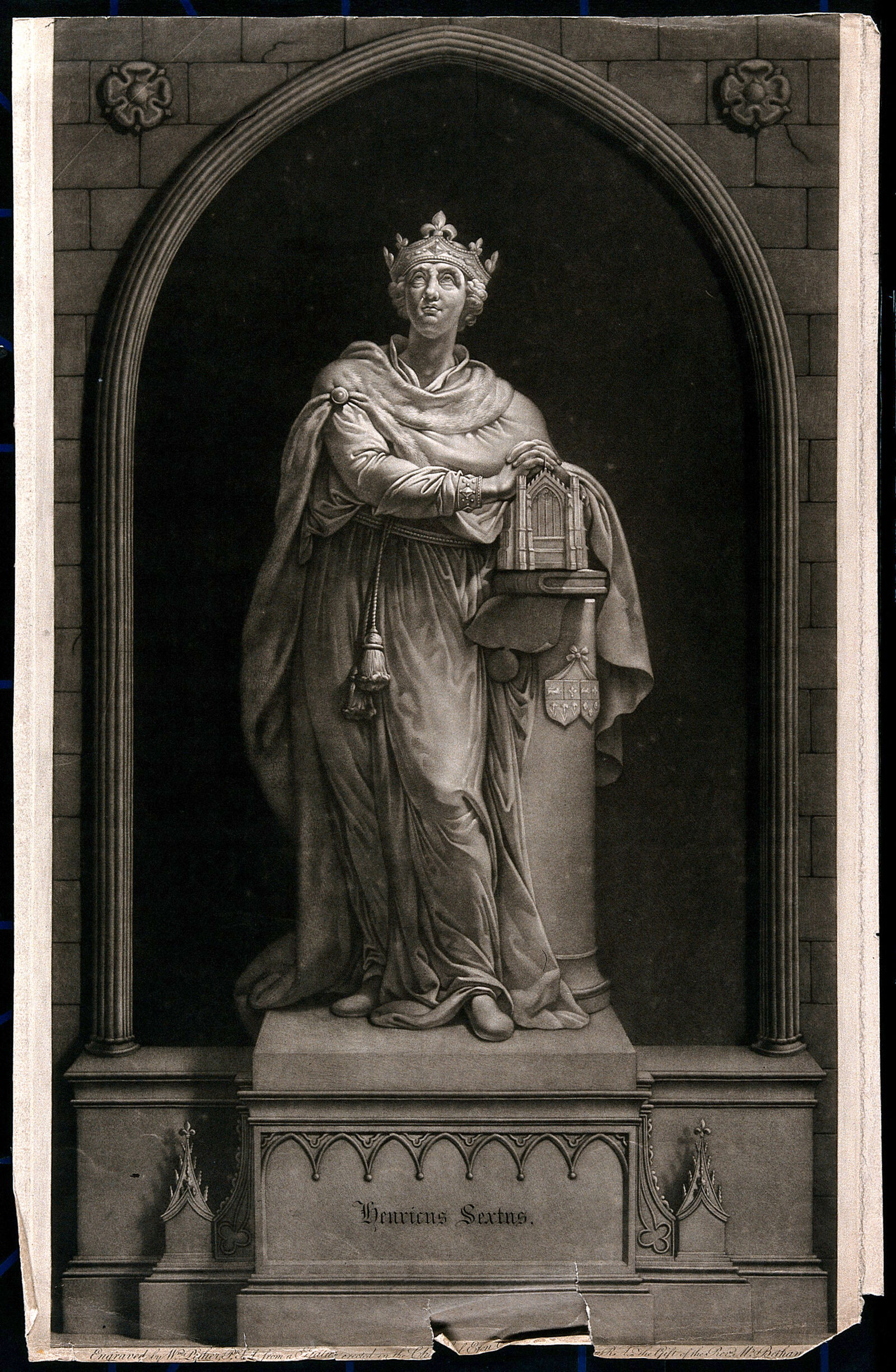
King Henry VI with Eton College chapel, mezzotint after John Bacon
John Bacon · 1788
A mezzotint showing a crowned stone-like statue of Henry VI holding a model of a Gothic chapel, made in 1788 after John Bacon. It honours Henry VI as founder of Eton College.
An 1788 mezzotint presenting Henry VI as the founder of Eton College, showing how later artists chose to remember him through his buildings.
About this source
What it is
This is a mezzotint print made in 1788. It shows a crowned, cloaked figure of King Henry VI standing in a Gothic niche, with one arm resting on a model of a Gothic chapel. A shield is on a pillar behind him, and the inscription 'Henricus Sextus' appears on the pedestal. The design is by John Bacon, and the mezzotint was made by W. Pether after Bacon. The print is held by the Wellcome Collection in London. The king is shown as a statue, not as a living person.
Why it matters
Henry VI founded Eton College, and the chapel and charter are among the emblems used to identify him in this image. The print shows how eighteenth-century artists remembered the king as a founder of schools and churches. It says more about the artists and the public who bought such prints than about the king himself, since it presents him as a monument rather than a person.
Look closer
- Why might the artist show Henry VI as a stone statue instead of a living man?
- Which objects, such as the chapel and the shield, help you identify what Henry is famous for?
- The design is by Bacon and the engraving is by Pether. What does this teamwork suggest about how such prints were made?
This painting is part of the curated material that grounds the AI version of Henry VI on Humy.ai — when students ask about related events, the AI can quote it and cite it.
More Henry VI sources
Meet the AI Henry VI →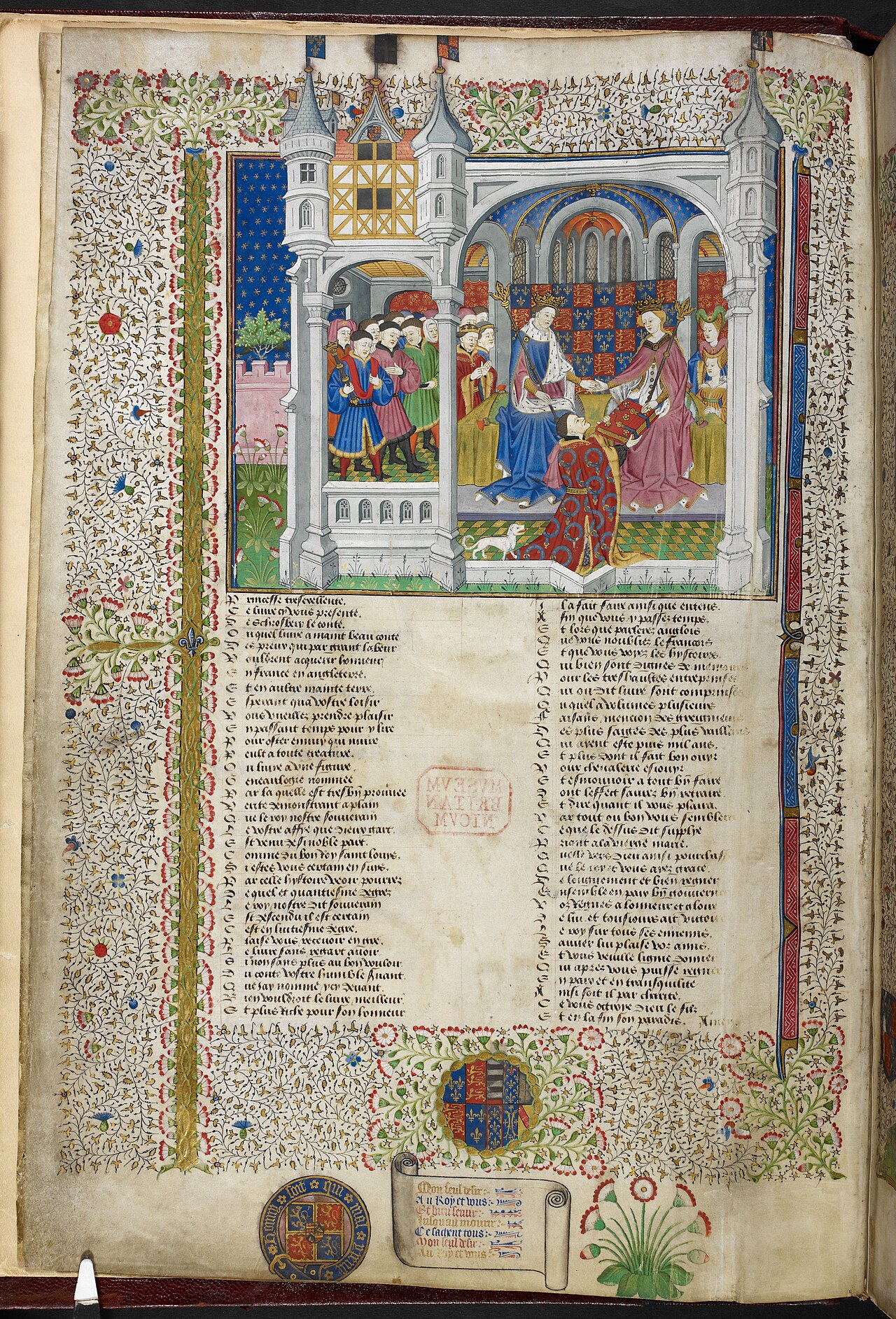 Book
Primary source
Talbot Shrewsbury Book
Master of the Munich Golden Legend · 1444/1445
 Painting
Secondary source
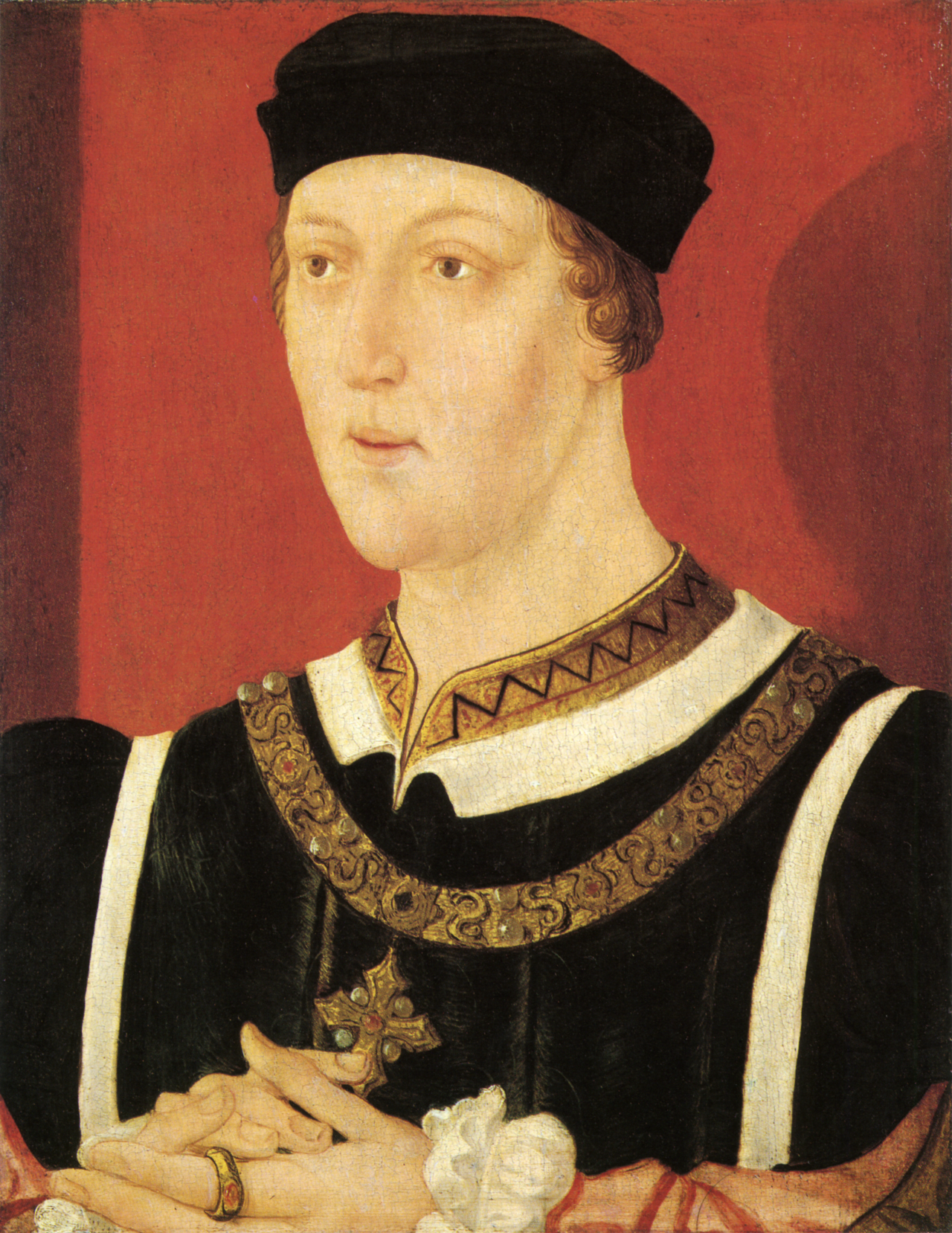
King Henry VI
Unknown English artist · c. 1540
 Artifact
Primary source
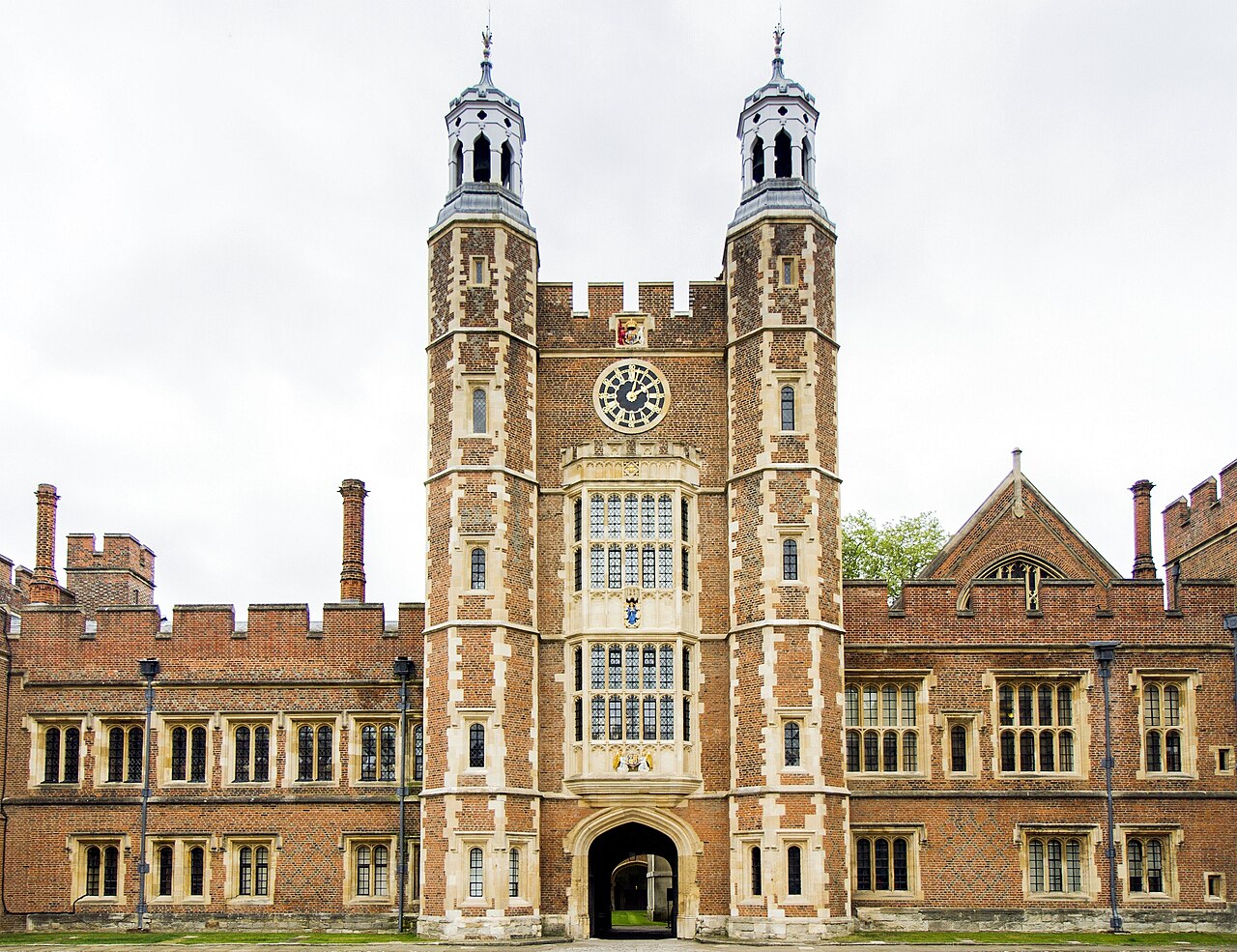
Eton College
1440
 Artifact
Primary source
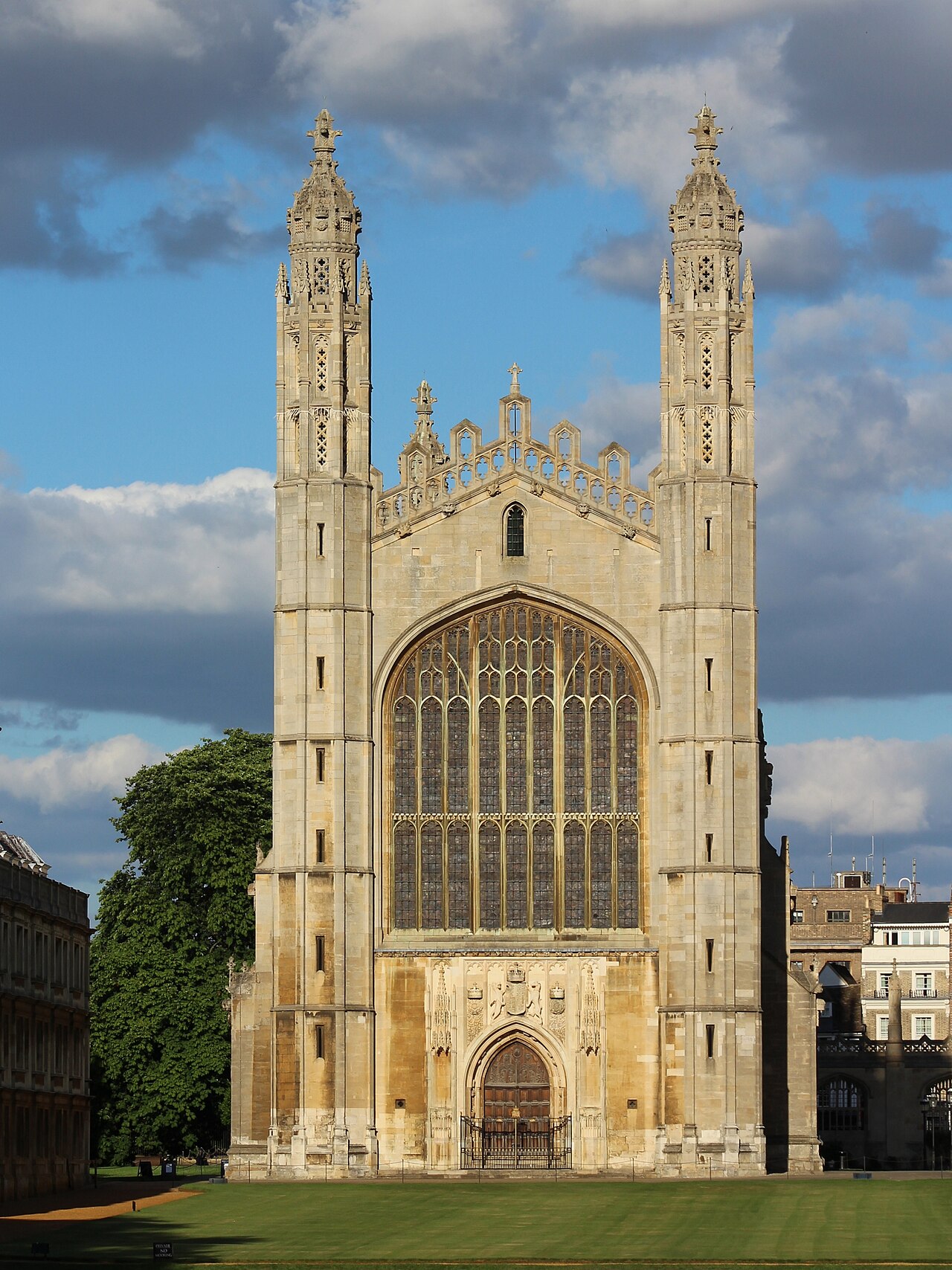
King's College Chapel
1446–1515
 Book
Secondary source
The Historie of the Arrivall of Edward IV
Unknown (servant of Edward IV) · c. 1500
Ready when you are
Start chatting with Henry VI now.
20 messages free · No credit card · Available in 50+ languages.