


Primary sourceArtifact1420
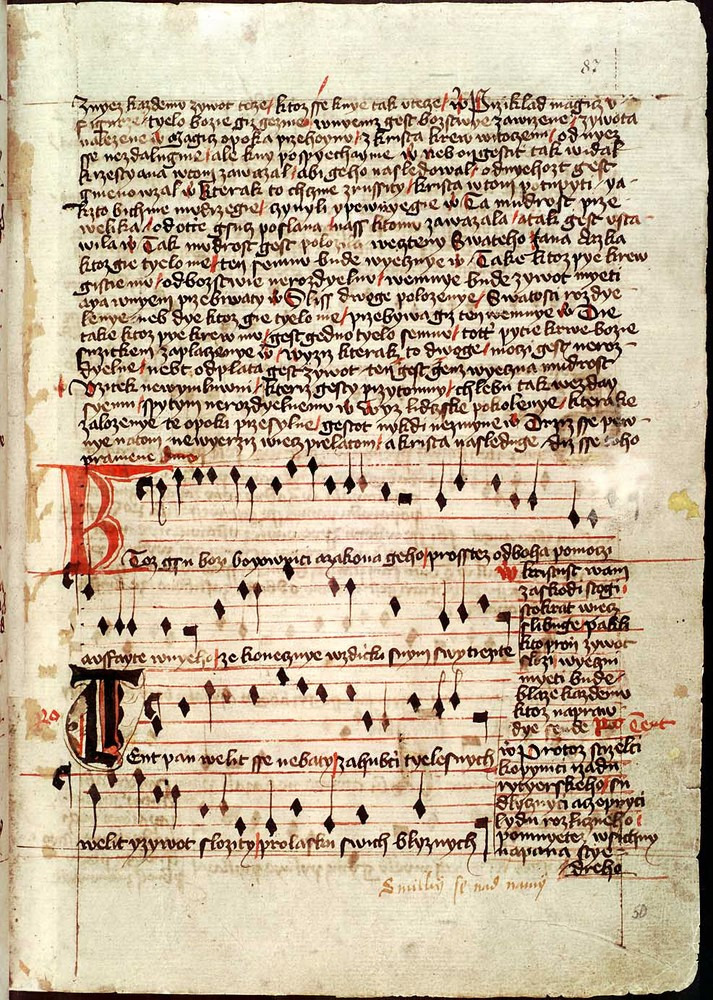
Ktož jsú boží bojovníci
1420
A 15th-century Hussite war hymn sung by the Taborite armies Žižka commanded, reputedly used to intimidate enemy forces.
This battle hymn was sung by the Taborite armies under Žižka's command, reflecting the religious militancy of his troops.
About this source
What it is
This is a Hussite war song, first recorded in the Jistebnice hymn book, from the time of the Hussite Wars. Its title translates as "Ye Who Are Warriors of God." The lyrics call on God's warriors to have faith, obey their captains, keep formation, and not fear death in battle.
Why it matters
The song was reportedly sung with such force that it frightened enemy crusader armies, with one Imperial Crusade said to have fled before fighting even began. It was led by a Hussite priest carrying a ceremonial axe. As the war song of the Taborite troops Žižka led, it shows the fusion of religious conviction and military discipline that defined his forces. Centuries later, composers such as Smetana, Dvořák, and Karel Husa used its melody, showing its lasting place in Czech national memory.
Look closer
- What values does the song tell soldiers to hold onto — and what does it warn against?
- Why might singing together have been an effective tactic in medieval warfare?
- How does the song's survival into later music show its importance to Czech identity?
This artifact is part of the curated material that grounds the AI version of Jan Žižka and Sigismund, Holy Roman Emperor on Humy.ai — when students ask about related events, the AI can quote it and cite it.
More Jan Žižka sources
Browse all 82 →Primary source
Žižka's Regulations of War
Jan Žižka · 1423
 Letter
Primary source
Letter of Jan Žižka of Trocnov
Jan Žižka
 Artifact
Secondary source
New Town Hall, Prague
1370 (building); 1419 (defenestration)
 Sculpture
Secondary source
Statue of Jan Žižka at Vítkov Hill
Bohumil Kafka · 1931


Free account
Read every Jan Žižka source
Sign up free →
Ready when you are
Start chatting with Jan Žižka now.
20 messages free · No credit card · Available in 50+ languages.