


Secondary sourcePainting
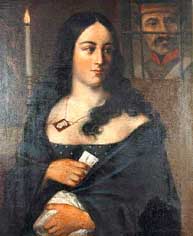
La Pola en capilla
José María Espinosa
A watercolour by José María Espinosa showing Policarpa Salavarrieta in the condemned chapel the night before her execution.
Shows Policarpa in the condemned chapel on the eve of her execution, a scene central to her legend of defiance.
About this source
What it is
This watercolour on canvas, measuring 80 by 70 centimetres, was painted by José María Espinosa. It shows a dark-haired woman in a shawl holding a folded paper, with a lit candle beside her and a small framed portrait of a man in the background.
Why it matters
The scene depicts Policarpa Salavarrieta in the chapel where condemned prisoners spent their last night, a moment remembered for her reported defiance and her words against the royalist authorities before her execution. As a work by a contemporary of the independence generation, it shows how this dramatic episode was already being memorialised in art soon after it happened.
Look closer
- What mood does the candlelight and the folded paper create in this scene?
- Why might an artist choose to paint this particular moment rather than her trial or execution itself?
- What can and can't a painted scene like this tell us about what actually happened that night?
This painting is part of the curated material that grounds the AI version of Policarpa Salavarrieta on Humy.ai — when students ask about related events, the AI can quote it and cite it.
More Policarpa Salavarrieta sources
Browse all 13 →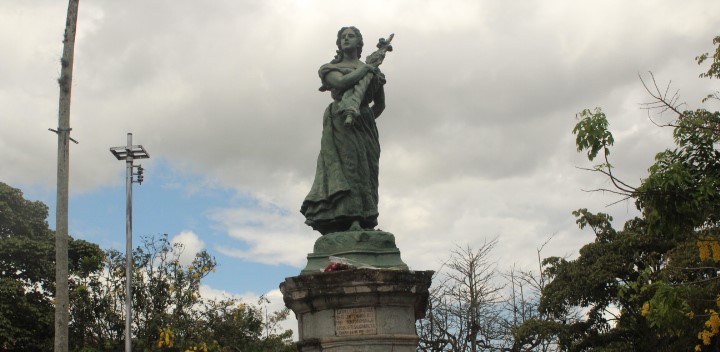 Sculpture
Secondary source
Monument to Policarpa Salavarrieta, Guaduas
20th century
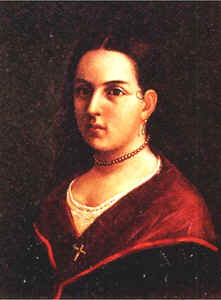 Painting
Secondary source
Policarpa
José María Espinosa
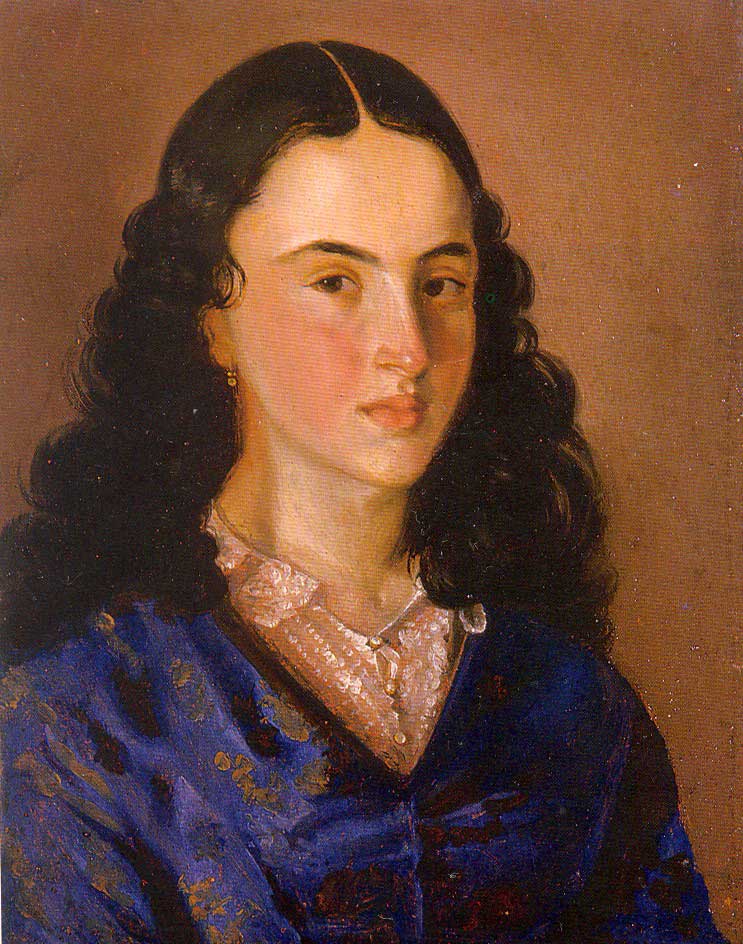 Painting
Secondary source
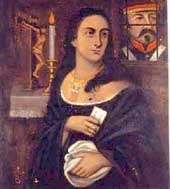
Portrait of Policarpa Salavarrieta
 Painting
Secondary source
Policarpa by Mercedes Delgado Mallarino
Mercedes Delgado Mallarino
Free account
Read every Policarpa Salavarrieta source
Sign up free →
Ready when you are
Start chatting with Policarpa Salavarrieta now.
20 messages free · No credit card · Available in 50+ languages.