


Secondary sourcePainting
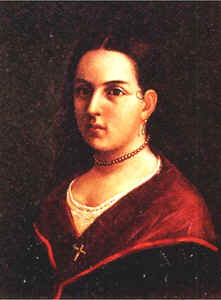
Policarpa
José María Espinosa
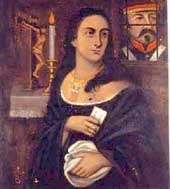
An oil portrait of Policarpa Salavarrieta by José María Espinosa, which became the standard image of 'La Pola' used in later depictions.
This painting of Policarpa by a contemporary artist became the canonical image used to depict her in later works.
About this source
What it is
This is an oil painting portrait showing a young woman with dark hair, a dark red shawl, white blouse, beaded choker and a small gold cross. It was painted by José María Espinosa, an artist who lived through the independence generation in Bogotá.
Why it matters
Because no portrait was made of Policarpa Salavarrieta during her own lifetime, this painting by a contemporary of her generation became the model that later artists copied when imagining her face. It shaped how generations of Colombians have pictured 'La Pola,' the heroine executed for her role in the independence movement.
Look closer
- What details in her clothing and expression might suggest dignity or defiance?
- Why do you think this image became the 'standard' face of Policarpa even though it was not made from life?
- What does it mean for a historical figure's image to be invented after their death?
This painting is part of the curated material that grounds the AI version of Policarpa Salavarrieta on Humy.ai — when students ask about related events, the AI can quote it and cite it.
More Policarpa Salavarrieta sources
Browse all 13 →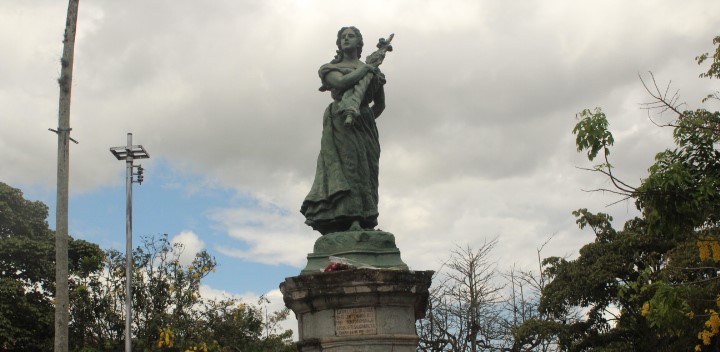 Sculpture
Secondary source
Monument to Policarpa Salavarrieta, Guaduas
20th century
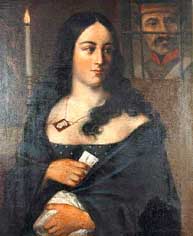 Painting
Secondary source
La Pola en capilla
José María Espinosa
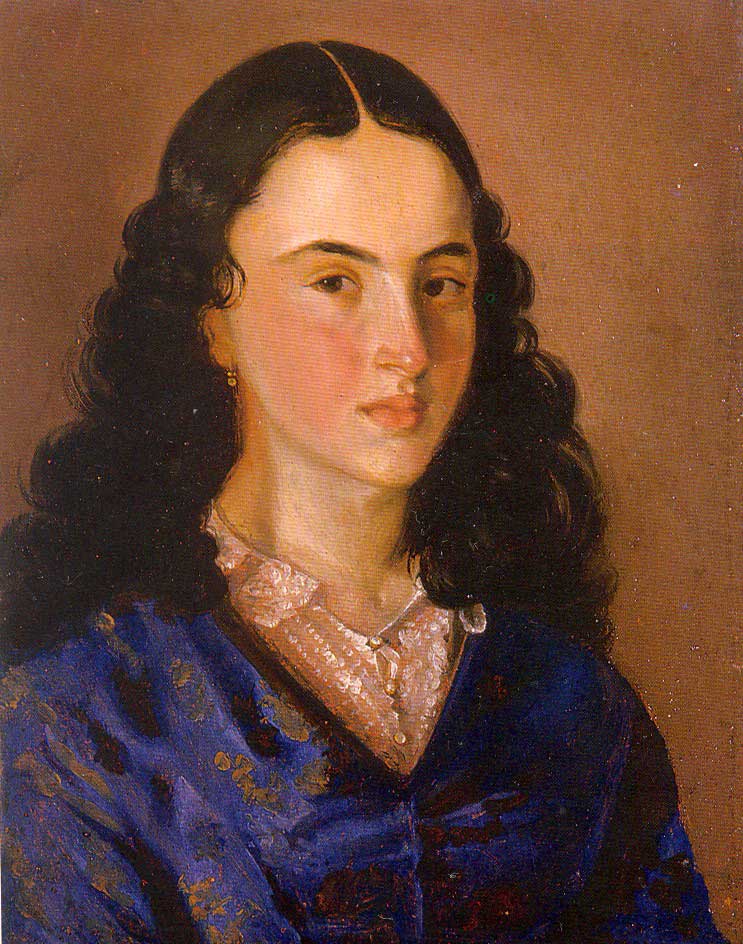 Painting
Secondary source
Portrait of Policarpa Salavarrieta
 Painting
Secondary source
Policarpa by Mercedes Delgado Mallarino
Mercedes Delgado Mallarino
Free account
Read every Policarpa Salavarrieta source
Sign up free →
Ready when you are
Start chatting with Policarpa Salavarrieta now.
20 messages free · No credit card · Available in 50+ languages.